How to Optimize Filter Changes During Wildfire and Pollen Season

How to Optimize Filter Changes During Wildfire and Pollen Season
Why Knowing How Often to Change Your AC Filter During Wildfire and Pollen Season Matters for Central Washington Homeowners
How often to change your AC filter during wildfire and pollen season is one of the most important HVAC questions homeowners in Wenatchee, East Wenatchee, and the surrounding Wenatchee Valley face every year. Central Washington summers bring a double threat: heavy pollen from local grasses and trees, followed closely by wildfire smoke that can push indoor air quality to dangerous levels. When that happens, your AC filter is working far harder than usual — and the standard 90-day replacement rule simply doesn't hold.
Here's a quick-reference guide to filter change frequency based on current air quality conditions:
| Condition | Check Filter | Replace Filter |
|---|---|---|
| Normal (no smoke, low pollen) | Every 30 days | Every 90 days |
| High pollen season | Every 30 days | Every 30-60 days |
| Active wildfire smoke (AQI 101-150) | Every 1-2 weeks | Every 30 days or sooner |
| Heavy smoke event (AQI 151+) | Every 7 days | Replace immediately when clogged |
| Pets or allergy sufferers (any season) | Every 20-30 days | Every 20-45 days |
Indoor air pollutant levels can already run 2 to 5 times higher than outdoor levels under normal conditions. Add wildfire smoke or a high-pollen surge to the mix, and a neglected AC filter stops protecting your home and starts working against it — restricting airflow, straining your system, and letting fine particles circulate through every room. In Central Washington, where smoke events can arrive fast and pollen counts climb early in the season, staying on top of filter changes isn't just good practice — it's essential for your family's health and your HVAC system's longevity.
How often to change your ac filter during wildfire and pollen season helpful reading:
- how dirty air filters destroy your ac in dusty climates
- how dirty filters cause frozen evaporator coils
Understanding the Threat: How Wildfire Smoke and Pollen Impact Your HVAC System
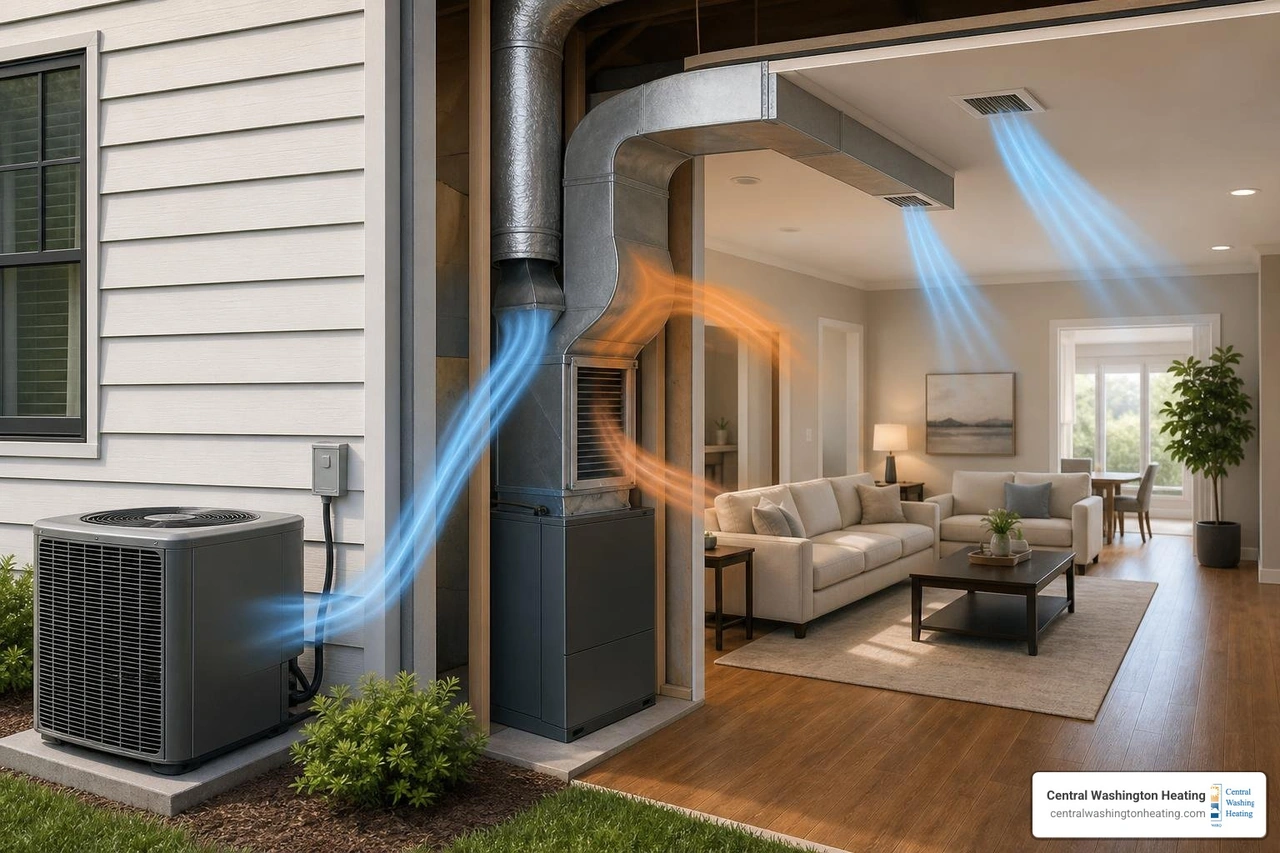
To understand why our seasonal maintenance schedules must shift so drastically, we have to look at the science of what is happening inside your heating and cooling system. Your air conditioning system is designed to circulate a specific volume of air to keep your home comfortable. When outdoor air is thick with pollen or wildfire smoke, your return vents pull those airborne particles directly into the system.
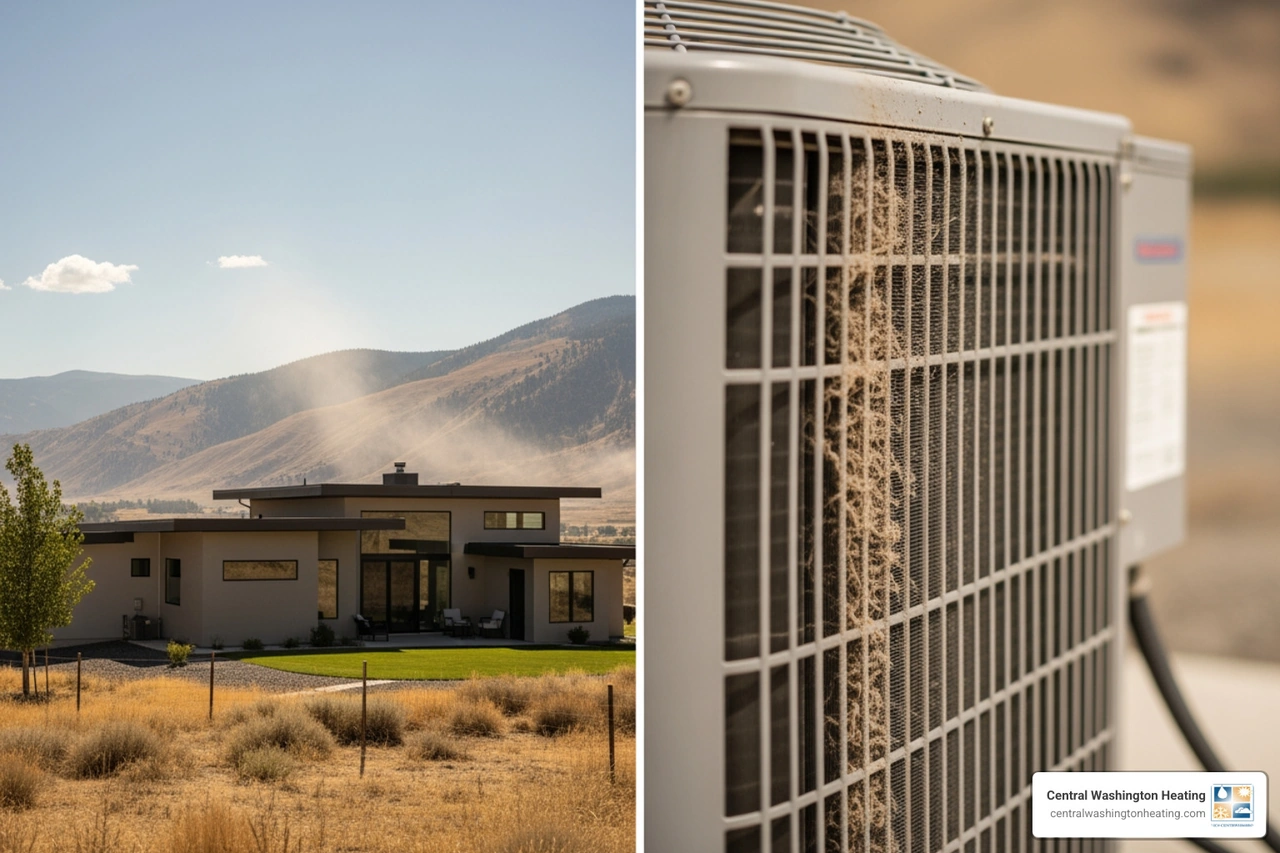
In the Wenatchee Valley, our unique geography acts like a bowl, trapping particulate matter near the ground during summer inversions. Additionally, because our climate is naturally arid and dry, particulate matter stays suspended in the air much longer than it would in a humid region. Dry soil and agricultural dust from local orchards in Cashmere, Dryden, and Malaga carry a slight static charge, which makes these fine silica particles cling to filter fibers even faster than standard household dust.
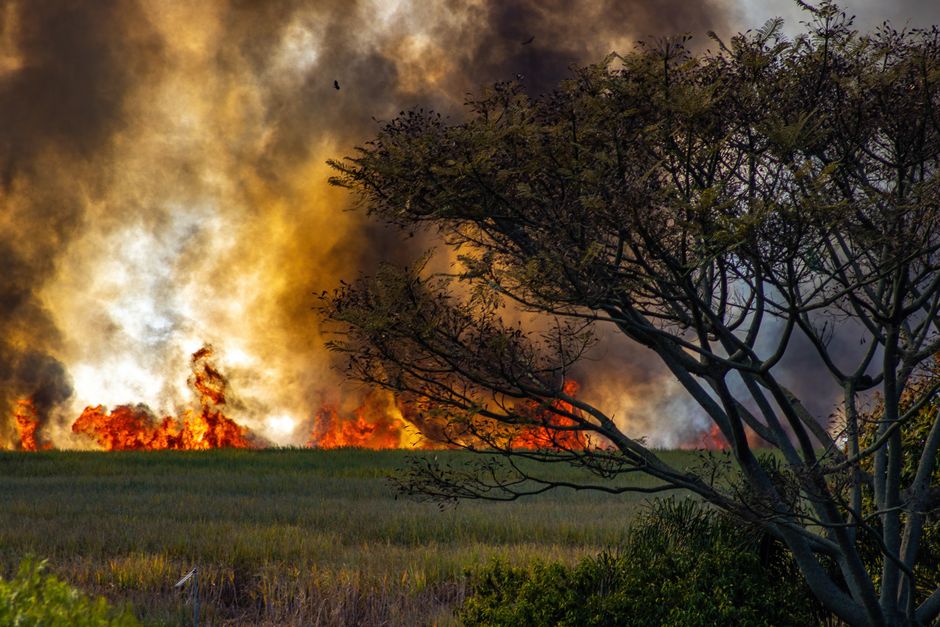
When wildfire smoke arrives, it brings a massive concentration of PM2.5—microscopic particulate matter that is 2.5 microns or smaller in diameter. These tiny particles are highly invasive. While pollen particles are relatively large and tend to settle on the outer surface of your filter, PM2.5 particles embed themselves deep within the microscopic pores of the filter media. This causes rapid airflow restriction.
As the filter becomes choked with a combination of sticky tree pollen, agricultural dust, and fine carbon soot from wildfires, your blower motor has to work up to 15% harder to pull air through the system. This extreme system strain leads to a rapid drop in operating efficiency, higher utility bills, and accelerated wear and tear on sensitive electrical components. Understanding Why You Need a Good Air Filter is the first step in realizing how a simple barrier protects thousands of dollars of mechanical equipment. If you neglect this simple component, you risk discovering How Dirty Air Filters Destroy Your AC in Dusty Climates during a triple-digit Leavenworth heatwave.
How Often to Change Your AC Filter During Wildfire and Pollen Season
Determining exactly how often to change your ac filter during wildfire and pollen season requires moving away from the generic "every three months" advice printed on the back of retail filter packaging. In Central Washington, our calendar is dictated by the environment.
During the spring pollen surge—which usually peaks between April and June as local flora releases heavy blankets of yellow dust—you should perform a visual inspection of your filter every 30 days. For most homes, replacing the filter every 30 to 60 days during peak pollen season is necessary to keep indoor air clean and prevent allergens from settling into your carpets and furniture.
When summer transitions into active wildfire season (typically July through October), the rules change completely. If a wildfire is active in the region and local air quality monitors show moderate to unhealthy levels, you should check your filter every 7 to 14 days. During heavy smoke events where the Air Quality Index (AQI) exceeds 151, a standard one-inch pleated filter can become completely saturated in as little as two to three weeks.
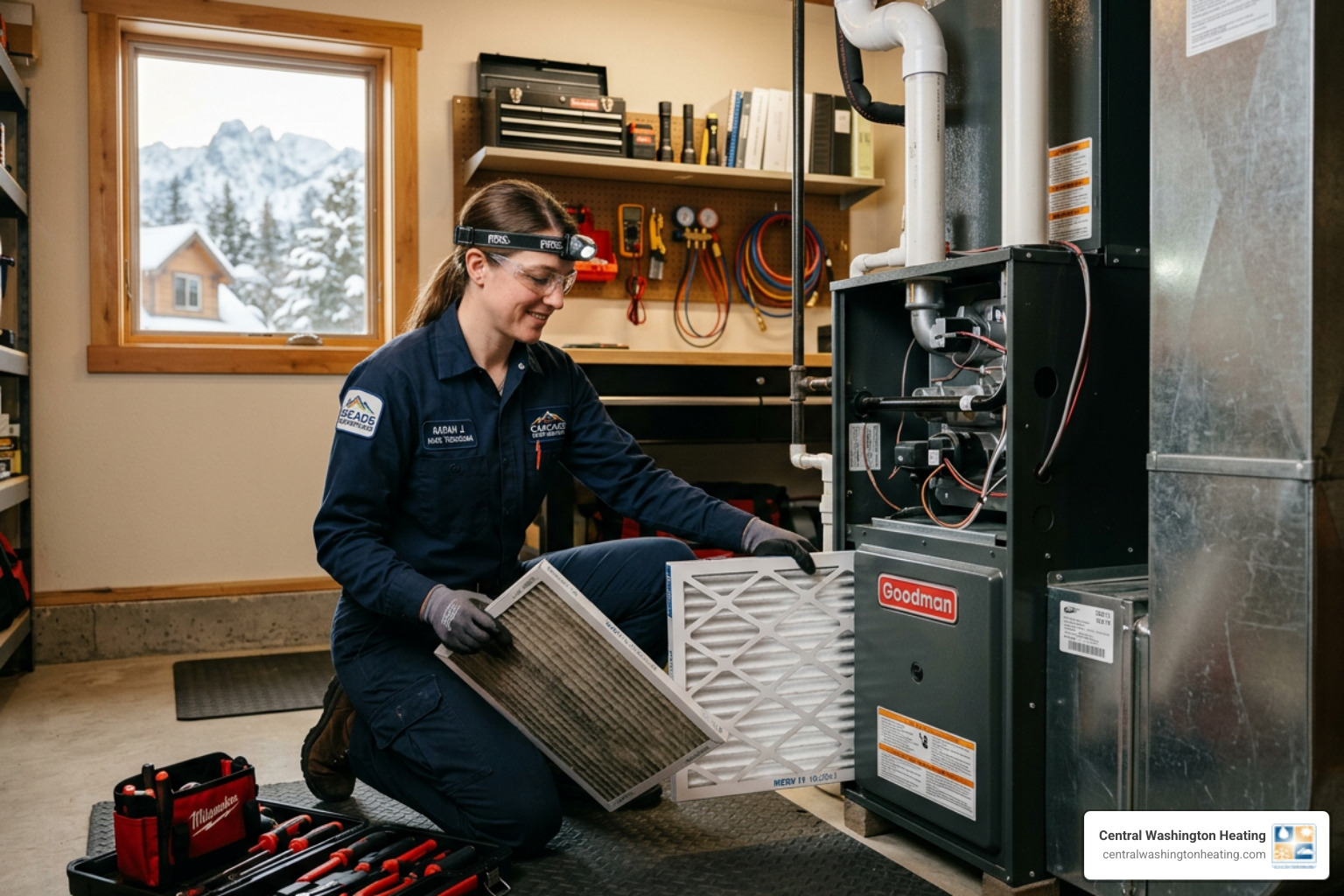
Waiting 90 days during a smoke event is a recipe for system failure. Performing a quick visual inspection is the best way to gauge the true state of your filter. If the filter media has turned a dark, heavy gray or is covered in a visible blanket of soot and dust, it is time for an AC Filter Change.
Determining How Often to Change Your AC Filter During Wildfire and Pollen Season Based on Filter Type
The material and thickness of your filter play a massive role in how frequently it needs to be swapped out during high-pollution seasons:
- Fiberglass Filters: These flat, thin, semi-transparent filters are designed solely to keep large debris like pet hair and carpet fibers out of your HVAC system. They have virtually no ability to capture fine pollen or wildfire smoke. Because they load quickly with large particles but let fine smoke pass right through, they must be replaced every 30 days, though we strongly recommend upgrading to a better material during wildfire season.
- Pleated Filters (1-inch): Made of synthetic fibers woven into pleats to increase surface area, these are the most common residential filters. During normal seasons, they last 60 to 90 days. However, during active wildfire or heavy pollen seasons, their high surface-to-volume ratio means they can clog rapidly. Expect to replace these every 30 days during peak pollution periods.
- Media Filters (4 to 5-inch): These thick, accordion-style filters are housed in a dedicated cabinet next to your air handler. Because they have a massive surface area, they can hold a significant amount of dust and soot before restricting airflow. While they can normally last 6 to 12 months, you should still check them monthly during wildfire season and plan to replace them every 3 to 6 months if our region experiences prolonged smoke.
- HEPA Filters: True High-Efficiency Particulate Air (HEPA) filters capture 99.97% of particles down to 0.3 microns. However, standard residential HVAC blower motors are not designed to handle the extreme airflow resistance of a true HEPA filter. Installing one directly into a standard filter slot can choke your system, leading to frozen coils or a burnt-out blower motor. True HEPA filtration should only be run via dedicated bypass systems or standalone air purifiers.
Adjusting How Often to Change Your AC Filter During Wildfire and Pollen Season for Pets and Allergies
Your household profile is the final piece of the filter-change puzzle. If you share your home with shedding pets, their dander and fur act like a pre-filter, coating the surface of your AC filter and making it even harder for the media to capture fine pollen and smoke. For homes in East Wenatchee or Chelan with one pet, we recommend checking the filter every 20 days and replacing it at least every 45 days. If you have multiple shedding pets, monthly replacement is a must.
For allergy sufferers, asthmatics, or anyone with underlying respiratory health conditions, your filter maintenance schedule must be proactive rather than reactive. Do not wait for the filter to reach its maximum capacity. Replacing your filter every 30 days during high-allergen months ensures that the filter operates at peak efficiency, keeping microscopic irritants out of your breathing zone. Additionally, during the hottest weeks of summer when your air conditioner runs 12 to 15 hours a day, the sheer volume of air passing through the system accelerates particle accumulation, requiring more frequent changes than during mild spring or fall days.
Choosing the Right MERV Rating for Smoke and Pollen Protection
MERV stands for Minimum Efficiency Reporting Value, and the rating scale ranges from 1 to 20. This rating tells you how effective a filter is at trapping particles of various sizes. Choosing the right MERV rating during wildfire and pollen season is a delicate balancing act between air purification and system airflow.
- MERV 8: This is the baseline filter rating we recommend for residential homes. A MERV 8 filter is highly effective at capturing large allergens like mold spores, dust mites, and common pollen. However, it will let a significant portion of fine wildfire smoke pass right through.
- MERV 11: This is the ideal "sweet spot" for most Central Washington homes during high-pollen seasons. It provides superior particle capture—trapping pet dander, fine dust, and a high percentage of pollen—without putting excessive strain on your air conditioner's blower motor.
- MERV 13: This is the minimum rating recommended by the EPA and ASHRAE for capturing the fine PM2.5 particles found in wildfire smoke. A MERV 13 filter is highly efficient at trapping smoke, bacteria, and microscopic droplets. However, because the weave is so tight, it creates higher static pressure (airflow resistance).
Before upgrading to a MERV 13 filter, it is crucial to ensure your HVAC system can handle the added resistance. If your system is older or has restrictive ductwork, a clogged MERV 13 filter can quickly choke the system, leading to frozen coils or motor strain. To learn more about customized filtration options that keep your air clean without risking equipment damage, explore our guide on Features in Home Air Filtration Systems or read our comprehensive Guide to Whole Home Air Filtration.
Signs Your Filter Needs Immediate Replacement
You don't always have to rely on the calendar to tell you when it's time for a fresh filter. Your HVAC system and your home will drop several hints when the filter is overloaded.
The most reliable DIY diagnostic is the light test. To perform this test, turn off your air conditioner, slide the filter out, and hold it up to a bright light source or the afternoon sun. If the light cannot easily pass through the filter media, the filter is choked with fine dust and soot and needs to be replaced immediately.
Keep an eye out for these common warning signs that your filter is clogged:
- Reduced Airflow: If the air blowing from your supply registers feels weaker than usual, a clogged filter is likely restricting the system's intake.
- Dust Accumulation: A sudden increase in dust settling on your countertops, tables, and grilles—especially right after the AC runs—indicates the filter is overloaded and allowing particles to bypass the media.
- Rising Energy Bills: When a filter is clogged, your system runs longer cycles to reach the temperature set on your thermostat, causing a noticeable spike in energy consumption.
- Musty or Smoky Odors: If you notice a lingering smell of stale campfire smoke or musty dust when the system kicks on, the filter has absorbed all the odors it can handle and is now releasing them back into your home.
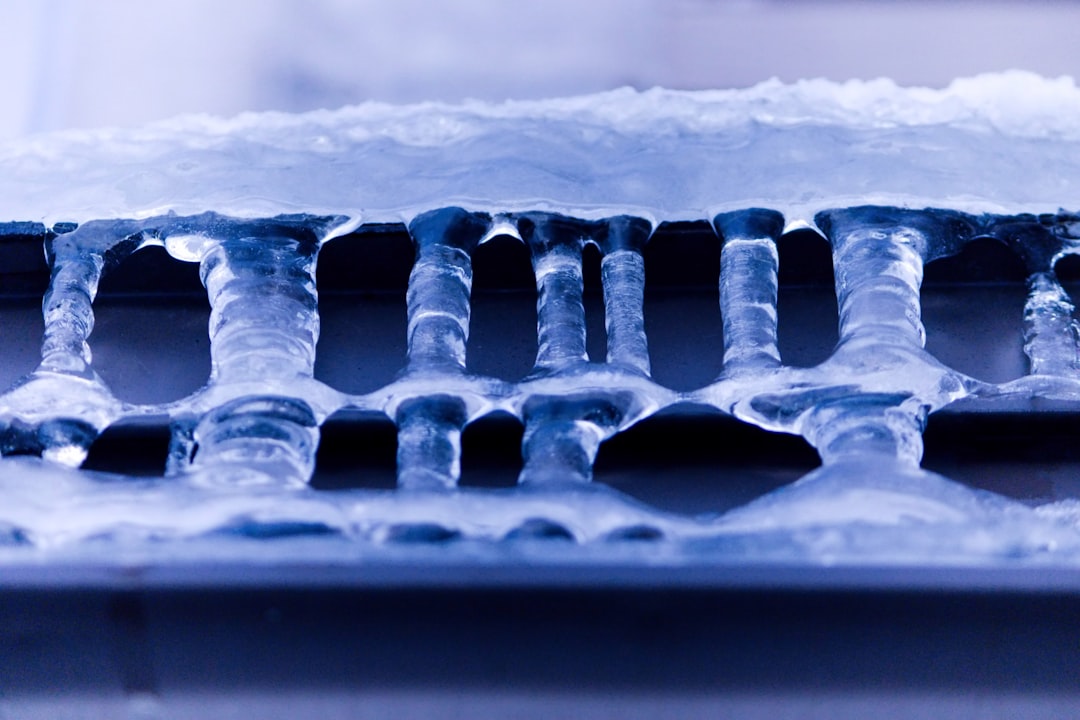
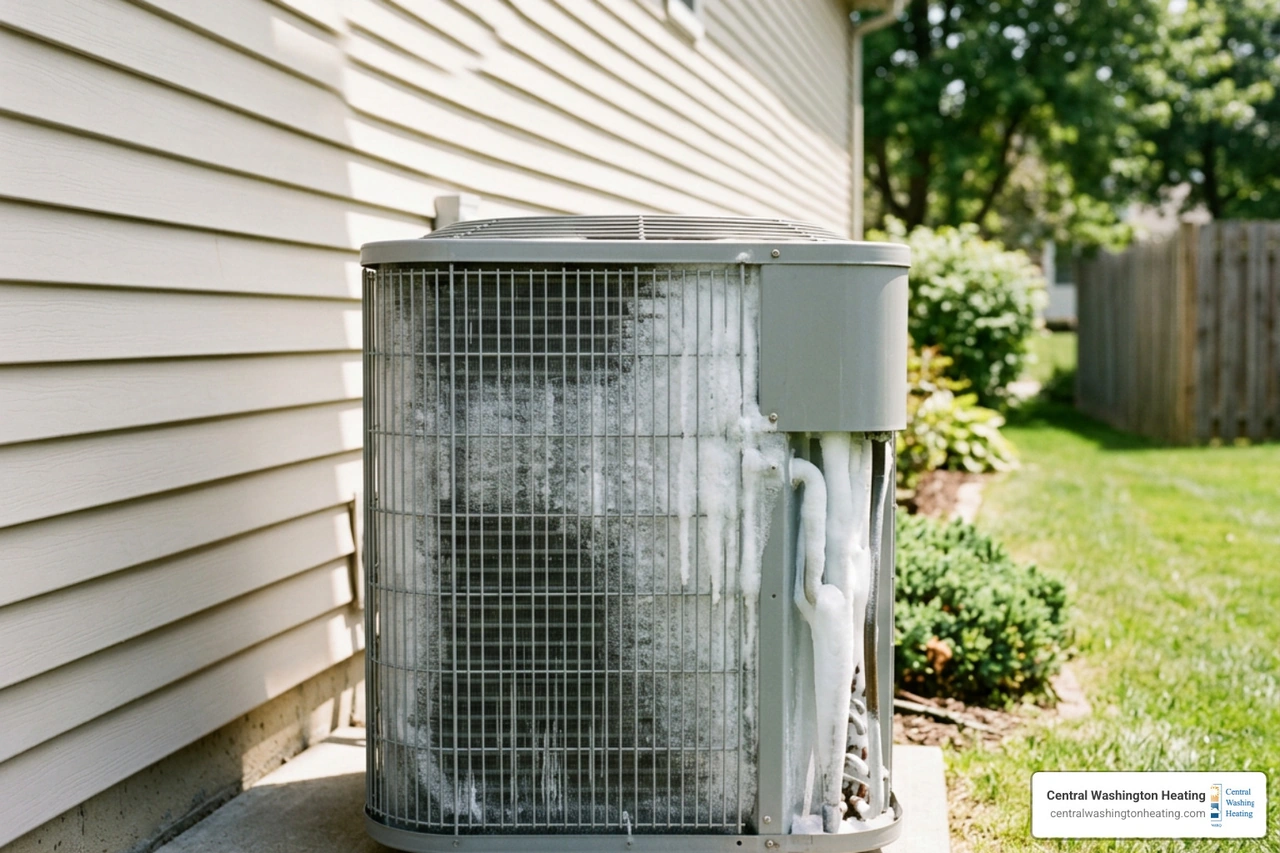
Neglecting these warning signs can lead to serious mechanical issues. For a deeper dive into what to look for, read about the Signs Your Furnace Air Filter Needs Replacing. If left unaddressed, restricted airflow prevents warm indoor air from blowing over your air conditioner’s cold evaporator coils. When this happens, condensation on the coils quickly turns to ice, leading to a complete system freeze-up. Understanding How Dirty Filters Cause Frozen Evaporator Coils can save you from a costly emergency service call during the hottest week of the year.
Additional Steps to Protect Your Indoor Air Quality
While keeping a fresh filter in your air conditioning system is your primary line of defense, managing indoor air quality during severe wildfire and pollen events requires a multi-layered approach. Your HVAC system is designed primarily to control temperature, not to act as an industrial-grade air purifier. To keep your indoor air truly safe when the outdoor AQI climbs into dangerous territory, consider implementing these proactive strategies:
- Create a "Clean Room": Designate one central room in your home—ideally a bedroom—as a sanctuary. Close all windows, seal any drafty gaps under the door with a towel, close the HVAC registers in that room if necessary, and run a dedicated portable HEPA air purifier on high 24/7.
- Run the HVAC Fan Continuously: Normally, your system's fan only runs when the compressor is actively cooling the air. During heavy smoke or pollen events, switch your thermostat's fan setting from "Auto" to "On." This keeps air circulating through your home's filter continuously, even when the system isn't actively cooling.
- Deploy Portable Air Purifiers: Supplement your central system by placing portable air purifiers equipped with true HEPA filters and activated carbon pre-filters in high-traffic areas. The HEPA filter captures the physical smoke particles, while the activated carbon adsorbs the harmful gases, volatile organic compounds (VOCs), and odors that standard filters cannot trap.
- Seal and Protect Your Ductwork: If your home's ductwork has leaks or loose joints, it can pull dusty, smoky air from your attic or crawlspace directly into your living areas, bypassing your AC filter entirely. Ensuring your ducts are tightly sealed prevents this "unfiltered bypass" and keeps your system running quietly and efficiently.
Taking these extra steps can dramatically reduce your family's exposure to seasonal allergens and smoke. If you are interested in exploring advanced solutions, learn more about Enhancing IAQ Air Purifiers and how Whole Home Air Filtration Improves IAQ across our region. When you are ready to make a change, our step-by-step guide on How to Check and Replace Your AC Air Filter will walk you through the process safely.
Frequently Asked Questions About Seasonal Filter Changes
Is it better to use a dirty filter or no filter at all during wildfire smoke?
You should never run your air conditioning system without an air filter, even for a single day. Running your system without a filter allows heavy concentrations of dust, pollen, and sticky wildfire soot to settle directly onto your air conditioner's wet evaporator coils. This creates a perfect breeding ground for mold, rapidly restricts heat transfer, and can cause permanent damage to your blower motor and compressor.
While a partially dirty filter does restrict airflow, it still acts as a vital barrier protecting your expensive mechanical equipment. If you do not have a replacement filter on hand during a severe smoke event, it is better to keep the dirty filter in place as a temporary shield while you source a replacement, rather than running the system completely unprotected.
Can a high-MERV filter damage my AC system?
Yes, if your system is not designed to handle it or if the filter is left in place too long. High-efficiency filters (such as MERV 13 and above) have a very tight weave that naturally creates more resistance to airflow, known in the industry as static pressure.
If your blower motor is older or your ductwork is undersized, a high-MERV filter can cause the blower motor to work significantly harder, leading to overheating, increased energy consumption, and eventual motor failure. To safely use a high-MERV filter during wildfire season, always ensure you check and replace it regularly before it can clog and compound the airflow restriction.
How often should I check my filter during active harvest or smoke events?
During active wildfire events or the peak agricultural harvest season in the Wenatchee Valley, you should visually inspect your air filter every 7 to 14 days. Heavy harvest dust from local orchards and fields can mat across the surface of your filter very quickly, while microscopic wildfire soot can load the internal fibers of the filter media even if the surface looks relatively clean. A quick bi-weekly check ensures you catch a clogged filter before it restricts airflow and strains your cooling system.
Conclusion
Managing how often to change your ac filter during wildfire and pollen season is one of the simplest yet most impactful ways to protect your home's comfort, your family's health, and your cooling equipment. In Central Washington, our beautiful summers come with unique environmental challenges, from heavy tree pollen to seasonal wildfire smoke. Staying proactive with your filter maintenance schedule keeps your indoor air clean and your utility bills manageable.
At Central Washington Heating, we have spent more than 30 years helping homeowners throughout Wenatchee, East Wenatchee, Leavenworth, Cashmere, Chelan, and the surrounding communities stay comfortable in every season. As a local, family-owned business, we understand the specific challenges our climate presents, and our licensed technicians are always ready to help you optimize your home's indoor air quality.
Whether you need a seasonal system tune-up, an upgrade to a whole-home air filtration system, or professional advice on keeping your air clean, we are here to help.
Breathe easier and protect your home's cooling system this season. Reach out to our friendly team to schedule your professional AC Maintenance in Wenatchee, WA today to speak with a local indoor air quality expert.
Latest Insights and Tips
























.svg)


.svg)


