
The Ultimate Survival Guide for Sudden HVAC Failures
Discover what to do when your hvac breaks down unexpectedly: troubleshoot, stay safe, spot emergencies & call pros in Wenatchee Valley.
My heating system just stopped working. What to do when your HVAC breaks down unexpectedly in Wenatchee?
Knowing what to do when your HVAC breaks down unexpectedly can make the difference between a quick fix and a costly, stressful ordeal. Here are the most important steps to take right away:
- Stay calm and assess the situation - Note any unusual sounds, smells, or visible leaks before touching anything.
- Check your thermostat - Verify the mode, temperature setting, and replace batteries if the display is blank.
- Inspect your circuit breaker - Reset any tripped breakers and check the outdoor disconnect switch.
- Replace or check the air filter - A clogged filter is one of the most common causes of sudden shutdowns.
- Look for ice buildup or water leaks - If present, turn the system off immediately to prevent further damage.
- Identify true emergencies - Burning smells, electrical hissing, or electrical issues require an immediate call to a professional.
- Stay comfortable and safe while you wait - Use layers, fans, or a safe electric space heater until help arrives.
Picture this: it's a hot July afternoon in Wenatchee, or a freezing January night in Leavenworth, and your heating or cooling system suddenly goes silent. No warning. No obvious reason. Just discomfort—and fast-rising stress levels.
You are not alone. According to industry data, 70% of homeowners experience an HVAC breakdown during peak seasons, precisely when they need their systems the most. In Central Washington, where summers push temperatures well above 90°F and winters can drop below freezing, a sudden HVAC failure is more than an inconvenience—it can become a real safety concern for your family.
The good news? Many breakdowns are caused by surprisingly simple issues—a tripped breaker, a dirty filter, or a thermostat with dead batteries. In fact, thermostat problems alone account for roughly 40% of all HVAC emergencies. Knowing how to respond quickly and calmly can save you time, money, and a lot of unnecessary worry.
This guide from Central Washington Heating walks you through exactly what to do, step by step, from the moment your system stops working to getting it back up and running safely.
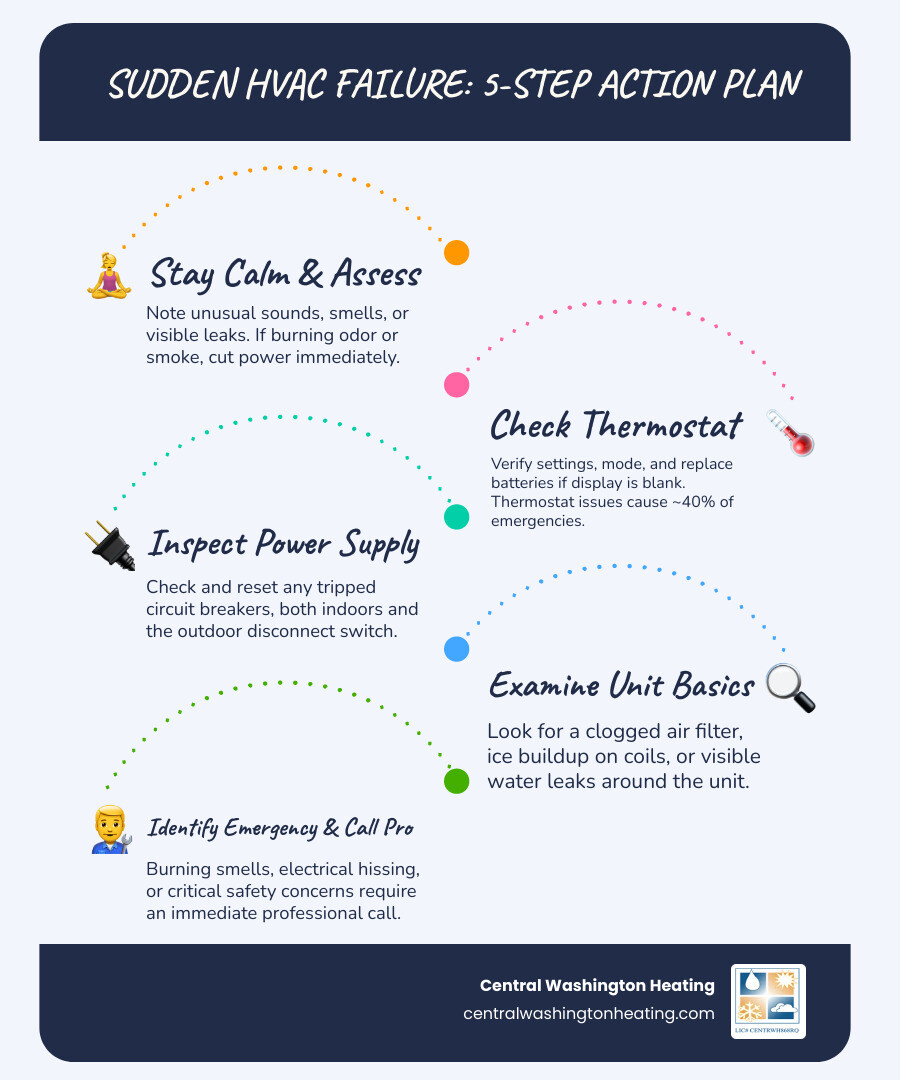
When the air stops moving in your home, the first instinct is often panic. However, the most effective response begins with a calm, systematic assessment. Before you reach for the phone, take a moment to "listen" to your home. Is the outdoor unit making a loud grinding noise? Do you smell something metallic or like burning plastic?
If you detect a burning odor or see smoke, shut off the power at the main electrical panel immediately. This is a critical safety step to prevent electrical fires. If the system is simply unresponsive, start your investigation at the control center of your home: the thermostat. Sometimes, a system "failure" is actually just a communication error between your wall unit and the equipment.
For a deeper dive into diagnosing these initial symptoms, our HVAC Troubleshooter can help you narrow down the possibilities. If you've already determined that the issue is beyond a simple fix and you're located in the Douglas County area, you may need to look into Emergency HVAC Service East Wenatchee to get a technician on the way as soon as possible.
Essential Troubleshooting and System Checks
Before calling for professional help, there are several "quick fixes" that resolve a surprising number of service calls. In April 2026, as we transition between heating and cooling needs in North Central Washington, these checks are especially pertinent.
- The Power Supply: Check your home's electrical panel. HVAC systems pull a significant amount of power, and a simple surge can trip a circuit breaker. Flip the switch fully to "off" and then back to "on" to ensure it is reset.
- Air Filters: We cannot overstate this—dirty air filters are the #1 cause of equipment failure. A clogged filter restricts airflow, causing the motor to overheat and the system to trigger a safety shutdown. If your filter looks like a lint trap, replace it immediately.
- Airflow Restrictions: Ensure all supply vents and return grilles are open and unobstructed by furniture or curtains. Blocked vents can cause pressure imbalances that lead to system freezing.
For more specific guidance on cooling issues, see our guide on AC Unit Troubleshooting.
Assessing the System: What to Do When Your HVAC Breaks Down Unexpectedly
The thermostat is the brain of your HVAC system, and like any brain, it can have a "lapse." About 40% of emergency calls start with a simple thermostat malfunction.
| Feature | Thermostat Issue | Mechanical Failure |
|---|---|---|
| Display | Blank or flickering | Bright and active |
| Settings | Set to "Off" or wrong mode | Set to "Cool" or "Heat" but no response |
| Power | Dead batteries | Tripped breaker or blown fuse |
| Sound | Silent | Grinding, squealing, or humming |
If your display is blank, try replacing the batteries first. Also, ensure the "Mode" is set correctly (Cool for summer, Heat for winter) and the "Fan" is set to "Auto." If you use a modern electric heat pump, you can find specific steps in our guide to Troubleshoot Heat Pump Issues.
Recognizing a True HVAC Emergency
Not every breakdown requires a 2 AM service call, but some situations are genuine emergencies that threaten your property or your health. You should call for immediate professional help if you notice:
- Electrical Hissing or Popping: This indicates a short circuit or failing capacitor, which is a significant fire risk.
- Water Leaks: If you see water pooling around your indoor unit, your condensate line may be backed up. This can lead to mold growth and structural damage to your floors.
- Extreme Temperatures: If the outdoor temperature is below freezing (common in Chelan or Waterville winters) or above 95°F, a lack of climate control is a health emergency for children, seniors, and pets.
- Total System Shutdown: If you've checked the breakers and the thermostat and the system remains lifeless.
For those using electric heat pumps, our Emergency Heat Pump Repair Guide offers specific advice for these versatile systems.
Staying Safe and Comfortable While You Wait
Once you've made the call for service, your priority shifts to maintaining a safe environment until the technician arrives. In the Wenatchee Valley, temperatures can swing wildly, so preparation is key.
In the Summer (AC Failure):
- Close all blinds and curtains on the sunny side of the house to block radiant heat.
- Use ceiling fans and portable fans to create a cross-breeze.
- Stay hydrated and avoid using the oven or dryer, which add heat to the home.
- If the heat becomes unbearable, consider moving to a basement or a lower level of the home.
In the Winter (Heating Failure):
- Dress in layers and gather everyone in a single, central room to preserve body heat.
- Seal drafts around doors and windows with towels.
- Use safe, electric space heaters—but never leave them unattended or plug them into extension cords.
- Open cabinet doors under sinks to allow warmer indoor air to reach your plumbing, preventing frozen pipes.
For residents in Malaga or surrounding areas, we offer 24-Hour AC Repair Services to ensure you aren't left in the heat for long.
Protecting Your Family: What to Do When Your HVAC Breaks Down Unexpectedly
Vulnerable family members, including the elderly, infants, and those with chronic health conditions, are at the highest risk during an HVAC failure. Heat exhaustion can set in quickly during a Central Washington heatwave, while hypothermia is a concern during our snowy winters.
If your home is in Leavenworth and your system fails during a cold snap, don't wait to see if it "fixes itself." Review our Troubleshooting AC Problems (which covers many common system-wide issues) or call us immediately. Your family’s safety is the top priority.

Preventing Future Failures with Proactive Care
The best way to handle an HVAC emergency is to prevent it from ever happening. Statistics show that homeowners who invest in regular maintenance are 50% less likely to experience a sudden breakdown. Furthermore, a well-maintained system operates 15-20% more efficiently, which translates directly to lower monthly energy bills.
A professional tune-up involves cleaning the coils, checking refrigerant levels (which can only be done by licensed pros), inspecting electrical connections, and ensuring the blower motor is running smoothly. For our neighbors in Wenatchee, searching for AC Repair Near Me Wenatchee is a great start, but scheduling that maintenance before the season starts is even better.
Electric heating systems and heat pumps are robust, but they do require consistent care to reach their full 15-20 year lifespan. Neglected systems often fail in half that time.
Frequently Asked Questions
When should I avoid DIY repairs and call a professional?
While checking a battery or a breaker is safe for most homeowners, you should never attempt to open the electrical cabinets of your HVAC unit or handle refrigerant. These tasks require specialized tools and licensing. If you hear loud mechanical noises or smell electrical burning, it is time to put down the screwdriver and call a professional.
What information should I have ready for the technician?
To speed up the repair process, have the following ready when you call:
- The make and model of your system (usually found on a metal plate on the unit).
- A description of the symptoms (e.g., "it's making a screeching sound" or "the fan is spinning but the air isn't cold").
- Any error codes displayed on your smart thermostat.
- The approximate age of the system.
How does regular maintenance prevent emergency breakdowns?
During a maintenance visit, technicians can identify small issues—like a fraying belt or a worn capacitor—before they cause a total system failure. It's much easier (and often more affordable) to replace a small part during a scheduled visit than to replace a major component during an emergency at 2 AM.
Conclusion
Facing a sudden HVAC failure is never easy, but with the right plan, it doesn't have to be a disaster. By following these steps—staying calm, performing basic checks, and knowing when to call in the experts—you can protect your home and your family from the extremes of Central Washington weather.
At Central Washington Heating, we bring over 30 years of expertise to every home we visit. As a family- and veteran-owned business, we understand the importance of trust and reliability. Whether you are in Cashmere, Chelan, Leavenworth, or Wenatchee, our licensed technicians are ready to provide the high-quality craftsmanship and fast response you deserve. We specialize in quiet, efficient electric heating and cooling systems tailored to the unique needs of the Wenatchee Valley.
Don't let a breakdown ruin your day. Request Service Today to restore your home's comfort and safety. We are here to keep you comfortable, no matter what the weather brings.
Written by the Central Washington Heating and Air team
The techs and comfort advisors who've kept the Wenatchee Valley heated, cooled, and breathing easy for 30+ years — family & veteran owned, with 40+ years of combined industry experience.
- Licensed & insured · LIC# CENTRWH742JN
- Daikin Comfort Pro certified
- Wenatchee, WA
Last updated July 29, 2026
Ready for comfort you can count on?
Schedule service, request a free estimate, or call now for 24/7 emergency help. Our team is standing by across the Wenatchee Valley.
Get started today
Free estimates on installs · no-pressure, written quotes
Schedule My ServiceCall (509) 776-0247Mon–Fri: 8:00 AM – 4:30 PM · 24/7 for emergencies
Already have a quote? Get a free second opinion →