
The Homeowner's Guide to Surviving a 24-Hour HVAC Emergency
HVAC emergency in Wenatchee? Get expert tips on 24 hour emergency hvac repair what to know to stay safe & comfortable.
When Your HVAC Fails: What Every Central Washington Homeowner Should Know First
24 hour emergency hvac repair what to know comes down to a few key facts: not every HVAC problem is an emergency, but some absolutely are — and knowing the difference can protect your health, your home, and your comfort.
Here’s a quick overview of what matters most:
- True emergencies include complete heating or cooling failure during extreme temperatures, burning smells, electrical issues, or refrigerant leaks
- Act immediately if you smell burning, see sparks, or suspect a electrical safety issue — shut the system off and call for help
- Basic checks first — verify your thermostat settings and check your circuit breaker before calling
- Don’t delay — small HVAC problems can lead to total system failure if left unaddressed, especially during peak seasons
- 24/7 service exists — licensed technicians are available around the clock, including nights, weekends, and holidays
- Be prepared — have your system information ready when you call for emergency assistance
Here in the Wenatchee Valley, HVAC systems don’t pick convenient times to fail. Summer heat waves and hard Central Washington winters put real strain on your heating and cooling equipment — and 70% of homeowners nationwide experience a breakdown during the exact seasons they need their systems most. That’s not a coincidence. It’s the nature of HVAC systems pushed to their limits.
Whether your AC stops cooling on a 100°F afternoon in Wenatchee or your electric heating system quits during a freezing January night in Leavenworth, knowing what to do in the first few minutes matters. This guide walks you through everything — what counts as a real emergency, what to do right now, how to find reliable help, and how to avoid being in this situation again.
What Qualifies as an HVAC Emergency?
One of the most common questions we hear is: “Does this really need a midnight service call, or can it wait until Monday morning?” Understanding what qualifies as an AC emergency is the first step in managing your home’s comfort and safety.
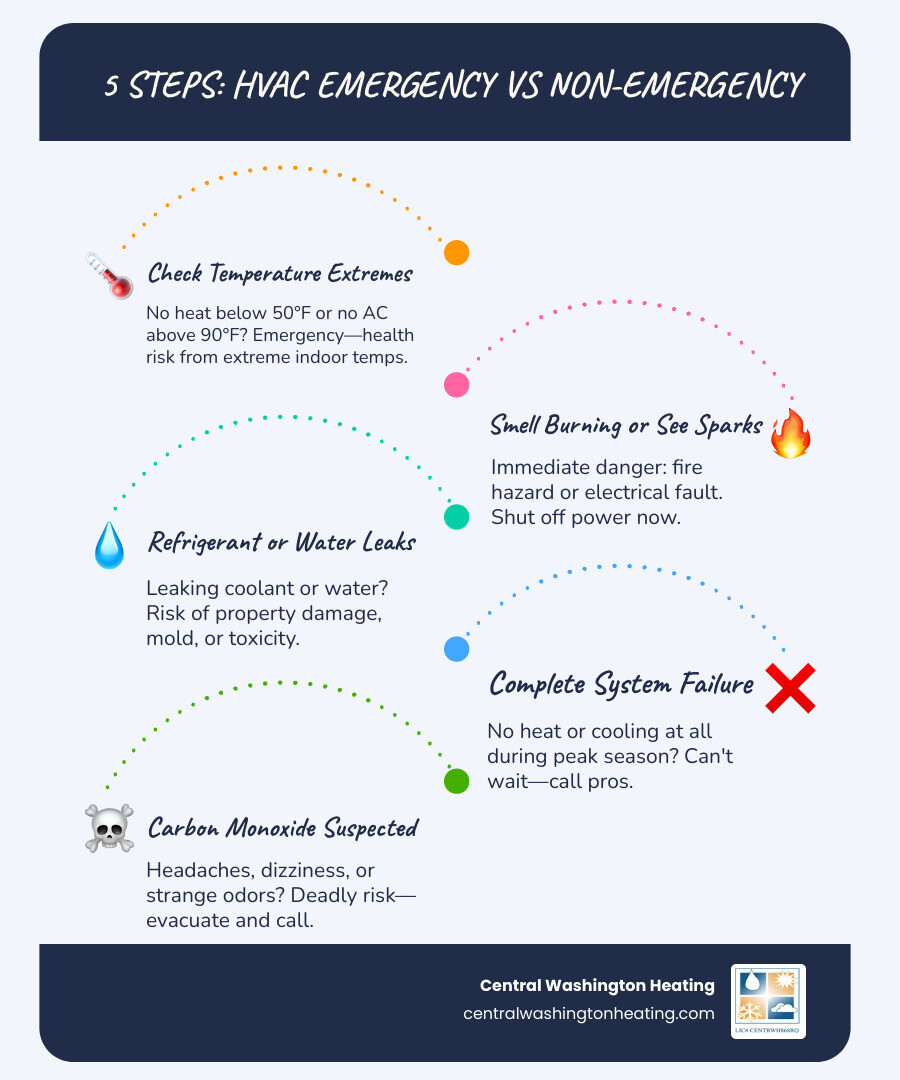
Generally, an HVAC issue becomes an emergency when it poses a direct threat to your health, your safety, or the structural integrity of your property. If the temperature outside is mild and you’re just slightly uncomfortable, it might not be an emergency. However, if the Wenatchee Valley is under a heat dome or a deep freeze, the situation changes instantly.
Emergency vs. Non-Emergency Scenarios
| Scenario | Emergency? | Why? |
|---|---|---|
| Complete System Failure | Yes (in extreme weather) | Risk of heat stroke or frozen pipes. |
| Burning Smell or Sparks | Yes | Immediate fire hazard. |
| Loud Banging/Screeching | Yes | Risk of catastrophic mechanical failure. |
| Minor Water Drip (AC) | No | Can usually wait for business hours if contained. |
| Reduced Airflow | No | Requires a scheduled maintenance visit. |
| Refrigerant Leak | Yes | Health hazard and environmental risk. |
Health Risks and Safety Hazards
When the heat index in Central Washington rises above 90°F, the risk of heat exhaustion begins to climb. Once it hits 103°F, the risk of heat stroke becomes significantly higher. For the elderly, young children, or those with underlying health conditions, a lack of cooling isn’t just an inconvenience; it’s a medical emergency.
Similarly, if you notice electrical issues—such as a circuit breaker that keeps tripping or a burning smell coming from your vents—you should treat this as a high-priority safety hazard. Electrical malfunctions in HVAC units are a leading cause of home fires. If you see smoke or sparks, shut off the power at the main breaker immediately and call for professional help.
24 Hour Emergency HVAC Repair What to Know for Wenatchee Homeowners
When you’re facing a breakdown, you need to know that help is available regardless of the hour. We understand that the climate in towns like Cashmere, Entiat, and Malaga can be unforgiving. That’s why 24-hour AC repair in Wenatchee, WA is a cornerstone of local home services.
As a veteran-owned business with over 30 years of experience, we’ve seen it all. From the middle of the night in East Wenatchee to a holiday weekend in Leavenworth, rapid response is essential. When looking for 24-hour AC repair in East Wenatchee, WA, ensure you are choosing licensed experts who arrive in fully stocked trucks. This ensures that most repairs can be completed on the spot, rather than waiting days for a part to arrive.
24 Hour Emergency HVAC Repair What to Know for Summer Cooling
In April 2026, as we prepare for the coming summer, AC units often fail when they are working their hardest. If your system is blowing warm air or won’t turn on at all during a heat wave, you may need 24-hour A/C repair in Chelan, WA.
Common summer emergencies include:
- Refrigerant Leaks: These reduce cooling efficiency and can damage the compressor. Signs include hissing sounds and ice on the coils.
- Frozen Evaporator Coils: Often caused by restricted airflow or low refrigerant, this can lead to a total system shutdown.
- Electrical Failures: Overheated motors or damaged wiring can create a burning smell.
If you are in the mountains and need 24-hour A/C repair in Leavenworth, WA, don’t wait for the indoor temperature to become dangerous. High humidity and heat can also lead to mold growth if the AC isn’t pulling moisture from the air properly.
24 Hour Emergency HVAC Repair What to Know for Winter Heating
Winter in Central Washington brings its own set of challenges. Since we focus on electric heating solutions, homeowners should be aware of specific issues related to electric air handlers and heat pumps. If your home is plummeting toward freezing temperatures, it’s time to consult an emergency air handler repair Wenatchee, WA guide.
Key winter emergencies include:
- Defrost Cycle Failure: Heat pumps naturally frost over in winter, but they should have a defrost cycle to melt that ice. If your unit is encased in a block of ice and not providing heat, you need a professional.
- Electric air handler Failure: If the heating elements burn out or the blower motor fails, your home will lose heat rapidly.
- Heat Pump Emergency Heat Issues: If your heat pump can’t keep up and the “emergency heat” (backup electric strips) isn’t kicking in, you’ll need 24-hour air handler repair in Cashmere, WA.
For those in outlying areas, having a reliable contact for 24-hour air handler service in Waterville, WA can be the difference between a cozy night and a dangerous situation involving frozen pipes.
Before you pick up the phone, there are a few things you should do to ensure your safety and potentially save yourself a service call.
- Safety First: If you smell burning, see smoke, or hear loud electrical buzzing, go straight to your electrical panel and shut off the breaker for the HVAC system.
- Thermostat Verification: It sounds simple, but about 40% of HVAC emergencies actually stem from thermostat issues. Check if the screen is blank. If it is, it might just need new batteries. Ensure it’s set to “Cool” in summer or “Heat” in winter and that the temperature setting is correct.
- Check the Circuit Breaker: Sometimes a power surge can trip the breaker. Reset it once. If it trips again immediately, do not reset it a second time—this indicates a serious electrical fault.
- Inspect the Air Filter: A completely clogged filter can cause a air handler to overheat and shut down, or an AC coil to freeze. If it looks like a thick wool blanket, replace it.
- Clear Debris: For heat pumps, ensure the outdoor unit isn’t buried in snow or blocked by fallen leaves. Airflow is vital for the heat exchange process.
For more detailed advice, check out these emergency heat pump maintenance tips for East Wenatchee. If these basic checks don’t work, refer to an emergency heat pump repair guide and call the pros.
While waiting for a technician, stay hydrated and use temporary comfort measures like fans or space heaters (used safely and never left unattended).
The Risks of Delaying Emergency HVAC Repair
It can be tempting to wait until “regular” hours, but delaying a true emergency can lead to much more extensive damage down the road.
Property Damage and Mold
An AC unit that is leaking water isn’t just a nuisance. If the condensate drain is clogged, water can back up into your home, damaging drywall, flooring, and insulation. In the humid periods of a Central Washington summer, this standing moisture can lead to mold growth in as little as 24 to 48 hours. Seeking emergency 24-hour AC repair can prevent a simple fix from turning into a major home restoration project.
Health Complications
We cannot overstate the risk of heat-related illness. In 2023, heat-related fatalities surpassed deaths from tornadoes, floods, and hurricanes combined. If your AC fails during a heat wave, your body may not be able to cool itself down, leading to heat exhaustion or heat stroke. This is especially true if indoor temperatures exceed 95°F.
System Burnout
Ignoring “minor” symptoms like a grinding noise or a system that “short cycles” (turns on and off rapidly) can lead to a total system burnout. A small electrical issue or a failing capacitor is a relatively easy fix. However, if left unaddressed, these issues can put too much strain on the compressor—the “heart” of your system. Replacing a compressor is one of the most complex repairs possible. As noted in the emergency heat pump repair guide for Cashmere, acting early saves your equipment.
Preventing Future Breakdowns with Regular Maintenance
The best way to handle an HVAC emergency is to prevent it from ever happening. Statistics show that homeowners who schedule regular maintenance are 50% less likely to experience an emergency breakdown.
As we move through April 2026, now is the perfect time for a spring tune-up. A well-maintained system operates 15-20% more efficiently and can last up to 20 years. In contrast, neglected systems often fail after just 8 to 10 years.
During a professional maintenance visit, we look for:
- Electrical Connections: Tightening loose wires prevents those scary burning smells later.
- Refrigerant Levels: Ensuring your system is properly charged prevents coil freezing.
- Customized Ductwork: We check for leaks in your ducts that force your system to work harder than it should.
- Cleaning: Removing dust and debris from coils and blowers improves indoor air quality and system health.
For those with heat pumps, following emergency heat pump maintenance tips year-round ensures the defrost cycle and reversing valve are ready for the winter chill.
Frequently Asked Questions about Emergency HVAC
What is considered a “dangerous” indoor temperature?
According to health experts, dangerous heat conditions begin when the heat index exceeds 90°F. If your indoor temperature stays above 95°F for extended periods, it is considered an emergency. On the flip side, if your indoor temperature drops below 50°F in the winter, you are at risk for health issues and your home is at risk for frozen pipes.
How do I know if my heat pump needs emergency repair?
If you see thick, dark smoke or smell a sharp, acrid “burning plastic” odor, shut it down immediately. If the unit is completely covered in ice and your home is cold, the defrost cycle has likely failed. Also, look out for loud metal-on-metal grinding noises, which indicate a failing motor.
What should I do if I smell a burning odor from my vents?
First, determine if it’s just the “dust-off” smell. If you haven’t turned your heater on in months, a slight dusty smell for the first 10 minutes is normal. However, if the smell is strong, persistent, or smells like electrical ozone or burning rubber, shut off the power at the breaker and call for emergency service immediately. It could be a failing blower motor or a wiring issue.
Conclusion
Surviving an HVAC emergency in the Wenatchee Valley is all about preparation and quick action. Whether you are in Leavenworth, East Wenatchee, or right here in Wenatchee, you don’t have to face a system failure alone. With over 30 years of local expertise, Central Washington Heating is committed to keeping our neighbors comfortable and safe.
We are a family- and veteran-owned business that understands the value of hard work and reliable service. We offer 24/7 emergency support because we know that your home’s comfort doesn’t follow a 9-to-5 schedule.
Don’t wait for a small problem to become a total system failure. If you’re experiencing any of the red flags mentioned in this guide, reach out to the experts who know the Wenatchee Valley best.
Dealing with an HVAC emergency? Request Emergency HVAC Service in East Wenatchee, WA to get your comfort back on track!

Written by the Central Washington Heating and Air team
The techs and comfort advisors who've kept the Wenatchee Valley heated, cooled, and breathing easy for 30+ years — family & veteran owned, with 40+ years of combined industry experience.
- Licensed & insured · LIC# CENTRWH742JN
- Daikin Comfort Pro certified
- Wenatchee, WA
Last updated July 29, 2026
Ready for comfort you can count on?
Schedule service, request a free estimate, or call now for 24/7 emergency help. Our team is standing by across the Wenatchee Valley.
Get started today
Free estimates on installs · no-pressure, written quotes
Schedule My ServiceCall (509) 776-0247Mon–Fri: 8:00 AM – 4:30 PM · 24/7 for emergencies
Already have a quote? Get a free second opinion →