
When to Call the HVAC Cavalry
Learn when an HVAC failure is a true emergency: electrical hazards, extreme weather, health risks. Call 24/7 pros now!
Is Your HVAC Acting Up? Here’s When It’s a True Emergency
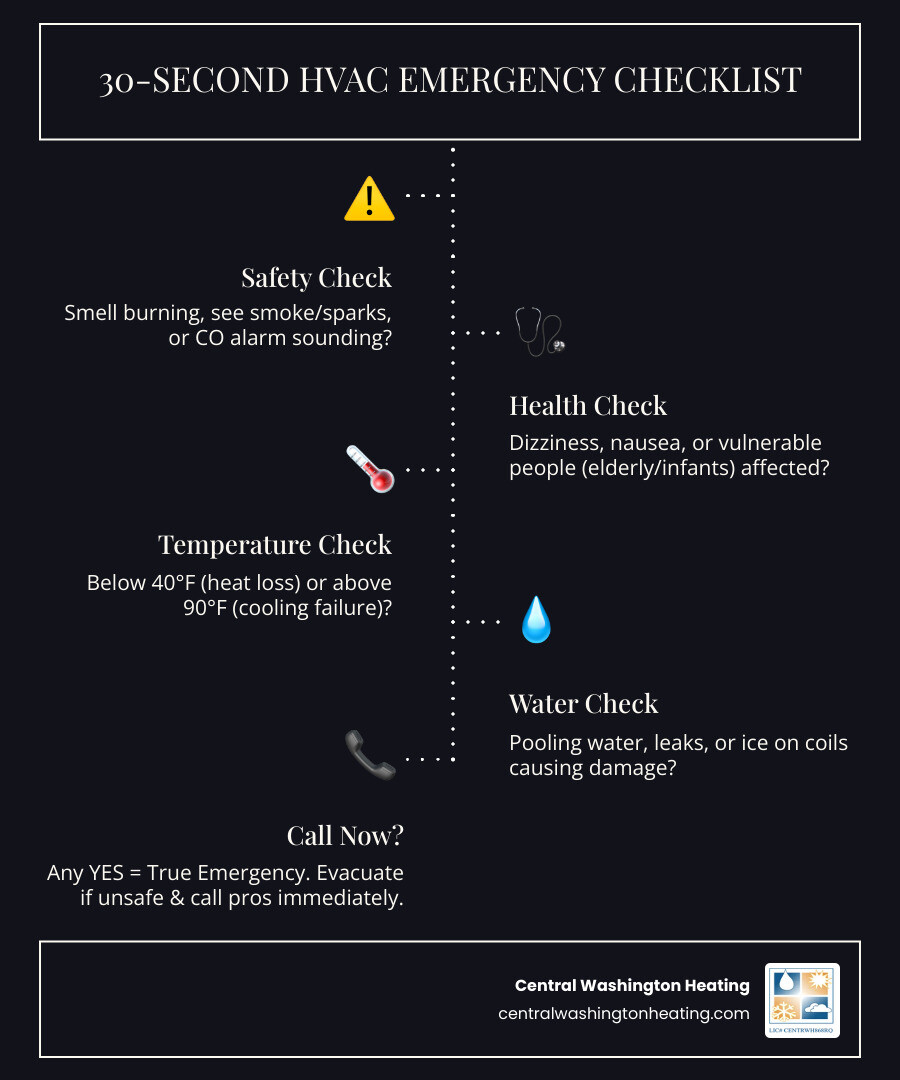
When an HVAC failure is a true emergency comes down to one simple rule: if it threatens your safety, your health, or your home’s structure, it cannot wait.
Here’s a quick breakdown of situations that qualify as true HVAC emergencies:
- Electrical hazards – burning smells, sparking components, or a breaker that keeps tripping
- Electrical safety concerns – symptoms like dizziness, nausea, or headaches near your heating system
- Total heat loss in freezing temps – outdoor temperatures at or below 40°F, risking frozen or burst pipes
- Total cooling failure in extreme heat – outdoor temperatures at or above 90°F, especially with elderly residents, infants, or anyone with a medical condition
- Significant water leaks – pooling water near your indoor unit that could cause structural damage or mold
- Refrigerant leaks – hissing sounds combined with ice buildup on your system
If none of those apply? You’re likely dealing with an inconvenience, not an emergency — and it can probably wait for a regular service appointment.
It’s 10 PM on a July night in Wenatchee, and your air conditioner just quit. Inside, it’s climbing past 85°F. Is that an emergency, or can it wait until morning? For most healthy adults in mild conditions, it might wait. But if you have a young child, an elderly parent, or outdoor temps pushing triple digits — that’s a different story entirely.
Knowing when an hvac failure is a true emergency isn’t just about comfort. In Central Washington, where summer heat regularly tops 100°F and winter nights can drop well below freezing, a failed system can quickly become a health or safety crisis. According to the CDC, unintentional electrical safety poisoning sends over 100,000 Americans to emergency departments every year — and a malfunctioning heating system is one of the most common culprits.
This guide will walk you through exactly which HVAC failures demand an immediate call, which can wait, and what steps to take right now if you’re not sure.
The “Safety First” Rule: When an HVAC Failure is a True Emergency
At Central Washington Heating, we’ve seen it all—from minor hiccups to major catastrophes. We always tell our neighbors in East Wenatchee and Leavenworth that your gut instinct is a powerful tool. If something smells, looks, or sounds dangerous, it probably is. Safety isn’t just a priority; it’s the only thing that matters when your system starts acting erratic.
A true emergency is any situation that puts your family at risk of fire, poisoning, or injury. For instance, if you notice a Air handler Electrical safety alarm going off, that is not the time to check your thermostat batteries. It is the time to get everyone out of the house immediately. Electrical safety is a silent, odorless killer, and in systems like electric air handlers or heat pumps, while less common than in fuel-burning systems, electrical malfunctions can still lead to dangerous off-gassing or smoke.
Identifying when an hvac failure is a true emergency due to electrical risks
Electrical issues are among the most common reasons we provide Emergency 24-Hour AC Repair. Your HVAC system pulls a significant amount of power. When something goes wrong with the wiring or the capacitor, it doesn’t just stop cooling; it can become a fire hazard.
Keep an eye (and a nose) out for these red flags:
- The “Ozone” Smell: If you smell something metallic or like burnt plastic, your motor might be overheating or wires could be melting.
- Tripped Breakers: If your HVAC system trips the circuit breaker once, it might be a fluke. If it happens again immediately after you reset it, stop. Do not flip it back on. This is a safety mechanism telling you there is a short circuit or a massive power surge that could start a fire.
- Buzzing or Humming: While some noise is normal, a loud, angry buzzing often points to an electrical failure in the contactor or the compressor.
If you encounter these, shut the system off at the breaker and use our Emergency Air handler Repair Wenatchee WA Guide to understand the next steps while the cavalry is on the way.
Visible signs of immediate system danger
Sometimes, the emergency is staring you right in the face. If you see smoke billowing from your outdoor condenser in Cashmere or sparks flying from your indoor air handler in Chelan, the situation has escalated beyond a “repair” and into a potential fire emergency.

Scorched wiring or visible soot around the electrical connections of your heat pump are clear indicators of a “near-miss” fire. Even if the system is still running, these signs mean the components are failing under high heat. Ignoring this could lead to a total loss of the equipment—or worse, your home. If you see flames or heavy smoke, call 911 first, then call us for an Emergency Heat Pump Repair East Wenatchee Guide consultation once the immediate danger is cleared.
Extreme Weather and Health Vulnerabilities
In Central Washington, our weather is beautiful but can be brutal. We live in a region where “mild” is a relative term. When we talk about when an hvac failure is a true emergency, we have to look at the thermometer.
Generally, if the outdoor temperature is above 90°F or below 40°F, a total system failure moves into the emergency category. Your home acts like an oven or a refrigerator depending on the season. Without a functioning HVAC system, indoor temperatures can reach dangerous levels within just a few hours.
When an hvac failure is a true emergency for vulnerable residents
For a healthy adult, a 85-degree house is miserable. For an infant, a senior citizen, or someone with a chronic medical condition, it can be life-threatening. Heat stroke and dehydration can set in quickly during a Wenatchee heatwave.
If you have vulnerable family members at home, you should check out our resource on What Qualifies as AC Emergency. We prioritize these calls because we know that “sweating it out” isn’t an option for everyone. Similarly, in the winter, the risk of hypothermia is real if your electric heating system fails when it’s 20°F in Entiat. If you find yourself in this spot, don’t hesitate to use our Emergency Heating Repair Ardenvoir Guide to stay safe while we head your way.
Property protection during freezing temperatures
It’s not just people who are at risk during a winter HVAC failure—it’s your house. When your heating system dies and the indoor temperature drops below 50°F, your plumbing is in jeopardy. Frozen pipes can burst, leading to significant water damage and mold remediation.
If your heat goes out in the dead of winter:
- Open cabinet doors under sinks to allow room air to reach the pipes.
- Drip your faucets to keep water moving.
- Call for 24/7 Air handler Repair in Ardenvoir WA immediately.
Most homes in our area are well-insulated, but that insulation only buys you about 8 to 12 hours of safety. Once that window closes, the risk to your property skyrockets.
Critical Mechanical Failures and Property Risks
Not every emergency involves fire or freezing. Some are “slow-motion” disasters that can ruin your floors, walls, and equipment if not caught in time. Mechanical failures often give us warnings through sound and smell before they completely give up the ghost.
Recognizing when an hvac failure is a true emergency via sound and smell
Your HVAC system should be seen and not heard (mostly). If it starts making sounds that remind you of a car crash or a construction site, something is very wrong.
- Grinding Metal: This usually means the bearings in your blower motor or fan have failed. If you keep running the system, the motor will eventually seize or overheat.
- Loud Banging: This could indicate a loose component or a broken fan blade.
- Sulfur or “Rotten Egg” Smells: In electric systems, this can sometimes be a sign of a dead animal in the ductwork or a specific type of electrical component failure.
If your system is screaming at you, turn it off. Continuing to run a failing mechanical system can turn a simple part replacement into a total system replacement. For those in East Wenatchee, our Emergency Heat Pump Installation Guide East Wenatchee WA can help you decide if your system is past the point of no return.
The danger of frozen evaporator coils
It sounds like a contradiction—how can an air conditioner freeze in the middle of a 100-degree July in Malaga? Frozen evaporator coils are a serious emergency because they indicate a major issue with airflow or refrigerant levels.
When coils freeze, they turn into a solid block of ice. This forces the compressor to work much harder than it was designed to, which can lead to a “slugging” failure where liquid refrigerant enters the compressor and destroys it. If you see ice on your indoor or outdoor units, or if you hear a hissing sound (which often indicates a refrigerant leak), shut the system down. You can find more details in our Emergency Heat Pump Repair Cashmere WA Guide.
Troubleshooting Before Requesting Emergency Service
We love helping our customers, but we also love saving you an unnecessary service call! Before you hit the panic button, there are a few “homeowner-level” checks you can perform. Sometimes, the fix is as simple as a flipped switch or a dead battery.
| Symptom | Potential Quick Fix | When to Call Us |
|---|---|---|
| System won’t turn on | Check thermostat batteries and settings | If batteries are fresh and settings are correct, but it’s still dead |
| No airflow | Replace a clogged air filter | If the filter is clean but the fan isn’t spinning |
| System is “Short Cycling” | Check for blocked vents or a dirty filter | If it continues to turn on and off every few minutes |
| Warm air from AC | Ensure the outdoor breaker isn’t tripped | If the outdoor unit is running but air is still warm |
If you’ve checked the basics and the system still isn’t behaving, it’s time to call the professionals. Residents in Dryden can refer to our Emergency Air handler Maintenance in Dryden WA for more localized tips on keeping electric systems running smoothly.
One of the most common “non-emergency” emergencies we see is a simple thermostat malfunction. In fact, about 40% of HVAC emergencies actually start with the thermostat! Before you call for Emergency HVAC Service East Wenatchee WA, make sure your thermostat is set to the correct mode (Cool or Heat) and that the set temperature is actually lower (for AC) or higher (for heat) than the current room temp.
Frequently Asked Questions About HVAC Emergencies
What temperature is considered an HVAC emergency?
In our neck of the woods, we generally define an emergency by the 90/40 rule. If it is 90°F or hotter outside, a loss of cooling is an emergency because of the risk of heat exhaustion. If it is 40°F or colder, a loss of heating is an emergency due to the risk of frozen pipes and hypothermia. However, if you have infants or elderly residents, these thresholds may be even tighter.
Can a thermostat malfunction cause a total system failure?
Absolutely. Since the thermostat is the “brain” of your HVAC system, if it fails, the “body” won’t know what to do. A blank screen, a loose wire, or even just old batteries can make it seem like your entire system has kicked the bucket. Always check the power to your thermostat first!
How does regular maintenance prevent emergency breakdowns?
The statistics don’t lie: homeowners who invest in regular maintenance are 50% less likely to experience a total emergency breakdown. During a tune-up, our technicians look for the small things—frayed wires, worn capacitors, and dirty coils—that eventually turn into 2 AM emergencies. Think of it like an oil change for your car; you do it now so you aren’t stranded on the side of the road later.
Conclusion
Determining when an hvac failure is a true emergency can be stressful, but you don’t have to make that call alone. At Central Washington Heating, we are a veteran-owned and family-operated business that treats your home like our own. We’ve been serving the Wenatchee Valley for over 30 years, and we know exactly what our local climate demands from your heating and cooling systems.
Whether you’re dealing with a mysterious burning smell in Waterville or a total system blackout in Monitor, our licensed technicians are available 24/7 to get your comfort back on track. We specialize in quiet, efficient systems and customized ductwork that ensures your home stays peaceful while it stays comfortable.
Don’t wait for a small problem to become a catastrophe. If you suspect your HVAC failure is an emergency, or if you just want the peace of mind that comes with a professional inspection, we are here for you.
Request Service Today to experience the reliability and craftsmanship that Central Washington homeowners have trusted since the 70s. Stay cool, stay warm, and stay safe!
Written by the Central Washington Heating and Air team
The techs and comfort advisors who've kept the Wenatchee Valley heated, cooled, and breathing easy for 30+ years — family & veteran owned, with 40+ years of combined industry experience.
- Licensed & insured · LIC# CENTRWH742JN
- Daikin Comfort Pro certified
- Wenatchee, WA
Last updated July 29, 2026
Ready for comfort you can count on?
Schedule service, request a free estimate, or call now for 24/7 emergency help. Our team is standing by across the Wenatchee Valley.
Get started today
Free estimates on installs · no-pressure, written quotes
Schedule My ServiceCall (509) 776-0247Mon–Fri: 8:00 AM – 4:30 PM · 24/7 for emergencies
Already have a quote? Get a free second opinion →