
How Dirty Filters Cause Frozen Evaporator Coils: 5 Critical Fixes
Wenatchee Valley's HVAC authority for over 30 years. Expert AC, electric air handler, heat pump, and mini-split installation, repair, and maintenance. Family & veteran owned. 24/7 emergency service.
Why Dirty Filters Cause Frozen Evaporator Coils — And What to Do About It
Understanding how dirty filters cause frozen evaporator coils can save you from a sweltering summer day in Wenatchee with a system that’s iced over and not cooling your home. When your air filter gets clogged, airflow to the evaporator coil drops. Without enough warm air moving across it, the coil gets too cold, moisture in the air freezes on contact, and ice builds up fast. What starts as a neglected filter can quickly become a system that stops cooling entirely.
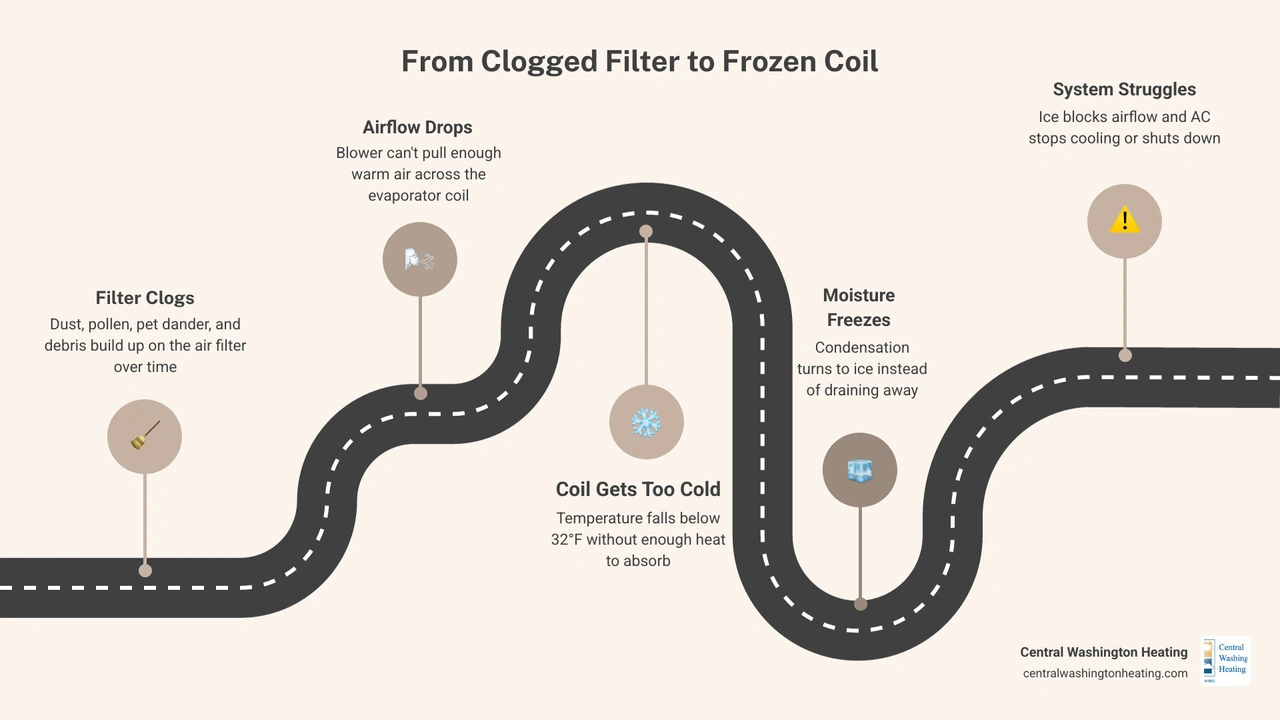
Here’s the quick version of how it happens:
- Filter clogs — dust, pollen, pet dander, and debris build up on the filter over time
- Airflow drops — the blower can’t pull enough warm air across the evaporator coil
- Coil temperature falls below 32°F — without enough heat to absorb, the refrigerant gets too cold
- Moisture freezes on the coil — condensation that normally drains away turns to ice instead
- Ice spreads — the buildup blocks even more airflow, making the problem worse fast
- System struggles or shuts down — the AC runs but doesn’t cool, or stops working altogether
A severely clogged filter can trigger this chain of events within 24 to 48 hours of continuous operation. The good news? If a dirty filter is the only cause, the fix is straightforward — and we’ll walk you through every step.
The Science Behind How Dirty Filters Cause Frozen Evaporator Coils
To appreciate why a simple piece of fibrous material can bring your entire cooling system to a freezing halt, it helps to look at the physics of your air conditioner or heat pump. Your HVAC system doesn’t actually “create” cold; rather, it removes heat from your indoor air.
At the center of this process is the indoor evaporator coil. Liquid refrigerant enters this coil at a very low temperature—sometimes as low as 10°F at the entry point. As the warm, humid air from your home is blown across the coil, the refrigerant absorbs the heat from that air. This heat absorption causes the refrigerant to evaporate into a gas, while the cooled air is pushed back into your living spaces.
For this thermodynamic dance to work, your system requires a steady, unobstructed stream of warm indoor air. This is why you need a clean, high-quality filter. To dive deeper into filter types and why they matter, check out our guide on Why You Need a Good Air Filter. When a dirty filter blocks that air, the balance is broken, and the temperature of the coil rapidly drops.
Restricted Airflow and Heat Absorption
When a filter becomes clogged with dust, hair, and local Wenatchee Valley pollen, it acts like a wall. The blower fan has to work significantly harder, creating high static pressure within the ductwork.
Because the blower cannot force enough air through the dense layer of dirt on the filter, the volume of warm air reaching the evaporator coil drops to a crawl. Without that constant stream of warm air to transfer heat to the refrigerant, the refrigerant inside the coil remains incredibly cold.
As the temperature of the coil’s metal surface plummets below 32°F, any moisture in the air immediately begins to freeze. This is the primary mechanism behind an AC Freezing Up. To make matters worse, a dirty air filter can reduce your HVAC system’s efficiency by up to 15 percent due to this restricted airflow, driving up your energy bills long before the unit completely freezes.
The Role of Condensation and Freezing Temperatures
Under normal operating conditions, your evaporator coil is supposed to get wet. As warm, humid air hits the cold metal fins of the coil, moisture condenses out of the air—much like water droplets forming on a cold glass of iced tea on a hot July afternoon in East Wenatchee. This condensation falls into a drain pan and flows safely outside through a condensate line.
However, when the lack of airflow drops the coil’s surface temperature below the freezing point, that condensation cannot drain. Instead, it instantly freezes into a thin layer of frost.
Once frost forms, it acts as an insulator, blocking what little heat transfer was still occurring. This triggers a rapid snowball effect:
- More moisture condenses on top of the frost.
- The new moisture freezes, thickening the ice.
- The expanding ice completely blocks the gaps between the coil’s fins.
- Airflow drops to zero, and the entire evaporator coil gets encased in a solid block of ice.
If you have ever wondered Why Is There Ice Forming on AC Unit, this cycle of restricted airflow and dropping dew points is almost always the culprit.
Signs Your AC is Freezing Up in the Wenatchee Valley
Recognizing the early warning signs of a frozen coil can prevent a minor airflow issue from turning into a major repair.

The most common signs include:
- Warm air blowing from the vents: The system is running, but your home feels like an oven.
- Weak airflow: You can barely feel any air coming out of your supply registers.
- A sudden spike in utility bills: Your system is running constantly to try and cool the home, consuming massive amounts of electricity.
- Hissing or bubbling noises: This can indicate ice-blocked passages or physical strain on the system.
If you suspect your filter is the root cause, it is helpful to review the Signs Air handler Air Filter Needs Replacing to catch these issues early.
How Dirty Filters Cause Frozen Evaporator Coils: Spotting the Symptoms
If the ice buildup is severe, you don’t even have to open up your indoor air handler to know something is wrong. You might see ice forming on the copper refrigerant lines running to your outdoor condenser unit.
Inside the home, you may find water pooling on the floor around the indoor unit. This happens when the massive block of ice on the evaporator coil begins to melt faster than the condensate drain pan can handle, or when ice blocks the drain path entirely, causing water to overflow onto your drywall or floor.
Additionally, your system may begin “short-cycling”—turning on and off rapidly—as safety switches detect abnormal pressures or overheating blower motors.
How to Tell If Your Filter is Clogged
You don’t have to guess if your filter is dirty enough to freeze your system. Perform a quick visual inspection:
- Turn off your system at the thermostat.
- Slide the air filter out of its slot.
- Hold it up to a bright light source (like a lightbulb or the afternoon sun).
If no light can pass through the filter, or if it is covered in a thick, gray blanket of dust and pet hair, it is completely clogged. For a step-by-step guide on how to swap it out safely, refer to our resource on Air handler Filter Replacement.
Step-by-Step: How to Fix Dirty Filter Issues Causing Frozen Coils
If you discover a block of ice on your evaporator coil, do not panic. Follow this simple guide to thaw your system safely and resolve the airflow issue.
| Step | Action | Why It Matters | DIY vs. Pro |
|---|---|---|---|
| 1 | Turn the system OFF at the thermostat. | Stops the cooling cycle and prevents further ice formation. | DIY |
| 2 | Switch the thermostat fan setting to “ON”. | Runs the blower fan to circulate warm air over the ice, speeding up the thaw. | DIY |
| 3 | Replace the dirty air filter. | Restores proper airflow once the ice melts. | DIY |
| 4 | Open all supply vents and grilles. | Ensures maximum airflow throughout the duct system. | DIY |
| 5 | Monitor the defrost process (1-3 hours). | Keeps an eye out for overflowing condensate water. | DIY |
| 6 | Restart the system and monitor for 4-6 hours. | Confirms that the system is cooling properly without refreezing. | DIY |
| 7 | Call a professional if ice returns. | Indicates an underlying issue like low refrigerant or a failing motor. | Professional |
Immediate Actions to Take When You Find Ice
The absolute first thing you must do is turn the cooling off. Running an AC with a frozen coil can destroy your compressor – the heart of your system.
Next, switch your fan setting from “AUTO” to “ON”. This keeps the indoor blower running even though the cooling is off, forcing warm indoor air over the frozen coil to melt the ice safely.
What to avoid:
- Do not use a hair dryer or heat gun to melt the ice quickly; extreme local heat can crack the copper lines or damage the sensitive aluminum fins.
- Do not use a knife, screwdriver, or any sharp tools to chip away at the ice. You risk puncturing a refrigerant line, which will result in a major repair.
As the ice melts, keep plenty of towels handy around the base of your indoor unit to catch any water overflow and protect your home from water damage.
Understanding How Dirty Filters Cause Frozen Evaporator Coils During Peak Seasons
In the Wenatchee Valley, our seasons demand a lot from our heat pumps and cooling systems. During the scorching summer months in Cashmere, Leavenworth, and Chelan, air conditioners run almost continuously. This constant operation means filters accumulate dust, pet dander, and outdoor pollen at an accelerated rate.
Furthermore, our region’s summer wildfire seasons can introduce heavy smoke and fine ash into the air. When you keep your home closed up tight to escape the smoke, your indoor filter works overtime to scrub these microscopic particles from the air, causing it to clog much faster than usual. During high-pollen weeks or active wildfire periods, we recommend checking your filter every 30 days and replacing it immediately if it shows signs of gray discoloration.
Other Causes of Frozen Coils and How to Prevent Them
While a dirty filter is the most common and easiest cause to fix, it is not the only reason an evaporator coil might freeze.
If you replace your filter and your system continues to freeze up, you may be dealing with:
- A dirty evaporator coil: Over time, fine dust bypasses the filter and cakes onto the coil itself, blocking heat transfer. You can learn more about professional cleaning in our AC Coil Cleaning guide.
- Closed or blocked supply vents: Closing vents in unused rooms to “save energy” actually restricts airflow, increases system pressure, and causes freezing. Keep at least 80% of your vents open.
- Blower motor failure: If the fan motor is failing or dirty, it won’t spin fast enough to move sufficient air across the coil.
Low Refrigerant and Mechanical Failures
Another common culprit is low refrigerant pressure. If your system has a small leak, the drop in pressure causes the remaining refrigerant to expand and evaporate at a much lower temperature than designed. This drops the coil’s surface temperature well below freezing, turning normal condensation into ice.
A failing thermostatic expansion valve (TXV) – which regulates the flow of refrigerant – can also cause similar pressure drops and subsequent freeze-ups. Because refrigerant handling requires specialized expertise, these mechanical issues must be diagnosed and repaired by a professional technician.
Essential Maintenance Beyond Filter Changes
To keep your system running at peak efficiency and prevent unexpected breakdowns, regular professional maintenance is essential. We recommend checking out our comprehensive AC Service Checklist to see what a professional tune-up entails.
Investing in regular maintenance offers incredible long-term benefits, which we outline in our guide on the Benefits Regular AC Maintenance.
Beyond filter changes, ensure you keep a clear 18-to-24-inch perimeter around your outdoor condenser unit, clearing away any weeds, leaves, or debris that could restrict airflow.
Frequently Asked Questions About Frozen AC Coils
Can running my AC with frozen coils cause permanent damage?
Yes. Running your system with a frozen coil can cause liquid refrigerant to flood back into your outdoor compressor. Compressors are designed to compress gas, not liquid. This phenomenon, known as “liquid slugging,” can permanently destroy the compressor’s internal valves and motor. Replacing a compressor is a major HVAC repair and can significantly shorten the overall lifespan of your system.
How long does it take for a frozen evaporator coil to thaw?
With the system turned completely off and the indoor blower fan set to “ON,” most frozen coils will thaw completely within one to three hours. However, if the ice buildup is exceptionally thick or if the indoor air handler is located in a cold basement or utility closet, it can take up to 24 hours to defrost completely. Always wait until the ice has melted entirely before attempting to run the cooling mode again.
When should I call an HVAC professional instead of just changing the filter?
You should call a professional if:
- The coil freezes up again shortly after you have replaced the dirty filter and allowed it to thaw completely.
- You hear unusual squealing, rattling, or grinding noises from your indoor blower motor.
- You suspect a refrigerant leak (indicated by hissing sounds, ice forming only in specific spots on the coil, or a system that runs constantly but never cools).
- There is extensive water damage around your indoor unit or coming through your ceiling.
Conclusion
A frozen evaporator coil can quickly turn a comfortable home into an unbearable hotbox, but keeping your air filters clean is the single best defense against this common issue. By establishing a simple routine of checking your filter monthly and replacing it regularly, you protect your system from severe wear, keep your energy bills low, and ensure reliable comfort all year long.
For over 30 years, Central Washington Heating has kept families comfortable throughout the Wenatchee Valley. As a family- and veteran-owned business, we pride ourselves on providing honest, dependable service to our neighbors in Wenatchee, East Wenatchee, Leavenworth, Cashmere, Chelan, and Entiat. Whether you need a quick system check, customized ductwork for whisper-quiet operation, or 24/7 emergency service, our licensed technicians are ready to help.
Are you experiencing recurring system freeze-ups or looking to prepare your cooling system for the summer heat? Schedule AC Maintenance in Wenatchee with our trusted team today!

Written by the Central Washington Heating and Air team
The techs and comfort advisors who've kept the Wenatchee Valley heated, cooled, and breathing easy for 30+ years — family & veteran owned, with 40+ years of combined industry experience.
- Licensed & insured · LIC# CENTRWH742JN
- Daikin Comfort Pro certified
- Wenatchee, WA
Last updated July 7, 2026
Ready for comfort you can count on?
Schedule service, request a free estimate, or call now for 24/7 emergency help. Our team is standing by across the Wenatchee Valley.
Get started today
Free estimates on installs · no-pressure, written quotes
Schedule My ServiceCall (509) 776-0247Mon–Fri: 8:00 AM – 4:30 PM · 24/7 for emergencies
Already have a quote? Get a free second opinion →