
Ice Forming On Your AC Unit Causes And What To Do: 5 Critical Fixes
Wenatchee Valley's HVAC authority for over 30 years. Expert AC, electric air handler, heat pump, and mini-split installation, repair, and maintenance. Family & veteran owned. 24/7 emergency service.
Why Ice Forming on Your AC Unit Is Always a Warning Sign
If you've spotted ice forming on your AC unit causes and what to do is probably the first thing on your mind — and you're right to act fast. Ice on your air conditioner is never normal, especially on a hot Central Washington summer day in Wenatchee, East Wenatchee, or Leavenworth.
Here's a quick answer before we dive deeper:
What causes ice on an AC unit and what should you do?
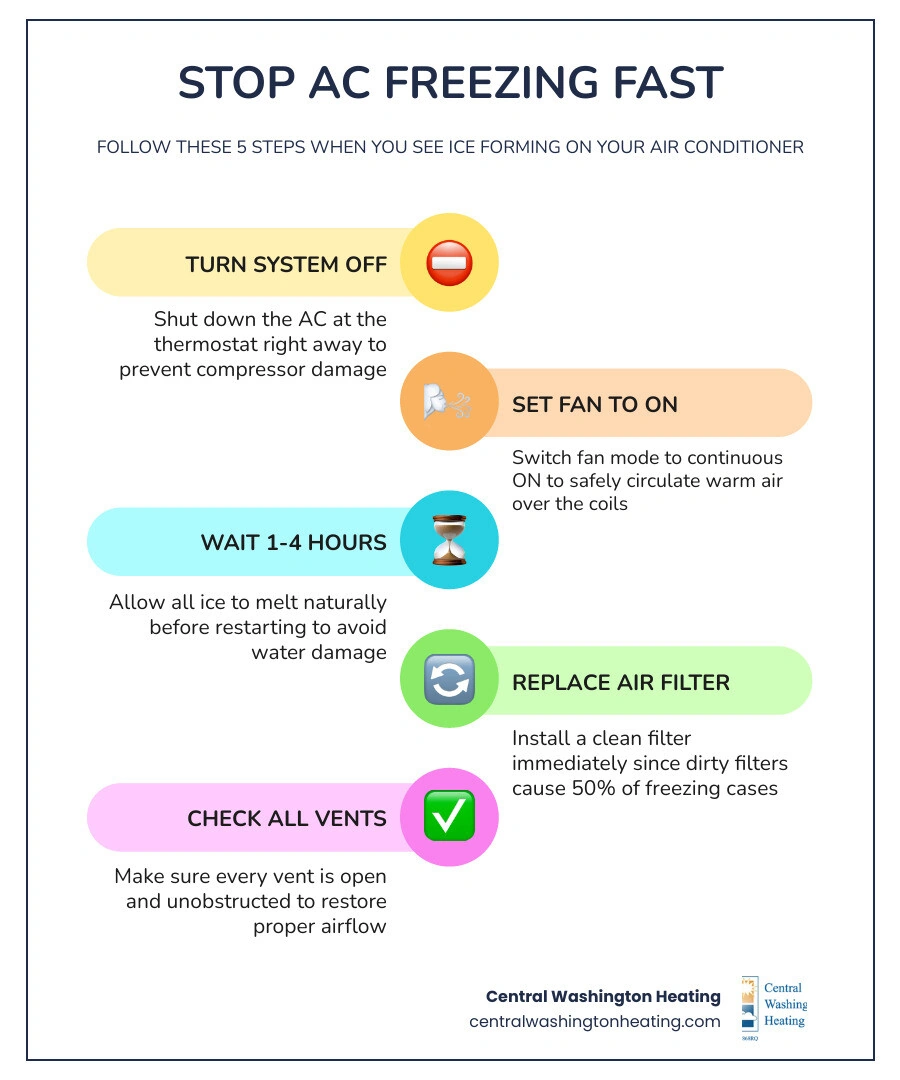
- Turn the system OFF immediately at the thermostat to stop further damage.
- Switch the fan to ON (not AUTO) to help thaw the coils safely.
- Wait 1 to 4 hours for the ice to melt completely before restarting.
- Replace a dirty air filter — it's the most common cause, responsible for roughly 50% of all AC freezing cases.
- Check that all vents are open and unblocked throughout your home.
- Call a licensed HVAC technician if the ice returns, which points to a refrigerant leak or a mechanical issue you can't fix yourself.
The two root causes of a frozen AC are nearly always the same: restricted airflow or low refrigerant from a leak. Both prevent your evaporator coil from absorbing heat properly, causing its temperature to drop below freezing and turning normal humidity into ice. Left unchecked, that ice can destroy your compressor — one of the most expensive components in your entire cooling system.
The good news? When you catch it early and follow the right steps, most AC freezing problems are straightforward to resolve.
Basic ice forming on your ac unit causes and what to do glossary:
- ac circuit breaker keeps tripping what it means
- ac troubleshooting tips before calling a professional
Ice Forming on Your AC Unit Causes and What to Do
The moment you notice frost creeping along your copper lines or a thick block of ice encasing your indoor evaporator coil, you need to act immediately. Running a frozen air conditioner is a recipe for a massive repair bill. If you are wondering Why Is There Ice Forming On AC Unit, the very first order of business is to safely shut it down.
Follow these critical steps to address an AC Freezing Up situation before it gets worse:
- Step 1: Turn the Thermostat to OFF. This immediately cuts power to the outdoor compressor, stopping the cooling cycle and preventing the ice from building up any further.
- Step 2: Switch the Fan Setting to ON. Do not leave it on "AUTO." Setting the fan to "ON" forces your indoor blower motor to run continuously. This circulates warm household air across the frozen evaporator coil, helping to melt the ice safely and quickly.
- Step 3: Prepare for Water Drainage. As that block of ice melts, it will turn into a significant amount of water. Check your condensate drain pan under the indoor air handler. Ensure the drain line is clear so you do not end up with water pooling on your floor or damaging your drywall. Lay down a few old towels around the unit just in case.
- Step 4: Check the Air Filter. While the system is thawing, slide out your air filter. If it is caked in dust, pet dander, or ash from our Central Washington wildfire seasons, this is likely your culprit.
- Step 5: Run Through Basic Checks. Try these AC Troubleshooting Tips Before Calling A Professional. Make sure all your supply registers and return grilles are completely open and unobstructed by furniture, drapes, or toys.
What NOT to do: Never, under any circumstances, use a screwdriver, knife, or any sharp tool to chip away at the ice. The copper tubing inside your evaporator coil is incredibly delicate. A single slip can puncture a line, releasing pressurized refrigerant and turning a simple airflow issue into an expensive, hazardous repair. Additionally, avoid pouring boiling water directly onto the frozen coils; the extreme thermal shock can crack the copper or damage the surrounding components.
Understanding the Root Causes of a Frozen AC
To understand why your air conditioner has transformed into a localized glacier, it helps to understand a little bit of the science behind how it cools your home. An air conditioner does not actually "create" cold; instead, it removes heat from your indoor air and transfers it outside.
This process relies heavily on the Joule-Thomson effect. As liquid refrigerant passes through an expansion valve into the evaporator coil, its pressure drops rapidly, causing its temperature to plummet. Under normal operating conditions, your indoor blower fan blows warm, humid house air across this cold coil. The refrigerant inside the coil absorbs the heat from your indoor air, and the moisture in the air condenses onto the coil and safely drains away.
However, if something disrupts this delicate balance of pressure and heat exchange, the temperature of the evaporator coil will drop below 32°F. When that happens, the condensation on the coil freezes instantly. As more warm air passes over the newly formed ice, more moisture freezes, causing a rapid snowball effect that eventually blocks all airflow.
The table below breaks down the differences between the two primary categories of AC freezing:
| Feature | Airflow-Related Freezing | Refrigerant-Related Freezing |
|---|---|---|
| Primary Cause | Insufficient air passing over the evaporator coil to keep it warm. | Drop in system pressure causing the coil temperature to plummet. |
| Common Symptoms | Weak airflow from vents, dirty air filter, dusty indoor coil, or silent blower fan. | Hissing or bubbling noises, oily residue on copper lines, warm air blowing from vents. |
| Ice Location | Typically covers the entire evaporator coil uniformly. | Often starts as partial ice near the refrigerant inlet pipes before spreading. |
| Primary Fix | Replace filter, clean coil, open vents, or replace blower motor. | Locate and repair the refrigerant leak, then recharge the system. |
Airflow Restrictions: Ice Forming on Your AC Unit Causes and What to Do
When looking into ice forming on your ac unit causes and what to do, restricted airflow is the most common culprit. If there isn't enough warm air passing over your evaporator coil, the cold refrigerant has no heat to absorb. The coil temperature quickly drops below freezing, and the moisture in your household air turns to ice.
To understand how this impact cascades through your system, read about How Airflow Affects Your Air Conditioners Performance. Several issues can choke off your system's breathing:
- Clogged Air Filters: This is the absolute number one cause of frozen AC units. A dirty filter blocks the return air from reaching the coil. If you have pets, live in a dusty area like Malaga or Waterville, or are dealing with summer wildfire smoke, your filter will clog much faster than the standard three-month recommendation.
- Blocked Return or Supply Vents: Many homeowners mistakenly believe that closing vents in unused rooms saves energy. In reality, it disrupts the pressure balance of your system and severely restricts airflow, leading to frozen coils. Always keep at least 80% of your supply registers open.
- Dirty Evaporator Coils: Over time, fine dust passes through your filter and settles on the wet evaporator coil, forming a layer of grime. This grime acts as an insulating blanket, preventing the refrigerant from absorbing heat from the air.
- Failing Blower Motor: If your blower fan is spinning too slowly or has stopped working entirely, warm air won't move across the coil. You can read more about resolving these issues in our guide on Fixing Low Airflow From Your AC Vents.
Low Refrigerant Levels: Ice Forming on Your AC Unit Causes and What to Do
If your air filter is clean and your vents are wide open, but you still see ice, you are likely dealing with low refrigerant levels. There is a common misconception that air conditioners "use up" refrigerant over time, much like a car uses gas. In reality, your AC is a sealed system. If the refrigerant is low, it means you have a leak.
When the refrigerant charge drops, the overall pressure inside the evaporator coil decreases. According to the laws of physics, a drop in pressure causes a corresponding drop in temperature. This causes the remaining refrigerant to run much colder than designed—often well below freezing. As warm, humid air hits this super-cold coil, it freezes instantly.
If you suspect this is the issue, consult our AC Refrigerant Leak Complete Guide. Here are the classic signs of a refrigerant leak:
- Hissing or Bubbling Sounds: A physical leak in the copper lines or the indoor coil will often make a distinct hissing or whistling sound.
- Oily Residue: Refrigerant circulates alongside a special lubricant. If there is a pinhole leak, you will often find an oily spot on the copper line connections or near the indoor coil.
- Warm Air from Vents: Despite the ice on the unit, the lack of sufficient refrigerant means the system cannot effectively cool your home, resulting in warm air blowing from your supply registers.
- Ice on the Outdoor Lines: If you see ice forming on the brass valves or the copper lines connecting to your outdoor condenser unit, this is a strong indicator of low refrigerant pressure.
If you use a heat pump system for year-round comfort in areas like Chelan or Entiat, you can learn more about managing these specialized setups in our article on How To Resolve Heat Pump Refrigerant Leak Issues.
The Hidden Dangers of Running a Frozen Air Conditioner
It can be tempting to ignore a little bit of frost and keep running your AC, especially when outdoor temperatures in the Wenatchee Valley are soaring. However, doing so is incredibly risky.
The biggest danger of operating a frozen AC is liquid slugging. Your air conditioner's compressor is designed specifically to compress refrigerant in its gaseous, vapor state. Liquid cannot be compressed. When the evaporator coil is completely encased in ice, the refrigerant inside cannot absorb enough heat to boil off into a gas.
As a result, liquid refrigerant travels back down the copper lines directly into the compressor. This liquid "slugs" the compressor, destroying its internal valves, pistons, and bearings. Replacing a compressor is one of the most expensive repairs in the HVAC industry.
Beyond compressor failure, running a frozen system causes:
- Skyrocketing Energy Bills: Because the ice acts as an insulator, your system will run continuously without actually cooling your home, pulling massive amounts of electricity.
- Water Damage and Mold: When that massive block of ice eventually melts, it can easily overflow your condensate pan, leading to water damage in your ceilings, walls, and floors, which can quickly lead to mold growth.
- The 50% Rule: If your system is over 15 years old, uses phased-out R-22 refrigerant, and suffers a compressor failure, repairing it is rarely the smart choice. The "50% rule" states that if the cost of a repair exceeds half the value of a new system, replacement is the more financially sound option.
How to Prevent Ice From Forming on Your AC Unit in the Future
The best way to handle a frozen AC is to prevent it from ever freezing in the first place. Fortunately, with a little proactive maintenance, you can keep your system running smoothly and efficiently all summer long.
Start by reviewing our Ultimate HVAC Maintenance Guide for a complete checklist. To keep the ice away, focus on these key habits:
- Stick to a Strict Filter Schedule: Check your air filter every 30 days. If you live in a high-use household with pets, or during the dry, dusty summer months in Cashmere or Dryden, replace it every 30 to 45 days.
- Keep Vents Open and Clear: Ensure that furniture, rugs, and curtains are not blocking your return air grilles or supply registers. Keep at least 80% of your home's vents wide open to maintain proper system pressure.
- Maintain Outdoor Clearance: Keep a two-foot clear zone around your outdoor condenser unit. Trim back shrubs, cut down tall grass, and clear away leaves or cottonwood fluff that can block airflow through the outdoor coil.
- Schedule Annual Professional Tune-Ups: Having a professional inspect your system every spring is the best insurance policy against summer breakdowns. A technician will check your refrigerant levels, measure electrical draw, and ensure your blower motor is performing perfectly. Learn more about Maximizing AC Lifespan With Regular Maintenance.
- Invest in Professional Coil Cleaning: If your indoor coil has accumulated a layer of stubborn dirt, a simple filter change won't fix it. Professional AC Coil Cleaning restores efficient heat transfer and keeps your coil operating well above freezing.
Frequently Asked Questions About Frozen AC Units
How long does it take for a frozen AC coil to thaw safely?
On average, it takes 1 to 4 hours for a frozen AC coil to thaw completely once you turn the system off and set the fan to "ON." However, if the ice buildup is exceptionally severe—such as when the entire indoor air handler is encased in a solid block of ice—it can take up to 24 hours to defrost fully. Never try to speed up the process with hair dryers on high heat or open flames, as this can damage the system.
Is it safe to run my AC if it has ice on the coils?
No, it is absolutely not safe. Running an air conditioner with frozen coils can cause permanent, catastrophic damage to your compressor due to liquid refrigerant slugging. Turn the system off immediately the moment you notice ice or frost.
Can a dirty air filter really cause an AC to freeze?
Yes, absolutely. A dirty air filter is responsible for approximately 50% of all frozen AC cases. When the filter is clogged, it chokes off the airflow. Without enough warm indoor air passing over the cold evaporator coil, the temperature of the coil drops below 32°F, causing the moisture in the air to freeze instantly.
Conclusion
Finding ice on your air conditioner on a hot summer day can be incredibly frustrating, but understanding ice forming on your ac unit causes and what to do gives you the power to protect your home and your wallet. The immediate solution is always to turn the system off, set the fan to run, and let the ice melt naturally while you check for simple airflow blocks like a dirty filter.
If you have thawed out your system, replaced the filter, checked your vents, and the ice returns within 24 hours, it is time to call in the experts.
At Central Washington Heating, we bring over 30 years of trusted HVAC expertise to homeowners across the Wenatchee Valley, including Wenatchee, East Wenatchee, Leavenworth, Cashmere, Chelan, and Entiat. As a local, family- and veteran-owned business, we are proud to offer 24/7 emergency service to keep your family comfortable when you need us most.
Don't risk a costly compressor failure. Request Professional AC Services in Wenatchee today to have one of our licensed technicians diagnose and resolve your AC freezing issues safely!

Written by the Central Washington Heating and Air team
The techs and comfort advisors who've kept the Wenatchee Valley heated, cooled, and breathing easy for 30+ years — family & veteran owned, with 40+ years of combined industry experience.
- Licensed & insured · LIC# CENTRWH742JN
- Daikin Comfort Pro certified
- Wenatchee, WA
Last updated July 3, 2026
Ready for comfort you can count on?
Schedule service, request a free estimate, or call now for 24/7 emergency help. Our team is standing by across the Wenatchee Valley.
Get started today
Free estimates on installs · no-pressure, written quotes
Schedule My ServiceCall (509) 776-0247Mon–Fri: 8:00 AM – 4:30 PM · 24/7 for emergencies
Already have a quote? Get a free second opinion →