
AC Circuit Breaker Keeps Tripping What It Means: 5 Essential Fixes
Discover ac circuit breaker keeps tripping what it means, 5 proven fixes, and when to call a pro. Protect your home now!
What It Means When Your AC Circuit Breaker Keeps Tripping
Understanding ac circuit breaker keeps tripping what it means could save your home from a serious electrical hazard. Simply put: your breaker is doing its job. It detected more current than the circuit can safely handle and shut things down to protect your wiring and your home.
Here are the most common reasons your AC breaker keeps tripping:
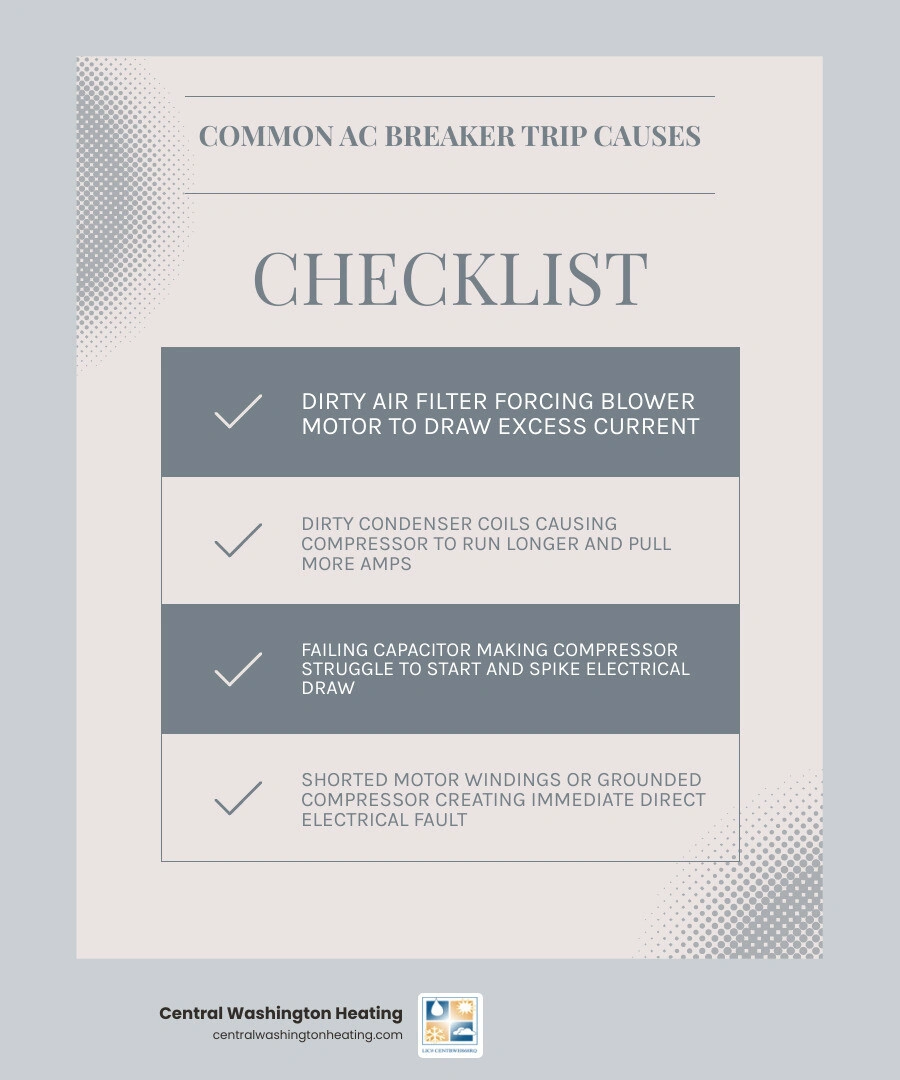
- Dirty air filter – a clogged filter forces the blower motor to work harder, drawing excess current
- Dirty condenser coils – trapped heat causes the compressor to run longer and pull more amps
- Failing capacitor – a weak capacitor makes the compressor struggle to start, spiking electrical draw
- Hard-starting compressor – aging compressors can pull 2-3 times their normal amperage at startup
- Shorted motor windings or grounded compressor – a direct electrical fault that trips the breaker immediately
- Loose or damaged wiring – corroded or loose connections create resistance, heat, and intermittent faults
- Worn-out breaker – the breaker itself may be failing and tripping at lower loads than it should
The key takeaway: a tripping breaker is a warning, not just an inconvenience. Repeatedly resetting it without finding the cause can damage your wiring, harm your AC components, and in serious cases, create a fire risk.
If your AC breaker trips again right after you reset it, turn the system off at the thermostat, leave the breaker off, and call a licensed HVAC technician.
For homeowners in the Wenatchee Valley, Central Washington Heating has helped diagnose and fix AC breaker issues for over 30 years — and we offer 24/7 emergency service when you need help fast.
AC Circuit Breaker Keeps Tripping What It Means
When you make a trip to your electrical panel in Cashmere, Leavenworth, or East Wenatchee to reset a stubborn switch, you are dealing with a critical protective system. Your central air conditioner is a high-powered appliance. Because of its intense power demands, it doesn’t run on a standard household outlet circuit. Instead, it is connected to a dedicated 240-volt circuit controlled by a double-pole breaker.
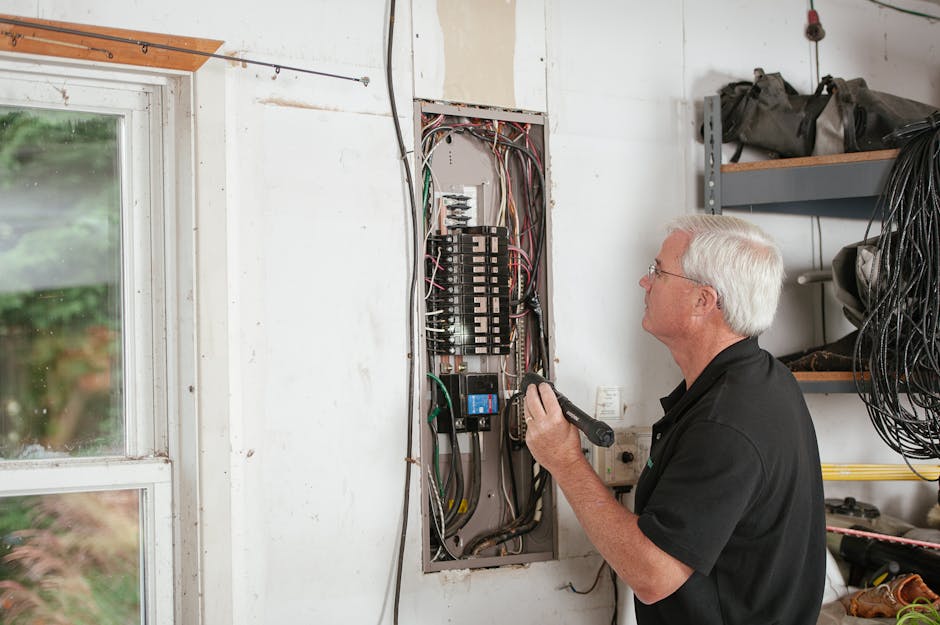
This double-pole breaker functions as an overcurrent protection device. If the electrical current (amperage) flowing to your air conditioning system exceeds the breaker’s rated limit, the internal mechanism heats up and flips the switch to the “tripped” position. This instantly cuts off the electricity.
If you are wondering about AC Circuit Breaker Keeps Tripping issues, it is crucial to recognize that the breaker itself is rarely the root problem. The breaker is the messenger. It is telling you that somewhere between your electrical panel and the outdoor unit, something is causing an unsafe draw of electricity.
Understanding the Difference Between an Overload and a Short Circuit
To truly grasp ac circuit breaker keeps tripping what it means, we have to look at the electrical physics occurring behind your drywall. When a breaker trips, it is usually responding to one of three electrical events: a circuit overload, an electrical short (short circuit), or a ground fault.
- Circuit Overload: This occurs when the air conditioner is simply drawing slightly more power than the circuit is designed to handle. This is often a gradual process. The AC runs for 10, 20, or 30 minutes, slowly generating heat in the breaker until it finally pops.
- Short Circuit: A short circuit is a much more sudden and dangerous event. It happens when an active “hot” wire comes into direct contact with a neutral wire. This bypasses the normal resistance of the system, causing an immediate, massive spike in current. The breaker will trip instantly—often the very microsecond the AC attempts to turn on.
- Ground Fault: Similar to a short circuit, a ground fault occurs when a hot wire touches a grounded portion of the system, such as the metal chassis of the outdoor condenser unit or a copper refrigerant line. This is highly dangerous as it can electrify the external parts of your unit.
To help visualize these differences, here is a quick comparison:
| Electrical Event | What Happens | How Fast the Breaker Trips | Common AC Causes |
|---|---|---|---|
| Circuit Overload | System draws slightly more amps than the breaker’s limit over time. | Gradually (after running for several minutes or hours). | Dirty filters, clogged condenser coils, low refrigerant, failing fan motor. |
| Short Circuit | Hot wire touches a neutral wire, creating an unrestricted path for electricity. | Instantly (the moment the unit starts up). | Damaged wire insulation, rodent damage in the attic, burned motor windings. |
| Ground Fault | Hot wire makes contact with a grounded metal component or ground wire. | Instantly (accompanied by sparks or a popping sound). | Grounded compressor, bare wires rubbing against the copper refrigerant lines. |
Common Mechanical Causes of a Tripping AC Breaker
Many homeowners are surprised to learn that mechanical issues are the most frequent triggers for electrical trips. If your air conditioner is struggling mechanically, it has to work twice as hard to do its job. This mechanical strain directly translates into a higher electrical draw, pushing your double-pole breaker past its limit. Keeping an eye out for these mechanical issues can help you spot the Signs AC Is About to Break Down before you are left in the summer heat.
Airflow Obstructions and Why an AC Filter Change Matters
The number one mechanical culprit behind a tripping breaker is surprisingly simple: a dirty air filter.
When your return vents are blocked by a thick layer of dust, pet dander, and hair, it creates severe airflow restriction. This restriction increases static pressure inside your ductwork. The indoor blower motor has to fight incredibly hard to pull air through the clogged filter.
According to energy industry data, a dirty air filter can increase an air conditioner’s energy consumption by up to 15%. This extra workload causes the blower motor to overheat and draw excessive amperage, eventually tripping the breaker. Furthermore, poor airflow causes the temperature of the evaporator coils to plummet, leading to your AC Freezing Up.
Performing a regular AC Filter Change every 30 to 90 days is the easiest way to prevent this system strain and keep your energy bills manageable during hot Chelan and Wenatchee summers.
Dirty Condenser Coils and System Pressure
Your air conditioner doesn’t actually “create” cold air; it absorbs heat from inside your home and releases it outdoors. This crucial heat transfer happens at the outdoor unit via the condenser coils.
Over time, the outdoor unit is exposed to cottonwood seeds, dirt, lawn clippings, and dust. If these coils are caked in grime, the dirt acts as an insulating blanket. The system cannot release the heat it absorbed from your living room.
Because the heat cannot escape, the pressure within the refrigerant lines rises dramatically. To pump refrigerant through these high-pressure lines, the compressor must work under extreme stress, drawing more and more electrical current until the breaker trips. Professional AC Coil Cleaning ensures that heat can dissipate freely, keeping system pressures low and your electrical panel happy.
Electrical Component Failures That Trigger Breaker Trips
If your filters are clean and your outdoor unit is free of debris, the issue likely points to an internal electrical component failure. Air conditioners are packed with complex electrical parts that naturally degrade over time due to our high-desert summer heat waves in Waterville, Entiat, and Malaga. If you notice your AC Making Strange Noises What They Mean might be the first clue that an electrical component is about to give out.
Failing Capacitors and Hard-Starting Compressors
Your outdoor unit relies on a small, cylindrical device called a capacitor. Think of the capacitor as a temporary battery that delivers a massive electrical boost to help the compressor and fan motor start running.
Because capacitors store and discharge high-voltage electricity constantly, they gradually lose their storage capacity over time. When a capacitor begins to fail, the compressor will struggle to start up. It will hum loudly and attempt to draw “Locked Rotor Amps” (LRA)—which is the maximum current a stalled motor can pull.
A failing or aging compressor can draw 2 to 3 times its normal running amperage during startup, and a hard-starting compressor can pull up to 3 to 5 times its normal running current. This massive spike instantly trips the breaker. If you catch this early, a simple AC Capacitor Replacement can save you from a far more expensive repair, such as addressing an AC Compressor Suddenly Stopped Working.
Grounded Motors and Shorted Windings
Inside both your outdoor condenser fan motor and your compressor are tightly wound copper coils called motor windings. These windings are coated with a thin layer of protective insulation.
Over years of heavy use, vibration, and extreme heat, this insulation can crack or melt. When the insulation fails, the electrical current inside the windings can jump directly to the metal frame of the motor or compressor. This is known as a “grounded motor” or “grounded compressor.”
A grounded compressor causes an immediate, severe short circuit to ground. The moment the thermostat calls for cooling, a massive rush of electricity bypasses the system’s resistance, causing the breaker to trip instantly. If this occurs, it can ignite the oil inside the compressor, leading to a catastrophic compressor burnout. Similarly, failing fan motors will draw excessive current, which is why recognizing AC Condenser Fan Motor Failure Signs Solutions is vital for protecting the rest of your system.
Safe Troubleshooting Steps for Homeowners Before Calling a Pro
Dealing with electricity requires caution. However, there are a few safe diagnostic steps you can perform using our HVAC Troubleshooter methodology before calling in our professional team.
AC Breaker Troubleshooting Steps:
- Turn off the AC at the thermostat: Never attempt to troubleshoot or reset the breaker while the system is actively trying to run.
- Inspect the air filter: If the filter is dirty or clogged, replace it immediately. If it is clean, proceed to the next step.
- Clear debris from the outdoor unit: Ensure there is at least two feet of clear space around your outdoor condenser unit.
- Perform the “One-Reset” Rule:
- Flip the breaker fully to the OFF position, then back to ON.
- Wait 30 minutes for system pressures to equalize.
- Turn the thermostat back to COOL.
- Monitor the system:
- If it trips again: Stop immediately. Leave the breaker off and call Central Washington Heating.
- If it runs normally: Monitor the system closely and schedule professional maintenance to find any underlying issues.
The One-Reset Rule for Electrical Safety
If your AC breaker trips, we recommend practicing the “One-Reset Rule.” You can safely attempt to reset the breaker exactly once, provided you follow these steps:
- Shut Off the Thermostat: Go to your indoor thermostat and turn the system completely “Off.” Never reset a breaker while the air conditioner is actively trying to run.
- Check the Filter and Vents: Ensure your air filter is clean and that none of your home’s supply or return vents are blocked.
- Inspect the Outdoor Unit: Make sure there are no weeds, leaves, or lawn debris crowding the outdoor condenser. It needs at least two feet of clear space on all sides.
- Reset the Breaker: Go to your electrical panel. Locate the AC breaker (it will usually be labeled and may be resting in a middle “tripped” position). Flip the switch fully to the OFF position first, then flip it firmly to the ON position.
- Wait and Restart: Wait about 30 minutes to allow the system to cool down and pressure to equalize. Then, turn your thermostat back to “Cool” and monitor the unit.
If the breaker trips again immediately or within the first hour of operation, do not reset it a second time. Repeatedly resetting a tripped breaker can melt wire insulation, damage the electrical contacts in your panel, and create a severe fire hazard.
When to Stop DIY Efforts and Call for Emergency HVAC Repair
You should immediately stop all troubleshooting and call for professional assistance if you experience any of the following:
- A Burning Smell: If you smell burning plastic, sulfur, or electrical smoke near your indoor vents, outdoor unit, or electrical panel.
- Loud Buzzing or Hissing: If the outdoor unit makes a loud, metallic buzzing sound or a hissing noise before the power cuts out.
- The Breaker Trips Instantly: If the breaker trips the exact millisecond you flip the switch, indicating a direct short circuit.
- Visible Sparks or Smoke: If you see sparks or smoke coming from any part of the system.
Electrical faults, including short circuits and ground faults, account for approximately 51,000 home fires annually in the U.S. Many of these are prevented by properly functioning circuit breakers, which is why you must never force a breaker to stay on. When safety is on the line, check out our Emergency HVAC Repair Complete Guide and contact our specialists for 24 Hour AC Repair Services in East Wenatchee and the surrounding areas.
Frequently Asked Questions About Tripping AC Breakers
Why does my ac circuit breaker keeps tripping what it means only when it is hot outside?
During peak summer afternoons in places like Leavenworth or Orondo, outdoor temperatures can soar. When it is incredibly hot outside, your air conditioner has to work much harder to release heat from your home. The high ambient temperature naturally increases the pressure inside the condenser coils.
If your system already has a slightly weak capacitor, minor coil grime, or a low refrigerant charge, the added thermal stress of a 95-degree day will push the electrical draw over the limit, causing the breaker to trip. This is also a common reason you might find your Why Is AC Blowing Warm Air during the hottest parts of the day.
Can a refrigerant leak cause my ac circuit breaker keeps tripping what it means?
Yes, absolutely. When your air conditioner has a low refrigerant charge due to a leak, it cannot absorb heat efficiently. To compensate, the system will run continuously without shutting down.
This extended run time causes the compressor to overheat. As the compressor’s temperature rises, its internal electrical resistance increases, forcing it to draw more amperage. Eventually, this excessive electrical draw trips the breaker. If you suspect a leak, read our AC Refrigerant Leak Complete Guide to understand the signs and why a professional repair is necessary.
Is it dangerous to keep resetting a tripped AC breaker?
Yes, it is highly dangerous. Every time a circuit breaker trips, an electrical arc occurs inside the breaker casing. If you repeatedly reset the breaker against an active short circuit or overload, this repeated arcing can degrade the breaker’s internal mechanism, eventually causing it to fail and “weld” itself closed.
If the breaker fails to trip when a fault occurs, the excessive current will rapidly overheat the household wiring inside your walls. This can melt the wire insulation and ignite surrounding wood or drywall, leading to a devastating house fire. Always treat a tripped breaker as a vital safety warning. For more definitions of these critical components, check out our Glossary HVAC resources.
How Regular Maintenance Prevents Electrical Emergencies
The best way to handle a tripping breaker is to prevent it from ever happening in the first place. This is where seasonal maintenance becomes your home’s best friend.
During a professional tune-up, our licensed technicians perform a comprehensive multi-point inspection designed to catch electrical and mechanical issues before they disrupt your comfort. Our seasonal maintenance includes:
- Tightening Electrical Connections: Over time, the natural vibration of your outdoor unit can loosen wire connections, creating high resistance and heat. We inspect and tighten all terminals.
- Testing Capacitors: We measure the microfarad output of your capacitors to ensure they are within factory specifications, replacing weak ones before they fail and strain your compressor.
- Cleaning the Coils: We thoroughly wash your outdoor condenser coils to ensure optimal heat transfer and low system pressures.
- Checking Amperage Draw: We measure the starting and running amperage of your compressor and fan motors, comparing them to the manufacturer’s limits to spot failing components early.
Investing in a regular HVAC Maintenance Plan Complete Guide is the most effective way to ensure your system runs efficiently all summer long. To learn more about protecting your home and extending the lifespan of your cooling system, read our guide on How to Prevent HVAC Emergencies with Maintenance.
Conclusion
A tripping AC breaker can be a frustrating experience, but it is important to remember that your electrical panel is working exactly as designed to protect your home and family. Whether the issue is a simple clogged filter, dusty coils, or a failing capacitor, addressing the root cause promptly is key to restoring your home’s comfort and safety.
At Central Washington Heating, we have spent over 30 years providing top-quality heating and cooling services across the Wenatchee Valley, including Wenatchee, East Wenatchee, Leavenworth, Cashmere, Chelan, and the surrounding areas. As a family- and veteran-owned business, we pride ourselves on honest diagnostics, customized craftsmanship, and dependable 24/7 emergency services.
Don’t let a stubborn breaker keep you in the heat. For expert diagnostics and peace of mind, Request Service Today to schedule your professional AC service.

Written by the Central Washington Heating and Air team
The techs and comfort advisors who've kept the Wenatchee Valley heated, cooled, and breathing easy for 30+ years — family & veteran owned, with 40+ years of combined industry experience.
- Licensed & insured · LIC# CENTRWH742JN
- Daikin Comfort Pro certified
- Wenatchee, WA
Last updated July 3, 2026
Ready for comfort you can count on?
Schedule service, request a free estimate, or call now for 24/7 emergency help. Our team is standing by across the Wenatchee Valley.
Get started today
Free estimates on installs · no-pressure, written quotes
Schedule My ServiceCall (509) 776-0247Mon–Fri: 8:00 AM – 4:30 PM · 24/7 for emergencies
Already have a quote? Get a free second opinion →