
How to Clean Your Outdoor AC Unit Safely After Pollen Season: 5 Essential Steps
Wenatchee Valley's HVAC authority for over 30 years. Expert AC, electric air handler, heat pump, and mini-split installation, repair, and maintenance. Family & veteran owned. 24/7 emergency service.
Why Pollen Season Is Tough on Your Outdoor AC Unit in Central Washington
If you're wondering how to clean your outdoor AC unit safely after pollen season, here's the quick answer:
- Shut off power at the thermostat, disconnect box, and circuit breaker.
- Clear vegetation within 2 feet of the unit.
- Remove the top panel and vacuum out internal debris.
- Brush the condenser fins vertically with a soft brush.
- Rinse coils from the inside out using a garden hose on a gentle setting.
- Straighten any bent fins with a fin comb, then let the unit dry 30–60 minutes before restoring power.
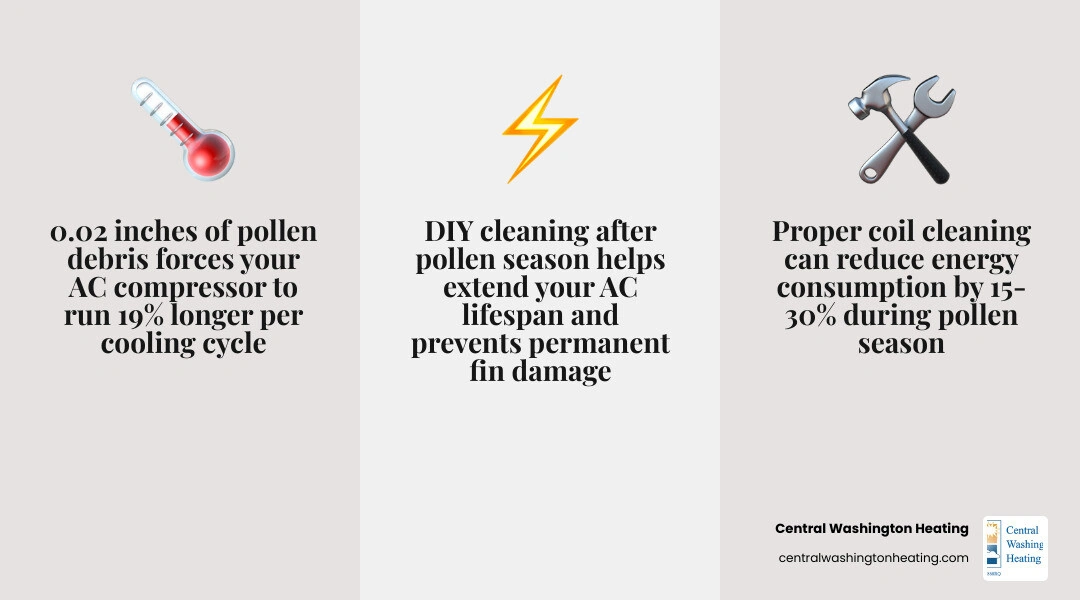
Every spring in the Wenatchee Valley, pollen coats everything — including your outdoor AC unit. What looks like a light dusting on the condenser fins is actually a serious problem. Research shows that even just 0.02 inches of debris on coil surfaces can force your compressor to run 19% longer per cooling cycle. Across a full summer, that kind of strain adds up fast — on your energy bill and on your equipment.
The good news is that cleaning your outdoor AC unit safely is a manageable DIY task that most homeowners in Central Washington can complete in under an hour. Done right, it can cut energy consumption by 15–30% and help your system last years longer. Done wrong — with a pressure washer or the wrong chemicals — it can cause permanent fin damage that no amount of cleaning will fix.
This guide walks you through exactly what to do, step by step.
How to clean your outdoor ac unit safely after pollen season terminology:
- ac maintenance checklist for central washington homeowners
- diy ac maintenance tasks you can do between service visits
Why You Need to Know How to Clean Your Outdoor AC Unit Safely After Pollen Season
To understand why a dirty AC unit is such a problem, we have to look at how your cooling system works. Your outdoor unit (the condenser) is responsible for releasing the heat that was absorbed from inside your home. It does this by blowing outdoor air across a network of copper tubes and thin aluminum fins.
When pollen, cottonwood fluff, and dust blanket these fins, they act like a thick insulating sweater. This layer of grime severely restricts the airflow and reduces the system's overall thermal efficiency. Instead of releasing heat easily, the condenser has to work twice as hard.
This extra effort leads to:
- Higher Utility Bills: A dirty outdoor condenser can increase your energy consumption by 10% to 30%.
- Compressor Strain: The compressor is the heart of your AC and the most expensive component to replace. When coils are dirty, the compressor runs hotter and longer, which can drastically shorten its lifespan. Every 10°F increase above a 220°F compressor oil temperature actually halves the bearing life of the motor.
- Poor Cooling Performance: You might notice your home in Cashmere or East Wenatchee takes much longer to reach your target temperature on a hot July afternoon.
By taking the time to learn how to clean your outdoor AC unit safely, you are directly investing in your home's comfort and protecting your wallet. For more information on the long-term advantages of keeping your system clean, check out our guide on the Benefits of Regular AC Maintenance.
Step-by-Step Guide: How to Clean Your Outdoor AC Unit Safely
Now that you understand the "why," let’s dive into the "how." Cleaning your air conditioner does not require professional-level mechanical skills, but it does require patience and strict adherence to safety rules.
Required Tools and Safety Preparation
Before you touch your air conditioner, you must gather the correct tools. Using the wrong equipment is the fastest way to turn a quick maintenance chore into an expensive repair bill.
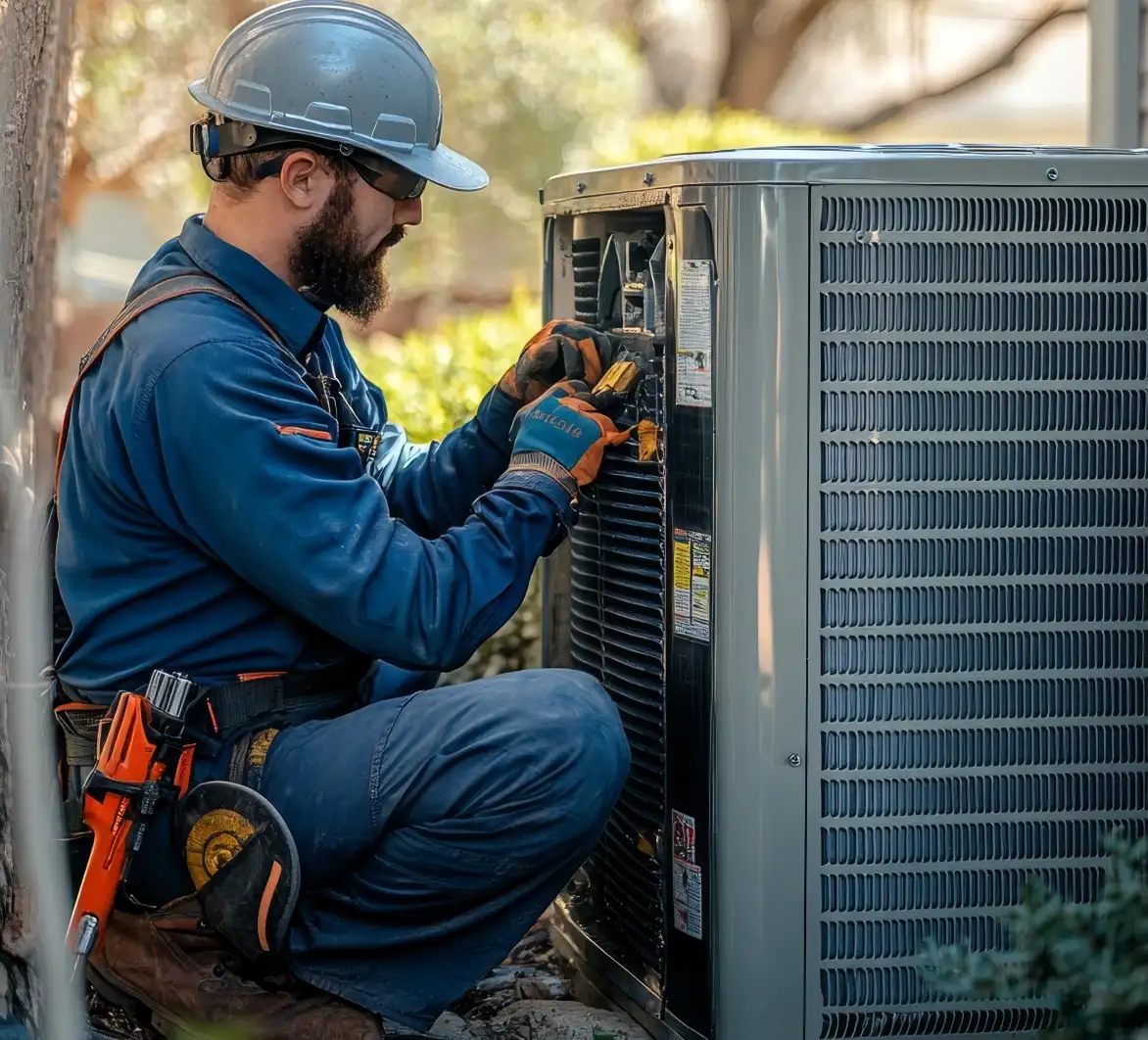
Here is your DIY toolkit:
- Safety Goggles and Work Gloves: Essential for protecting your eyes from flying debris and your hands from sharp metal fins.
- Non-Contact Voltage Tester: To verify that the electrical current is completely disconnected.
- Screwdriver or Nut Driver: To remove the top grille panel.
- Shop Vacuum: Equipped with a soft brush attachment.
- Soft-Bristled Hand Brush: A soft paint brush or old toothbrush works perfectly.
- Garden Hose with a Adjustable Spray Nozzle: (Never use a pressure washer!)
- Fin Comb: For straightening bent aluminum fins.
Safety is our absolute priority. Industry statistics show that skipping the power-down step accounts for 68% of residential HVAC electrocutions. Never attempt to clean your unit while it is connected to power.
Reviewing our AC Maintenance Checklist for Central Washington Homeowners is a great way to make sure your entire HVAC system is ready for the upcoming summer heat.
Step 1: Shut Off the Power and Clear Surrounding Vegetation
The first physical step is to cut all electrical power to the outdoor unit. Do this in three separate locations to ensure complete safety:
- Turn your indoor thermostat to the "OFF" position.
- Locate the outdoor electrical disconnect box (usually mounted on the home's siding near the unit). Open the box and pull out the disconnect switch, or flip the breaker to the "OFF" position.
- Go to your home's main electrical breaker panel and turn off the circuit breaker labeled for your air conditioner.
Use your non-contact voltage tester near the unit's wiring to verify that no electrical current is active.
Once the power is verified off, turn your attention to the surrounding area. Plants, weeds, and branches love to crowd around AC units during the spring growing season in places like Leavenworth and Chelan. Trim back all vegetation to maintain at least a 2-foot clearance on all sides of the unit, and ensure there is at least 5 feet of vertical clearance above the fan. This open space allows the unit to draw in and exhaust air without restriction.
Step 2: Remove the Top Panel and Clear Internal Debris
The condenser fan is designed to pull air through the sides of the unit and exhaust it out of the top. This process naturally sucks in leaves, twigs, and cottonwood seeds, which settle at the bottom of the unit's base pan.
Carefully use your screwdriver or nut driver to remove the screws holding the top fan grille in place. When lifting the top panel, be extremely careful not to pull or strain the electrical wires connected to the fan motor. You do not need to fully disconnect the motor; simply lift the lid and set it gently to the side, or have a helper hold it.
Reach inside and manually clear out any large leaves, twigs, or nests. After removing the bulk of the debris, use your shop vacuum with the brush attachment to clean out the bottom of the base pan. Be sure to check that the drain holes at the bottom of the pan are clear of dirt to prevent standing water, which can lead to rust and corrosion.
Step 3: How to Clean Your Outdoor AC Unit Safely After Pollen Season Using a Soft Brush
With the interior cleared of large debris, it is time to address the fine pollen caked on the exterior fins. The aluminum fins on your condenser coils are incredibly delicate — they can easily bend under the slightest horizontal pressure.
Take your soft-bristled brush or your shop vacuum with the soft brush attachment. Always brush vertically along the direction of the fins (up and down), never horizontally. Brushing sideways will flatten the fins, blocking airflow and degrading your system's efficiency.
Gently sweep away the loose yellow pollen, dust, and spiderwebs clinging to the outside of the unit. This dry brushing step is crucial because it prevents the pollen from turning into a thick, muddy paste when we introduce water in the next step.
For more quick tips on keeping your system running smoothly between professional visits, read our guide on DIY AC Maintenance Tasks You Can Do Between Service Visits.
Step 4: Rinse the Condenser Coils From the Inside Out
Once the loose dry debris is gone, you can wash away the remaining pollen and grime.
Grab your garden hose and set the nozzle to a moderate, gentle spray setting (like the "shower" or "cone" setting).
- Crucial Tip: Always spray from the inside of the unit outward. If you spray from the outside in, you will force the pollen and dirt deeper into the delicate fins, packing it tight and making it nearly impossible to remove.
- Angle the Spray: Hold the hose at a 45-degree angle and work your way from the top of the coils down to the bottom. Continue rinsing around the entire perimeter of the unit until the runoff water running out of the bottom of the unit is completely clear.
Avoid spraying water directly into the electrical control box or the fan motor. While these components are designed to withstand rain, high-velocity direct spraying can force water into sealed compartments, increasing motor failure rates by up to 5.7 times.
To learn more about the science behind keeping your coils immaculate, check out our detailed article on AC Coil Cleaning.
Step 5: Straighten Bent Fins and Restore Power Safely
After rinsing, inspect the exterior of your unit for any bent or flattened fins. If you notice areas where the aluminum fins are squashed together, you can use a specialized tool called a fin comb.
Select the side of the fin comb that matches the spacing of your unit's fins (measured in fins per inch). Gently insert the comb at a spot just above or below the damaged area and slide it vertically through the bent section to straighten them out.
Once the fins are straight, carefully reassemble the top panel and secure the screws.
Do not turn the power back on immediately. Let the unit sit and air-dry completely for 30 to 60 minutes.
When you are ready to restore power:
- Turn the main circuit breaker back "ON".
- Flip the outdoor disconnect switch back "ON".
- Finally, set your indoor thermostat back to your desired cooling temperature.
Remember to respect the "3-minute rule" — if you turn the system off, always wait at least three minutes before restarting it to allow the refrigerant pressures to equalize safely. This simple habit is one of the easiest ways to protect your compressor. Discover more longevity tips in our guide on How to Extend the Life of Your AC in Central Washington.
Common Mistakes to Avoid When Cleaning Your Condenser
When it comes to DIY air conditioner maintenance, sometimes enthusiasm can lead to accidental damage. Here is a quick reference table to help you keep your cleaning session completely safe and effective.
| Safe Cleaning Practices | Unsafe Cleaning Practices | Why It Matters |
|---|---|---|
| Using a standard garden hose | Using a pressure washer | Pressure washers will instantly bend and flatten delicate aluminum fins, leading to a permanent 9.2% SEER efficiency degradation. |
| Brushing vertically | Brushing horizontally | Brushing sideways crushes the fins, blocking the vital airflow paths. |
| Plain water or pH-neutral cleaner | Acidic cleaners or household vinegar | Acidic solutions (pH < 6.0) corrode copper and aluminum, leading to costly refrigerant leaks over time. |
| Turning off power at three points | Cleaning while the unit is running | Cleaning a running unit poses extreme electrocution hazards and risks severe physical injury from the spinning fan blades. |
Frequently Asked Questions
When is the Best Time to Clean Your Outdoor AC Unit Safely After Pollen Season?
The absolute best time to perform this deep clean is in late spring or early summer, right after the local pollen counts peak. In the Wenatchee Valley, tree pollen usually tapers off by late May or early June. Cleaning your unit at this time ensures that the heavy spring buildup is removed right before the intense summer heat hits Cashmere, Dryden, and Leavenworth, setting your system up for its most efficient performance.
Can I Use a Pressure Washer on My AC Condenser Coils?
No, you should never use a pressure washer on your AC unit. The aluminum fins on your condenser are incredibly thin and fragile. Even a low-pressure setting on a pressure washer can easily fold the fins flat, permanently blocking airflow. Stick to a standard garden hose with a gentle spray nozzle.
What Should I Do If My AC Still Struggles After Cleaning?
If you have cleared the debris and rinsed the coils, but your home in East Wenatchee or Chelan still isn't reaching a comfortable temperature, the issue might be deeper than simple dirt. Your system could be dealing with:
- Low refrigerant levels (which usually indicates a leak).
- A failing capacitor or electrical component.
- Blocked ductwork or a severely clogged indoor air filter.
Before you schedule a service call, walk through our practical AC Troubleshooting Tips Before Calling a Professional to see if there is an easy fix you can perform yourself.
Conclusion
Taking the time to safely clean your outdoor AC unit after pollen season is one of the smartest DIY tasks you can perform as a homeowner. It lowers your monthly energy bills, prevents unexpected breakdowns on hot summer days, and extends the overall life of your cooling system.
However, if your unit is heavily impacted, has severely bent fins, or you simply prefer to have an expert handle the job, we are here to help.
At Central Washington Heating, we are a veteran-owned business with over 30 years of trusted HVAC expertise serving the Wenatchee Valley. Our fully licensed technicians provide thorough, professional AC maintenance and customized care to keep your home comfortable all summer long. We proudly serve homeowners in Wenatchee, East Wenatchee, Leavenworth, Cashmere, Chelan, Entiat, and the surrounding areas.
Ready to ensure your system is running at peak efficiency? Schedule your professional AC maintenance today!

Written by the Central Washington Heating and Air team
The techs and comfort advisors who've kept the Wenatchee Valley heated, cooled, and breathing easy for 30+ years — family & veteran owned, with 40+ years of combined industry experience.
- Licensed & insured · LIC# CENTRWH742JN
- Daikin Comfort Pro certified
- Wenatchee, WA
Last updated July 3, 2026
Ready for comfort you can count on?
Schedule service, request a free estimate, or call now for 24/7 emergency help. Our team is standing by across the Wenatchee Valley.
Get started today
Free estimates on installs · no-pressure, written quotes
Schedule My ServiceCall (509) 776-0247Mon–Fri: 8:00 AM – 4:30 PM · 24/7 for emergencies
Already have a quote? Get a free second opinion →