
How UV Exposure and Dust Affect Your Outdoor Unit: 5 Critical Warnings
Wenatchee Valley's HVAC authority for over 30 years. Expert AC, electric air handler, heat pump, and mini-split installation, repair, and maintenance. Family & veteran owned. 24/7 emergency service.
Why UV Exposure and Dust Are Silent Threats to Your Outdoor AC Unit
Understanding how UV exposure and dust affect your outdoor unit is one of the most important things you can do to protect your home comfort system — especially in a place like Central Washington’s high desert climate.
Here’s a quick overview of the key ways these two forces cause damage:
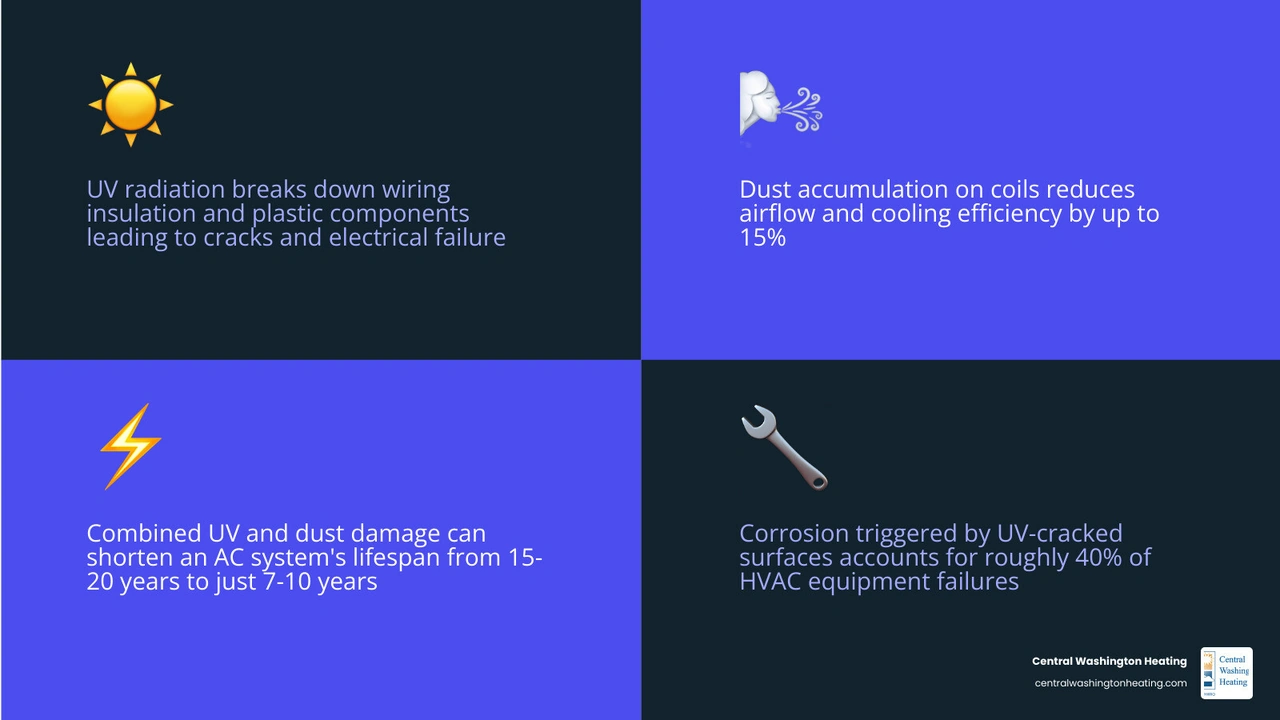
- UV radiation breaks down wiring insulation, plastic components, and refrigerant line foam, leading to cracks, brittleness, and eventual electrical failure
- Dust accumulation coats condenser coils, restricting airflow and reducing the unit’s ability to transfer heat efficiently
- Together, UV and dust accelerate wear, raise energy bills, and can shorten an AC system’s lifespan from 15-20 years down to as little as 7-10 years
- Efficiency losses from neglected outdoor units can reach up to 15%, meaning your system works harder and costs more to run
- Corrosion — often triggered or worsened by UV-cracked surfaces letting in moisture and dust — accounts for roughly 40% of all HVAC equipment failures
Most homeowners focus on indoor filter changes and thermostat settings. But the outdoor condenser unit sits fully exposed to the sun, wind, and airborne particles every single day. In the Wenatchee Valley, that means intense summer UV, agricultural dust, gravel roads, and seasonal windstorms all working against your equipment — often without any visible warning signs until something stops working.
The good news is that once you know what’s happening and why, protecting your system becomes straightforward.
Terms related to how uv exposure and dust affect your outdoor unit:
The Science of Solar Damage: How UV Exposure and Dust Affect Your Outdoor Unit
To understand why the sun is so tough on your air conditioner, we have to look at the science of solar radiation. The sun emits ultraviolet (UV) radiation, specifically UV-A and UV-B rays. While these rays are responsible for giving you a summer sunburn, they do something very similar to the materials that make up your outdoor AC unit.
When UV-A and UV-B rays strike non-metallic materials like plastics, rubbers, and polymers, they initiate a chemical process known as photo-degradation. This process breaks down the polymer chains and destroys “plasticizers”—the chemical additives that give plastics and rubbers their flexibility and durability. Without plasticizers, these materials lose their elasticity, become incredibly brittle, fade in color, and eventually crack or crumble under the slightest physical stress.
At the same time, direct sunlight significantly increases the “thermal load” on the metal chassis of your air conditioner. On a scorching July afternoon in East Wenatchee or Chelan, the metal casing of an unshaded AC unit can easily exceed 130°F. This extra surface heat means the compressor inside has to work much harder to release heat from the refrigerant, leading to longer run times, higher electrical bills, and accelerated mechanical wear.
Understanding How UV Exposure and Dust Affect Your Outdoor Unit’s Electrical Components
Behind the metal access panels of your outdoor unit lies a complex network of electrical components, including control wiring, contactors, capacitors, and protective conduits. Under normal circumstances, these are shielded from the elements. However, the exterior electrical conduits—the flexible plastic tubes that carry high-voltage power from your home’s disconnect box to the AC unit—are constantly exposed to the sun.
Over time, UV rays break down these plastic conduits, causing them to crack and split open. Once the conduit is compromised, rainwater, morning dew, irrigation overspray, and fine windblown dust can easily penetrate the interior. When fine dust mixes with moisture inside a cracked conduit or electrical box, it forms a conductive, abrasive grime. This grime can coat electrical contact points, leading to:
- Arcing and Short Circuits: Dust-coated contacts can cause electrical current to jump, leading to blown fuses, tripped breakers, or fried control boards.
- Premature Component Failure: Capacitors and contactors can overheat when coated in a layer of insulating dust, causing your system to shut down unexpectedly during a heatwave.
- Corrosion of Wire Terminals: Moisture entering through UV-damaged pathways accelerates the oxidation of copper and aluminum connections, increasing electrical resistance and system strain.
Taking steps to protect these components is a vital part of learning How to Prevent HVAC Emergencies with Maintenance before the peak summer heat sets in.
The Impact of Solar Radiation on Refrigerant Line Insulation
The thick copper pipes running from your outdoor condenser to your home’s indoor coil are responsible for transporting refrigerant. The larger, colder line (the suction line) must be insulated with closed-cell elastomeric foam insulation. This insulation serves two critical purposes: it prevents the cold line from absorbing heat from the outdoor air, and it stops condensation from forming and dripping.
Unfortunately, standard foam insulation is highly susceptible to UV degradation. Unprotected foam exposed to the intense sun in Malaga or Waterville will begin to dry out, stiffen, and crumble away within just a few seasons. Once the insulation thins or falls off entirely, several issues arise:
- Loss of Energy Efficiency: The exposed copper line absorbs ambient heat from the sun, warming the refrigerant before it ever reaches your indoor system. This forces your compressor to work significantly harder to achieve the same cooling effect inside.
- Condensation Issues: Without insulation, moisture from the air condenses on the cold copper line, creating a constant drip that can pool around the foundation of your home or invite mold growth.
- Accelerated Line Wear: Exposed copper is vulnerable to physical damage and environmental corrosion.
To combat this, we recommend upgrading to UV-resistant insulation or wrapping the foam with specialized PVC jacketing or heavy-duty UV-resistant tape. Keeping these lines properly protected is a key highlight in our Ultimate HVAC Maintenance Guide.
The Choking Effect: How Dust and Debris Restrict Airflow and Efficiency
While UV radiation attacks your system from a chemical standpoint, dust and debris wage a physical war against your air conditioner’s ability to breathe. Your outdoor unit is essentially a giant indoor coil. It pulls outdoor air through its metal sides, passes it across hot copper coils, and blows the heated air out the top to cool the refrigerant inside.
When a layer of dust, pollen, or agricultural debris settles onto the condenser coils, it acts as a thermal blanket. Dust particles (which typically range from 6 to 21 micrometers in size) are highly insulating. This thin layer of grime increases thermal resistance, making it incredibly difficult for heat to escape from the refrigerant into the surrounding air.
As a result, your compressor has to run longer and at much higher pressures to cool your home, leading to a massive increase in your monthly utility bills and putting immense strain on the compressor motor.
To put this into perspective, let’s look at how a clean condenser compares to one coated in typical high-desert dust:
| Performance Metric | Clean Condenser | Dusty/Fouled Condenser | Impact on System |
|---|---|---|---|
| Airflow Rate | 100% (Optimal) | Restricted (Down by 15-30%) | Fan motor runs hotter and works harder |
| Thermal Resistance | Low (Excellent heat transfer) | High (Heat trapped in refrigerant) | Compressor works longer to cool the home |
| Pressure Drop | Baseline | Increased by 128% to 283% | Massive strain on the refrigeration cycle |
| Cooling Capacity | Full Rated Output | Reduced by 5% to 10% | Home takes longer to reach thermostat setpoint |
| Energy Consumption | Baseline | Increased by up to 15% | Higher monthly electricity bills |
How UV Exposure and Dust Affect Your Outdoor Unit’s Condenser Coils
The metal fins surrounding your outdoor unit are engineered to maximize surface area for heat exchange. Depending on the brand and model of your air conditioner, these fins are typically designed in one of two configurations: corrugated or louvered.
- Corrugated Fins: These feature a wave-like pattern. While they are highly efficient, dust tends to adhere across the entire surface, leading to rapid pressure drops. The upside is that they are relatively easy to clean with a gentle water rinse.
- Louvered Fins: These have tiny, angled slits that create turbulence to improve heat transfer. However, these complex shapes act like a trap for fine silt and agricultural dust. Once dust gets wedged inside louvered fins, it is much harder to wash out.
As dust accumulates in these tiny spaces, the pressure drop across the indoor coil increases dramatically (sometimes up to 283%). This restriction in airflow directly correlates to a drop in cooling capacity, meaning your system might struggle to keep your home comfortable on a 100°F day in Cashmere or Leavenworth. Regular, professional AC Coil Cleaning is the best way to restore your system’s airway and protect these delicate metal fins from getting crushed or clogged.
Local Environmental Factors: From Agricultural Dust to High Desert Winds
Our home region of Central Washington is beautiful, but our unique geography presents some distinct challenges for outdoor AC units. Homeowners in Wenatchee, East Wenatchee, and surrounding areas have to deal with localized environmental factors that you simply don’t find in wetter or more urban climates:
- Agricultural Silt and Pollen: Surrounded by world-class orchards in Cashmere, Peshastin, and Monitor, our air is frequently filled with fine soil dust, fruit tree pollen, and organic debris from farming equipment. This fine dust easily bypasses the outer grilles of your AC and lodges deep within the condenser coils.
- High Desert Windstorms: Strong winds sweeping through the Columbia River basin and down from the Cascade foothills carry abrasive gravel dust and sand. These high-speed particles can literally sandblast the protective coatings off your unit’s aluminum fins, making them highly susceptible to corrosion.
- Wildfire Smoke and Ash: In late summer, regional wildfires can fill the air with fine ash. This ash is highly corrosive when mixed with moisture (such as morning dew) and can quickly degrade both copper coils and electrical connections.
Understanding these unique challenges is why we emphasize the Benefits of Regular HVAC Maintenance in High Desert Four Season climates to keep your system running efficiently year-round.
Shading and Shielding: Best Practices for Dual Protection

Protecting your outdoor unit from the twin threats of sun and dust requires a balanced, thoughtful approach. You cannot simply build a tight box around your air conditioner to keep the dust out, nor can you plant dense bushes right up against it to block the sun. Doing so will suffocate the system, causing it to overheat and fail in a matter of hours.
The key is creating a “layered defense” that shields the unit from direct solar radiation and windblown dust while maintaining the wide-open pathways it needs to breathe.
Strategic Shading vs. Airflow Restriction
Shading your outdoor unit can help lower the temperature of the air immediately surrounding the condenser, which slightly improves its operating efficiency. However, improper shading is one of the most common mistakes homeowners make.
If you plant thick shrubs, install a solid fence, or build a low roof directly over the unit without proper clearance, you will trap the hot exhaust air. The unit will end up sucking its own hot air back through the coils, causing the compressor to overheat and short-cycle.
To shade your unit safely, follow these rules of thumb:
- Maintain Clearance: Keep a minimum of 2 to 3 feet of open space on all sides of the unit, and at least 5 feet of clear space above it.
- Use Natural Shade: Plant deciduous trees (trees that lose their leaves in winter) several feet away on the south or west side of the unit. This provides excellent canopy shade during the hottest summer months while allowing winter sunlight to warm the area if you use a heat pump.
- Build Smart Windbreaks: If you live in a windy area like Waterville or Orondo, installing a louvered or perforated screen upwind of the unit can help diffuse blowing dust without choking the system’s airflow.
Ensuring your unit has the breathing room it needs is a major focus during a professional tune-up. Learn more about how this keeps your system running smoothly with our guide on How an AC Tune-Up Prevents Costly Summer Breakdowns.
Choosing the Right Protective Covers and Enclosures
Many homeowners ask if they should buy a cover for their outdoor unit. The answer depends entirely on the season and the type of cover you choose.
- Breathable Mesh Covers: These are lightweight, mesh screens designed to wrap around the sides of the unit during the operating season. They act as a pre-filter, catching large cottonwood seeds, leaves, and heavy debris before they can get stuck in the fins. They are excellent for homes near orchards or wooded areas in Leavenworth and Dryden, but they must be checked and cleaned regularly so they don’t restrict airflow.
- Solid Vinyl Covers: These are heavy, waterproof covers designed to seal the unit completely. Never run your air conditioner with a solid cover installed. Doing so will instantly destroy your compressor. Solid covers should only be used during the late autumn and winter months when the system is completely shut down for the season.
- Hard-Top Shields: These are durable polypropylene or metal caps that mount several inches above the top of the unit. They protect the fan motor from direct vertical sunlight, falling icicles, and pine needles while leaving the sides completely open for unrestricted airflow.
For a complete breakdown of how to care for your system throughout the year, check out our AC Maintenance Checklist for Central Washington Homeowners.
Recognizing the Warning Signs of Environmental Wear
Because your outdoor unit is tucked away in the backyard or on the side of your house, it is easy to forget about. However, catching the early signs of UV and dust damage can save you from a hot, uncomfortable summer afternoon and an expensive emergency repair bill.
Visual Indicators of UV Degradation
The next time you are out weeding the garden or mowing the lawn, take sixty seconds to inspect your outdoor AC unit. Look closely for these visual warning signs of sun damage:
- Flaking or Crumbling Pipe Insulation: If the black foam wrapping the copper lines looks dry, cracked, or is missing entirely, it is time to have it replaced.
- Cracked or Separated Conduits: Look at the flexible gray piping carrying the electrical wires. If it is split open, showing exposed wires, or pulling away from the connection boxes, this is a safety hazard that needs immediate attention.
- Faded, Yellowed, or Brittle Plastics: Check the fan blades (visible through the top grille) and the plastic grilles. If they look chalky, faded, or have visible hairline cracks, UV rays have severely weakened the material.
- Chipped or Peeling Paint: UV rays break down the protective powder-coated finish on the metal cabinet, opening the door for rust and corrosion to take hold.
If you notice any of these signs, scheduling a professional inspection is highly recommended. You can find out exactly what our technicians look for by reading What Does an HVAC Maintenance Visit Include.
Performance Signs of Dust Fouling
Dust damage is often invisible because the finest, most insulating silt gets trapped deep inside the middle of the coil fins where you can’t see it. However, your system will start dropping hints that it is struggling to breathe:
- Unusually High Energy Bills: If your electricity bills are climbing compared to the same month last year, but your family’s habits haven’t changed, a dusty, inefficient condenser is a likely culprit.
- The AC Runs Constantly: A clean system should cool your home quickly and shut off. If your AC is running non-stop without reaching your desired temperature, the outdoor unit is struggling to dump heat.
- Short-Cycling: If the system turns on for a few minutes, shuts off, and then turns back on repeatedly, the compressor may be overheating due to restricted airflow and shutting itself down to prevent permanent damage.
- Loud or Vibrating Compressor: When forced to work under high pressures due to dirty coils, the compressor will make a louder, deeper humming or vibrating sound than usual.
Keeping these issues at bay is essential for Maximizing AC Lifespan with Regular Maintenance.
Frequently Asked Questions About Outdoor AC Protection
Should I cover my outdoor AC unit during a dust storm?
No, you should never run your air conditioner with a solid cover on, even during a severe dust storm. If a major windstorm or dust event is sweeping through your area, the best course of action is to turn your AC system completely off at the thermostat until the storm passes.
Running the system during a dust storm forces the powerful condenser fan to act like a vacuum, sucking fine silt, sand, and organic debris directly into the wet, hot coils and packing it tight. By shutting the system down temporarily, you prevent the fan from drawing in these particles, keeping the interior of the unit much cleaner. Once the storm has fully cleared, you can safely turn the system back on.
Does direct sunlight reduce the lifespan of my AC’s refrigerant?
No, direct sunlight does not break down or degrade the chemical composition of your system’s refrigerant. Modern refrigerants are incredibly stable chemicals designed to withstand extreme temperatures and pressures inside a sealed loop.
However, direct sunlight does heat up the metal chassis and copper lines of your unit, which raises the overall pressure within the system. This increased pressure forces the compressor to work significantly harder to pump the refrigerant through the cooling cycle. So while the sun doesn’t hurt the refrigerant itself, the extra thermal load absolutely increases the workload on your compressor, which can lead to premature mechanical failure over time.
How often should I clean my outdoor unit in a high-dust environment?
In the dusty, agricultural areas of Central Washington, we recommend giving your outdoor unit a gentle DIY rinse once a month during the peak summer cooling season.
To do this:
- Turn off the power to your AC unit at the outdoor disconnect box or your home’s main electrical panel.
- Use a standard garden hose with a gentle spray nozzle (never use a high-pressure washer, as this will instantly bend and ruin the delicate aluminum fins).
- Spray the coils from the top down, washing away accumulated dust, grass clippings, and pollen.
- Let the unit dry completely before turning the power back on.
In addition to this monthly rinse, you should schedule a professional deep clean and inspection at least once a year. A trained technician can safely use specialized, non-acidic coil cleaners to dissolve stubborn, baked-on grime that water alone can’t remove. If you are wondering whether this annual service is worth the investment, take a look at our article: Annual HVAC Maintenance: Is It Worth It?
Keep Your Cool in Central Washington
At Central Washington Heating, we have spent over 30 years helping our neighbors across the Wenatchee Valley keep their homes comfortable through scorching summers and freezing winters. As a family- and veteran-owned business, we take pride in offering honest, dependable craftsmanship and fast, licensed service.
Whether you live in Wenatchee, East Wenatchee, Leavenworth, Cashmere, Chelan, or any of our surrounding communities, we understand the unique environmental challenges our high desert climate poses to your heating and cooling systems. From custom ductwork designed for quiet, efficient operation to 24/7 emergency services when you need us most, we are here to help.
Don’t let summer sun and windblown dust quietly wear down your air conditioner. Protect your investment, lower your energy bills, and ensure peace of mind for your family. Explore our HVAC Maintenance Plan Complete Guide to see how we make year-round comfort simple and affordable.
Ready to get your system ready for the summer heat? Request Service Today to schedule your professional AC tune-up and deep coil cleaning!

Written by the Central Washington Heating and Air team
The techs and comfort advisors who've kept the Wenatchee Valley heated, cooled, and breathing easy for 30+ years — family & veteran owned, with 40+ years of combined industry experience.
- Licensed & insured · LIC# CENTRWH742JN
- Daikin Comfort Pro certified
- Wenatchee, WA
Last updated July 7, 2026
Ready for comfort you can count on?
Schedule service, request a free estimate, or call now for 24/7 emergency help. Our team is standing by across the Wenatchee Valley.
Get started today
Free estimates on installs · no-pressure, written quotes
Schedule My ServiceCall (509) 776-0247Mon–Fri: 8:00 AM – 4:30 PM · 24/7 for emergencies
Already have a quote? Get a free second opinion →