
How AC Refrigerant Changes Affect Homeowners in 2026
Wenatchee Valley's HVAC authority for over 30 years. Expert AC, electric air handler, heat pump, and mini-split installation, repair, and maintenance. Family & veteran owned. 24/7 emergency service.
Why Homeowners Are Hearing More About Refrigerant Changes in 2026
Understanding how AC refrigerant changes affect homeowners starts with one reassuring fact: if your air conditioner works fine today, you almost certainly do not need to replace it.
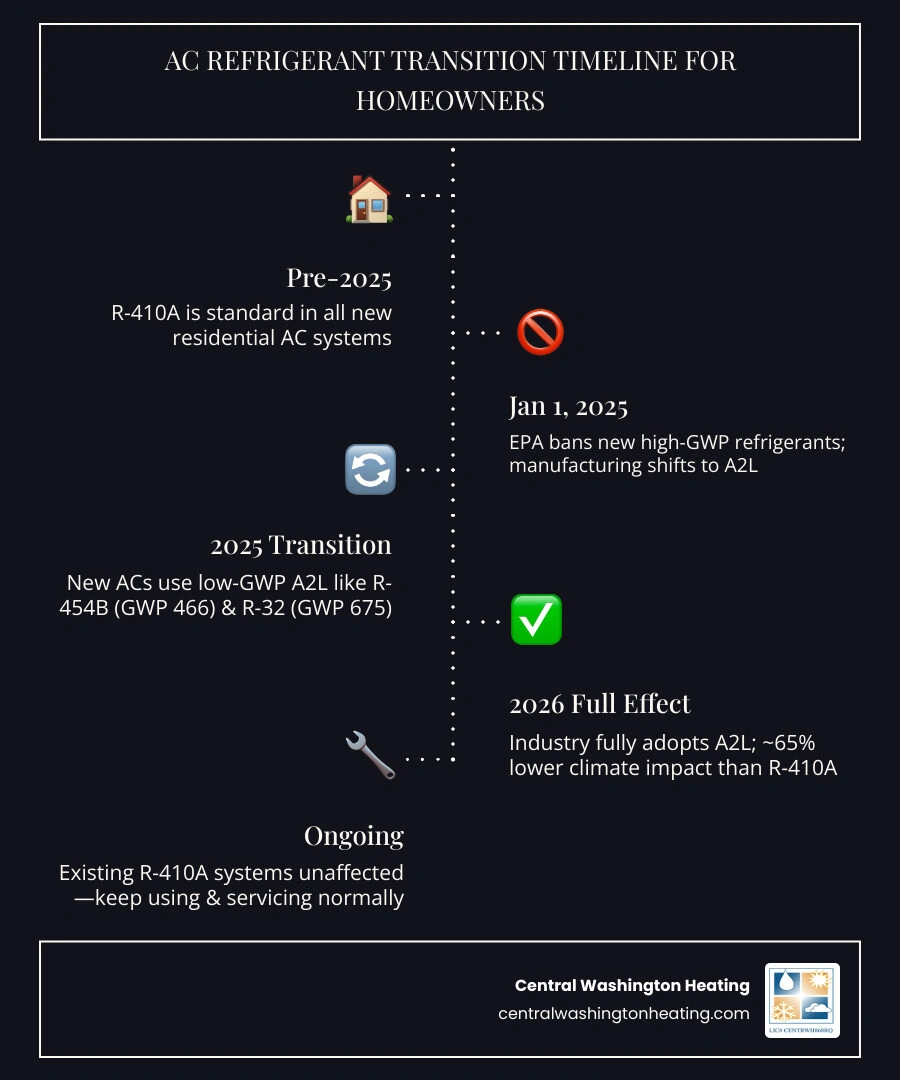
Starting January 1, 2025, new EPA rules required that new residential AC systems be manufactured with lower-impact refrigerants — moving away from R-410A and toward a newer class called A2L refrigerants, such as R-454B and R-32. By 2026, that transition is fully in effect across the industry. But here is what matters most for homeowners in Central Washington: existing R-410A systems are not affected by the ban on new production. You can still run your system, service it, and repair it.
Here is a quick breakdown of what the refrigerant changes actually mean for you:
| Your Situation | What the Change Means for You |
|---|---|
| You own a working R-410A AC | No action required — keep using and servicing it |
| Your system needs a major repair | Evaluate age and condition before spending on repairs |
| You are shopping for a new system | New units will use A2L refrigerants like R-454B or R-32 |
| You suspect a refrigerant leak | Call a licensed technician — do not delay |
| You want to retrofit your old system | Not possible — A2L refrigerants require purpose-built equipment |
That said, these changes do have real long-term implications — for refrigerant availability and what to expect when it is eventually time to upgrade. This guide walks through all of it in plain language, so you can make smart decisions without the stress.
How ac refrigerant changes affect homeowners in 2025 and 2026
The big change is not that air conditioners suddenly stopped working in 2025 or 2026. The real change is that newly manufactured residential AC systems and heat pumps are now being built around lower-GWP refrigerants.
GWP stands for global warming potential. R-410A, which has been common in residential systems for years, has a GWP of 2,088. Newer replacements such as R-454B and R-32 have much lower GWPs at 466 and 675, respectively. In practical terms, that cuts climate impact by roughly 65%.
These changes are part of a broader HFC phasedown aimed at reducing high-impact greenhouse gases. They also fit into the long history of refrigerant regulation that began with protecting the ozone layer and has now expanded to include climate impact.
What changed for new AC systems starting in 2025 and carrying into 2026?
As of January 1, 2025, the industry began shifting new residential cooling equipment away from R-410A. By 2026, that transition is fully underway in the field.
For homeowners, that means:
- New central AC systems now use low-GWP refrigerants such as R-454B or R-32
- New heat pumps and many ductless systems are also following the same shift
- Equipment, controls, coils, and safety components are designed specifically for these refrigerants
- Installation practices and building code requirements have been updated to match the new equipment
So if you are buying a new system in Wenatchee, East Wenatchee, Leavenworth, Cashmere, Chelan, Entiat, or nearby communities, you should expect it to use an A2L refrigerant rather than R-410A.

Why R-410A is being replaced even though it does not harm the ozone layer
This is where many homeowners understandably get confused.
R-410A does not damage the ozone layer the way older refrigerants such as R-22 did. That part is true. But it still has a very high climate impact if released into the atmosphere. Because of that, regulators have shifted focus from just ozone depletion to greenhouse gas reduction too.
That broader refrigerant transition has had major public-health benefits over time. According to EPA-related research, phasing out ozone-depleting substances is expected to avoid more than 280 million cases of skin cancer, about 1.6 million skin cancer deaths, and more than 45 million cases of cataracts in the United States among people born between 1890 and 2100.
In short:
- Older rules focused heavily on ozone damage
- Newer rules also target climate impact
- R-410A is being replaced because its GWP is still very high
How ac refrigerant changes affect homeowners who already own an R-410A system
If you already have an R-410A air conditioner, this is the part to remember: you are not being forced to replace it.
Your system can continue to operate as long as it is in good condition. It can still be maintained. It can still be repaired. What changes over time is the long-term availability and convenience of R-410A and certain older parts, not the legality of owning your current system.
So for most homeowners, the right move is simple:
- Keep using your system if it is cooling well
- Stay on top of routine maintenance
- Repair leaks promptly
- Plan ahead if your system is older or has a history of major problems
Do you need to replace your current AC system?
Usually, no. Refrigerant changes alone are not a reason to replace a working system.
What matters more is your unit’s age, reliability, leak history, and overall condition. If your AC is still doing its job without major trouble, there is no prize for replacing it early except maybe a lighter wallet and less patience in July.
| Situation | Usually Best to Keep | Usually Best to Consider Replacement |
|---|---|---|
| System age | Newer to mid-life equipment | Older equipment nearing end of service life |
| Repair history | Few repairs, no leaks | Repeated breakdowns or recurring leaks |
| Cooling performance | Consistent comfort | Warm air, poor airflow, short cycling |
| Major component condition | Compressor and coils in good shape | Major component failure or severe corrosion |
| Refrigerant status | No leak history | Significant refrigerant leak or large sealed-system repair |
Do homeowners need to replace an existing R-410A AC in 2026?
No. There is no rule that says homeowners must remove a functioning R-410A system in 2026.
You can legally keep using it. You can have it serviced. You can continue normal maintenance. The 2025 and 2026 changes apply to new equipment manufacturing and installation, not to forcing replacements of existing residential systems.
That is the single biggest misconception we see around this topic.
Can an older system be retrofitted to use new A2L refrigerants?
In most residential situations, no.
A2L refrigerants are not simple drop-in replacements for R-410A systems. New systems using R-454B or R-32 are engineered around those refrigerants from the start. That includes:
- Compressor design
- Refrigerant charge limits
- Control logic
- Electrical components
- Leak response features
- Oil compatibility
- Manufacturer safety approvals
Because of those differences, an older R-410A system generally cannot be converted over in a safe or manufacturer-approved way. As a rule, existing systems should stay with the refrigerant they were designed to use.
Signs it may be time to replace instead of keep repairing
Refrigerant changes may not force replacement, but they can affect the decision if your unit is already struggling.
Common warning signs include:
- Warm air coming from vents
- Short cycling
- Ice on the indoor coil or refrigerant lines
- Rising energy bills
- Poor airflow
- Frequent repairs
- A major compressor issue
- Repeated refrigerant leaks
- Aging equipment that no longer keeps up during Central Washington heat
If more than one of those is happening, replacement may make more sense than continuing to patch things together.
What the new A2L refrigerants mean for comfort, safety, and service
A2L is a safety classification.
- A = lower toxicity
- 2L = mildly flammable, with a low burning velocity
The phrase “mildly flammable” tends to make people raise an eyebrow and maybe both eyebrows. That is understandable. But these refrigerants are being used in systems specifically designed for them, and approved residential equipment includes safety measures to manage that risk.
The most common A2L refrigerants homeowners will hear about are R-454B and R-32.
Are A2L refrigerants safe for home use?
Yes, when used in properly designed and installed equipment, A2L refrigerants are considered safe for residential use.
The key point is that the system is purpose-built for the refrigerant. Manufacturers have updated equipment to meet safety standards, and the equipment includes safeguards that older systems did not need.
A2L refrigerants are not the same thing as unsafe substitute products sometimes marketed for old systems. Homeowners should never assume one refrigerant can simply replace another.
What safety features do new A2L systems use if a leak happens?
Exact features vary by system design, but modern A2L equipment may include:
- Leak detection components
- Updated control boards
- Built-in response sequences if refrigerant concentration rises
- Airflow or ventilation strategies
- Limits on refrigerant charge in certain applications
- Components designed to reduce electric heat startup risk
These are not “business as usual” add-ons. They are part of the equipment design, which is why older systems are not candidates for conversion.
Will new systems cool better or run more efficiently?
The refrigerant itself is only part of the story. Newer systems often come with broader efficiency improvements too, including better compressors, controls, and airflow design.
That means homeowners replacing older equipment may see:
- Better cooling consistency
- Improved humidity control
- Lower energy use
- Quieter operation
- Better comfort during peak summer weather
Research also shows that replacing old heating and cooling equipment with ENERGY STAR certified systems can reduce annual energy bills. Actual savings vary, but efficiency improvements are a real part of the upgrade conversation.
Repairs, leaks, and refrigerant availability after 2026
The biggest long-term homeowner impact will likely be on repairs, especially if an older R-410A system develops a refrigerant leak.
Refrigerant does not get “used up” in a healthy system. If the charge is low, there is a leak somewhere in the sealed system. That is why topping off a leaking unit without fixing the leak is not a real solution.
Will HVAC service and parts for older R-410A systems still be available after 2026?
Yes, but with an important footnote: availability should continue, but over time it may become less convenient.
Homeowners should still expect:
- Continued service for R-410A systems after 2026
- Ongoing access to many repair parts
- Refrigerant supply through existing inventory and reclaimed material
However, as the installed base ages and production shifts fully to newer refrigerants, R-410A may gradually become harder to source. We saw a similar pattern during the R-22 phaseout. Research from 2000 to 2018 found that reclaimers reported recovering more than 140 million pounds of HCFC-22, which helped support older systems after new production stopped. A similar reclaim-and-reuse approach helps extend service life for phased-down refrigerants too.
What happens if your AC is low on refrigerant?
Low refrigerant almost always means there is a leak.
That can lead to:
- Weak cooling
- Warm air from vents
- Longer run times
- Frozen evaporator coils
- Higher energy use
- Compressor strain
- Costlier damage if ignored
If you want a quick refresher on what refrigerant is and how it works in your system, see this refrigerant glossary page.
What should homeowners do if they notice signs of a refrigerant leak?
Do not wait and hope it gets better. Refrigerant leaks do not heal themselves out of loyalty.
Watch for signs such as:
- Warm air
- Hissing sounds
- Ice buildup on the indoor coil or line set
- Longer cooling cycles
- Higher utility bills
- Reduced comfort
If you notice these symptoms:
- Turn the thermostat up or shut the system off if ice is forming.
- Call for professional service promptly.
- Have the leak located and repaired.
- Avoid asking for a simple top-off without leak repair.
A leak should be diagnosed, repaired, and then the refrigerant charge restored to manufacturer specifications. For more on leak symptoms and next steps, visit our AC refrigerant leak complete guide, How To Resolve Heat Pump Refrigerant Leak Issues, and our page on refrigerant lines.
How to check your refrigerant type and make a smart next step
If you are not sure what refrigerant your system uses, you do not need to guess. Your equipment usually tells you.
How ac refrigerant changes affect homeowners when shopping for a new system
If you are planning a replacement, refrigerant changes mainly affect what kind of new equipment you will be offered. New systems are designed around lower-GWP refrigerants, and that is generally a good thing for long-term compatibility and environmental impact.
The main homeowner takeaways are:
- New systems will use A2L refrigerants such as R-454B or R-32
- Replacement planning matters more if your current system is older or leak-prone
- Choosing high-efficiency equipment may improve comfort and reduce energy use
- Waiting until a total breakdown can limit your options during peak season
How can homeowners check what refrigerant their current AC uses?
Start with the outdoor unit.
Look for:
- A nameplate or manufacturer label on the condenser cabinet
- A refrigerant marking that says R-410A, R-22, R-454B, or R-32
- Information in the owner manual
- Notes on past service paperwork
The outdoor condenser is usually the easiest place to confirm refrigerant type.
Are there rebates or incentives for upgrading?
Sometimes, yes.
Depending on the equipment and current programs available in 2026, homeowners may qualify for:
- Utility rebates for eligible high-efficiency HVAC equipment
- Manufacturer promotions
- Other local or regional efficiency incentives
Programs can change, and eligibility depends on the exact equipment installed. In general, ENERGY STAR qualified systems are a good place to start when reviewing incentive opportunities. Before replacing your system, it is worth checking current documentation requirements and program rules so you do not miss out.
Frequently Asked Questions About AC Refrigerant Changes
Can I still use my old refrigerant if my AC works fine?
Yes. If your R-410A system is working properly, you can keep using it. There is no 2026 rule requiring homeowners to replace a functioning unit just because it uses R-410A.
Will R-410A disappear right away?
No. This is a gradual transition, not a vanishing act.
R-410A will still be around for service and repairs through existing supply and reclaimed refrigerant. Over time, it may become less available, which is why long-term planning matters for older systems.
Is refrigerant something that gets used up over time?
No. In a sealed AC system, refrigerant circulates in a closed loop. It does not get consumed like fuel in a car.
If your system is low, that points to a leak. That is why adding refrigerant without finding and fixing the leak is only a temporary patch.
Conclusion: What homeowners in Central Washington should do next
The short version is reassuring: most homeowners in Wenatchee, East Wenatchee, Leavenworth, Cashmere, Chelan, Entiat, and nearby Central Washington communities do not need to replace their AC just because refrigerant rules changed.
What we recommend instead is simple:
- Keep your current R-410A system if it is working well
- Schedule regular maintenance to catch problems early
- Take refrigerant leaks seriously
- Plan ahead if your system is older or facing major repairs
- Expect any future replacement to use a newer low-GWP A2L refrigerant
If you want help understanding your current system, checking for leaks, or planning your next step, Central Washington Heating and Air is here to help with trusted HVAC service across the Wenatchee Valley. Request Service Today.
Serving Wenatchee, East Wenatchee, Leavenworth, Cashmere, Chelan, Entiat, and nearby communities.
For a helpful refresher on refrigerant basics, visit our refrigerant glossary.

Written by the Central Washington Heating and Air team
The techs and comfort advisors who've kept the Wenatchee Valley heated, cooled, and breathing easy for 30+ years — family & veteran owned, with 40+ years of combined industry experience.
- Licensed & insured · LIC# CENTRWH742JN
- Daikin Comfort Pro certified
- Wenatchee, WA
Last updated July 7, 2026
Ready for comfort you can count on?
Schedule service, request a free estimate, or call now for 24/7 emergency help. Our team is standing by across the Wenatchee Valley.
Get started today
Free estimates on installs · no-pressure, written quotes
Schedule My ServiceCall (509) 776-0247Mon–Fri: 8:00 AM – 4:30 PM · 24/7 for emergencies
Already have a quote? Get a free second opinion →