
Filter Finesse: Keeping Your AC Running Smoothly
Improve air quality, save energy, & protect your HVAC. Our guide makes AC filter change easy with step-by-step instructions.
Why Your AC Filter Change Makes All the Difference
An AC filter change is a simple yet crucial maintenance task for every homeowner. Replacing your air filter improves air quality and keeps your HVAC system running efficiently.
Quick AC Filter Change Steps:
- Turn off your AC system at the thermostat and circuit breaker
- Locate the filter (usually in the return air duct or air handler cabinet)
- Remove the old filter and note the size and airflow arrow direction
- Install the new filter with the arrow pointing toward the air handler/air handler
- Replace the cover and turn your system back on
According to the US Department of Energy, replacing a dirty, clogged filter with a clean one can lower your air conditioner’s energy consumption by 5 to 15 percent, which means real savings on your utility bills.
A dirty filter doesn’t just waste energy; it forces your AC to work harder. This strain can reduce your HVAC’s lifespan, leading to costly repairs or even a full system replacement.

Why Your AC Filter is Your System’s First Line of Defense
Your AC filter is the first line of defense for your home’s air quality and your HVAC system’s health. The main job of an Filter is to trap dust, pollen, pet dander, and other particles before they enter your HVAC system.
Without this barrier, contaminants build up on sensitive components like evaporator coils, reducing efficiency and leading to expensive problems. A clean filter maintains proper airflow, which is critical for your system to operate smoothly. When your AC can “breathe” easily, it runs efficiently. For more insights, check out Why You Need a Good Air Filter.
Signs It’s Time for a Change
Your HVAC system will show signs of distress when the filter is dirty. Recognizing these can save you from bigger problems. For more detailed warning signs, see our guide on Signs Air handler Air Filter Needs Replacing.
- Increased dust: If you’re dusting more often, your filter may be full, allowing particles to recirculate.
- Weak airflow: If air from your vents feels weak or your AC struggles to cool, a clogged filter is a likely culprit.
- Strange noises: A humming or whining sound can indicate the fan motor is straining against a clogged filter.
- Higher energy bills: An unexplained spike in your energy bill often points to a dirty filter forcing your system to work harder.
- Visible dirt: If you can’t see light through the filter, it’s definitely time for an AC filter change.
- Frozen coils: In severe cases, restricted airflow can cause the evaporator coil to freeze, a serious issue needing immediate attention.
Key Factors Influencing AC Filter Change Frequency
The standard 90-day rule for an AC filter change doesn’t fit every home. Your schedule should adapt to your specific environment.
- Pets: Change filters every 60 days for one pet, and as often as every 20-30 days for multiple pets.
- Allergies: For households with allergies or respiratory issues, change filters monthly or every 20 days during peak season.
- Location: Homes near construction, dusty areas, or agricultural fields (common in Central Washington) require more frequent changes.
- Usage: The more you run your AC, the faster the filter clogs. Check monthly during heavy use seasons.
- Filter Thickness: Thinner 1-inch filters need changing more often than thicker 4-inch filters. Check manufacturer recommendations.
- Other Factors: Indoor smoking and the number of occupants also increase the need for frequent changes.
The key is to check your filter monthly and adjust your schedule based on what you see.
Choosing Your Champion: Finding the Right Filter for Your Home
Selecting the right AC filter is crucial for your comfort and your system’s performance. Whether you’re dealing with pet hair, allergies, or dust, the right filter makes a difference.
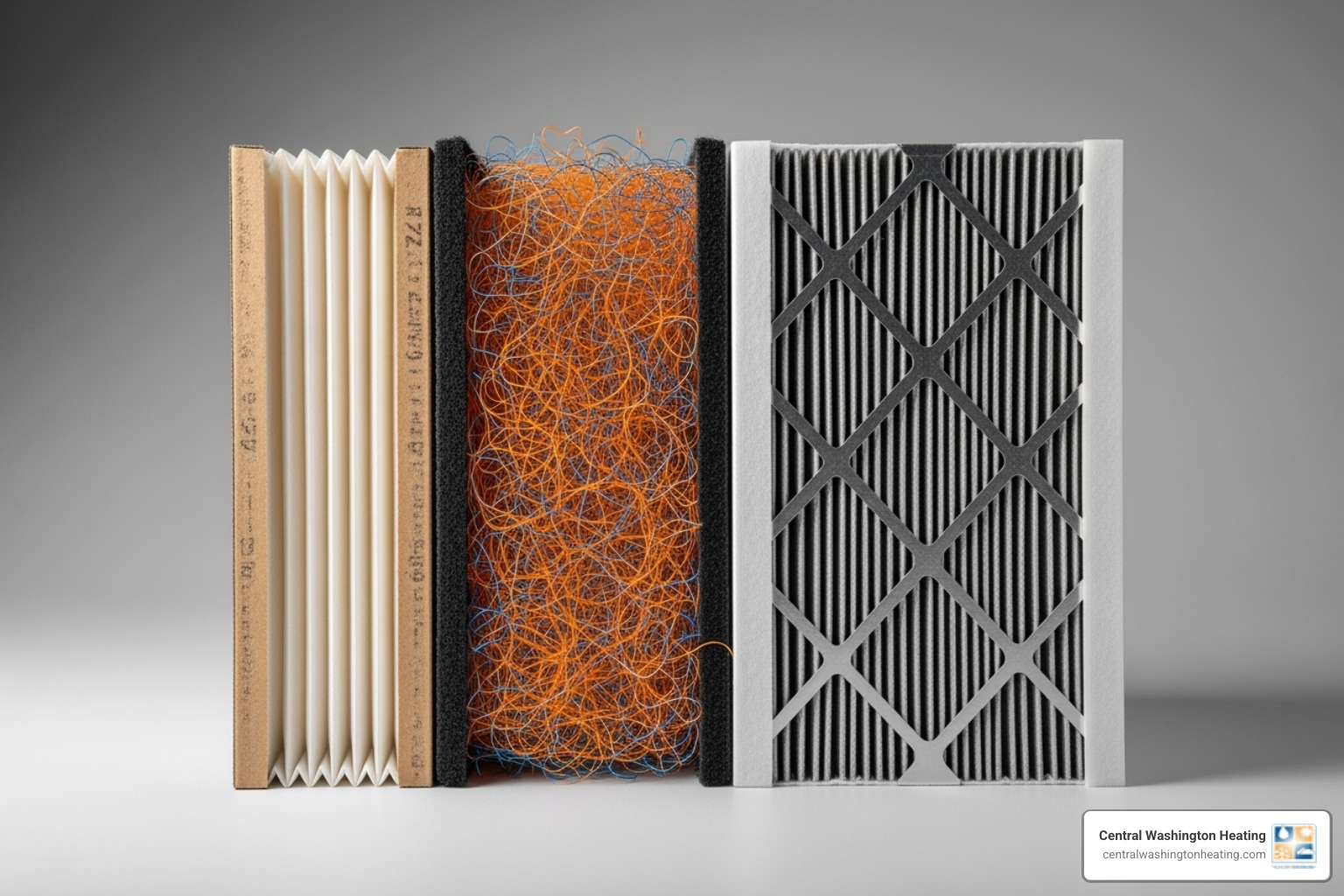
First, check your current filter for its dimensions (e.g., 20x25x1). Matching the size exactly is critical; a filter that’s too small allows dirty air to bypass it, while one that’s too big won’t fit. Next, consider the filtration power you need, which is determined by the filter type and MERV rating. To explore advanced options, check out Features in Home Air Filtration Systems.
Understanding Filter Types and MERV Ratings
Here’s a breakdown of common filter types to help with your next AC filter change.
- Fiberglass filters: These budget-friendly filters (MERV 2-3) catch large debris but offer minimal air quality improvement.
- Pleated filters: A popular choice (MERV 5-8), these capture dust, pollen, and dander. A MERV 6-8 filter is a great balance for most Central Washington homes.
- HEPA filters: With high MERV ratings (11+), these trap tiny particles like bacteria and smoke but can restrict airflow in systems not designed for them.
- Electrostatic filters: These use a static charge to attract particles and are available in disposable or reusable versions.
- Activated carbon filters: These contain charcoal to absorb odors from pets, cooking, or smoke.
The MERV scale (Minimum Efficiency Reporting Value) rates a filter’s effectiveness. Low ratings (1-4) offer basic equipment protection, medium ratings (5-8) are good for most homes, and high ratings (9-12) are excellent for allergy sufferers. Higher isn’t always better. A rating too high for your system can restrict airflow and cause damage. Always check your system’s manual for the recommended MERV range.
Reusable vs. Disposable: Can You Clean Your Filter?
Whether you can wash your filter depends on its type.
- Disposable filters, like most fiberglass and pleated paper types, are single-use. Washing them will damage the material and can release trapped particles.
- Reusable filters have sturdy frames and washable mesh. Proper cleaning allows them to be used for years.
To clean a reusable filter, gently vacuum it, then rinse with low-pressure water. Some can be soaked in a mild detergent or a water-vinegar solution. Crucially, let the filter air dry completely before reinstalling to prevent mold growth. Replace any reusable filter that is torn or damaged. While reusable filters have a higher upfront cost, they can save money over time compared to disposable ones.
Your Step-by-Step Guide to an AC Filter Change
An AC filter change is a quick DIY task that improves air quality and system efficiency. Safety is essential when working with electrical equipment, but the process is straightforward and requires minimal tools, regardless of your filter’s location in a return vent or Air Handler.

Step 1: Turn Off the Power and Locate the Filter
Safety first: Always turn off power to your HVAC system before starting. Switch your thermostat to “off,” then turn off the corresponding circuit breaker at your electrical panel. Look for a dedicated shut-off switch near the indoor unit as well.
Next, locate the filter. Common spots include return air vents (large grilles on a wall or ceiling), inside the air handler or air handler cabinet near the Air Conditioner unit, or in a dedicated filter box in the ductwork.
Step 2: Remove the Old Filter and Note the Details
Open the filter compartment by unlatching clips or removing screws. Gently slide out the old filter. Have a trash bag ready to contain dust.
Before discarding the old filter, note the dimensions printed on the frame (e.g., “20x25x1”). You’ll need this exact size for the replacement. Also, note the direction of the airflow arrow on the frame. The new filter must be installed with the arrow pointing the same way.
Step 3: Insert the New Filter and Close Up

Unpack the new filter and find its airflow arrow. The arrow must point in the same direction as the old one, typically toward the main HVAC unit. Installing it backward restricts airflow and can damage the filter and system.
Slide the new filter into its slot. It should fit snugly to prevent air from bypassing it. Replace the cover or grille, ensuring it’s securely fastened to prevent air leaks.
Finally, restore power at the circuit breaker and turn your thermostat back on. As a helpful reminder, write the date of the change on the new filter’s frame.
The High Cost of Neglect: What Happens When You Don’t Change Your Filter
Neglecting your AC filter change can lead to serious and expensive consequences. A clogged filter creates restricted airflow, forcing the blower motor to work overtime. This strain can cause short cycling (frequent on/off cycles), which wears out components like the compressor.
A struggling blower motor can burn out, and evaporator coils can freeze solid due to poor airflow. These issues lead to costly repairs. This strain can shorten your HVAC system’s lifespan by 5 to 10 years, forcing a premature replacement.
A clogged filter also degrades indoor air quality by failing to trap dust, allergens, and mold, which is a health concern for those with allergies or asthma. For insights on improving your indoor air quality, check out Whole Home Air Filtration Improves IAQ.
The Financial Impact of a Timely AC Filter Change
Neglecting your AC filter change has a significant financial impact. A clogged filter increases energy consumption. The US Department of Energy states that a clean filter can lower energy use by 5 to 15 percent. This translates to real savings on your utility bills, especially during hot Central Washington summers.
More importantly, regular changes help prevent expensive breakdowns like compressor or blower motor failures. The ultimate benefit is extending your HVAC system’s lifespan, protecting a major home investment and delaying the cost of a full system replacement. For more information, explore our Guide to Whole Home Air Filtration.
Frequently Asked Questions about AC Filters
Here are answers to some of the most common questions about AC filters.
How often should I really change my filter?
The general rule is every 90 days for standard 1-inch filters. However, you should check monthly and adjust your schedule based on your home’s needs. More frequent changes may be needed during Central Washington summers.
Factors like pets (change every 30-60 days) and allergies (change monthly) require more frequent replacement. Dusty locations and heavy AC usage also accelerate how quickly a filter gets dirty. 1-inch filters need more frequent changes than thicker 4-inch filters, which can last up to 6 months. Always check monthly regardless of thickness. Smart thermostat alerts are just timers; trust a visual inspection of your filter instead.
What happens if I install the filter backward?
Installing a filter backward restricts airflow because it goes against the filter’s designed flow pattern. This reduces efficiency, forcing the system to work harder and increasing energy bills. The pressure can also cause the filter to collapse, allowing debris into your system. This puts extra strain on the blower motor, which can lead to premature failure.
Can I run my AC without a filter?
Short answer: No. We absolutely do not recommend it. Without a filter, dust, hair, and debris go directly into your HVAC system’s sensitive components. This dirt coats the evaporator coils, impairing their ability to cool and potentially causing them to freeze. Dust buildup on the blower motor and fan can cause imbalance, noise, and motor failure.
Running without a filter allows dust and debris directly into the HVAC system, contaminating ductwork and recirculating allergens. This leads to expensive repairs and poor air quality. If you’re out of filters, it’s better to turn off your system until you can get a replacement.
Keep Your System Healthy and Your Air Clean
Regular AC filter changes are a simple task with significant rewards: improved efficiency, better air quality, and a longer system life. A clean filter helps your HVAC system run more quietly and effectively, protecting your investment.
At Central Washington Heating, we know that consistent filter changes prevent many common HVAC problems and emergency repairs. A clean filter is the first step to a healthy system.
Of course, some issues go beyond a dirty filter. If you’ve performed your AC filter change and your system is still not cooling properly, making unusual sounds, or your energy bills are still high, it may be time for professional help. These symptoms could indicate issues with refrigerant, ductwork, or other components.
If your AC is still struggling after a filter change, it may be time for professional AC repair in East Wenatchee, WA. Our experienced team can diagnose and solve complex issues, ensuring your home stays comfortable no matter what Central Washington’s weather throws at you.

Written by the Central Washington Heating and Air team
The techs and comfort advisors who've kept the Wenatchee Valley heated, cooled, and breathing easy for 30+ years — family & veteran owned, with 40+ years of combined industry experience.
- Licensed & insured · LIC# CENTRWH742JN
- Daikin Comfort Pro certified
- Wenatchee, WA
Last updated July 29, 2026
Ready for comfort you can count on?
Schedule service, request a free estimate, or call now for 24/7 emergency help. Our team is standing by across the Wenatchee Valley.
Get started today
Free estimates on installs · no-pressure, written quotes
Schedule My ServiceCall (509) 776-0247Mon–Fri: 8:00 AM – 4:30 PM · 24/7 for emergencies
Already have a quote? Get a free second opinion →