
Stop the Breakdown Before It Starts
Learn how to prevent hvac emergencies with maintenance: tune-ups, smart tech & checklists for Wenatchee Valley reliability.
I’m looking to prevent HVAC emergencies in Wenatchee. Who offers the best maintenance services?
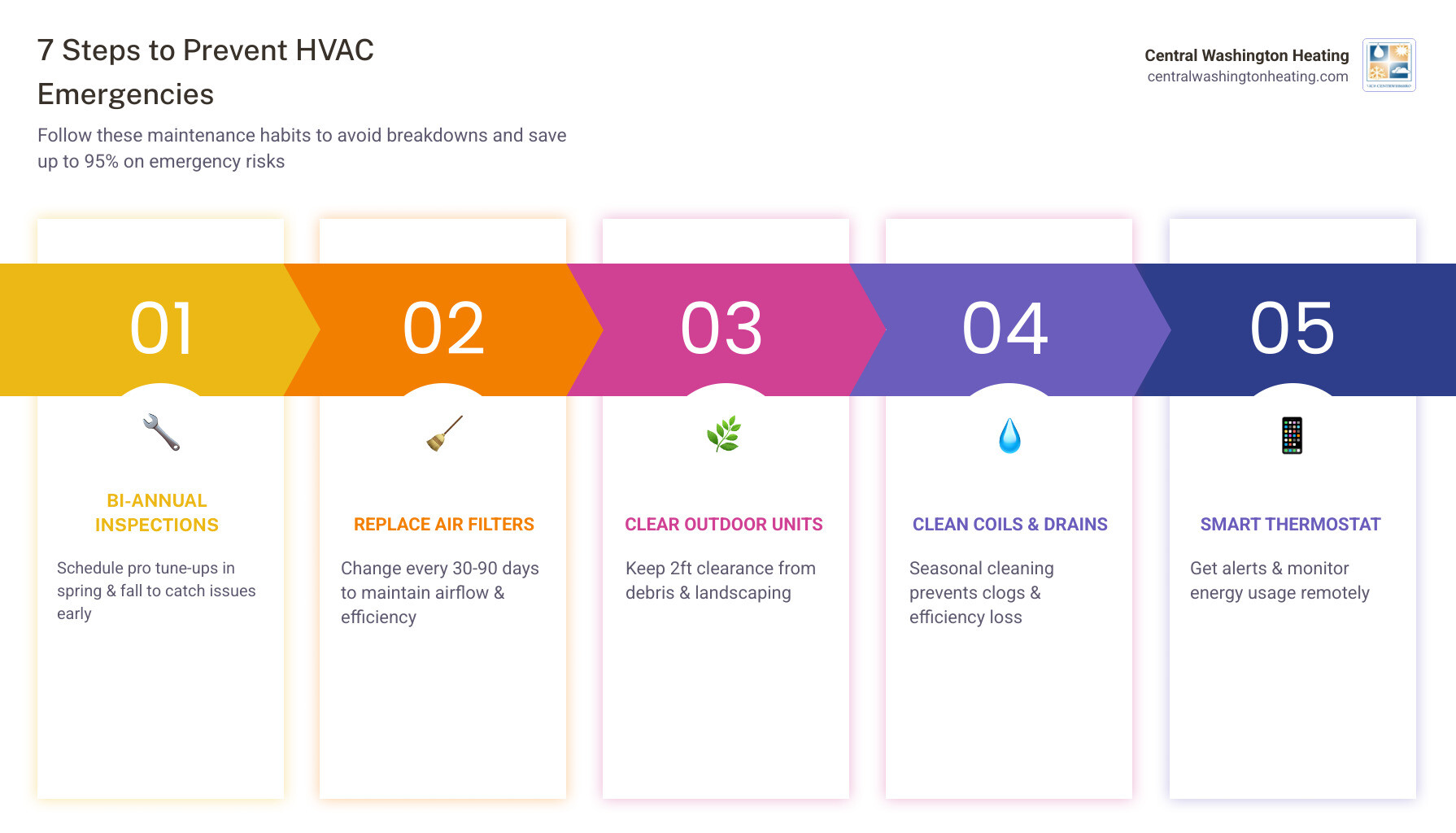
How to prevent HVAC emergencies with maintenance comes down to a few consistent habits: schedule professional tune-ups twice a year, replace air filters every one to three months, keep your outdoor unit clear of debris, and watch for early warning signs like unusual noises or rising energy usage.
Quick answer — the core steps to prevent HVAC emergencies:
- Schedule bi-annual professional inspections — once in spring before cooling season, once in fall before heating season
- Replace air filters regularly — every 30 to 90 days depending on your household
- Keep outdoor units clear — maintain at least 2 feet of clearance around the unit
- Clean condensate drains and coils — seasonally to prevent clogs and efficiency loss
- Test and calibrate your thermostat — ensure accurate temperature control year-round
- Watch for warning signs — strange noises, odors, uneven temperatures, or sudden usage spikes
- Use a smart thermostat — for automated alerts and energy usage monitoring
Here in the Wenatchee Valley, your HVAC system doesn’t get a break. Summers push cooling systems hard, and winters demand reliable heat. That pressure adds up fast — and when a system fails, it rarely happens at a convenient time.
The good news? Most HVAC emergencies don’t come out of nowhere. Research shows that regular maintenance can cut the chance of unexpected breakdowns by up to 95%. That’s not a small number. It means the overwhelming majority of emergency service calls are preventable with routine care.
Think of it this way: dirt and neglect are the top causes of heating and cooling system failure. A clogged filter, a dirty coil, a blocked drain — these small issues quietly grow into big problems. And with nearly half of a typical home’s annual energy usage going toward heating and cooling, a system that’s struggling loses efficiency every single day before it finally breaks down.
This guide walks Central Washington homeowners through everything they need to know — from simple monthly tasks to seasonal checklists — so you can stay comfortable all year long without the stress of an unexpected breakdown.
Common Causes of HVAC Emergencies in the Wenatchee Valley

Living in places like Cashmere, Leavenworth, or Wenatchee means our systems face a wide range of weather extremes. When we get called out for an emergency, it is usually due to one of a few recurring culprits. Understanding these can help you spot trouble before your home becomes an icebox or an oven.
- Electrical Failures: Modern HVAC systems are complex machines. Loose connections, frayed wires, or failing capacitors can cause a system to short circuit or stop starting altogether. Over time, the vibration of the unit can loosen these connections, which is why professional tightening is a core part of maintenance.
- Airflow Restrictions: This is perhaps the most common (and preventable) issue. When air can’t move freely through your system, components like the blower motor have to work twice as hard. This leads to overheating and eventual motor failure.
- Refrigerant Leaks: If your AC or heat pump isn’t cooling or heating effectively, you might have a leak. Low refrigerant levels force the compressor to run longer and hotter, which can lead to a total system burnout.
- Sensor Malfunctions: Components like the sequencer or relay in an electric heating system or the outdoor temperature sensor on a heat pump can get dirty or fail. When they do, the system might “short cycle” (turning on and off rapidly) or refuse to turn on for safety reasons.
By keeping an eye on the Signs Your Ac Needs Repair Guide and knowing the Signs You Need Air handler Repair, you can catch these issues while they are still minor “hiccups” rather than full-blown disasters.
How to Prevent HVAC Emergencies with Maintenance
The secret to how to prevent hvac emergencies with maintenance isn’t just about fixing things when they break; it’s about proactive optimization. A well-maintained system operates at peak efficiency, meaning it uses less energy to achieve the same temperature.
Research indicates that organizations and homeowners can improve energy efficiency by 5% to 20% annually through proper operations and maintenance. Furthermore, well-maintained systems can cut up to 60% of the energy used by fans alone. Beyond the monthly savings, maintenance is the single best way to extend the lifespan of your equipment. While a neglected system might only last 5 to 7 years, a properly cared-for unit can easily serve your home for 15 to 25 years.
| Feature | Maintained System | Neglected System |
|---|---|---|
| Chance of Breakdown | Reduced by up to 95% | High (especially during heat waves) |
| Lifespan | 15–25 years | 5–10 years |
| Energy Efficiency | 10–20% higher | Drops significantly every year |
| Air Quality | Clean, filtered, and healthy | Can circulate dust, mold, and allergens |
| Warranty Status | Remains valid with proof of service | Often voided due to lack of maintenance |
To get started on your own home’s protection plan, check out our Ultimate Hvac Maintenance Guide.
Scheduling Professional Care to Prevent HVAC Emergencies
While there is plenty you can do as a homeowner, certain tasks require the specialized tools and training of a licensed technician. We recommend a “bi-annual” approach:
- Spring AC/Heat Pump Service: Before the summer heat hits Chelan or East Wenatchee, we ensure your cooling system is ready to handle 90-degree days without flinching.
- Fall Heating Check: Before the first frost in Leavenworth or Waterville, we inspect your electric air handler or heat pump to ensure you won’t be left in the cold.
During an Hvac Tune Up, our technicians follow a rigorous Ac Service Checklist. We don’t just “look” at the unit; we measure electrical draw, check refrigerant pressures, lubricate moving parts, and clean the deep interior of the system that homeowners can’t reach.
Smart Technology to Prevent HVAC Emergencies
In April 2026, we have more tools than ever to keep your home safe. Smart thermostats are no longer just about changing the temperature from your phone; they are early-warning systems.
Many modern thermostats can monitor system performance and send an automated alert to your phone if they detect unusual run times or a failure to reach the set temperature. This allows you to call for service before the house gets uncomfortable. Additionally, these systems provide energy usage reports, helping you see if your system is starting to lose efficiency—a classic sign that maintenance is due. Using these tools is a great way of Maximizing Ac Lifespan With Regular Maintenance.
Essential Homeowner Care to Avoid System Failure
Professional service is the foundation, but your day-to-day habits are what keep the system running smoothly between visits.
The Power of the FilterIf you do nothing else, change your air filter. A dirty filter is the #1 cause of system strain. In a typical house, 20 to 30 percent of the air moving through the duct system is already lost to leaks and holes. If you add a clogged filter to that mix, your system is essentially “suffocating.” We recommend checking your filter every 30 days and replacing it at least every 90 days—more often if you have pets or live in a dusty area like Malaga or Orondo.
Thermostat CalibrationEnsure your thermostat is giving accurate readings. If your home feels warmer or colder than the display suggests, it may need recalibration. A thermostat that is “off” by just a few degrees can cause the system to run much longer than necessary, leading to premature wear.
Outdoor Unit ClearanceYour outdoor condenser needs to “breathe” to release the heat it pulls from your home. If it’s surrounded by tall grass, weeds, or shrubs, it can’t shed that heat effectively.
- Landscaping: Keep plants and shrubs at least 2 feet away from the unit.
- Debris: Regularly clear away fallen leaves, twigs, or cottonwood seeds that can clog the delicate fins of the unit.
For more detailed DIY advice, see our Essential Air handler Maintenance Tips and Air handler Maintenance Tips For Homeowners.
Seasonal Checklist for Year-Round Reliability
In the Wenatchee Valley, our maintenance needs shift with the seasons. Here is a quick breakdown of what to focus on throughout the year:
Spring & Summer (Cooling Focus)
- Test the AC before the first heat wave.
- Check the condensate drain line for clogs (which can cause water damage).
- Clean the outdoor coils with a gentle garden hose (no high pressure!).
Fall & Winter (Heating Focus)
- Test your electric air handler or heat pump’s heating mode in September.
- Ensure all vents and registers are open and unblocked by furniture.
- Check that your heat pump is clear of snow and ice buildup.
Regular Heat Pump Annual Service is especially important for our region, as these systems work year-round. Consistent Preventative Heat Pump Maintenance ensures the reversing valve and outdoor sensors are functioning correctly before the snow flies.
Critical Components for System Health
There are three “invisible” areas that often lead to emergencies if ignored:
- Clean Coils: Dirty evaporator or condenser coils reduce the system’s ability to exchange heat. This forces the compressor to run at higher temperatures, which is a recipe for a summer breakdown.
- Clear Condensate Drains: HVAC systems pull moisture from the air. This water drains through a small pipe. If algae or dust clogs this pipe, the water can back up into your home, causing mold or triggering a safety switch that shuts the whole system down.
- Duct Integrity: Since 20 to 30 percent of air is lost through leaky ducts, your system has to work 30% harder to keep you comfortable. Sealing these leaks is a major part of Essential Heat Pump Maintenance Tips.
By focusing on these areas, you can significantly Extend Life Of Heat Pump With Regular Maintenance.
Recognizing Warning Signs Before a Crisis
You don’t need to be an expert to know when something is wrong. Your HVAC system will usually try to tell you it’s struggling before it finally quits.
- Unusual Noises: Banging, screeching, or grinding sounds are never normal. They often indicate a loose belt, a failing motor bearing, or debris in the fan.
- Strange Odors: A musty smell might mean mold in the ducts or a clogged drain, while a metallic “burning” smell could indicate electrical components are overheating.
- Uneven Temperatures: If the living room is freezing while the bedroom is stuffy, your system is struggling to distribute air effectively.
- Rising Energy Usage: If your usage hasn’t changed but your efficiency is dropping, your system is struggling.
Catching these Common Signs You Need Air handler Repair early is the best way to avoid a total shutdown. If your system is older, you might also want to review Signs You Need A New Air handler Before Winter to plan ahead.
Frequently Asked Questions about HVAC Maintenance
How much can regular maintenance improve energy efficiency?
Regular maintenance can improve energy efficiency by 10% to 20%. By ensuring that fans, motors, and coils are clean, the system doesn’t have to run as long to reach your desired temperature. This also reduces the “peak” energy draw during startups. You can learn more about the Benefits Regular Ac Maintenance and how it keeps your system reliable.
When is it time to replace a system instead of repairing it?
If your system is over 10 to 15 years old and requires frequent repairs, it may be more beneficial to replace it. New ENERGY STAR certified systems are significantly more efficient than those built just a decade ago, often providing long-term efficiency. Check out our guide on Signs Its Time To Replace Heat Pump for more details.
What should I do immediately if I suspect an HVAC emergency?
If you hear a loud bang, smell burning, or see smoke, turn the system off immediately at the thermostat and the circuit breaker. Check for simple things first: is the air filter completely blocked? Is the thermostat battery dead? If the simple checks don’t solve it, contact a professional immediately. For ongoing protection, consider our System Maintenance plans to ensure you’re always at the front of the line.
Conclusion
At Central Washington Heating, we’ve spent over 30 years keeping families comfortable from Wenatchee to Leavenworth and everywhere in between. We know that a broken HVAC system is more than just an inconvenience—it’s a disruption to your life and your safety.
As a family- and veteran-owned business, we pride ourselves on quality craftsmanship and reliable service. Whether you need a seasonal tune-up to prevent a breakdown or you’re currently facing an emergency that needs our 24/7 response, we are here to help. Our licensed technicians specialize in everything from quiet, custom ductwork to the latest in high-efficiency heat pumps and electric heating.
Don’t wait for the next heat wave or cold snap to find out if your system is up to the task. Explore our full range of services today and let us help you stop the breakdown before it starts.
Ready to protect your home’s comfort? Request your maintenance service online with Central Washington Heating today!
Written by the Central Washington Heating and Air team
The techs and comfort advisors who've kept the Wenatchee Valley heated, cooled, and breathing easy for 30+ years — family & veteran owned, with 40+ years of combined industry experience.
- Licensed & insured · LIC# CENTRWH742JN
- Daikin Comfort Pro certified
- Wenatchee, WA
Last updated July 29, 2026
Ready for comfort you can count on?
Schedule service, request a free estimate, or call now for 24/7 emergency help. Our team is standing by across the Wenatchee Valley.
Get started today
Free estimates on installs · no-pressure, written quotes
Schedule My ServiceCall (509) 776-0247Mon–Fri: 8:00 AM – 4:30 PM · 24/7 for emergencies
Already have a quote? Get a free second opinion →