
How the Compressor Evaporator and Condenser Function: 2026 Essential Guide
Wenatchee Valley's HVAC authority for over 30 years. Expert AC, electric air handler, heat pump, and mini-split installation, repair, and maintenance. Family & veteran owned. 24/7 emergency service.
Why Understanding How the Compressor, Evaporator, and Condenser Function Matters for Your Home Comfort
How the compressor, evaporator, and condenser function is the foundation of every cooling and heating system in your home. Here is a quick breakdown:
| Component | What It Does |
|---|---|
| Compressor | Pressurizes low-temperature refrigerant gas, raising its temperature and pushing it through the system |
| Condenser | Releases heat from the hot refrigerant to the outdoors, turning it from gas into liquid |
| Evaporator | Absorbs heat from your indoor air, cooling the space as refrigerant evaporates inside the coil |
Think about stepping inside on a hot Central Washington summer day and feeling that immediate rush of cool air. That relief is not magic — it is the result of three core components working in a continuous loop to pull heat out of your home and push it outside. Refrigeration systems do not actually create cold air; they move heat from one place to another. Understanding how each part plays its role can help you recognize warning signs early, avoid costly breakdowns, and keep your system running efficiently through the Wenatchee Valley’s hot summers and cold winters.
How the Compressor Evaporator and Condenser Function Together
To understand how the compressor evaporator and condenser function, we first have to look at the “blood” of the system: Refrigerant. This special chemical compound has a very low boiling point, allowing it to change from a liquid to a gas at low temperatures. By manipulating the pressure of this refrigerant, your HVAC system can force heat to move against its natural inclination—essentially “pumping” heat out of a cool room and dumping it into the hot outdoors.
This process is known as the vapor-compression cycle. Whether you are using a standard AC or you want to learn How Heat Pumps Work, the physics remains the same. The system is divided into two distinct sides: the high-pressure side (where heat is rejected) and the low-pressure side (where heat is absorbed).
The High-Pressure vs. Low-Pressure Side
| Feature | Low-Pressure Side (Indoor) | High-Pressure Side (Outdoor) |
|---|---|---|
| Primary Component | Evaporator | Condenser & Compressor |
| Refrigerant State | Cold Liquid/Vapor Mix | Hot Vapor/Liquid |
| Temperature | Lower than indoor air | Higher than outdoor air |
| Goal | Absorb Heat | Reject Heat |
The Step-by-Step Sequence of How the Compressor Evaporator and Condenser Function
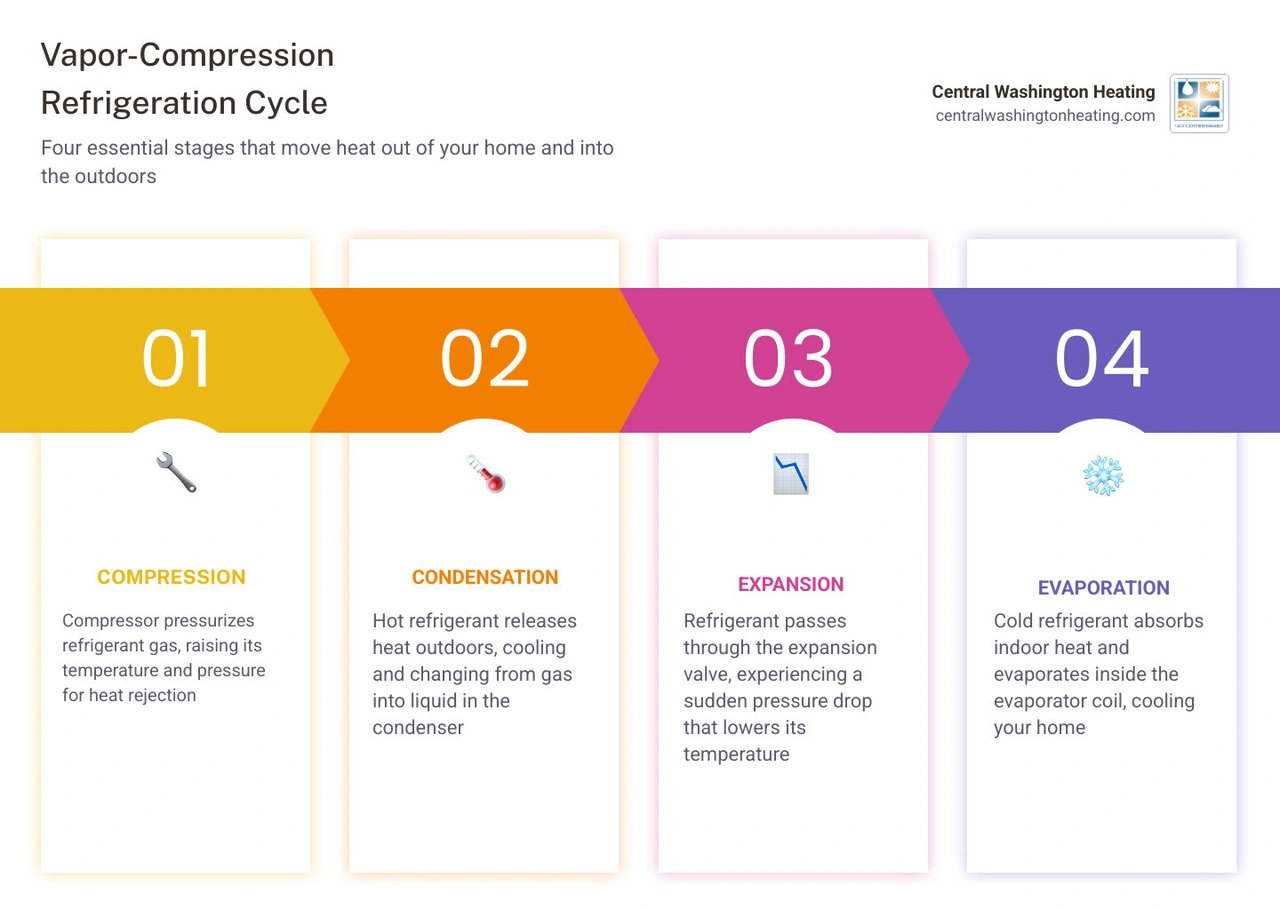
The cycle begins when the low-pressure, cool refrigerant vapor enters the compressor. Once compressed into a hot, high-pressure gas, it travels to the condenser. In the condenser, the heat is blown away by a fan, and the refrigerant turns back into a liquid.
Before it can return to the evaporator to pick up more heat, it must pass through an expansion device, such as a Thermostatic Expansion Valve (TXV). The TXV is like a nozzle on a garden hose; it restricts flow, causing a sudden drop in pressure. This “flashing” process causes the refrigerant temperature to plummet, preparing it to enter the evaporator as a cold mist. As indoor air blows over the evaporator coils, the refrigerant boils (evaporates), soaking up the heat from your living room and starting the whole journey over again.

The Compressor: The Heart of the Refrigeration Cycle
If the refrigerant is the blood of your HVAC system, then the Compressor is undoubtedly the heart. Located in the outdoor unit, its primary job is to circulate the refrigerant and create the pressure differential required for the cycle to work.
When the refrigerant arrives at the compressor from the indoor unit via the suction line, it is a “superheated vapor.” This simply means it is a gas that has been heated past its boiling point. The compressor squeezes these gas molecules into a much smaller space. If you’ve ever used a bicycle pump and noticed the nozzle getting hot, you’ve seen this physics in action: increasing pressure increases temperature.
The compressor discharges this now-scorching-hot gas into the condenser. In the Wenatchee Valley, we commonly see two types of compressors:
- Reciprocating Compressors: These use a piston and cylinder setup, much like a car engine, to compress the gas.
- Scroll Compressors: These use two interlocking spirals. One remains stationary while the other rotates, “trapping” and compressing the gas more quietly and efficiently.
Because the compressor handles so much pressure, it can sometimes be a source of trouble. If you notice your AC Making Strange Noises What They Mean might involve a failing compressor motor or “slugging,” which happens when liquid refrigerant (which can’t be compressed) accidentally enters the chamber.
The Condenser and Evaporator: Managing Heat Exchange
While the compressor moves the refrigerant, the condenser and evaporator are where the actual “trading” of heat happens. These are both indoor coils, typically made of copper tubing surrounded by thin aluminum fins designed to maximize surface area.
The Condenser: Releasing the Heat
The outdoor unit houses the condenser coils. Its mission is heat rejection. The hot gas from the compressor enters the top of the condenser. As the outdoor fan blows air across the coils, the refrigerant undergoes three stages:
- Desuperheating: The gas cools down to its “saturation” point (the temperature where it wants to turn back into a liquid).
- Condensing: The refrigerant changes state from a gas to a liquid, releasing a massive amount of “latent heat” in the process. This is why the air blowing out of the top of your outdoor unit feels incredibly hot!
- Subcooling: The liquid is cooled even further below its boiling point to ensure no gas bubbles remain before it heads to the expansion valve.
Whether you are looking at a Heat Pump vs AC, the outdoor condenser functions similarly during the cooling season, acting as the exit door for the heat that was once inside your home.
The Evaporator: The “Business End” of Cooling
While the condenser is outside working hard in the sun, the evaporator is usually tucked away inside your home (often near your electric air handler or in a crawlspace). If you have a Heat Pump, this coil is responsible for providing that crisp, cool air you crave in July.
As the cold, low-pressure refrigerant enters the evaporator, it is much colder than the air in your home. As your indoor fan blows warm house air over these coils, the refrigerant absorbs that heat. Because the refrigerant has such a low boiling point, this heat causes it to evaporate. By the time the refrigerant leaves the evaporator, it has successfully “stolen” the heat from your home, leaving the air behind it significantly cooler and less humid.
Why Homeowners Should Understand How the Compressor Evaporator and Condenser Function
You don’t need to be a scientist to benefit from knowing how the compressor evaporator and condenser function. In our local climate—from the dry heat of East Wenatchee to the mountain air of Leavenworth—HVAC systems work under high demand.
Understanding these roles helps with basic AC Unit Troubleshooting. For instance, if your evaporator coil is “frozen” (covered in ice), it’s usually because of an airflow restriction like a dirty filter or low refrigerant levels. Without enough air blowing over it, the coil gets too cold, and the moisture in the air turns to ice.
Here are a few warning signs to watch for:
- Dirty Condenser Coils: If your outdoor unit is clogged with cottonwood seeds or dust, it can’t reject heat. This forces the compressor to work harder, driving up energy bills.
- Hissing Noises: This could indicate a refrigerant leak, meaning there isn’t enough “fluid” to carry the heat away.
- Warm Air from Vents: This often means the cycle is broken—perhaps the compressor isn’t engaging or the TXV is stuck.
Frequently Asked Questions About HVAC Components
What is the main difference between the condenser and evaporator coils?
The primary difference lies in their function and location. The evaporator coil is located indoors and is responsible for heat absorption (cooling your air). The condenser coil is located outdoors and is responsible for heat rejection (dumping that heat into the atmosphere). Essentially, the evaporator “picks up” the heat, and the condenser “drops it off.”
Why is the compressor often called the heart of the system?
The compressor is the only component that actively “pumps” the refrigerant. Without it, the refrigerant would just sit still, and no heat transfer would occur. It creates the “pulse” of the system by maintaining the pressure differential that allows the refrigerant to change from a gas to a liquid and back again. It is also the most energy-consuming part of your HVAC unit.
How does the expansion valve assist the other components?
The expansion valve (or TXV) acts as the gatekeeper between the high-pressure and low-pressure sides. If the compressor is the heart, the TXV is the brain. It measures the temperature of the refrigerant leaving the evaporator and adjusts the flow to ensure the coil is as efficient as possible without allowing liquid refrigerant to flood back and damage the compressor.
Reliable Home Comfort in the Wenatchee Valley
At Central Washington Heating, we have spent over 30 years helping our neighbors in Wenatchee, East Wenatchee, Cashmere, and Leavenworth stay comfortable year-round. As a family- and veteran-owned business, we pride ourselves on quality craftsmanship and honest service. Whether your system needs a routine tune-up to keep those condenser coils clean or you need a complex compressor replacement, our licensed technicians are ready to help.
We understand the unique challenges of our local climate, from wildfire smoke clogging your outdoor units to the heavy cooling demands of a 100-degree August day. We offer 24/7 emergency service and customized solutions to ensure your home remains a sanctuary of comfort.
Ready to ensure your HVAC system is running at peak efficiency?Request Air Conditioning Services in Wenatchee Today. Let us put our three decades of expertise to work for you!

Written by the Central Washington Heating and Air team
The techs and comfort advisors who've kept the Wenatchee Valley heated, cooled, and breathing easy for 30+ years — family & veteran owned, with 40+ years of combined industry experience.
- Licensed & insured · LIC# CENTRWH742JN
- Daikin Comfort Pro certified
- Wenatchee, WA
Last updated July 7, 2026
Ready for comfort you can count on?
Schedule service, request a free estimate, or call now for 24/7 emergency help. Our team is standing by across the Wenatchee Valley.
Get started today
Free estimates on installs · no-pressure, written quotes
Schedule My ServiceCall (509) 776-0247Mon–Fri: 8:00 AM – 4:30 PM · 24/7 for emergencies
Already have a quote? Get a free second opinion →