
Cold Comfort: Troubleshooting Your Air handler’s Icy Blast
Furnace blowing cold? Get DIY fixes, common issues, and when to call pros. Restore your home's warmth now!
When Your Air handler Delivers an Unwelcome Surprise
Air handler blowing cold air when you need heat most is one of winter’s most frustrating surprises. When temperatures drop in Central Washington, the last thing you want is an icy blast coming from your vents instead of cozy warmth. Whether you’re in Wenatchee, Chelan, or Leavenworth, a malfunctioning air handler can quickly turn your home from comfortable to unbearable.
Quick Answer: Top 5 Reasons Your Air handler Blows Cold Air
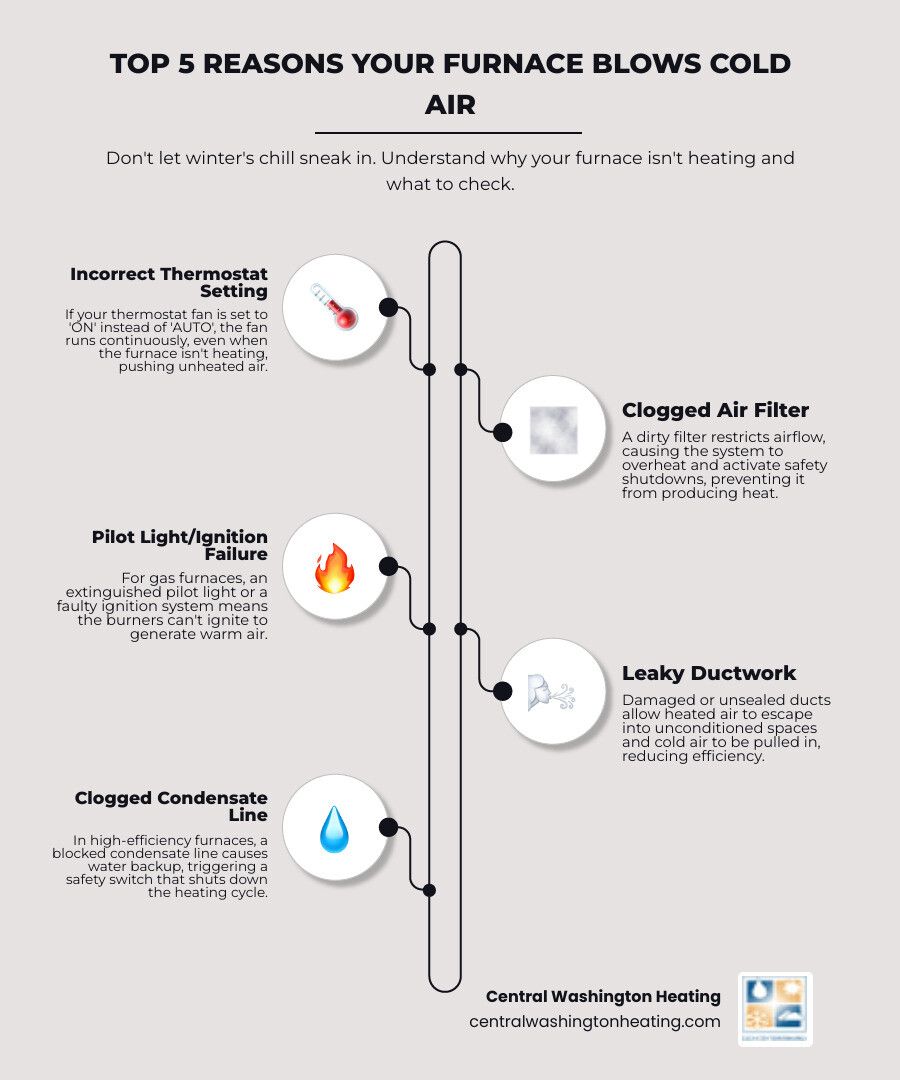
- Thermostat set to “ON” instead of “AUTO” – fan runs constantly, even when not heating
- Dirty air filter – restricts airflow, causing system to overheat and shut down
- Electric heat control or electric heat startup problems – heat strips can’t light to produce heat
- Leaky ductwork – warm air escapes, cold air infiltrates (20-30% air loss is common)
- Clogged condensate line – triggers safety switch in high-efficiency air handlers
For comprehensive HVAC solutions, explore our heating services, or if you need immediate help, schedule a air handler repair today.
The good news? Many cold air issues have simple fixes you can try yourself before calling a technician. Others require professional diagnosis to keep your family safe and warm. This guide walks you through both scenarios, helping you understand what’s happening with your air handler and when it’s time to get expert help.
Related content about Air handler blowing cold:
Simple DIY Checks for a Air handler Blowing Cold Air
When your air handler starts blowing cold air, it’s easy to jump to the worst conclusions. But before panic sets in or you reach for the phone, there are several simple checks you, as a homeowner in East Wenatchee or Cashmere, can perform. These easy first steps can often resolve the issue, saving you time and the need for a professional service call. We believe in empowering our neighbors with the knowledge to troubleshoot common problems, helping you maintain a comfortable home.
Is Your Thermostat the Culprit?
Believe it or not, your thermostat is often the unsung hero (or villain) when your air handler is blowing cold air. It’s the brain of your heating system, and sometimes, a simple setting can be the cause of your discomfort.
First, check the fan setting. If your thermostat is set to “ON” instead of “AUTO”, the fan will run continuously. This means it will blow air even when the air handler isn’t actively heating, sending chilly drafts through your vents. Switching it back to “AUTO” ensures the fan only operates when your air handler is generating heat, allowing it to warm up properly before circulating air.
Next, verify that your thermostat is actually set to “HEAT” mode and that the desired temperature is higher than the current room temperature. It’s a common oversight to accidentally leave it on “COOL” from the warmer months or have the temperature set too low. Also, check for dead batteries in your thermostat. A lack of power can cause it to malfunction or lose its settings. Some thermostats may also require recalibration if they’re not accurately sensing the room temperature. For more detailed information on your thermostat, visit our Thermostat glossary page or learn about AC Thermostat Repair.
How a Dirty Air Filter Can Cause Cold Air
A dirty air filter is one of the most frequent culprits behind a air handler blowing cold air, and it’s a remarkably easy fix. Your air filter is designed to trap dust, dirt, and allergens, protecting your system and improving your indoor air quality. However, when it becomes clogged, it creates a significant problem: restricted airflow.
This restricted airflow forces your air handler to work harder, which can lead to the indoor coil overheating. Air handlers are equipped with safety mechanisms, like a high limit switch, to prevent damage from overheating. When the indoor coil gets too hot, this switch will cause the heat strips to switch off, leaving you without heat while the blower continues to push cold air. This cycle of heating, shutting off, and blowing cold air is known as “short cycling.”
We recommend checking your air filter at least once per month, especially during peak heating seasons in areas like Malaga or Orondo. If it looks visibly dirty or clogged, it’s time for a replacement. Most filters should be replaced every 1-3 months, depending on usage and household conditions (pets, allergies, etc.). Always ensure you’re using the correctly sized replacement and that the airflow arrows are pointing in the right direction. Learn more about Air handler Filter Replacement and Signs Your Air handler Air Filter Needs Replacing. For general filter knowledge, check our Filter glossary page.
Deeper Diagnostics: Common Mechanical and System Issues
If the simple DIY checks haven’t resolved your air handler blowing cold air issue, it’s time to dig into some slightly more complex, yet still common, mechanical and system problems. These often involve critical components that directly affect your air handler’s ability to generate heat. While some of these might still have homeowner-friendly solutions, others will certainly require the expertise of a professional.
The Role of the Electric heat control and Sequencer or relay
For electric air handlers, the electric heat control or sequencer or relay is crucial for electric heat startup. If your older electric air handler in Peshastin or Waterville is blowing cold air, the electric heat control is a prime suspect. The electric heat control is a small, continuous flame that ignites the main heat strips. If it goes out, the heat strips won’t light, and your air handler will only circulate cold air. Often, you can carefully follow your air handler’s instructions for relighting the electric heat control. If it repeatedly goes out, however, this indicates a larger underlying issue that requires professional attention. For more guidance, see our page on Air handler Electric heat control Repair.
Modern electric air handlers, typically manufactured after the 1990s, often use an electronic electric heat startup sequence instead of a standing electric heat control. These systems rely on a component called a sequencer or relay. The sequencer or relay’s job is to detect the presence of a flame once the gas valve opens. If it doesn’t sense a flame (perhaps because it’s dirty), it will signal the air handler to shut down the gas supply as a safety measure, preventing unburned gas from accumulating. A dirty sequencer or relay, covered in dust, dirt, or grime, can prevent it from doing its job, leading your air handler to shut off the heat prematurely and blow cold air. You might be able to gently clean the sequencer or relay’s surface with an emery cloth or fine steel wool, but be very careful not to damage this delicate component. For general sensor information, visit our Sensor glossary page.
Could Leaky Ductwork Be the Problem?
Even if your air handler is producing plenty of hot air, leaky ductwork can sabotage your efforts to heat your home, making it feel like your air handler is blowing cold air. Consider this statistic: in a typical house, about 20 to 30 percent of the air that moves through the duct system is lost due to leaks, holes, and poorly connected ducts. This means a significant portion of the warm air your air handler generates might never reach your living spaces in Dryden or Entiat.
Instead, this heated air escapes into unconditioned areas like your attic, crawl space, or basement. Simultaneously, cold air from these unheated spaces can infiltrate the ductwork, mixing with the warm air and lowering its temperature before it even reaches your vents. The result? You feel a cooler airflow, and your air handler has to run longer and harder to compensate, leading to wasted energy and reduced efficiency.
We encourage homeowners to inspect accessible ductwork for visible signs of damage, such as loose joints, gaps, or holes. Simple repairs can often be made by straightening sheet metal and securing joints with appropriately rated HVAC tape or mastic sealant. For more comprehensive information, our Ductwork glossary page and Air Duct Sealing article provide valuable insights.
Clogged Condensate Lines in High-Efficiency Air handlers
If you own a high-efficiency electric air handler (typically 90% AFUE or higher) in areas like Monitor or Orondo, a clogged condensate line could be the reason your air handler is blowing cold air. These modern air handlers are designed to extract more heat from the overheated air, a process that creates a significant amount of acidic water vapor, or condensate. This condensate is collected in a pan and drained away through a PVC pipe, known as the condensate line.
Over time, this line can become clogged with dirt, debris, or even algae, preventing the water from draining properly. When the condensate backs up, it can trigger a safety float switch. This switch is designed to shut down the air handler’s heat strips to prevent water damage to the system or your home. While the heat strips are off, the blower fan may continue to run, circulating cold air throughout your house.
You might notice standing water around the base of your air handler if the condensate line is clogged. A common DIY fix is to flush the line with a solution of bleach or vinegar (about a cup) mixed with water. Pour it slowly into the access port of the condensate line (usually a T-shaped fitting with a removable cap), let it sit for about 30 minutes to break down the clog, and then flush it thoroughly with water. If the problem persists or you’re uncomfortable with this task, it’s best to call a professional. For a deeper understanding, check out our Condensate glossary page.
Gas vs. Electric: Key Troubleshooting Differences
While many of the reasons a air handler is blowing cold air apply to both gas and electric models, there are distinct differences in their internal workings and potential failure points. Understanding these differences can help you troubleshoot more effectively, whether you’re in Wenatchee or Leavenworth.
| Problem Area | Electric air handler | Electric air handler |
|---|---|---|
| Heat Source | Electric heat control/Electric heat startup sequence, gas valve, heat strips | Heating elements (like a large toaster) |
| Fuel Supply | Electric auxiliary heat or electric auxiliary heat line | Electrical circuit (circuit breaker, fuses) |
| Common Cold Air Causes | Electric heat control out, dirty sequencer or relay, gas valve closed/faulty, heat strip issues, cracked indoor coil | Tripped circuit breaker, blown fuse, faulty heating elements, sequencer malfunction, wiring issues |
| Safety Concerns | Electrical safety (CO) leaks, gas leaks | Electrical fire risk, power surges |
| DIY Potential | Relighting pilot, cleaning sequencer or relay | Resetting breaker, replacing fuse |
| Professional Call | Persistent pilot issues, sharp electrical odor, heat strip problems, indoor coil cracks | Repeated breaker trips, blown elements, sequencer issues, any electrical burning smell |
Troubleshooting a Electric air handler Blowing Cold Air
When your electric air handler in Chelan or Cashmere is blowing cold air, the issue often revolves around the fuel (gas) or its electric heat startup.
First, ensure the gas supply valve to your air handler is fully open. It’s sometimes accidentally bumped or turned off during other home maintenance. If the valve is open and you still have no heat, the problem might lie with the heat strips. If the heat strips aren’t igniting or staying lit, the air handler can’t produce warm air.
Issues with the electric heat startup sequence (either a standing electric heat control or an electronic sequencer or relay, as discussed earlier) are common. If the electric heat control frequently goes out, or the electronic sequencer or relay fails to spark, the air handler won’t heat. If you smell gas, turn off the gas supply immediately and call a professional. A Air handler Smells Like Gas indicates a serious safety hazard. Problems with the Heat strip itself, such as blockages or damage, can also prevent proper heating.
Troubleshooting an Electric air handler
Electric air handlers, common in many Central Washington homes, don’t use gas, so their troubleshooting differs. If your electric air handler is blowing cold air, the problem is usually electrical.
A common culprit is a tripped circuit breaker in your home’s electrical panel. Electric air handlers draw a lot of power, and a surge or malfunction can cause their dedicated breaker to trip, cutting power to the unit. Locate your electrical panel, identify the breaker labeled for your air handler (or the one that’s in the “off” or middle position), and firmly switch it back to “on.” If it immediately trips again, do not force it; this indicates a more serious electrical issue. For more on this, visit our article on AC Circuit Breaker Keeps Tripping.
Some older homes might still use fuse boxes instead of circuit breakers. If you have fuses, check for a blown fuse—it will typically appear discolored or have a broken filament. Carefully replace it with a new fuse of the exact same size, type, and amperage. If your electric air handler’s heating elements (which glow red hot to generate heat, much like a toaster) fail, the air handler will simply blow cold air. Diagnosing and replacing faulty heating elements or other electrical components like the sequencer (which controls the timing of the heating elements) is a job for a qualified HVAC technician.
When to Call for Professional Air handler Repair
While we encourage homeowners in places like Wenatchee and East Wenatchee to perform basic troubleshooting, it’s crucial to recognize when a problem with your air handler blowing cold air moves beyond DIY capabilities. Attempting complex repairs without the proper training and tools can be dangerous and potentially cause further damage to your system.
Signs of a Serious Problem with a Air handler Blowing Cold Air
If you’ve tried the simple checks and your air handler is still blowing cold air, or if you notice any of these more alarming symptoms, it’s time to call in the experts:
- Persistent Issues After DIY Checks: If you’ve reset your thermostat, changed your filter, checked your electric heat control, and still have no heat, the problem is likely internal and requires professional diagnosis.
- Strong Sharp electrical odor: This is an emergency. If you detect a strong odor of gas, evacuate your home immediately and call your gas company and our team from a safe distance. Never try to troubleshoot this yourself.
- Loud Banging or Grinding Noises: Unusual sounds coming from your air handler can indicate serious mechanical issues, such as a failing blower motor, a cracked indoor coil, or other damaged internal components. These issues can be dangerous and require immediate attention. Learn more about Air handler Making Noise.
- Electrical Problems: If you see sparks, smell burning plastic, or experience frequent circuit breaker trips specifically for your air handler, there’s an electrical fault that needs professional assessment.
- Water Leaks (Not from Condensate Line): Any other water pooling around your air handler could signal a serious internal leak or a problem with your humidifier if you have one.
Recognizing these Signs You Need Air handler Repair can prevent a minor issue from becoming a major, complex repair.
The Importance of Expert Diagnosis
When dealing with a complex appliance like a air handler, especially one that uses gas, expert diagnosis is paramount. Our experienced technicians in Chelan, Leavenworth, and beyond have the specialized knowledge and tools to accurately identify the root cause of your air handler blowing cold air.
Safety is our top priority. Professionals can safely inspect for gas leaks, electrical safety issues, and electrical hazards that are invisible to the untrained eye. They can also perform thorough checks of critical components like the indoor coil, control board, and safety switches, which require specific expertise. Trying to fix these intricate parts yourself can lead to further damage, void your warranty, or, most importantly, create dangerous conditions for your family. This is why trusting local experts for Air handler Repair Chelan Wa is essential. Understanding Why Air handler Repair Is Important helps protect both your system and your home.
Prevention Is the Best Medicine: Keeping Your Air handler Healthy
An ounce of prevention is worth a pound of cure, especially when it comes to your air handler. Proactive care can significantly reduce the chances of your air handler blowing cold air, extend its lifespan, improve efficiency, and ensure consistent comfort in your Wenatchee, Cashmere, or Entiat home.
- Schedule Annual Tune-Ups: Professional maintenance is key to a healthy air handler.
- Change Air Filters Regularly: Don’t underestimate the power of a clean filter.
- Keep Vents Clear: Ensure unobstructed airflow throughout your home.
- Monitor for Unusual Sounds or Smells: Early detection can prevent major breakdowns.
- Check Thermostat Settings: Avoid accidental changes that lead to cold air.
- Inspect Ductwork: Look for visible leaks and seal them promptly.
- Clear Condensate Line: Prevent clogs in high-efficiency air handlers.
Annual Professional Tune-Ups
Just like your car needs regular oil changes, your air handler benefits immensely from annual professional tune-ups. These comprehensive inspections and cleanings, ideally performed before the heating season begins, are designed to catch potential problems before they lead to your air handler blowing cold air.
During a tune-up, our technicians will clean internal components, lubricate moving parts, inspect electrical connections, check heat-strip amperage, test safety controls, and assess overall system performance. This not only ensures your air handler is operating at peak efficiency, which helps conserve energy, but also helps identify worn parts or potential hazards, like a cracked indoor coil, before they become serious issues. Regular maintenance can help catch symptoms of bigger problems before they become an issue. Find the Benefits of Regular Air handler Maintenance and learn more about an HVAC Tune-Up.
Routine Homeowner Maintenance
In addition to professional tune-ups, there are several routine maintenance tasks you can perform yourself to keep your air handler running smoothly and prevent it from blowing cold air.
The most important is regular air filter changes, as discussed earlier. Make it a habit to check your filter monthly and replace it every 1-3 months. Next, ensure all your heating vents and return air registers are clear and unobstructed. Furniture, rugs, or curtains blocking these can restrict airflow, leading to uneven heating and potential system strain. Also, perform visual inspections around your air handler periodically. Look for any unusual leaks, debris buildup, or signs of wear and tear. These simple steps, outlined in our Essential Air handler Maintenance Tips and Air handler Maintenance Wenatchee Wa guides, can make a significant difference in your air handler’s reliability and longevity.
Your Partner in Home Comfort
Dealing with a air handler blowing cold air can be incredibly frustrating, especially during the chilly Central Washington winters. We hope this guide has empowered you with the knowledge to troubleshoot common issues and understand when it’s time to call for professional help. While many problems have simple DIY fixes, your safety and the longevity of your heating system are paramount.
Regular maintenance and timely repairs are key to ensuring your air handler delivers consistent, cozy warmth to your home in Chelan, Cashmere, or any of our service areas. Don’t let an icy blast ruin your comfort.
If you’ve tried these troubleshooting steps and your air handler is still struggling, or if you’re experiencing any of the signs of a serious problem, our team at Central Washington Heating is here to help. We’re dedicated to keeping your home warm and comfortable all season long.
Schedule Your Air handler Maintenance in Chelan, WA today and let us ensure your heating system is ready to face anything winter throws its way.

Written by the Central Washington Heating and Air team
The techs and comfort advisors who've kept the Wenatchee Valley heated, cooled, and breathing easy for 30+ years — family & veteran owned, with 40+ years of combined industry experience.
- Licensed & insured · LIC# CENTRWH742JN
- Daikin Comfort Pro certified
- Wenatchee, WA
Last updated July 29, 2026
Ready for comfort you can count on?
Schedule service, request a free estimate, or call now for 24/7 emergency help. Our team is standing by across the Wenatchee Valley.
Get started today
Free estimates on installs · no-pressure, written quotes
Schedule My ServiceCall (509) 776-0247Mon–Fri: 8:00 AM – 4:30 PM · 24/7 for emergencies
Already have a quote? Get a free second opinion →