
Beyond the Heat: Understanding Your Air handler Limit Switch
Is your furnace safe? Discover how the Furnace limit switch protects against overheating. Learn signs of failure & essential maintenance.
The Unsung Hero of Your Heating System
When your home in Central Washington gets cold and your air handler limit switch trips, you’re left wondering what went wrong. This small but critical component is your air handler’s built-in safety device that prevents overheating and controls when warm air circulates through your home. Understanding how it works can help us recognize problems early and keep your heating system running safely all winter long.
Quick Answer: What is a Air handler Limit Switch?
- Primary Function: Monitors air handler temperature and prevents overheating
- Safety Role: Shuts off gas heat strips if temperature gets too high
- Fan Control: Signals blower fan to turn on/off at the right times
- Location: Mounted on or near the supply plenum (main duct leaving air handler)
- Common Issue: Trips when airflow is restricted by dirty filters or blocked vents
If you’re experiencing heating issues in Chelan, WA, Central Washington Heating offers comprehensive air handler services to diagnose and repair limit switch problems. For emergency repairs when your system stops working, our technicians are ready to help restore your comfort.
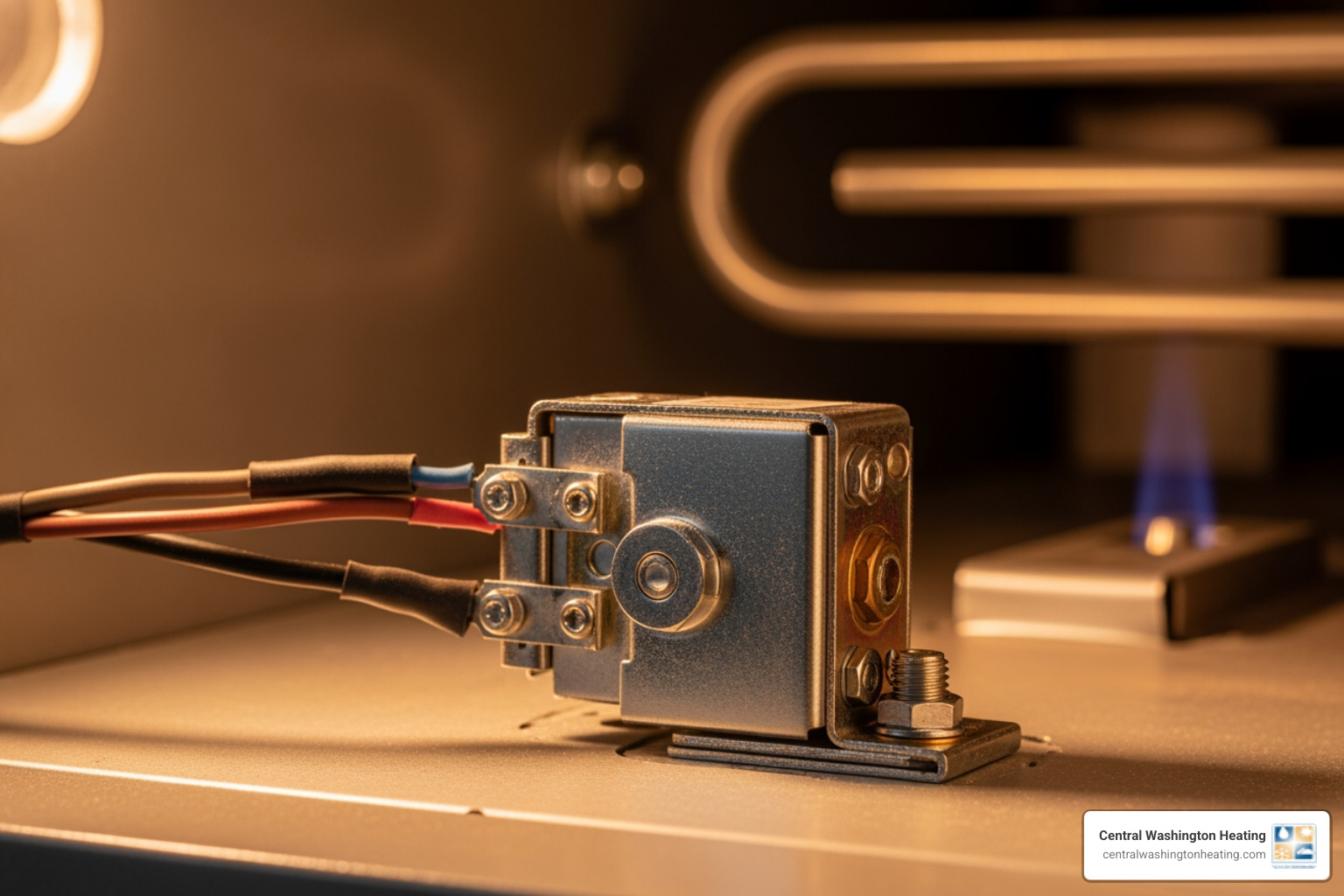
The limit switch sits between your air handler’s indoor coil and the blower fan, acting as both a thermostat and a safety guard. When your air handler fires up and heats air to the right temperature, the limit switch closes an electrical circuit that turns on your blower fan. If something goes wrong and temperatures climb too high—maybe from a clogged filter or failed blower motor—the limit switch opens the circuit, cutting power to the heat strips before damage occurs.
Similar topics to Air handler limit switch:
What is a Air handler Limit Switch and How Does It Work?
At its core, a air handler limit switch is a small but mighty component with a big job: ensuring your air handler operates safely and efficiently. Also known as a high-limit switch or a fan limit switch, this device performs a dual function in your heating system. Its primary role is safety, preventing your air handler from dangerously overheating. Secondly, it plays a crucial part in controlling the blower fan, ensuring that only warm air is distributed throughout your home in Chelan, Wenatchee, or wherever you are in our service area.
When your air handler’s heat strips ignite, they heat a component called the indoor coil. The air for your home then passes over this hot indoor coil. If the indoor coil gets too hot, it could suffer damage, such as cracking or warping. A cracked indoor coil is not only expensive to repair but can also pose severe safety risks, including the potential for dangerous electrical safety leaks into your home. The air handler limit switch acts as a guardian, constantly monitoring the temperature within the air handler, typically inside the supply plenum (the main duct leaving the air handler). If this temperature rises above a predetermined safe threshold, the limit switch springs into action, shutting off the gas supply to the heat strips, preventing overheating and protecting your air handler and your family from harm.
Beyond its critical safety role, the limit switch also orchestrates the normal heating cycle. When the air handler reaches an optimal temperature for heating your home, the limit switch signals the blower fan to turn on. This ensures that warm, comfortable air is circulated. Once the thermostat’s set temperature is reached and the heat strips shut off, the blower fan continues to run until the air handler cools down to a lower, safe limit. This cool-down cycle helps extract residual heat from the indoor coil and further protects the air handler components. Without a properly functioning air handler limit switch, your air handler wouldn’t be able to regulate its internal temperature or distribute heat effectively, putting both your comfort and safety at risk.
How it Regulates Temperature and Ensures Safety
The magic behind the air handler limit switch lies in its simple yet effective design. Many limit switches use a temperature probe that extends into the heated air stream, or they incorporate a bi-metallic strip or coil. This strip or coil is made of two different metals bonded together, each expanding and contracting at different rates when exposed to temperature changes.
Here’s how this ingenious mechanism works:
- Temperature Monitoring: As the air handler heats up, the air temperature around the bi-metallic strip or coil inside the limit switch rises.
- Expansion and Movement: When the temperature reaches a specific point, the bi-metallic strip expands and bends, or the coil unwinds. This movement is precisely calibrated to respond to temperature changes.
- Electrical Circuit Control: This physical movement either closes or opens an electrical circuit.
- For Blower Activation: When the air handler air reaches a safe, warm temperature suitable for distribution, the movement closes a circuit, sending power to the blower fan. The fan then begins to circulate heated air throughout your home.
- For Safety Shut-off: If the air handler temperature continues to climb beyond a safe limit (due to issues like restricted airflow or a malfunctioning blower), the limit switch opens another circuit. This action immediately cuts off the gas supply to the heat strips, preventing further heat generation and allowing the air handler to cool down.
- Cool-Down Cycle: Even after the heat strips shut off due to high temperature or when your home reaches the desired setting, the limit switch keeps the blower fan running. It continues to operate until the temperature inside the air handler drops to a predetermined lower limit, effectively cooling down the indoor coil and preventing residual heat from causing damage.
This continuous monitoring and precise control ensure that your air handler never gets too hot, protecting vital components like the indoor coil and safeguarding your home from potential fire hazards or dangerous electrical safety leaks. It’s a testament to how a small part can indeed have a monumental impact on your heating system’s overall safety and performance.
Signs of a Malfunctioning Limit Switch
When your air handler limit switch starts to falter, your air handler will likely begin to exhibit some noticeable symptoms. These aren’t just minor inconveniences; they are your air handler’s way of telling us something is amiss and needs attention. Ignoring these signs can lead to further damage to your heating system or, more importantly, create safety hazards for your home and family in Dryden, Entiat, or the surrounding areas.
Here are some common indicators that your air handler limit switch might be malfunctioning:
- Blower runs constantly: One of the most common complaints we hear is the air handler blower fan running non-stop, even when the heating cycle is complete or the thermostat is turned off. A faulty limit switch might be stuck in the “on” position for the blower, causing it to run continuously.
- Air handler won’t start or blow hot air: Conversely, if the limit switch fails to close the circuit that activates the blower, your air handler might ignite but then fail to circulate any warm air. Or, if it’s stuck in the “safety off” position, it might prevent the heat strips from igniting at all, leaving you with no heat.
- Air handler short cycles: Short cycling means your air handler turns on, runs for a very brief period, and then shuts off, only to restart again shortly after. This often happens if the limit switch is tripping prematurely, cutting off the heat strips because it incorrectly senses an overheating condition or is overly sensitive.
- Blowing cold air: If your air handler is blowing air but it’s cold, it could mean the limit switch has activated the blower fan too early, before the indoor coil has adequately warmed up, or that the heat strips have been shut off prematurely while the fan continues to run its cool-down cycle.
- Air handler stops abruptly: Your air handler might be working fine, then suddenly stop heating mid-operation. This abrupt cessation of heat can be a sign that the limit switch has tripped due to an actual overheating event or a false alarm caused by a faulty switch.
- Error codes: Many modern air handlers will display error codes on their control panel if a safety device, like the air handler limit switch, detects a problem. Consult your air handler manual to decipher these codes, but often they point directly to limit switch issues.
Common Symptoms of a Failing Air handler Limit Switch
Let’s dig a little deeper into these symptoms, as they are crucial for diagnosing a potential issue with your air handler limit switch. Recognizing these signs early can prevent more significant problems and ensure timely repairs.
- Blower Fan Issues: As mentioned, a blower fan that runs without stopping is a classic symptom. This indicates the limit switch isn’t correctly signaling the fan to turn off after the indoor coil has cooled. Conversely, if the blower fan refuses to turn on at all, even when the heat strips are lit, the limit switch might be preventing its activation, leading to rapid overheating.
- Intermittent Heat: Your home might not maintain a consistent temperature. You’ll feel warmth, then cold, then warmth again. This “on-again, off-again” heating can be due to the limit switch tripping and resetting frequently, leading to an inconsistent heat supply.
- System Lockout: In some cases, if the air handler limit switch trips multiple times within a short period, your air handler might enter a “hard lockout” mode. This is a safety feature designed to prevent damage and will require a manual reset or professional intervention to get the air handler running again. Error codes often accompany a system lockout.
- Unusual Noises: While not always directly linked to the limit switch itself, an overheating air handler (which the limit switch is supposed to prevent) can cause other components to strain or make unusual noises. If you hear banging, rattling, or squealing accompanying any of the above symptoms, it’s a strong indication of a deeper problem that the limit switch might be struggling to manage.
If you observe any of these symptoms in your air handler, especially in the colder months in Malaga, Monitor, or Orondo, it’s wise to contact a qualified HVAC professional for a thorough inspection.
Common Causes and Preventative Maintenance
Understanding why a air handler limit switch might fail is key to preventing future issues. Most problems stem from conditions that cause the air handler to overheat, forcing the limit switch to do its job more frequently or under undue stress. Over time, this stress can lead to the switch wearing out or malfunctioning.
Here are the most common culprits behind a failing air handler limit switch:
- Restricted Airflow: This is arguably the leading cause of air handler overheating and subsequent limit switch trips. When airflow is restricted, the heat generated by the heat strips cannot be properly distributed away from the indoor coil. The trapped heat causes temperatures inside the air handler to soar, activating the limit switch.
-
Clogged Air Filters: A severely clogged air filter is a major contributor to restricted airflow. Dust, dirt, and debris accumulate on the filter, creating a barrier that the blower fan struggles to pull air through. This reduced airflow leads to overheating. Homeowners should replace their air filter every 1-3 months, depending on the quality of the filter and household conditions.
-
Blower Motor Malfunction: The blower fan is responsible for moving air across the indoor coil and into your ductwork. If the blower motor fails to operate, operates at a reduced speed, or is otherwise malfunctioning, insufficient air will move through the air handler, causing it to overheat. This is a common scenario where the air handler limit switch will trip to prevent damage.
- Blocked Vents or Registers: Just as a dirty filter restricts air intake, blocked supply or return air vents and registers restrict the distribution and return of air. Furniture, curtains, rugs, or even excessive dust can impede airflow, causing heat to build up inside the air handler. Closing too many registers in your home can also lead to this issue.
- Normal Wear and Tear: Like any mechanical or electrical component, a air handler limit switch has a lifespan. Years of continuous operation, especially if the air handler frequently overheats due to other issues, can simply cause the switch to wear out. Its internal components, such as the bi-metallic strip, can lose their calibration or become less responsive over time.
Preventing Problems with Your Air handler Limit Switch
The good news is that many of the issues that lead to a faulty air handler limit switch are preventable with regular, proactive maintenance. Taking these steps will not only protect your limit switch but also improve your air handler’s overall efficiency and longevity.
- Regular Filter Changes: This is the easiest and most impactful preventative measure you can take. We recommend checking your air filter monthly during heating season and replacing it every 1 to 3 months. A clean filter ensures optimal airflow, preventing your air handler from straining and overheating.
- Keeping Vents Clear: Walk through your home in Peshastin, Waterville, or Wenatchee and ensure all supply and return air vents and registers are unobstructed. Move furniture, curtains, or anything else that might be blocking them. Also, keep them clean from dust and debris. Avoid closing more than 60% of your registers, as this can create airflow imbalances.
- Annual Professional Tune-ups: Schedule a professional air handler tune-up each fall before the heating season begins. During these appointments, our technicians will inspect all components of your system, including the air handler limit switch. They’ll check for proper operation, clean internal components, and identify any potential issues before they escalate into costly repairs or safety hazards. Regular air handler maintenance keeps the limit switch working properly and ensures your safety every time you heat your home.
- Ensuring Proper Ductwork: Damaged, leaky, or improperly sized ductwork can also contribute to airflow problems. While not a homeowner’s typical DIY project, if you suspect issues with your ducts, mention it during your annual air handler inspection. Our technicians can assess the ductwork for kinks, crushing, or other damage and recommend solutions to ensure adequate airflow.
By following these preventative maintenance steps, you can significantly reduce the likelihood of your air handler limit switch failing and keep your heating system running safely and efficiently throughout the Central Washington winter.
Limit Switch vs. Pressure Switch: What’s the Difference?
While both the air handler limit switch and the air handler pressure switch are critical safety components in your heating system, they serve distinct functions and monitor different aspects of your air handler’s operation. It’s easy to confuse them, but understanding their individual roles can help us better comprehend air handler diagnostics.
Here’s a comparison to highlight the key differences:
| Feature | Air handler Limit Switch | Air handler Pressure Switch |
|---|---|---|
| What it Senses | Temperature (specifically, internal air handler air temperature) | Pressure (specifically, negative pressure or vacuum in the inducer motor/flue) |
| Primary Function | Prevents overheating by shutting off heat strips; controls blower fan operation | Ensures safe venting of overheated air; confirms inducer motor operation |
| Safety Role | Protects indoor coil from damage; prevents fire hazards and electrical safety leaks from cracked indoor coils | Prevents air handler from operating if flue is blocked or inducer motor fails, which could lead to electric heating gas buildup |
| Location | Typically located on or near the supply plenum (main air outlet) of the air handler, often more visible to homeowners | Located inside the motor compartment, connected by a small hose to the inducer motor or flue |
| Role in Electric heat startup Sequence | Allows heat strips to stay on as long as temperature is safe; activates blower fan once air is hot enough | Confirms proper exhaust ventilation before heat strips are allowed to ignite |
| Common Failure Triggers | Restricted airflow (dirty filter, blocked vents), blower motor malfunction, internal air handler overheating | Blocked flue or vent, faulty inducer motor, cracked indoor coil (affecting pressure), water in condensate drain line |
The air handler limit switch is concerned with the heat being generated and distributed within the air handler, ensuring it doesn’t get too hot and that warm air reaches your home. The pressure switch, on the other hand, is all about the exhaust. It ensures that dangerous overheated air are safely vented out of your home before the heat strips are allowed to ignite. Both are vital guardians, but they watch over different aspects of your air handler’s intricate dance of heating and safety.
Frequently Asked Questions about the Air handler Limit Switch
We often get questions about the air handler limit switch, and for good reason—it’s a crucial component that directly impacts your home’s safety and comfort. Here are some of the most common questions we hear from homeowners in areas like Cashmere, East Wenatchee, and throughout Central Washington.
Can a homeowner replace a air handler limit switch themselves?
While it might seem like a straightforward task to replace a small part, we generally recommend against homeowners attempting to replace a air handler limit switch themselves. Here’s why:
- DIY Risks: Air handlers contain high-voltage electrical components. Working with these without proper training and safety precautions can lead to electrical shock, burns, or other serious injuries.
- Professional Recommendation: Our HVAC technicians are equipped to safely work with these systems. They understand the intricacies of air handler wiring and the specific requirements for different air handler models.
- Safety Concerns: An improperly installed limit switch might not function correctly, leaving your air handler vulnerable to overheating. This could lead to fire hazards or the risk of dangerous electrical safety leaks.
- Potential for Further Damage: An incorrect installation or misdiagnosis could lead to further damage to your air handler, turning a relatively simple repair into a much more expensive one.
- Diagnosis is Key: Often, a tripping limit switch is a symptom of an underlying problem (like restricted airflow or a failing blower motor), not the problem itself. A professional can accurately diagnose the root cause, ensuring the actual issue is resolved.
While it’s possible for experienced individuals to replace a limit switch, the potential risks outweigh the benefits for most homeowners. It’s always best to call a professional if you suspect a problem with your air handler limit switch.
What are the safety risks of an overheating air handler?
An overheating air handler, especially one with a faulty air handler limit switch that fails to shut it down, poses several severe safety risks:
-
Cracked Indoor coil: This is perhaps the most dangerous consequence. Prolonged exposure to excessive heat can cause the metal indoor coil to warp, crack, or even melt. A cracked indoor coil allows overheated air—including deadly electrical safety—to mix with the heated air circulated into your home.
-
Electrical safety Concerns: Electrical safety (CO) is a colorless, odorless, and tasteless gas produced by incomplete electric heating. It’s highly toxic and can cause serious illness or even death. An overheating air handler with a compromised indoor coil is a primary source of CO leaks, making a functional air handler limit switch vital for safety.
- Fire Hazard: Extreme internal temperatures can ignite nearby flammable materials within or around the air handler. This includes dust buildup, insulation, or even components within the air handler itself, leading to a house fire.
- Damage to Air handler Components: Beyond the indoor coil, overheating can damage other expensive components, such as the blower motor, circuit board, or wiring, leading to costly repairs or even the need for a full air handler replacement.
This is why the air handler limit switch is a non-negotiable safety device. It’s designed to prevent these catastrophic scenarios, and its proper function is paramount for the safety of your home and loved ones.
How often should I have my air handler inspected?
We strongly recommend having your air handler inspected by a professional at least once a year. The ideal time for this annual tune-up is in the fall, before the heating season officially kicks in.
Here’s why annual inspections are so important:
- Preventative Maintenance: Regular maintenance allows our technicians to identify and address minor issues, like a slightly worn air handler limit switch or restricted airflow, before they escalate into major breakdowns.
- Safety and Efficiency Benefits: A well-maintained air handler operates more safely and efficiently, reducing the risk of electrical safety leaks and lowering your energy bills. Our technicians check all safety controls, including the limit switch, to ensure they are functioning correctly.
- Longevity of System: Just like your car, regular tune-ups extend the lifespan of your air handler, helping you get the most out of your investment.
- Warranty Compliance: Many air handler manufacturers require annual professional maintenance to keep your warranty valid.
An annual inspection ensures that your air handler, including its vital air handler limit switch, is ready to provide reliable and safe heat throughout the cold Central Washington winter.
Conclusion: Ensure Your Air handler’s Safety and Longevity
The air handler limit switch may be a small, often unseen component, but its role in your home’s heating system is undeniably monumental. It acts as a vigilant guardian, constantly monitoring temperatures to prevent dangerous overheating and orchestrating the comfortable flow of warm air throughout your home. Understanding its function, recognizing the signs of malfunction, and committing to preventative maintenance are crucial steps for every homeowner.
Proactive maintenance is truly key to extending the life of your air handler, maintaining its efficiency, and most importantly, ensuring the safety of your family. Simple actions like regularly changing your air filter and keeping vents clear can go a long way in preventing issues that might stress your limit switch.
As homeowners, the responsibility to keep our heating systems in top shape falls to us. When in doubt, or when facing any of the symptoms of a failing air handler limit switch, the safest and most reliable course of action is to call a professional. Our team at Central Washington Heating is always ready to provide expert air handler services, from routine maintenance to complex repairs, ensuring your home stays warm and safe, no matter how cold it gets outside.
Schedule your air handler maintenance in Chelan, WA today and let us help you keep your air handler’s unsung hero, the limit switch, performing its vital job flawlessly.

Written by the Central Washington Heating and Air team
The techs and comfort advisors who've kept the Wenatchee Valley heated, cooled, and breathing easy for 30+ years — family & veteran owned, with 40+ years of combined industry experience.
- Licensed & insured · LIC# CENTRWH742JN
- Daikin Comfort Pro certified
- Wenatchee, WA
Last updated July 29, 2026
Ready for comfort you can count on?
Schedule service, request a free estimate, or call now for 24/7 emergency help. Our team is standing by across the Wenatchee Valley.
Get started today
Free estimates on installs · no-pressure, written quotes
Schedule My ServiceCall (509) 776-0247Mon–Fri: 8:00 AM – 4:30 PM · 24/7 for emergencies
Already have a quote? Get a free second opinion →