
Unmasking the Magic of Air Duct Sealing: A Homeowner's Guide
Stop energy loss! Learn how air duct sealing improves home comfort, saves money, and boosts air quality. Get your guide.
The Unseen Highways of Your Home's Comfort
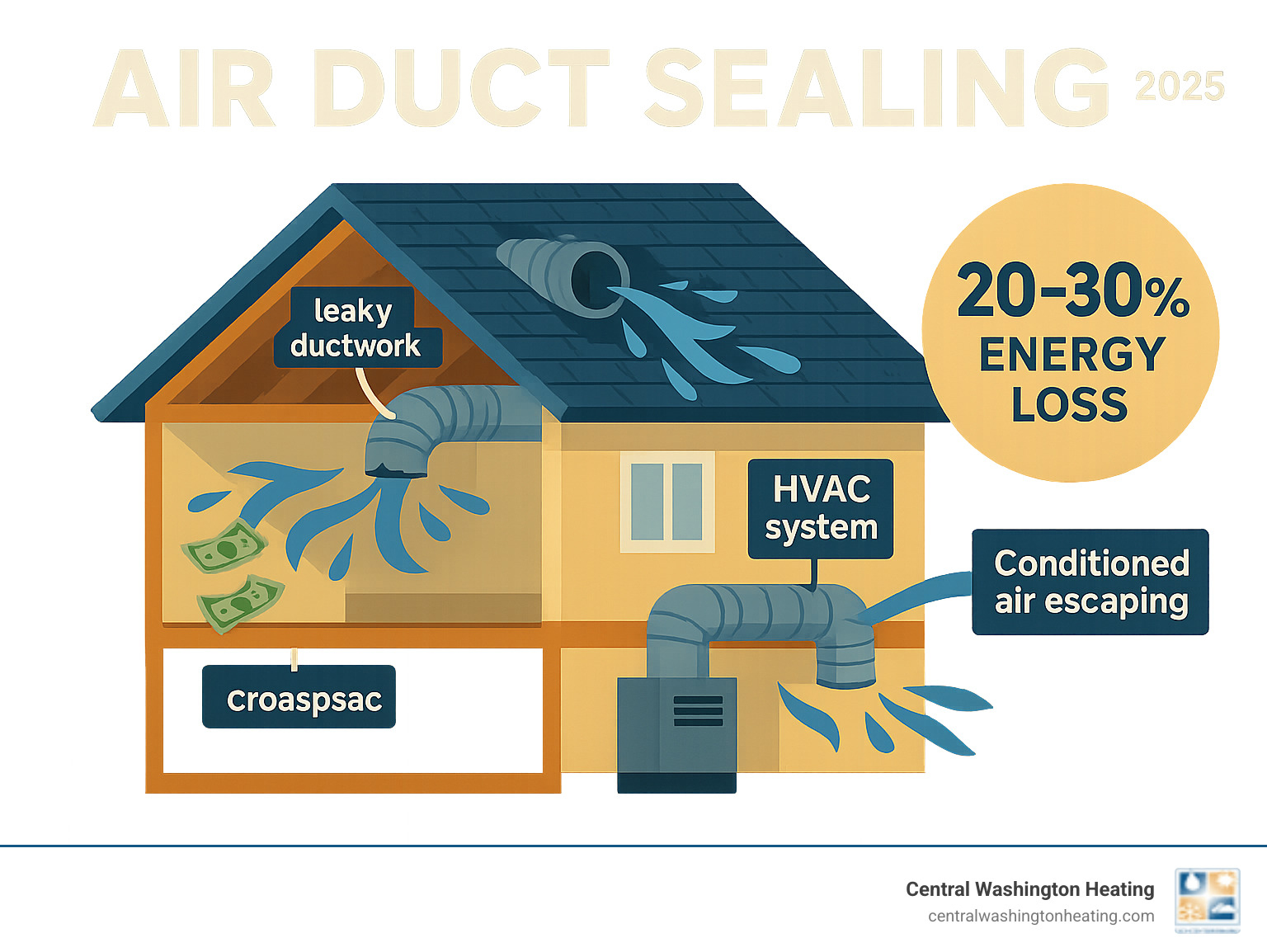
Air duct sealing is the process of closing leaks, gaps, and holes in your home's ductwork to prevent conditioned air from escaping into unconditioned spaces like attics, crawlspaces, and wall cavities. Here are the key benefits homeowners can expect:
- Energy savings - Reduce heating and cooling costs by up to 30%
- Better comfort - Eliminate hot and cold spots throughout your home
- Improved air quality - Prevent dust, allergens, and pollutants from entering your ducts
- Extended HVAC life - Reduce strain on your heating and cooling equipment
- Environmental impact - Lower your home's carbon footprint through improved efficiency
Think of your home's ductwork as the circulatory system for comfort. Just like arteries carry blood throughout your body, ducts carry heated and cooled air to every room in your house.
But here's the problem most homeowners don't realize: in a typical house, about 20 to 30 percent of the air that moves through the duct system is lost due to leaks, holes, and poorly connected ducts.
That's like having a garden hose with holes punched along its length. No matter how much water pressure you have at the source, you're losing a significant amount before it reaches where you need it most.
When your expensive heated or cooled air leaks into spaces like your attic or crawlspace, you're essentially paying to condition the outdoors. Your HVAC system works harder, runs longer, and drives up your energy bills while leaving some rooms uncomfortably hot or cold.
The good news? Air duct sealing is one of the most cost-effective home improvements you can make. Whether you tackle accessible leaks yourself or hire professionals for comprehensive sealing, the investment typically pays for itself through lower energy bills and improved comfort.
Are Your Ducts Leaking? Telltale Signs to Watch For
Picture this: you're curled up on your favorite couch, thermostat set to the perfect temperature, but somehow one room feels like the Arctic while another could double as a sauna. Sound familiar? Or maybe you've been staring at your energy bills in disbelief, wondering why they keep climbing even though you haven't changed how you use your home.
These aren't just the quirks of living in an older house – they're your home's way of waving a red flag. The truth is, a surprising number of homeowners are living with leaky ductwork right now and have no idea it's happening. But don't worry – we're about to turn you into a leak detective!
Let's start with the most obvious (and painful) clue: high utility bills. When your ducts are leaking, your HVAC system becomes like a marathon runner trying to reach the finish line with a backpack full of rocks. It has to work harder and run longer just to maintain the temperature you want. All that extra effort shows up as higher energy costs on your monthly bill.
Those uneven room temperatures we mentioned? They're actually one of the clearest signs that air duct sealing might be exactly what your home needs. When conditioned air escapes through leaks before reaching its destination, some rooms get shortchanged while others might get too much. You'll notice hot and cold spots throughout your house, leaving family members constantly adjusting thermostats or grabbing sweaters in summer.
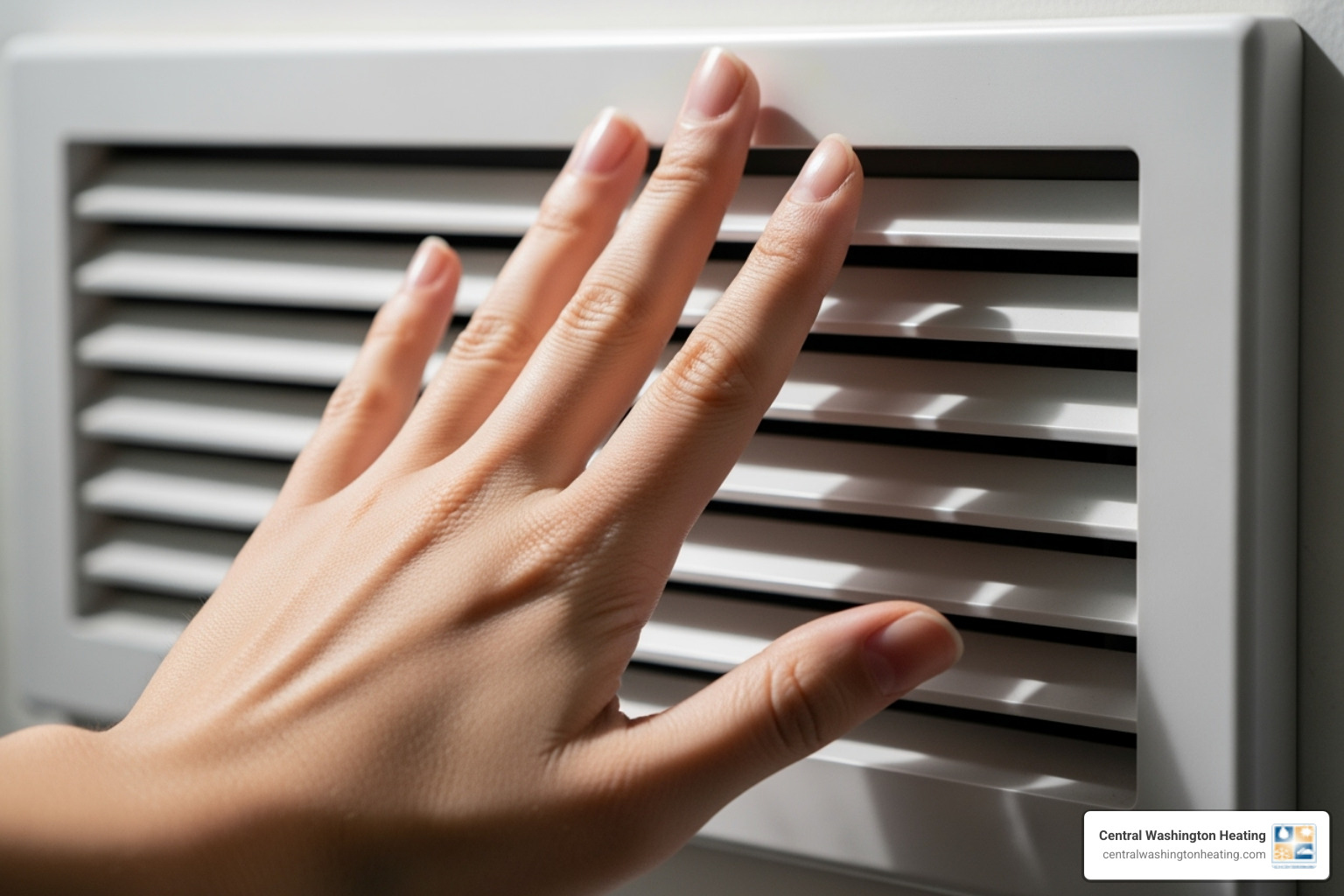
Here's a simple test you can try right now: walk over to a vent and hold your hand up to feel the airflow. Does it feel weak or barely there, especially in rooms that are furthest from your HVAC unit? That's a telltale sign that your precious heated or cooled air is taking an unauthorized detour somewhere along the way.
If your HVAC system runs constantly – cycling on and off repeatedly or just running non-stop – it's desperately trying to compensate for all that lost air. Think of it like trying to fill a bucket with holes in the bottom. No matter how much water you pour in, you're fighting a losing battle.
But leaky ducts don't just lose air – they also invite unwanted guests into your home. Excessive household dust is often a dead giveaway that your ductwork has gaps and holes. These openings can pull unfiltered air from attics, crawlspaces, and wall cavities, carrying dust, insulation fibers, and other particles directly into your living spaces. You might find yourself dusting constantly but never quite winning the battle.
Even more concerning, if you or your family members are experiencing worsening allergy symptoms – unexplained sneezing, respiratory issues, or general stuffiness – leaky ducts could be the hidden culprit. When unfiltered air carrying pollen, pet dander, and other allergens bypasses your HVAC system's filtration, it creates an unhealthy indoor environment.
The good news is that you don't always need a professional to start identifying these problems. Here are some simple detective methods you can try:
- Visual inspection for gaps in accessible ductwork like basements or attics
- Incense stick test – hold a lit incense stick near duct seams while your system runs and watch for wavering smoke
- Feeling for drafts around duct connections with your hand while the HVAC system is operating
While these DIY methods can help you spot obvious issues, many leaks hide behind walls and ceilings where only professionals can reach them. But knowing these warning signs gives you a great starting point for understanding your home's ductwork health.
The Transformative Benefits of Air Duct Sealing
Picture this: you walk into your home after a long day, and every room feels perfectly comfortable. Your energy bills arrive without causing sticker shock. The air feels fresh and clean, and your family's allergy symptoms have mysteriously improved. This isn't wishful thinking – it's the reality that air duct sealing can create for your home.

When you seal those sneaky duct leaks, you're not just plugging holes – you're open uping a cascade of benefits that transform how your home feels and performs.
Dramatically improved energy efficiency is often the first benefit homeowners notice. 20-30% of conditioned air escaping through leaks? When you seal those gaps, that expensive heated and cooled air finally reaches its destination instead of warming your attic or crawlspace.
The impact on your wallet is remarkable. Studies consistently show that homeowners can reduce their heating and cooling bills by up to 30% after sealing their ducts. That's real money back in your pocket, month after month. Most homeowners find their investment pays for itself within just a few years through these energy savings alone.
But the magic doesn't stop at lower bills. Improved home comfort might be even more noticeable day-to-day. Those frustrating hot and cold spots throughout your house? They often disappear completely once your ducts are properly sealed.
When conditioned air actually reaches every room as intended, you'll experience consistent temperatures from your living room to your bedroom. No more cranking up the thermostat because the back bedrooms are freezing, or bundling up in sweaters while the front rooms are toasty warm.
Many homeowners are surprised to find that airflow from their vents increases by 30-40% after sealing. Suddenly, those weak, barely-there breezes from your registers become strong, steady streams of perfectly conditioned air.
The health benefits are equally impressive. Better indoor air quality happens naturally when you seal duct leaks. Those gaps that let conditioned air escape also invite unwanted guests – dust, pollen, mold spores, and other contaminants from your attic or crawlspace get sucked directly into your home's air supply.
By sealing these pathways, you prevent reduced dust and allergens from infiltrating your living spaces. The result is a healthier living environment where family members often experience fewer allergy symptoms, less respiratory irritation, and cleaner air overall.
Your HVAC equipment benefits tremendously too. When your system doesn't have to work overtime compensating for leaky ducts, it experiences less wear and tear. This translates to an extended HVAC equipment lifespan, fewer repair calls, and more reliable performance year after year.
Finally, there are meaningful environmental benefits to consider. By significantly reducing your home's energy consumption, you're also shrinking your carbon footprint. It's a simple way to live more sustainably while enjoying all the comfort and financial benefits for yourself.
Air duct sealing truly is one of those rare home improvements that delivers on multiple fronts – comfort, health, savings, and environmental responsibility. It's an investment that keeps paying dividends long after the work is complete.
A Homeowner's Guide to Sealing Methods: DIY vs. Professional
So, you've spotted the signs and you're ready to tackle those sneaky leaks. Great! But now comes the big question: should you grab your toolbox and dive in yourself, or is it time to call in the experts?
The truth is, both approaches have their place. It really depends on your comfort level, the scope of the problem, and how thorough you want to be. Let's break down what each option brings to the table so you can make the best choice for your home.
| Feature | DIY Duct Sealing | Professional Duct Sealing |
|---|---|---|
| Accessibility | Limited to visible, reachable areas only | Can seal all ducts, including hidden ones behind walls and in tight spaces |
| Thoroughness | Addresses obvious leaks you can see and reach | Comprehensive sealing of entire system using advanced diagnostics |
| Tools Required | Basic materials: mastic, foil tape, brush | Specialized equipment: blower door tests, aerosolized sealing technology |
| Types of Leaks | Small gaps, visible joints, register connections | All leak sizes up to 5/8", hidden leaks, complex ductwork issues |
| Effectiveness | Can reduce 5-10% of total duct leakage | Can reduce duct leakage by up to 99% |
| Durability | Good for accessible areas with proper materials | Long-term solution with guarantees, withstands significant pressure |
DIY Air Duct Sealing: What You Can Do
Rolling up your sleeves and tackling the job yourself is a fantastic way to save money while getting to know your home's HVAC system better. You can definitely make a meaningful impact on those energy bills by focusing on the areas you can actually reach.
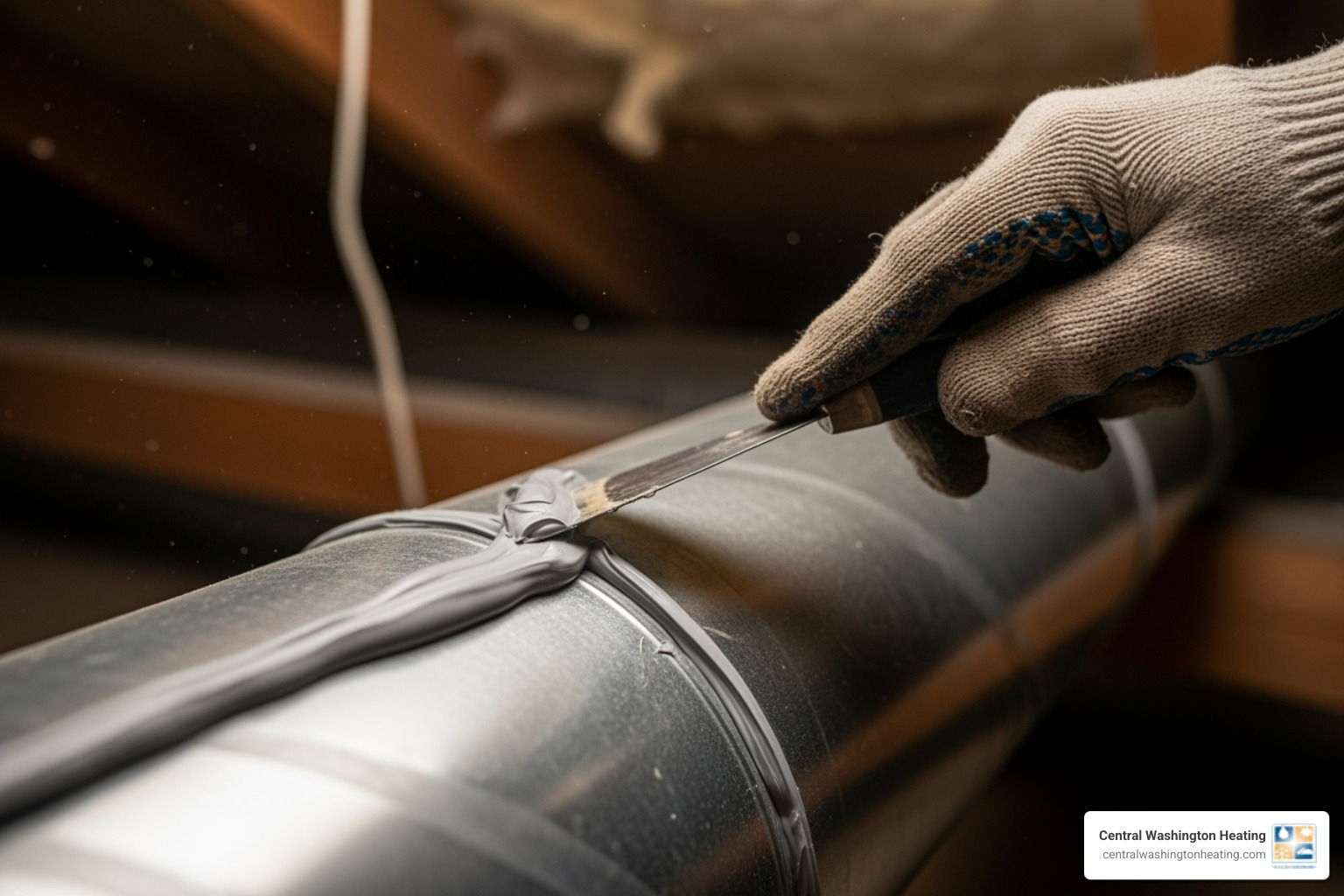
The stars of your DIY air duct sealing toolkit are mastic sealant and UL-181 rated foil tape. Think of water-based mastic as the superhero of duct sealing – it's a sticky, paste-like substance that hardens into an airtight seal. It's perfect for filling gaps, cracks, and small holes. Just grab a brush or putty knife and apply a thick, even coat over any leaks you find. For gaps larger than 1/4 inch, you might want to add some fiberglass mesh tape for extra strength.
Foil tape isn't your run-of-the-mill household tape – this is the heavy-duty stuff designed specifically for HVAC work. Look for the UL-181 rating, which means it meets strict safety and performance standards. It's excellent for sealing seams and joints, especially on rigid ductwork.
Your DIY mission should focus on sealing accessible joints and register connections. Head down to your basement, up to your attic, or crawl into that crawlspace (we know, not the most glamorous part of homeownership). Look for spots where duct sections meet or branch off – these are leak magnets. Don't forget those register connections where your floor, wall, or ceiling vents meet the ductwork.
Here's the most important thing to remember: never, ever use regular "duct tape" on your ducts! We know, the irony is real. Despite its name, that gray stuff you've got in your garage isn't built for HVAC work. It degrades quickly, loses its stick with temperature changes, and can become brittle and fall off. Stick with your mastic and UL-181 foil tape.
The biggest limitation of DIY work? You can only seal what you can see and reach. Much of your ductwork is playing hide-and-seek behind walls and ceilings, making a complete seal impossible without some serious demolition.
Professional Air Duct Sealing: When to Call the Experts
Sometimes even the most dedicated DIYer needs to bring in the cavalry. When you're dealing with inaccessible ducts hidden throughout your home's structure, or when you want a truly comprehensive solution, professional air duct sealing is where the magic happens.
Professional services start with advanced diagnostics like blower door tests that measure exactly how much air your system is losing. This scientific approach gives you a clear before-and-after picture of the improvement.
The real game-changer is aerosolized sealing technology like Aeroseal. This isn't science fiction – it's proven technology developed by Lawrence Berkeley National Laboratory and recognized by the U.S. Department of Energy. Here's how it works: your registers get temporarily sealed, then a specialized machine injects tiny polymer particles into your pressurized ductwork. These microscopic particles ride the airflow and naturally find every leak, hole, and crack in your system. As they escape through the leaks, they stick to the edges and to each other, sealing from the inside without any messy demolition or guesswork.
This technology can seal leaks up to 5/8 inch wide and reduce duct leakage by up to 99% – compared to the 5-10% that DIY methods typically address. The sealed leaks are durable enough to withstand significant pressure and come with guaranteed results that give you peace of mind for years to come.
When your home's comfort, energy efficiency, and air quality are on the line, professional sealing ensures that every single leak gets addressed – even the ones you never knew existed.
Frequently Asked Questions about Air Duct Sealing
When it comes to air duct sealing, we get a lot of questions from homeowners here in Central Washington. And honestly, that makes perfect sense! It's not exactly something you think about every day, like changing a light bulb or mowing the lawn. So let's clear up some of the mystery and answer the questions we hear most often.
How long does the sealant last?
This is probably the first thing most homeowners want to know, and the answer depends on what type of sealing you choose.
If you go the DIY route with mastic sealant and foil tape, you're looking at pretty good longevity when it's done right. High-quality, water-based mastic and UL-181 rated foil tape can easily last 10 to 20 years or more. The key phrase there is "when it's done right" – that means applying it to clean surfaces with a thick, even coat.
But here's where professional sealing really shines. When we use advanced systems like Aeroseal, we're talking about a completely different level of durability. The polymer sealant is designed to flex with your ductwork as it expands and contracts with temperature changes. Most professional services offer 10-year guarantees on their work, but the actual product life can extend up to 40 years. That's potentially decades of improved comfort and energy savings from one treatment.
Does sealing air ducts really help with allergies?
Oh, absolutely! This is one of those benefits that often surprises homeowners, but it makes perfect sense when you think about it.
Here's what's happening in your home right now: your HVAC system is supposed to pull air from your living spaces, condition it, and send it back out through the ducts. But if those ducts are leaky, your system is also sucking in unfiltered air from attics, crawlspaces, and wall cavities.
That unfiltered air is like a highway for dust, pollen, mold spores, and other allergens. Every time your system runs, it's potentially circulating these irritants throughout your entire home. No wonder your allergies act up indoors!
When we seal those leaks, we create a closed loop. Your HVAC filter can actually do its job properly because it's only dealing with air from your conditioned living spaces. Many of our customers tell us they notice fewer allergy symptoms and can breathe easier within just a few weeks of having their ducts sealed.
If someone in your family struggles with allergies or asthma, air duct sealing isn't just about saving energy – it's about creating a healthier home environment.
Is duct sealing different from duct cleaning?
Yes, these are two completely different services, though they work beautifully together.
Air duct sealing is all about fixing the leaks in your ductwork. Think of it as patching holes in a bucket so the water (or in this case, your expensive heated and cooled air) doesn't leak out. We're making sure air flows efficiently from your HVAC unit to your rooms, and nowhere else.
Duct cleaning, on the other hand, is about removing the dust, debris, and contaminants that have built up inside your ducts over time. Even with a good filter, stuff accumulates on the interior surfaces. Professional cleaning uses specialized equipment to brush and vacuum all that gunk out.
Here's a simple way to think about it: imagine your ductwork is a garden hose that's both dirty inside and has holes in it. If you only clean the inside, you're still losing water through the holes. If you only patch the holes, the dirty water inside is still going to come out when you turn on the hose.
For the best results – maximum energy efficiency, comfort, and air quality – many homeowners choose to have both services done. First cleaning removes existing contaminants, then sealing prevents future contamination and keeps that clean air flowing exactly where it should go.
It's like giving your home's respiratory system a complete tune-up, and the results speak for themselves.
Conclusion: Reclaim Your Comfort and Efficiency
We've taken quite a journey together through the hidden world of your home's air duct sealing. Think about it – we started by finding those invisible highways carrying comfort throughout your house, learned to spot the sneaky signs of leaky ducts, and explored the amazing benefits that proper sealing can bring to your Central Washington home.
The numbers don't lie. When you can slash your energy bills by up to 30%, breathe cleaner air, and finally achieve that perfect temperature in every room, you're not just fixing a problem – you're changing your entire living experience.
Every home deserves to be a sanctuary where comfort meets efficiency. Those hidden leaks we talked about aren't just numbers on your utility bill. They're stealing your hard-earned money while forcing your family to breathe dusty, unfiltered air from attics and crawlspaces. That's simply not acceptable when the solution is so achievable.
Whether you're feeling confident about tackling some DIY air duct sealing with mastic and foil tape in your accessible areas, or you're intrigued by the comprehensive results that professional services can deliver, the most important thing is taking that first step. Your future self will thank you when those energy bills drop and your home feels comfortable in every season.
Well-maintained ductwork isn't a luxury – it's a necessity for modern living. When your HVAC system can finally do its job without fighting against leaks and inefficiencies, everything changes. Your equipment lasts longer, your air stays cleaner, and your wallet stays fuller.
Don't let another month pass with your expensive heated and cooled air escaping into spaces where it does you no good. You now have the knowledge to spot the problems and understand the solutions. The question isn't whether your ducts need attention – it's how soon you want to start enjoying the benefits of a properly sealed system.
Ready to find what air duct sealing can do for your Central Washington home? We'd love to help you take the next step toward better comfort, lower bills, and healthier air. Check out more info about our HVAC services and let's start your journey toward a truly efficient home that works as hard for you as you do for it.

Written by the Central Washington Heating and Air team
The techs and comfort advisors who've kept the Wenatchee Valley heated, cooled, and breathing easy for 30+ years — family & veteran owned, with 40+ years of combined industry experience.
- Licensed & insured · LIC# CENTRWH742JN
- Daikin Comfort Pro certified
- Wenatchee, WA
Last updated July 29, 2026
Ready for comfort you can count on?
Schedule service, request a free estimate, or call now for 24/7 emergency help. Our team is standing by across the Wenatchee Valley.
Get started today
Free estimates on installs · no-pressure, written quotes
Schedule My ServiceCall (509) 776-0247Mon–Fri: 8:00 AM – 4:30 PM · 24/7 for emergencies
Already have a quote? Get a free second opinion →