
The Brains of the Operation: Choosing a Air handler Circuit Board
"Furnace circuit board" failing? Learn to diagnose issues, choose replacements, and extend its life for a warm home.
Why Your Air handler Circuit Board Matters
Air handler circuit board failures are a common cause of heating system breakdowns in Chelan, WA, and Central Washington. If your air handler won’t start, cycles erratically, or blows cold air, the control board—the system’s brain—is often the culprit. This critical component coordinates all air handler operations, from electric heat startup to safety shutdowns. Understanding its function, signs of failure, and replacement options can save you discomfort and costly repairs.
Quick Guide to Air handler Circuit Boards:
- Function: Manages electric heat startup, flame sensing, blower operation, gas valve timing, and safety checks
- Common Failure Signs: Flashing warning lights, air handler won’t start, interrupted heating cycles, inconsistent temperatures
- Main Causes: Thermal expansion, power surges, loose wiring, dirty air filters, component wear
- Replacement Types: OEM (Original Equipment Manufacturer) parts for exact fit, or universal boards for multiple models
- Professional Help Needed: When diagnostic lights flash error codes, voltage testing is required, or wiring is complex
For comprehensive guidance on heating system care, visit our air handler maintenance tips for homeowners page, or if you need immediate assistance, reach out for air handler repair services.
As one Selah homeowner noted, routine maintenance caught an “indoor circuit board fault” before it became a winter emergency. This shows why understanding your control board is vital, whether you’re diagnosing a problem or seeking a replacement.
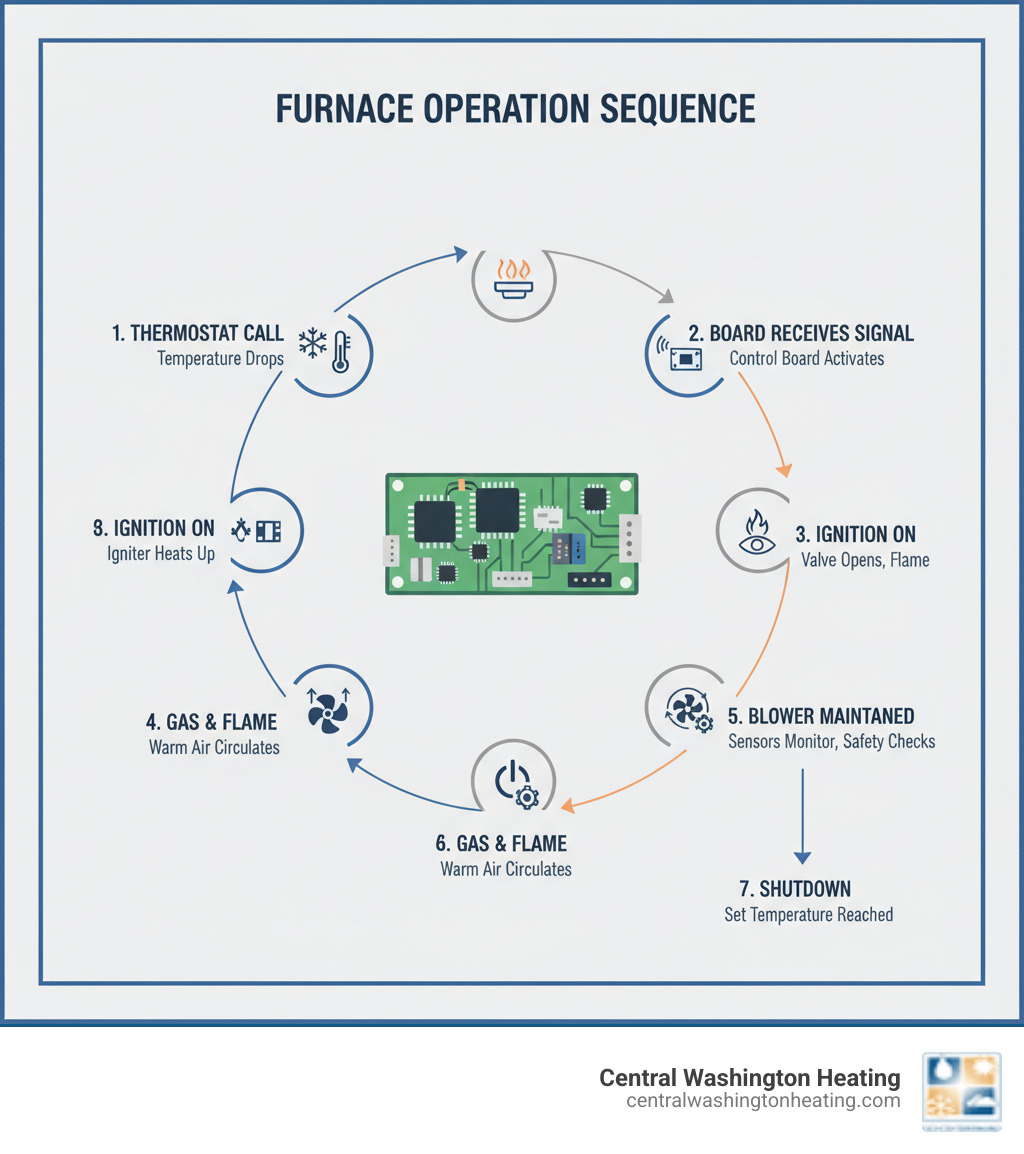
Simple Air handler circuit board glossary:
Common Signs and Causes of a Failing Control Board
When your air handler circuit board fails, it disrupts your entire heating system. This small but mighty component coordinates every aspect of your air handler’s operation—and when it falters, you’ll notice.
A failing control board usually gives warning signs. You might notice flashing warning lights on the board itself, blinking in patterns that correspond to error codes in your air handler manual. These diagnostic lights are your air handler’s way of signaling a problem.
A frustrating symptom is interrupted heating cycles. The air handler starts, runs for a few minutes, then suddenly shuts down, only to try again shortly after. This “short-cycling” occurs when the control board can’t properly regulate the heating sequence, perhaps due to a sensor failure or an internal fault.
Sometimes, your air handler simply won’t start. Despite the thermostat’s call for heat, the control board fails to send signals to the electric heat startup, gas valve, or blower motor. In other cases, you might find your air handler blowing cold air; the blower runs, but the heat strips don’t ignite because the board isn’t managing the gas valve correctly.
Inconsistent temperatures throughout your home can also point to a struggling control board. If you set the thermostat to 70 degrees but some rooms are much warmer or colder, the board may not be accurately responding to temperature changes.
Finally, a burning odor or strange smells from your air handler can indicate overheating components on the circuit board. If you notice unusual smells, check our guide on what burning smells from air handler means, as this could signal an electrical issue needing immediate attention.
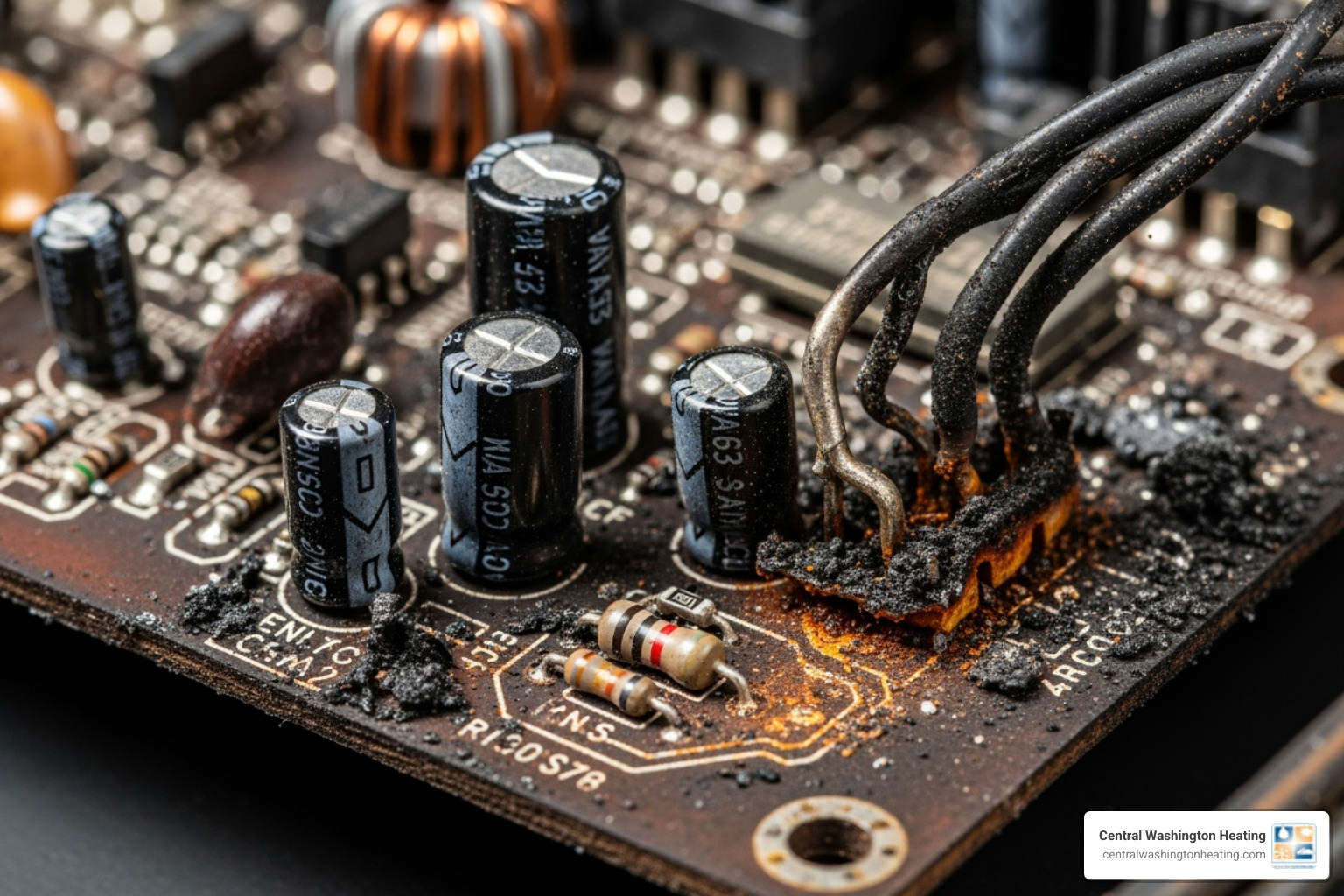
What Causes a Air handler Circuit Board to Fail?
Understanding why circuit boards fail helps you prevent problems. While durable, these components face tough challenges.
Thermal expansion is a major culprit. The intense heating and cooling cycles cause materials on the board to expand and contract. Over time, this stress creates microscopic cracks in solder joints and wires, leading to failure.
Component wear is a fact of life for electronics. Parts on the air handler circuit board, like resistors and capacitors, degrade with use. A control board may wear out sooner than the air handler’s 15-20 year lifespan due to its constant operation.
Power surges from lightning, grid fluctuations, or large appliances can instantly destroy a control board by overwhelming its delicate circuits.
Electrostatic discharge from a simple static shock can carry enough voltage to damage sensitive components on the air handler circuit board. This is why professionals always ground themselves before handling it.
Loose wiring can develop from air handler vibrations, causing intermittent electrical contact. A loose connection to the circuit board can make the air handler work one day and fail the next.
Bad solder connections, combined with thermal expansion, can create frustrating intermittent issues that are tricky to diagnose.
Overheating is another cause. If your air handler blower motor is failing, it can’t move enough air. This causes heat to build up, which can damage or melt components on the circuit board.
Dirty air filters are a simple but common cause. A clogged filter restricts airflow, forcing the air handler to work harder and overheat. This strain can damage the control board. Regular replacement is an easy way to prevent this, as we explain in why you need a good air filter.
Diagnosing the Issue: DIY Checks vs. Professional Help
When your air handler acts up, some initial checks can be safely done by a homeowner, but it’s crucial to know when to call a professional. Since air handlers involve gas lines and high voltage, safety is the top priority.
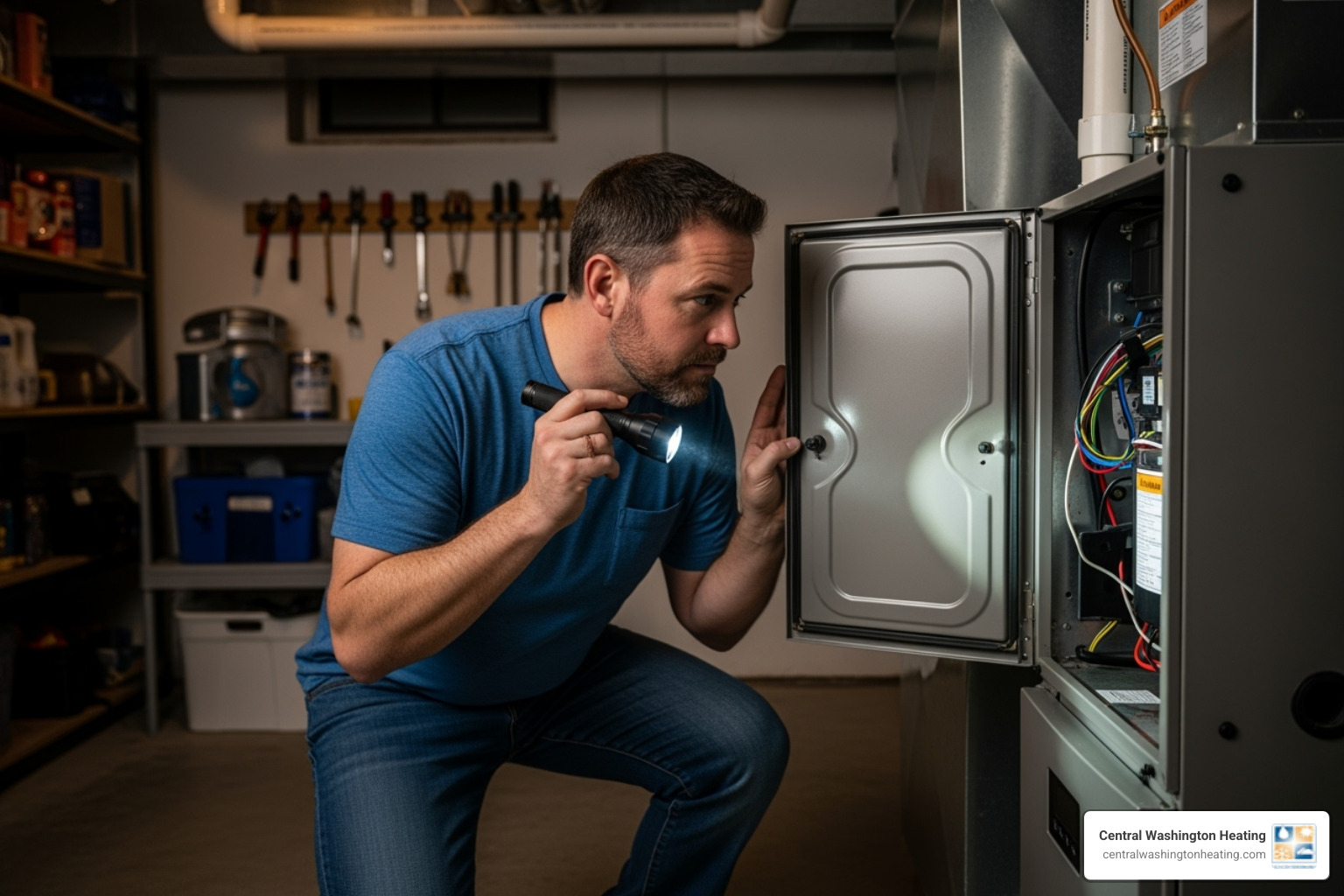
First, turn off the power to your air handler at the thermostat and circuit breaker. Once the power is off, you can safely remove the access panels to look inside.
Your first step is a visual inspection. Look for obvious damage on the air handler circuit board, like burn marks or melted components. A burnt smell is another red flag.
Check the diagnostic lights. Many control boards use flashing LEDs to signal specific problems. Consult your user manual to decode the pattern. Knowing the error code is helpful information to provide when you call for service.
A simple reset can sometimes resolve the issue. Use the reset button on your air handler or flip the circuit breaker off for 30 seconds and then back on. If the problem persists, it’s time for a deeper look.
Also, check your thermostat settings to ensure it’s calling for heat and set to the correct mode. Our AC thermostat repair guide has tips that also apply to heating.
Finally, check your home’s circuit breaker. A tripped breaker could be the issue, but if your air handler circuit breaker keeps tripping, it signals a deeper electrical problem that needs a professional.
While these DIY checks are helpful, recognize your limits. Complex wiring, high voltage testing, and gas connections must be handled by qualified HVAC technicians. Electrical issues, including air handler circuit board problems, account for 15-20% of service calls, highlighting their complexity. Understanding why air handler repair is important means trusting experts with your safety.
How a Professional Diagnoses a Faulty Air handler Circuit Board
Our technicians use specialized tools and systematic processes that go beyond DIY checks. We don’t guess—we test, measure, and verify to accurately diagnose the issue.
The process starts with voltage meter testing. Our technicians use a multimeter to check for proper voltage across the air handler circuit board and its components. This confirms if the board is receiving and sending power correctly.
By testing terminals like R, W, G, and C, we can isolate the problem. Jumping specific terminals allows us to manually trigger functions. If a function works when jumped but not via the thermostat, the issue lies with the thermostat or its wiring. If it doesn’t work, the control board is the likely culprit.
We also check safety sensors, such as sequencers or relays, limit switches, and pressure switches. A faulty sensor can cause the board to shut down the air handler as a precaution. We’ll check for issues like a faulty pressure switch—learn more on our air handler pressure switch repair page—to ensure we’re not replacing a board unnecessarily.
Sometimes only a specific relay or transformer on the board has failed. Our technicians can identify these individual component failures to provide the most cost-effective solution. For more on what we see, check our guide on common air handler repair issues.
Choosing a Replacement Air handler Circuit Board
Once a faulty air handler circuit board is identified, you need the right replacement. You can’t use just any board; the wrong one won’t work and could cause damage.
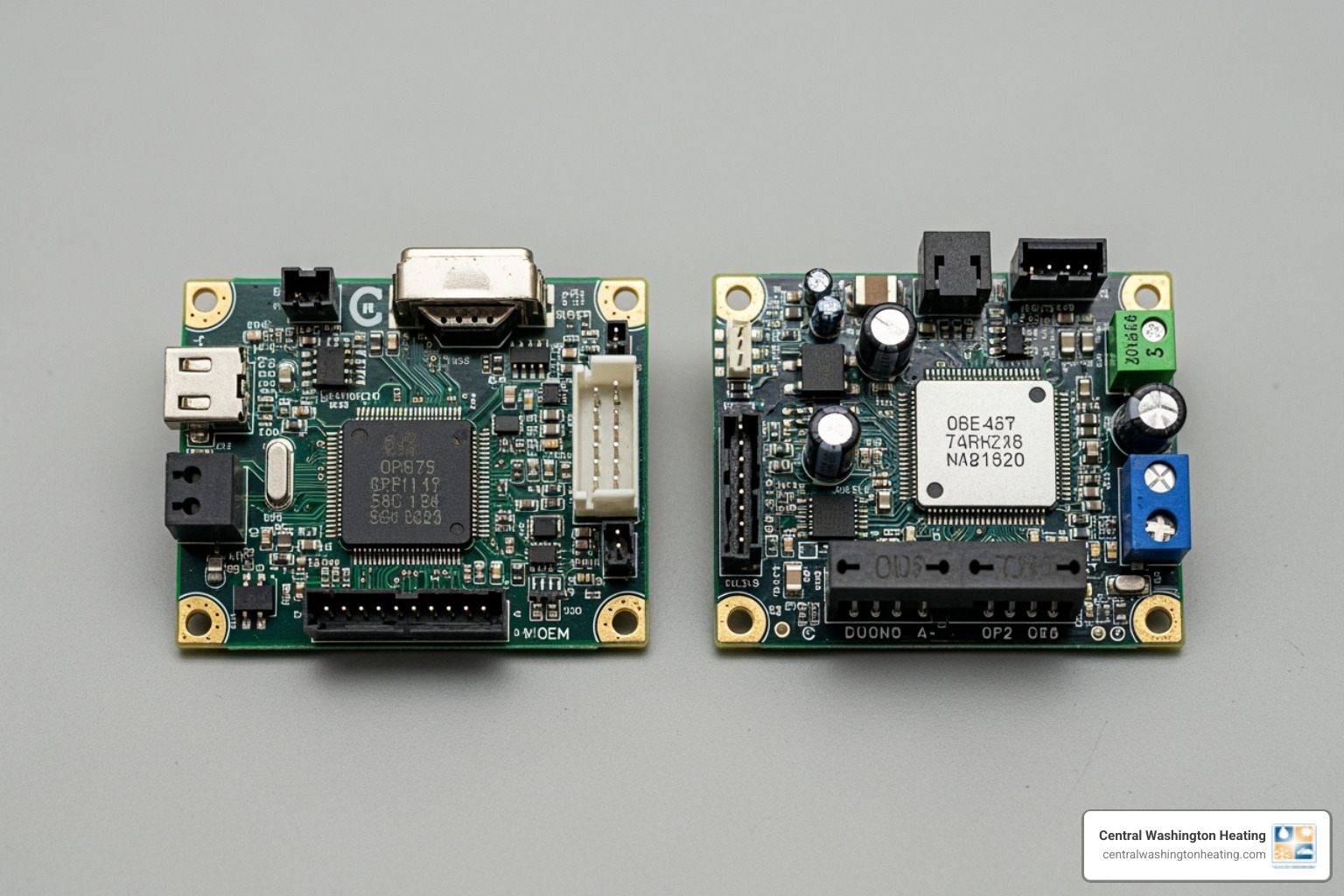
You’ll choose between OEM parts and universal replacements. OEM (Original Equipment Manufacturer) boards are made by your air handler’s manufacturer for an exact match in fit and function. Using the OEM part number is the quickest way to ensure guaranteed compatibility.
Universal replacement boards are designed to work with multiple brands and models, offering flexibility when an OEM part is unavailable. They may require configuration, like adjusting dip switches or using different cable harnesses, and demand more technical skill to install correctly.
Compatibility is key. Start by finding the original part number. The replacement must match the type of air handler (gas, electric, oil) and whether it’s a single-stage or multi-stage system. Single-stage systems are simply on or off, while multi-stage systems run at different capacities for greater efficiency.
Other critical factors include electric heat startup types (Hot Surface, Direct Spark, or Intermittent Pilot) and accessory outputs for components like humidifiers. The board must be compatible with your air handler’s electric heat startup sequence and support any accessories. Finally, the board’s voltage (e.g., 24 VAC or 120 VAC) must match your system’s requirements.
Here’s a quick comparison:
| Feature | OEM Replacement Control Boards | Universal Replacement Control Boards |
|---|---|---|
| Compatibility | Exact fit, guaranteed to work with specific make/model. | Designed to replace multiple OEM models, may require adjustments. |
| Features | Matches original features precisely. | May have additional features or require configuration to match original. |
| Warranty | Typically backed by the air handler manufacturer. | Backed by the universal board manufacturer. |
| Installation | Often plug-and-play, minimal configuration. | May involve setting dip switches, wiring adaptations, or using adapters. |
| Availability | Can sometimes be harder to find for older or discontinued models. | Generally more readily available, offering flexibility. |
| Troubleshooting | Diagnostic codes are specific to the air handler manual. | May have universal diagnostic codes or require cross-referencing. |
Understanding the Professional Replacement Process
Replacing a air handler circuit board is complex electrical work that requires understanding the air handler’s operational sequence. We always recommend professional service because a single wrong wire can damage the new board or create a safety hazard.
Here’s how our technicians approach a replacement:
Safety first. We cut power to the air handler at the breaker and the local switch. Then, we use a voltage meter to verify the power is off before proceeding.
Documentation. Before disconnecting anything, we photograph or diagram all wire connections. This ensures every wire goes to the correct terminal on the new board, preventing damage or malfunction.
Removal and Installation. We carefully remove the old board and securely mount the new one. We follow our wiring diagram to make clean, tight connections. If it’s a universal board, we configure the dip switches to match your air handler’s specifications.
System Testing. After installation, we restore power and run comprehensive tests. We watch the air handler complete a full cycle—electric heat startup, flame sensing, blower operation, and safety shutdowns—to confirm it operates safely and efficiently. This process mirrors the care we take in all our work, like what’s detailed in our guide on steps in professional air handler installation.
A skilled technician typically completes this process in one to two hours, ensuring your family’s comfort and safety.
Extending the Life of Your Control Board
Your air handler circuit board is the brain of your heating system. With proper care, it can last 15-20 years, matching your air handler’s lifespan. Neglect can lead to early failure, but a few simple maintenance habits can extend its life and help you avoid inconvenient breakdowns.
Regular filter changes are crucial. A neglected air filter restricts airflow, forcing components to work harder and causing the unit to overheat. This stress damages the air handler circuit board. Check your filter monthly and replace it every 1-3 months. It’s the simplest way to protect your system. For more on this, visit our guide on why you need a good air filter.
Power surges are silent killers for electronics. A whole-house surge protector can defend your air handler’s delicate circuitry from damaging voltage spikes caused by lightning or utility grid issues, saving you from a costly emergency repair.
Ensuring proper airflow also helps. Make sure furniture, curtains, or boxes aren’t blocking supply and return vents. When air circulates freely, your air handler runs more efficiently, reducing strain on the air handler circuit board.
The most effective protection is scheduling annual tune-ups. Our technicians inspect electrical connections, clean components to prevent overheating, and check for early signs of wear on the circuit board. We test voltage and verify blower motor operation to prevent heat-related damage to the board.
As one of our Chelan customers noted, regular maintenance “caught a problem before it turned into a winter emergency.” Small issues are easy to fix during a scheduled visit but can lead to board failure if left unattended. Our air handler maintenance tips for homeowners page offers more guidance, and you can learn about the benefits regular air handler maintenance brings.
Air handlers over ten years old are more prone to malfunctions, and the control board is often one of the first parts to show its age. Consistent care can significantly extend its reliable service life.
Your Air handler Deserves Expert Care
Your air handler circuit board is small but plays an enormous role in keeping your home warm. As the conductor of your heating system, its failure can bring the entire operation to a halt, leaving you in the cold.
We’ve covered the warning signs of a failing board, from flashing lights to a air handler that won’t start. We’ve also discussed the common causes, including thermal expansion, power surges, component wear, and overheating from a dirty air filter.
While some DIY troubleshooting is possible, the complexity of modern air handler circuit board systems makes professional diagnosis essential. Due to high voltage, wiring, and gas connections, an experienced technician is invaluable. Our team at Central Washington Heating has seen every type of failure, from surge damage to age-related wear.
Catching issues early is key. The Selah homeowner whose board fault was found during routine maintenance avoided a mid-winter breakdown. This is the power of proactive care.
Here’s what we want you to remember:
- The air handler circuit board is your air handler’s brain, managing everything from electric heat startup to safety shutdowns.
- Overheating and power surges are common culprits of failure, but many can be prevented with proper care.
- Regular maintenance—especially changing your air filter and scheduling annual tune-ups—is the best way to protect your investment and extend your control board’s life.
Your heating system works hard and deserves the same level of care. Whether you have a air handler that won’t start or you want to ensure your system is ready for winter, we’re here to help. For expert diagnostics and air handler maintenance in Chelan, WA, or anywhere in Central Washington, reach out to our team. We’ll ensure your air handler operates reliably all season long.

Written by the Central Washington Heating and Air team
The techs and comfort advisors who've kept the Wenatchee Valley heated, cooled, and breathing easy for 30+ years — family & veteran owned, with 40+ years of combined industry experience.
- Licensed & insured · LIC# CENTRWH742JN
- Daikin Comfort Pro certified
- Wenatchee, WA
Last updated July 29, 2026
Ready for comfort you can count on?
Schedule service, request a free estimate, or call now for 24/7 emergency help. Our team is standing by across the Wenatchee Valley.
Get started today
Free estimates on installs · no-pressure, written quotes
Schedule My ServiceCall (509) 776-0247Mon–Fri: 8:00 AM – 4:30 PM · 24/7 for emergencies
Already have a quote? Get a free second opinion →