
Listen Up: A Guide to Air handler Noises You Shouldn’t Ignore
Is your furnace making noise? Learn what strange sounds mean, from normal hums to dangerous bangs, and when to call a pro.
Why Understanding Your Air handler’s Language Matters
Air handler making noise can transform your peaceful winter evening into a source of stress and concern. That once-comforting hum from your basement has suddenly become a symphony of bangs, squeals, and mysterious grinding sounds that keep you awake at night.
Here’s what different air handler noises typically mean:
- Loud banging or booming – Delayed gas electric heat startup (emergency situation)
- High-pitched squealing – Worn blower motor bearings or damaged belt
- Whistling or hissing – Clogged air filter or potential gas leak
- Scraping or grinding – Loose blower wheel or worn ball bearings
- Rattling – Loose panels, screws, or ductwork connections
- Buzzing – Electrical issues or loose transformer
- Clicking – Normal at startup, concerning if persistent
Your air handler is essentially talking to you through these sounds. Like any complex machine with moving parts, gas heat strips, and electrical components, it communicates problems before they become dangerous or expensive failures.
The reality is stark: 85% of single-family homes were built before 2000, when energy standards were less stringent. This means most air handlers are working harder than they should, leading to more wear, tear, and noise.
Some sounds signal immediate safety risks – like electrical safety leaks or gas buildup that could cause explosions. Others warn of expensive repairs ahead, like a failing blower motor or cracked indoor coil.
Learning to distinguish between normal operational sounds and concerning noises isn’t just about comfort – it’s about protecting your family’s safety and avoiding emergency repair bills during Central Washington’s coldest days.
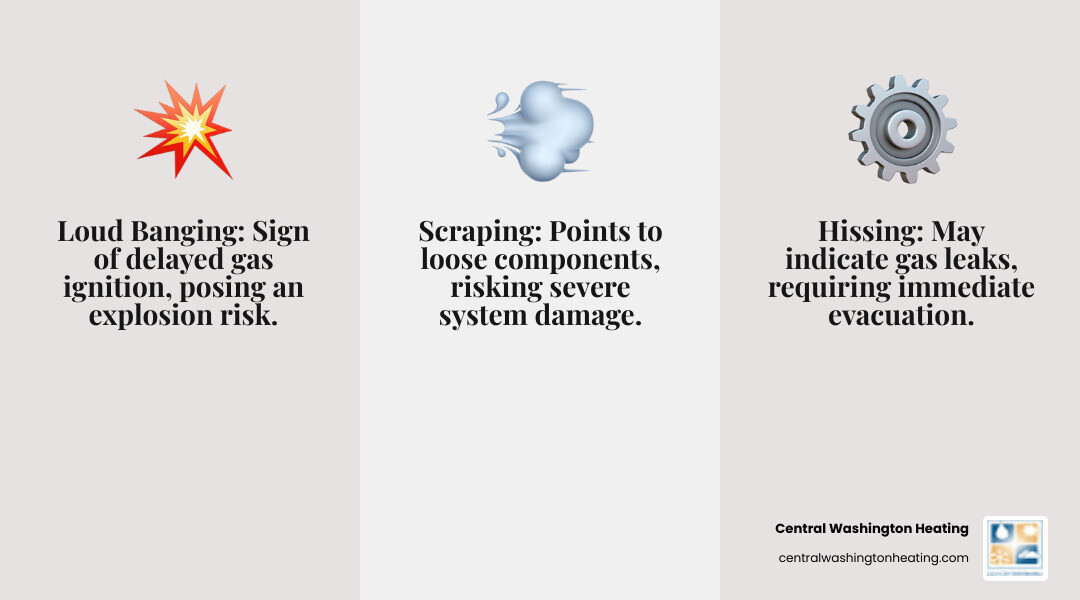
Key Air handler making noise vocabulary:
Normal Air handler Sounds vs. Concerning Noises
Think of your air handler like a hardworking friend who’s been keeping your Central Washington home cozy all winter long. Just like that friend might hum while they work or make the occasional sound while getting things done, your air handler isn’t meant to be completely silent during operation.
Normal clicking at startup is actually a good sign – it means your sequencer or relay or electric heat control is doing its job. You’ll hear this gentle click as your system fires up, and it’s nothing to lose sleep over.
That gentle humming coming from your basement? That’s your blower motor working steadily to circulate warm air throughout your home. It’s the sound of comfort being delivered to every room.
The whooshing air you hear through your vents is simply heated air traveling through your ductwork – exactly what you want to hear on a chilly evening. And those occasional pops or pings? That’s just your ductwork expanding and contracting as it heats up and cools down, much like how a car engine ticks as it cools after a long drive.
But here’s where things get interesting – and potentially concerning. Air handler making noise that’s sudden, loud, or completely new is your system’s way of waving a red flag.
Sudden changes in your air handler’s sound signature are like your friend suddenly speaking in a different voice – something’s definitely up. Maybe your once-quiet system has become the loudest “appliance” in your house, or perhaps there’s a loudness increase that makes you pause and wonder what’s happening down there.
New noises are particularly telling. If you’ve lived with your air handler for years and suddenly hear something you’ve never heard before, especially if it’s persistent or jarring, that’s your cue to investigate.
The difference between normal and problematic sounds often comes down to consistency and context. Normal operational sounds tend to be steady, predictable, and relatively subtle. Concerning noises? They’re the ones that make you stop mid-conversation and ask, “Did you hear that?”
What’s That Sound? A Quick Guide
Let’s walk through what you’re actually hearing when your air handler operates normally. That normal clicking at the beginning or end of a heating cycle is typically your sequencer or relay or relay switching on or off – think of it as your air handler saying “hello” and “goodbye.”
The steady blower motor hum is the heartbeat of your heating system, moving air consistently through your home. Air movement creates that gentle whooshing sound through your registers – it’s the sound of warm air reaching every corner of your living space.
Duct expansion causes the occasional ping or pop as metal ductwork adjusts to temperature changes. It’s completely normal and harmless.
Now for the sounds that should grab your attention. Grinding typically signals metal components rubbing against each other when they shouldn’t be – imagine two gears that have lost their lubrication.
Squealing produces a high-pitched shriek that usually points to blower motor issues or belt problems. It’s sharp, unmistakable, and definitely not something to ignore.
Banging can range from concerning to downright dangerous. While sometimes it’s just ductwork expanding more dramatically than usual, it could also indicate delayed electric heat startup – a serious safety issue.
When to pay attention? Trust your instincts. If a sound is new, louder than usual, or persistent, your air handler is trying to communicate with you. Ignoring these audio cues often leads to bigger problems and more expensive repairs down the road.
A Homeowner’s Guide to Common Air handler Noises and What They Mean
Your air handler has its own way of communicating, and learning its language can save you from both sleepless nights and surprise repair bills. Think of these sounds as your heating system’s way of asking for help – sometimes politely, sometimes urgently.
Every air handler making noise tells a story. Some are simple tales of normal operation, while others are urgent pleas for immediate attention. Here’s what your air handler is trying to tell you through its symphony of sounds.
Loud Banging or Booming
Nothing gets your attention quite like a loud bang echoing from your basement. This jarring sound can mean two very different things, and understanding which one you’re dealing with could be a matter of safety.
Delayed electric heat startup is the serious culprit here. In electric air handlers, this happens when gas builds up in the electric heating chamber before finally igniting with a controlled explosion. It’s like your air handler is playing a dangerous game of buildup and release. The delay can stem from dirty heat strips, a faulty sequencer or relay, or incorrect heat-strip amperage.
While it might sound like just a dramatic “boom,” this is your air handler waving a red flag. The stress from these mini-explosions can crack your indoor coil, potentially leading to electrical safety leaks. In extreme cases, it poses a real explosion risk.
If you hear this sound, treat it as an emergency. Turn off your air handler immediately, leave your home, and contact both your gas company and a professional HVAC technician. This isn’t the time to play detective.
Sometimes, though, that bang is just your expanding ductwork doing its thing. Metal ducts expand and contract as hot air rushes through them, especially in older homes or systems with undersized ducts. While not dangerous, it can signal inefficient airflow that’s worth addressing.
For any banging concerns, our guide on Common Air handler Repair Issues can help you understand what might be happening.
High-Pitched Squealing or Screeching
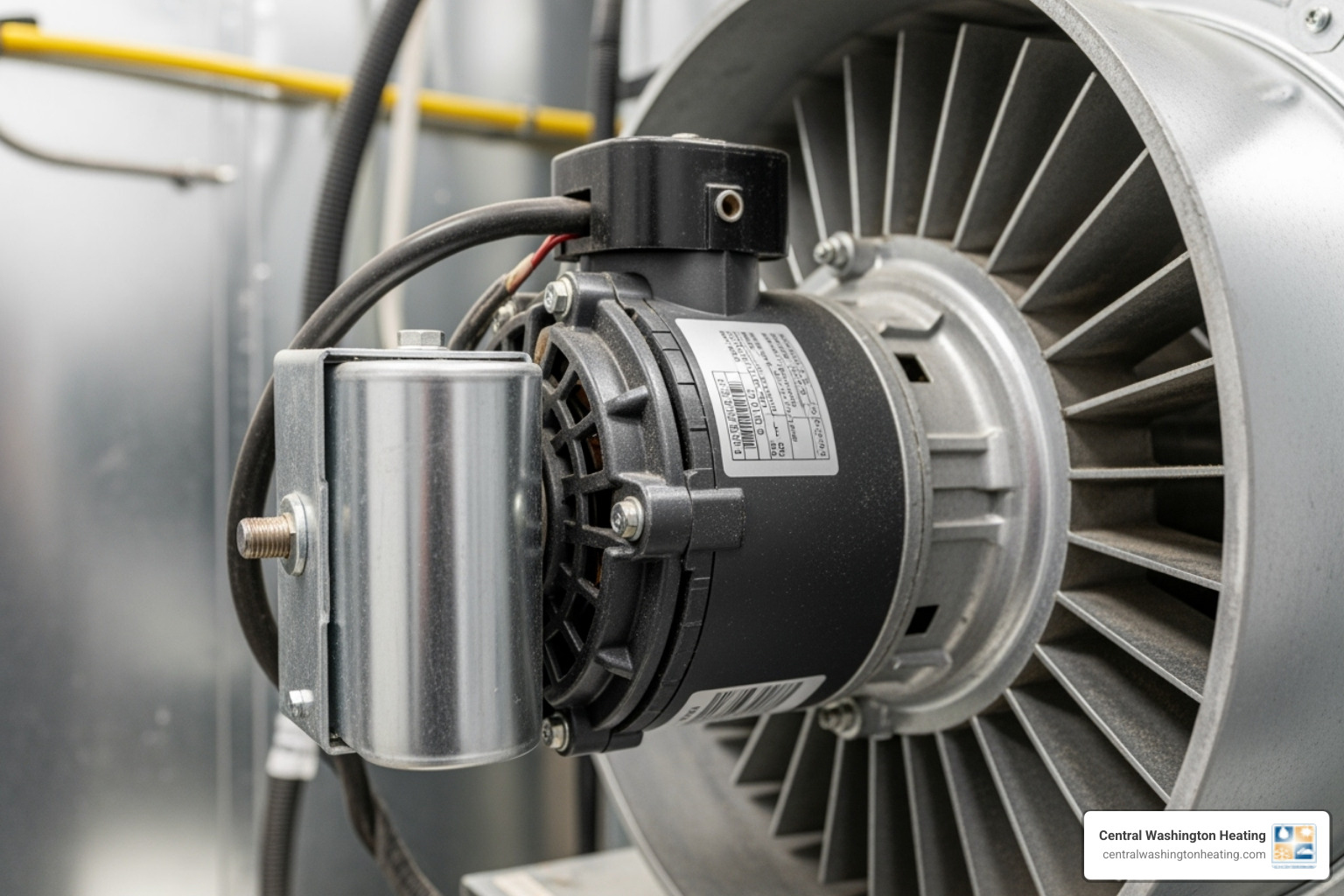
A high-pitched squeal is like nails on a chalkboard – impossible to ignore and definitely not something you want to live with. This sound usually comes from your blower motor assembly, and it’s asking for immediate help.
Worn motor bearings are often the culprit. These small but crucial components help your blower motor spin smoothly. Over time, they wear down, creating that unmistakable metal-on-metal friction sound. It’s your motor’s way of saying it’s working too hard to do its job.
In older air handlers with belt-driven blowers, a damaged or worn belt might be the troublemaker. When belts get loose, cracked, or stretched, they slip and squeal like tires on wet pavement.
Ignoring these sounds is like ignoring a friend who’s asking for help – it rarely ends well. What starts as a simple bearing replacement can turn into a complete motor failure if left untreated. If you’re experiencing these issues, our article on Air handler Blower Motor Is Failing East Wenatchee provides valuable insights.
Whistling or Hissing

Whistling and hissing sounds can range from a simple fix to a genuine emergency, making them particularly important to understand correctly.
Most of the time, restricted airflow is behind that whistling sound. Your air handler is essentially trying to push air through a space that’s too small – like trying to breathe through a straw. A clogged air filter is usually the main suspect, forcing your system to work harder and potentially overheat.
Ductwork leaks can also create whistling as air escapes through cracks and gaps. It’s like having tiny holes in a balloon – your heated air is sneaking out before it reaches your living spaces, making your system work overtime.
But here’s where things get serious: hissing with a rotten egg smell is a completely different beast. This could indicate a gas leak, which transforms your home into a potential danger zone. Gas leaks don’t mess around – they can lead to fires, explosions, or electrical safety poisoning.
If you suspect a gas leak, don’t try to be a hero. Turn off your air handler, evacuate immediately, and call professionals from a safe location. Don’t flip any electrical switches or use phones inside the house. For detailed safety protocols, check out What to do if you smell gas.
For more information about whistling sounds, our detailed guide Why Air handler Making a Whistling Noise can help you troubleshoot.
Scraping or Grinding
When you hear scraping or grinding, your air handler is essentially screaming “Stop everything!” This metal-on-metal sound means components are rubbing together when they absolutely shouldn’t be.
A loose blower wheel might have shifted on its shaft, now scraping against the housing like a coin in a washing machine. Broken motor mounts can cause the entire blower assembly to shift position, creating contact where none should exist.
Worn-out ball bearings that have completely given up can also create this grinding symphony. It’s the sound of metal components destroying each other with every rotation.
Here’s the critical part: if you hear scraping or grinding, turn off your air handler immediately. Don’t wait to see if it gets better or try to tough it out for one more day. Continued operation can transform a manageable repair into an expensive replacement.
Every minute you run the system with these sounds, you’re potentially causing more damage. What might start as a simple blower wheel adjustment can quickly become a complete motor replacement if ignored.
For professional help in the Wenatchee area, our team specializes in Air handler Repair Wenatchee, WA and can quickly diagnose and resolve these issues.
Rattling often sounds less dramatic than other air handler noises, but it still deserves your attention. Sometimes it’s as simple as loose panels or screws vibrating with the system’s operation – an easy fix that just requires some tightening.
Loose ductwork connections can rattle against each other or nearby surfaces, especially as your system vibrates during operation. Occasionally, small debris finds its way into the blower fan, creating a rattling sound as it gets tossed around.
Buzzing or humming beyond the normal operational sounds usually points to electrical issues or loose components. Faulty capacitors, struggling fan motors, or transformer problems can all create persistent buzzing. If the buzzing is loud or accompanied by any burning smell, it could indicate dangerous electrical issues.
Clicking is normal when your air handler starts up or shuts down, but persistent clicking tells a different story. In electric air handlers, repeated clicking without electric heat startup often means problems with the electric heat startup sequence – dirty sequencers or relays, faulty sequencers or relays, or gas valve issues. Continuous clicking can lead to dangerous gas buildup, making professional inspection essential.
Why Is My Air handler Making Noise? Key Causes and Risks
When your air handler making noise becomes more than the usual gentle hum, it’s your heating system’s way of telling you something isn’t quite right. Think of these sounds as your air handler’s vocabulary – each noise has meaning, and learning to understand them can save you from bigger headaches down the road.
The most common culprits behind unusual air handler noises usually trace back to a few key areas. Your blower motor might be struggling with worn bearings or an unbalanced wheel that’s collected dust over the years. Your home’s ductwork could have loose connections rattling around or leaks that create whistling sounds. Sometimes it’s the heat strips and ignitors that have gotten dirty, leading to that scary delayed electric heat startup we talked about earlier. And don’t forget about electrical issues – faulty capacitors or loose wiring can create their own symphony of concerning sounds.
Here’s what makes ignoring these noises so risky: they’re early warning signs of much bigger problems ahead.
Reduced efficiency is often the first consequence you’ll notice. When your air handler has to work harder because of worn parts or airflow restrictions, your energy bills start creeping up. That gentle hum becomes a labored wheeze, and suddenly you’re paying more to heat your home less effectively.
System failure is the next domino to fall. That loose screw that’s been rattling for months? It could work its way out completely, causing other components to shift and break. A dirty heat strip that’s been causing delayed electric heat startup? It’s slowly damaging your indoor coil, which could mean replacing your entire air handler instead of just cleaning a component.
But the most serious risk is safety hazards. Some air handler noises signal immediate dangers like gas leaks, electrical hazards, or electrical fires. These aren’t just comfort issues – they’re life-threatening emergencies that require immediate action.
The Role of the Blower Motor and Ductwork

Your blower motor and ductwork are like the heart and circulatory system of your home’s heating. When either one starts having problems, you’ll definitely hear about it.
The blower motor is responsible for pushing all that warm air throughout your house. When it starts making noise, it’s usually because something has gone wrong with its moving parts. A blower wheel imbalance often happens when dust and debris build up over time, causing the wheel to wobble as it spins. Worn bearings that once helped everything rotate smoothly start grinding against each other, creating those squealing or grinding sounds that make you cringe.
Sometimes the motor itself is fine, but it’s not sitting properly in its housing anymore. When motor mounts loosen or break, the entire assembly can shift, causing vibrations and rattling that echo through your home. If you’re hearing persistent motor-related noises, our guide on Air handler Blower Motor Is Failing East Wenatchee can help you understand what’s happening.
Your ductwork problems usually announce themselves differently. Loose duct connections create rattling sounds as air rushes past them. Leaks or cracks in the ducts cause whistling or hissing as heated air escapes into your walls or crawlspace instead of reaching your living areas.
Undersized ducts or significant airflow restrictions – maybe from a clogged filter or blocked vents – can cause pressure changes that make your ducts pop and bang like they’re protesting. These issues don’t just create noise; they waste energy and leave some rooms uncomfortably cold while others get too hot.
Why a air handler making noise can be a safety risk
Some air handler noises aren’t just annoying – they’re genuinely dangerous warning signals that demand immediate attention.
Gas leaks are probably the most serious risk. That persistent hissing sound, especially when combined with the smell of rotten eggs, means electric auxiliary heat is escaping somewhere it shouldn’t be. Electric auxiliary heat is highly explosive, and even a small spark from a light switch or appliance could trigger a catastrophic explosion. If you suspect a gas leak, don’t take any chances – evacuate immediately and call your gas company from outside your home.
Electrical safety exposure is another silent killer that often starts with air handler noises. When delayed electric heat startup causes those loud banging sounds, it’s slowly damaging your indoor coil. A cracked indoor coil can leak deadly electrical safety into your home’s air supply. Electrical safety is odorless and colorless, so you might not realize you’re being poisoned until you start experiencing dizziness, nausea, or flu-like symptoms.
Electrical problems announce themselves through persistent buzzing, crackling, or the smell of burning plastic. These issues can lead to overheating components, electrical shorts, and house fires. Electrical problems in your air handler aren’t DIY territory – they require professional expertise to diagnose and repair safely.
The explosion risk from delayed electric heat startup might sound dramatic, but it’s real. When gas builds up in your electric heating chamber and finally ignites, it creates a small explosion inside your air handler. While these are usually contained, they stress your entire system and, in extreme cases, can cause serious damage or injury.
Understanding Why Air handler Repair Is Important goes far beyond keeping your home comfortable – it’s about protecting your family’s safety and your property.
Gas vs. Electric: Does Air handler Type Change the Noise?
The type of air handler you have definitely influences the kinds of noises you might hear, mainly because gas and electric air handlers heat your home in completely different ways.
Electric air handlers have their own unique sounds because they’re burning fuel to create heat. Delayed electric heat startup creates those scary banging or booming sounds when gas builds up before igniting. Heat strip issues like dirty flames or incorrect heat-strip amperage can cause rumbling or roaring sounds that aren’t normal. You might also hear clicking from the electric heat startup sequence or whooshing as gas flows to the heat strips.
Electric air handlers skip the electric heating process entirely, so they won’t have electric heat startup-related noises. Instead, you might hear electrical buzzing from transformers or contactors switching on and off. Heating element sounds can include crackling or ticking as the elements heat up and cool down, similar to how an electric oven behaves.
Both types share some common noise sources. Blower motor problems sound the same whether your air handler burns gas or uses electricity – squealing bearings, grinding metal, or rattling from loose components affect both systems equally. Ductwork noises are also universal since both air handler types use the same air distribution system to move heated air through your home.
The key difference is that electric air handlers have more potential safety risks associated with their noises. While both types can have dangerous electrical issues, electric air handlers add the risks of gas leaks, electrical safety poisoning, and explosion hazards that electric models simply don’t have.
Normal Air handler Sounds vs. Concerning Noises
Your air handler isn’t meant to be completely silent – think of it as the hardworking heart of your Central Washington home. Just like your car engine or washing machine, it naturally makes some sounds while doing its job of keeping you warm and cozy.
When everything’s running smoothly, you’ll hear some perfectly normal sounds. That gentle clicking at startup is just your sequencer or relay or electric heat control getting to work – nothing to lose sleep over. The low, steady humming from your blower motor is actually a good sign that it’s circulating air properly throughout your home.
You’ll also notice the whooshing sound of air moving through your vents and ductwork as heated air travels to every room. And those occasional pops or pings from your ductwork? That’s just your metal ducts expanding and contracting as they heat up and cool down – completely normal and harmless.
But then there are the sounds that make you pause and think, “That’s new.” These are the noises that deserve your attention and shouldn’t be ignored.
Sudden changes in your air handler’s sound are often the first red flag. If your once-quiet system suddenly becomes that noisy neighbor you never wanted, something’s likely going wrong. Even a consistent increase in overall volume – without any dramatic banging or clanking – can signal developing problems.
Most importantly, any new noises you haven’t heard before should catch your attention, especially if they’re loud or keep happening. Your air handler making noise is essentially its way of talking to you.
The key to telling normal from problematic sounds comes down to consistency and context. Normal operational sounds tend to be steady and relatively quiet. Concerning noises are often sudden, much louder than usual, or change over time.
What’s That Sound? A Quick Guide
Let’s walk through what you might be hearing and whether it’s worth worrying about.
Those normal clicking sounds you hear at the beginning or end of a heating cycle are typically just your sequencer or relay or relay doing their job. If you have an older air handler, these startup and shutdown clicks are especially common and usually harmless.
The steady hum from your blower motor is actually music to your ears – it means your air handler has ignited successfully and is operating smoothly, moving warm air throughout your home.
That gentle whoosh of air flowing through your registers is exactly what you want to hear. It’s the sound of your heating system distributing comfort to every corner of your house.
And those occasional pings or pops from your ductwork? Just your ducts adjusting to temperature changes – nothing more concerning than the creaks your house makes as it settles.
Now for the sounds that should get your attention. Grinding noises often mean metal parts are rubbing against each other when they shouldn’t be – a clear sign of mechanical wear that needs addressing.
High-pitched squealing usually points to problems with your blower motor or a worn belt that’s struggling to do its job.
Loud banging can range from serious (like delayed gas electric heat startup) to less concerning (expanding ductwork), but it always deserves investigation.
The bottom line? Pay attention to new, louder, or persistent sounds. While modern air handlers are designed to run quietly, any change in your system’s normal sound pattern is worth investigating. Your air handler is trying to communicate with you – and listening now can save you from much bigger headaches later.
A Homeowner’s Guide to Common Air handler Noises and What They Mean
Your air handler is constantly trying to communicate with you, and learning its language can save you from both sleepless nights and expensive emergency repairs. Think of those sounds as your heating system’s way of asking for help before a small problem becomes a major headache.
Let’s walk through the seven most common air handler making noise situations you might encounter in your Central Washington home, from the merely annoying to the downright dangerous.
Loud Banging or Booming
When your air handler sounds like someone’s banging pots and pans in your basement, it’s time to pay serious attention. This jarring noise can mean two very different things, and one of them is genuinely scary.
Delayed electric heat startup is the serious culprit here. In electric air handlers, this happens when gas builds up in the electric heating chamber before finally igniting with a loud BOOM. It’s like a mini explosion happening inside your air handler every time it tries to start. The gas accumulation usually stems from dirty heat strips, a faulty sequencer or relay, or incorrect heat-strip amperage.
Here’s what makes this so dangerous: that small explosion stresses your entire system. It can crack the indoor coil, which opens the door to electrical safety leaks. In extreme cases, it creates a genuine explosion risk. If you hear this sound, consider it an emergency. Turn off your air handler immediately, leave your home, and call both your gas company and an HVAC professional.
On the less terrifying side, sometimes that banging is just your metal ductwork expanding and contracting as hot air rushes through. This is especially common in older homes or when your ducts are undersized for your system. While not dangerous, it’s still telling you that your airflow isn’t as efficient as it could be.
For any banging sounds, especially with electric air handlers, it’s always better to be overly cautious. You can learn more about these and other issues on our Common Air handler Repair Issues page.
High-Pitched Squealing or Screeching
That piercing squeal coming from your air handler isn’t just unpleasant – it’s your blower motor crying for help. This sound typically means something inside your blower assembly is wearing out or breaking down.
Worn motor bearings are often the main culprit. These small but crucial parts help your blower motor spin smoothly, and when they start failing, you get that unmistakable metal-on-metal friction sound. Sometimes you can fix this by replacing just the bearings, but other times the whole motor needs replacing.
If your air handler is older and has a belt-driven blower, a worn or damaged belt can create an equally annoying squeal as it slips around the pulleys. This is actually one of the easier fixes – a professional can swap out that belt relatively quickly.
The key thing to remember is that ignoring these sounds never makes them go away. Instead, you’ll likely end up with a completely dead blower motor right when you need heat most. If your Air handler Blower Motor Is Failing East Wenatchee, getting it checked sooner rather than later will save you money and keep you warm.
Whistling or Hissing
Whistling and hissing sounds can range from “minor annoyance you can fix yourself” to “evacuate the house immediately.” The trick is knowing which is which.
Most of the time, whistling means restricted airflow. Your air handler is working harder than it should to push air through your system. The most common cause? A clogged air filter that hasn’t been changed in months (or longer – we don’t judge). When your filter gets packed with dust and debris, air has to squeeze through tiny gaps, creating that whistling sound.
Ductwork leaks can also cause whistling as heated air escapes through cracks or loose connections. Not only does this waste energy and drive up your bills, but it also means some rooms never quite get warm enough. Our guide on Why Air handler Making a Whistling Noise covers these issues in more detail.
But here’s where things get serious: hissing combined with the smell of rotten eggs means you might have a gas leak. This is a genuine emergency that requires immediate action. Turn off your air handler, get everyone out of the house, and call your gas company from a safe location. Don’t flip any light switches or use your phone inside the house – even a small spark could be dangerous.
For official safety guidelines on What to do if you smell gas, always refer to government resources.
Scraping or Grinding
When your air handler sounds like it’s grinding coffee beans, that’s metal rubbing against metal – and that’s never good. This noise demands immediate attention because continued operation can turn a fixable problem into an expensive replacement.
A loose blower wheel is often the source of this grinding symphony. The wheel that circulates air through your home can work loose from its shaft and start scraping against the housing. Similarly, a broken motor mount can allow the entire blower assembly to shift out of position, causing parts to rub together.
Worn-out ball bearings can also create grinding sounds as they deteriorate. These bearings are supposed to let your motor spin smoothly, but when they fail, you get that horrible metal-on-metal sound.
If you hear scraping or grinding, turn off your air handler right away. Every minute it runs while making these sounds potentially causes more damage. What might be a relatively simple repair today could become a full system replacement if you wait too long.
Our team is ready to help diagnose and fix these issues with professional Air handler Repair Wenatchee, WA services.
Rattling
Rattling is often the least scary of the air handler noises, but it still deserves your attention. Think of it as your air handler’s way of saying “something’s a little loose here.”
Sometimes it’s as simple as loose panels or screws that vibrate when the air handler runs. If you’re handy with a screwdriver, you might be able to tighten these yourself. The access panels on your air handler can work loose over time, especially if they’ve been removed for maintenance.
Loose ductwork connections are another common source of rattling. The vibrations from your air handler can cause ductwork joints to rattle against each other or nearby surfaces. Debris inside the blower – like a small toy that fell through a vent or accumulated leaves – can also create rattling as the fan spins.
In some cases, rattling is an early warning sign of worn motor mounts or bearings before they progress to the more serious grinding sounds we talked about earlier. While rattling often indicates minor issues, persistent rattling shouldn’t be ignored. It’s usually trying to tell you that something will become a bigger problem soon.
Buzzing or Humming
Every air handler hums a little during normal operation, but a constant, loud buzzing is different. This usually points to electrical issues or components that are struggling to work properly.
Electrical problems like a faulty capacitor, struggling fan motor, or transformer issues often announce themselves with persistent buzzing. These components need the right amount of electrical power to work correctly, and when they don’t get it, they buzz in protest.
Sometimes the buzzing comes from loose parts like mounting bolts, brackets, or fan blades that vibrate when the system runs. Loose ductwork can also create buzzing sounds as it vibrates with the airflow.
Pay special attention if the buzzing is loud, persistent, or – especially concerning – if you smell anything burning. This could indicate an electrical short or overheating component, which creates a fire risk. If you notice any burning smells along with electrical buzzing, turn off your air handler immediately and call a professional.
Clicking
A single click when your air handler starts up or shuts down? That’s perfectly normal – just your electric heat startup sequence or relays doing their job. But repeated, persistent clicking is your air handler’s way of saying something isn’t working right.
Electric heat startup sequence problems are the most common cause of concerning clicking sounds in electric air handlers. When your air handler tries repeatedly to ignite but can’t quite get the flame going, you’ll hear that ongoing clicking. This could mean a dirty sequencer or relay, faulty sequencer or relay, or problems with the gas valve.
Here’s why this matters: when your air handler keeps trying to ignite without success, gas can build up in the electric heating chamber. That’s the same dangerous situation that leads to the explosive banging we discussed earlier.
Failing electrical components like relays can also create clicking sounds as they try to engage but can’t quite complete their job. If your air handler is clicking continuously or failing to ignite properly, it’s time to have a professional inspect the electric heat startup sequence to keep your family safe.
Why Is My Air handler Making Noise? Key Causes and Risks
Understanding why your air handler making noise is more than just solving an annoyance—it’s about protecting your home, your family, and your wallet. When your air handler starts speaking up with unusual sounds, it’s usually trying to tell you about problems brewing within its complex system of moving parts, electrical components, and gas connections.
The heart of most air handler noise issues lies within a few key system components. Your blower motor works tirelessly to circulate warm air throughout your home, and when its bearings wear out or its wheel becomes unbalanced, you’ll hear about it through squealing or grinding sounds. Your ductwork, which acts like your home’s circulatory system, can develop loose connections or leaks that create their own symphony of rattles and whistles.
Then there are the heat strips and ignitors in electric air handlers—when these get dirty or malfunction, they can cause that alarming delayed electric heat startup that sounds like a small explosion. Electrical issues, from faulty capacitors to loose wiring, often announce themselves through persistent buzzing or humming that goes beyond normal operation.
The consequences of ignoring these warning signs can be severe and costly. Reduced efficiency is often the first casualty—a struggling air handler works overtime to maintain your desired temperature, sending your energy bills through the roof. This is especially concerning for the 85% of homes built before 2000, where older systems are already working harder due to less stringent energy standards.
System failure is the next domino to fall. What starts as a minor loose part can quickly cascade into major component damage. Imagine your air handler breaking down completely during Central Washington’s coldest winter days—that’s not just uncomfortable, it’s potentially dangerous.
Most critically, certain air handler noises signal immediate safety hazards. We’re talking about gas leaks that could lead to explosions, electrical hazards from cracked indoor coils, or electrical problems that could spark house fires. These aren’t situations you want to find the hard way.
The Role of the Blower Motor and Ductwork
Your blower motor is essentially the lungs of your heating system, and like any hardworking component, it can develop problems that make themselves known through sound. When you hear squealing, grinding, or unusual buzzing, you’re often listening to a blower motor in distress.
A blower wheel imbalance is surprisingly common and usually happens when dirt, debris, or even small objects get stuck to the wheel. As it spins, this creates vibration that can sound like anything from a gentle wobble to a more concerning grinding noise. Sometimes the wheel itself can become loose on its shaft, leading to that metal-scraping sound that makes you wince.
Worn bearings are another frequent culprit. These small but crucial components help your motor spin smoothly, and when they start to fail, you’ll hear high-pitched squealing or grinding. Think of it like a squeaky wheel that desperately needs oil—except this wheel is responsible for keeping your entire home warm.
Your home’s ductwork plays an equally important role, acting as the highway system that delivers heated air to every room. When ductwork develops problems, the sounds can be just as telling. Loose duct connections create rattling noises as vibrations travel through the system. Leaks or cracks in the ducts cause whistling sounds as pressurized air escapes—and along with that escaping air goes your energy efficiency and heating dollars.
Undersized ducts or significant airflow restrictions can create pressure changes that result in banging or popping sounds. It’s like trying to force too much water through a garden hose—something’s got to give, and usually it announces itself loudly. If your Air handler Blower Motor Is Failing East Wenatchee, these issues often compound each other, creating a cascade of problems that affect your entire system.
Why a air handler making noise can be a safety risk
Some air handler making noise situations cross the line from annoying to dangerous, and recognizing these sounds could literally save lives. Your air handler handles electric auxiliary heat, electricity, and electric heating—a combination that demands respect and immediate attention when something goes wrong.
Gas leaks are perhaps the most immediately dangerous situation. That persistent hissing sound, especially when combined with the distinctive rotten egg smell of electric auxiliary heat, means you need to act fast. Electric auxiliary heat is highly explosive, and even a small spark from a light switch or phone could trigger a catastrophic explosion. If you suspect a gas leak, don’t hesitate—turn off your air handler, evacuate your home immediately, and call your gas company from a safe location outside.
Electrical safety exposure is the silent killer that often results from other air handler problems. When delayed electric heat startup causes those alarming banging sounds, it can stress your indoor coil enough to crack it. A cracked indoor coil allows deadly electrical safety to leak into your home’s air supply. CO is completely odorless and colorless, making it impossible to detect without proper equipment. Early symptoms like dizziness, nausea, and flu-like feelings are often dismissed as minor illnesses, but they can quickly progress to unconsciousness or death.
Electrical problems manifest through persistent buzzing, sizzling sounds, or the unmistakable smell of burning plastic. These issues can lead to overheating components, electrical shorts, and house fires. Unlike some air handler problems, electrical issues aren’t something you can diagnose or fix yourself—they require immediate professional attention.
The explosion risk from delayed electric heat startup deserves special emphasis. When gas builds up in the electric heating chamber before igniting, it creates what’s essentially a controlled explosion inside your air handler. While the system is designed to contain these forces, repeated occurrences stress metal components and can lead to catastrophic failure. In rare cases, severe delayed electric heat startup has caused air handlers to literally blow apart.
These safety risks highlight exactly Why Air handler Repair Is Important—it’s not just about comfort or saving money, it’s about protecting everything and everyone you care about most.
Gas vs. Electric: Does Air handler Type Change the Noise?
The type of air handler humming away in your basement definitely influences the kinds of sounds you’ll hear, mainly because gas and electric air handlers work in fundamentally different ways. Understanding these differences can help you better interpret what your specific system is trying to tell you.
Electric air handlers have some unique noise signatures that electric units simply don’t produce. The most distinctive and concerning is that delayed electric heat startup banging we’ve discussed—this only happens in gas systems where fuel can accumulate before igniting. Heat strip issues also create sounds specific to electric air handlers, like whooshing during normal electric heat startup or irregular sounds when heat strips are dirty or misaligned.
Electric air handlers, on the other hand, have their own acoustic personality. Electrical buzzing is more common and often more noticeable in electric systems because they rely entirely on electrical components for heating. Heating element sounds can include crackling or popping as the elements heat up and cool down—sounds you’ll never hear from a gas heat strip.
However, many sounds are shared between both types because they use similar components for air circulation and distribution. Both gas and electric air handlers have blower motors that can develop the same bearing problems, belt issues, or wheel imbalances. Both types also use the same ductwork systems, so rattling, whistling, or banging from ducts sounds identical regardless of your air handler type.
| Noise Type | Electric air handler Specifics | Electric air handler Specifics | Shared Noises (Both Types) |
|---|---|---|---|
| Banging | Delayed electric heat startup (emergency situation), heat strip problems | Rare, usually ductwork expansion | Ductwork expansion, loose panels |
| Buzzing | Electrical components, gas valve issues | Heating elements, electrical problems | Blower motor issues, loose parts |
| Clicking | Electric heat startup sequence cycling, gas valve operation | Relay switching, electrical contacts | Normal startup sounds, failing components |
| Squealing | Same as electric | Same as gas | Blower motor bearings, belt problems |
| Whistling | Gas leak (emergency!), airflow restriction | Airflow restriction only | Clogged filters, ductwork leaks |
The key takeaway is that while the heating method differs, both types of air handlers share many of the same mechanical components that can develop problems and create noise. Whether you have gas or electric, unusual sounds deserve the same level of attention and professional evaluation.

Written by the Central Washington Heating and Air team
The techs and comfort advisors who've kept the Wenatchee Valley heated, cooled, and breathing easy for 30+ years — family & veteran owned, with 40+ years of combined industry experience.
- Licensed & insured · LIC# CENTRWH742JN
- Daikin Comfort Pro certified
- Wenatchee, WA
Last updated July 29, 2026
Ready for comfort you can count on?
Schedule service, request a free estimate, or call now for 24/7 emergency help. Our team is standing by across the Wenatchee Valley.
Get started today
Free estimates on installs · no-pressure, written quotes
Schedule My ServiceCall (509) 776-0247Mon–Fri: 8:00 AM – 4:30 PM · 24/7 for emergencies
Already have a quote? Get a free second opinion →