
The Simple Swap: Changing Your Air handler Filter
Learn easy furnace filter replacement! Improve air quality, save energy, and protect your HVAC with our step-by-step guide.
Why Your Air handler Filter Matters More Than You Think
Air handler filter replacement is one of the simplest yet most impactful home maintenance tasks. Here’s what you need to know:
Quick Answer: How to Replace Your Air handler Filter
- Turn off your air handler using the thermostat or power switch.
- Locate the filter in the blower compartment or return air duct.
- Note the airflow direction; arrows should point toward the air handler.
- Remove the old filter and slide in the new one.
- Turn the system back on.
Most 1-inch filters need replacement every 1-3 months. Thicker 4-inch filters last 6-9 months.
Your air filter does some seriously heavy lifting, protecting your heating system from dust and debris while cleaning the air your family breathes. However, a dirty filter forces your air handler to work harder. Research shows a clogged filter can increase your energy consumption by up to 15%, leading to higher bills and more wear on your system.
The good news is that changing your air filter is simple and takes less than five minutes. This guide walks you through everything from choosing the right filter to installing it correctly, helping you improve your home’s comfort and save money.

Simple Air handler filter replacement glossary:
Why a Clean Filter is Your Air handler’s Best Friend
Your air filter has two critical jobs: protecting your heating system and improving your family’s health.
First, it acts as a barrier, catching dust, pet hair, pollen, and other debris before it enters your air handler’s delicate internal components. This prevents buildup that can reduce efficiency and lead to expensive breakdowns.
Second, the filter improves the air you breathe by trapping pollutants. For households with allergies, asthma, or other respiratory sensitivities, a clean filter can significantly improve comfort. Learn more about improving your home’s Residential Air Quality.
Regular air filter replacement protects your equipment, lowers energy bills, and helps everyone breathe easier. It’s a small task with big results.
The Consequences of Neglect
Skipping filter changes leads to problems that affect your wallet and your comfort. A clogged filter causes restricted airflow, forcing your air handler to strain. This leads to a cascade of issues:
- Higher Energy Bills: The air handler motor works overtime, increasing energy consumption by up to 15%.
- Increased Wear and Tear: Extra strain on components like the blower motor can shorten your air handler’s lifespan and lead to more frequent repairs.
- Poor Indoor Air Quality: A saturated filter can no longer trap dust, allergens, and pet dander, allowing them to circulate through your home and worsen allergy or asthma symptoms.
- Costly Repairs: Debris that bypasses a clogged filter can build up on critical parts like the indoor coil, causing malfunctions.
- Overheating Risk: In extreme cases, restricted airflow can cause the air handler to overheat, triggering safety shutoffs or even becoming a fire hazard.
All of these issues are avoidable with regular air filter replacement. For more ways to keep your system running smoothly, check out our Air handler Maintenance Tips for Homeowners.
Signs You Need a Air handler Filter Replacement
A dirty filter sends out several clear warning signs. The most obvious clue is the filter itself: if it’s coated in a thick layer of gray or brown dust and you can’t see light through it, it’s time for a change.
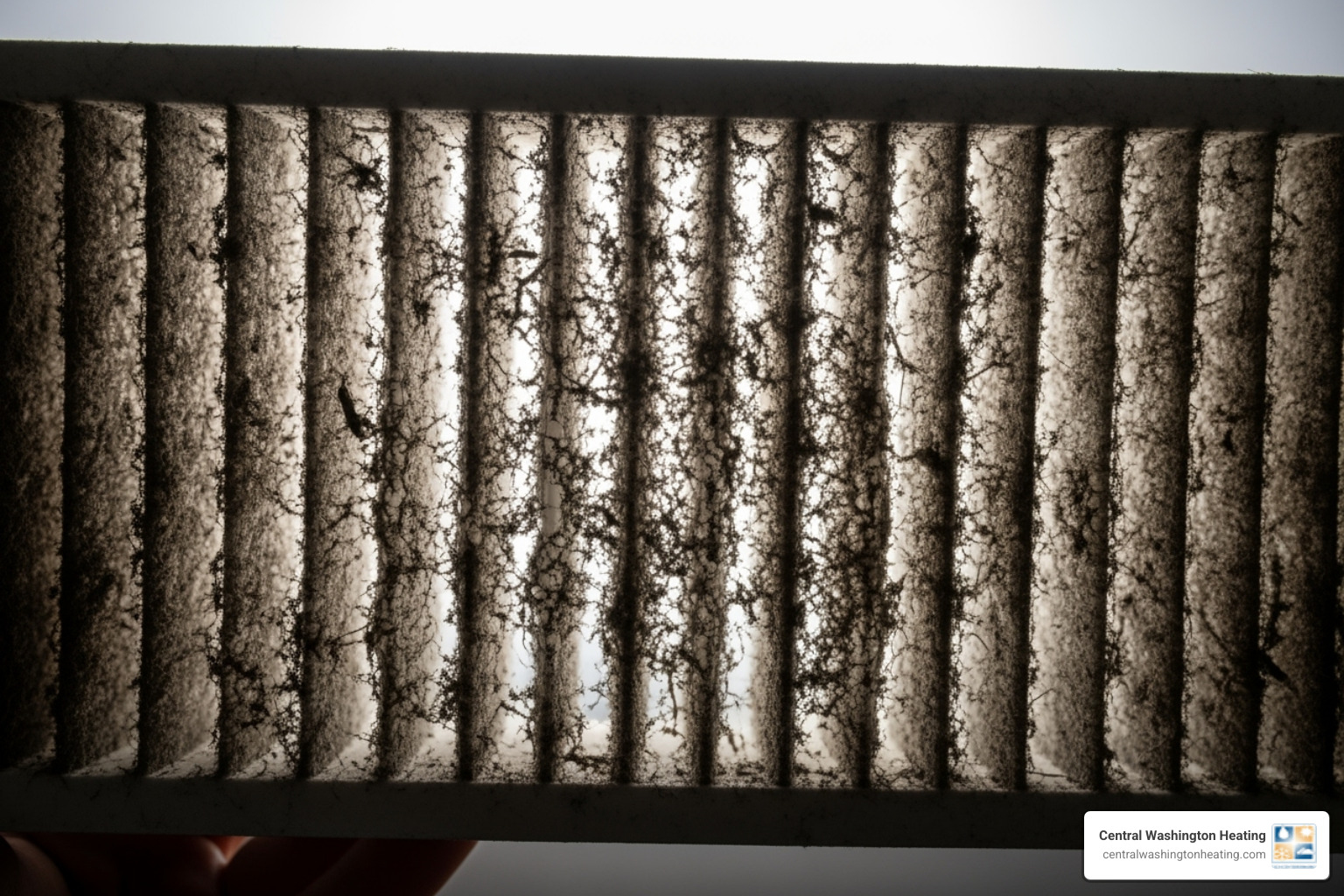
Other telltale signs include:
- Increased Dust: Dust accumulating faster than usual on furniture and floors.
- Longer Run Times: Your air handler runs longer to reach the set temperature.
- Weak Airflow: The air coming from your vents feels weaker than normal.
- Musty Odors: Stale or musty smells from the vents can indicate mold or bacteria in a dirty filter.
- Unusual Noises: Whining or whistling sounds as the air handler strains against the blockage.
- Worsened Allergies: A sudden increase in indoor allergy symptoms like sneezing or congestion.
If you notice any of these signs, a quick air filter replacement can often solve the problem. For a deeper dive, read our article on Signs Air handler Air Filter Needs Replacing.
Choosing the Right Filter for Your Home
Selecting the right air filter isn’t complicated once you understand types and ratings. For advanced options, learn about the HEPA Filter.
Understanding Filter Types and MERV Ratings
A filter’s MERV (Minimum Efficiency Reporting Value) rating, on a scale of 1-20, indicates how well it traps airborne particles. A higher number means finer filtration, but it can also restrict airflow if your air handler isn’t designed for it. The goal is to balance clean air with proper system function.
Here are the most common filter types:
| Filter Type | Common MERV Rating | Particle Capture Ability | Typical Replacement Frequency |
|---|---|---|---|
| Fiberglass (Disposable) | 1-4 | Basic dust, lint, pet hair. Least effective, offers minimal protection for air quality. | Monthly |
| Pleated (Disposable) | 6-13 | Dust, lint, pet dander, pollen, mold spores, some bacteria, larger allergens. Good balance of filtration and airflow for most homes. | 1-3 months (1-inch), 3-6+ months (4-inch) |
| Electrostatic (Disposable) | 10-12 | Uses static electricity to attract particles. Similar to pleated but often better at capturing smaller particles. | 1-3 months |
| Washable/Reusable | 1-4 (when clean) | Similar to fiberglass or low-end pleated. Requires regular cleaning to maintain effectiveness. Can degrade over time. | Clean monthly |
- Fiberglass filters are a basic, budget-friendly option that primarily protect your air handler from large debris like dust and hair.
- Pleated filters are the standard for most homes, offering a good balance of filtration and airflow by trapping smaller particles like pollen and pet dander.
- Electrostatic filters use a static charge to attract and capture fine particles effectively.
- Washable filters require regular, thorough cleaning and may not filter as well as high-quality disposable options.
For most Central Washington homes, a MERV rating between 7 and 13 is ideal.
- MERV 8: A great standard choice for capturing common household dust.
- MERV 11: Recommended for homes with pets or allergies, as it traps finer particles.
- MERV 13: Provides excellent filtration for those with respiratory sensitivities but may restrict airflow in some systems.
Always balance filtration with airflow. A filter that’s too restrictive makes your air handler work harder, increasing energy bills and strain on the equipment. If unsure, check your air handler manual or contact a professional.
How to Find the Correct Filter Size
Using the correct filter size is essential. A filter that’s too small will leave gaps, allowing debris to bypass it, while one that’s too large won’t fit.
Here’s how to find the right size:
- Check the current filter: The dimensions (length x width x thickness) are usually printed on the cardboard frame (e.g., “20x25x1”).

- Measure if needed: If the size isn’t printed, use a tape measure to get the length, width, and thickness. Filter sizes are often nominal, meaning the actual measurements might be slightly smaller than the numbers printed on the package.
Pay close attention to the thickness (depth). Your air handler is designed for a specific thickness (e.g., 1-inch or 4-inch), and you must match it exactly. Never force a filter that doesn’t fit, and avoid using one that’s too small.
Once you know the size, write it down on the air handler or save it in your phone for future reference. Getting the size right ensures your air filter replacement is effective.
The Simple Swap: A Step-by-Step Guide to Air handler Filter Replacement
Replacing your air filter is one of the easiest home maintenance tasks. Let’s walk through the simple steps.
What You’ll Need
Gather these simple items before you start:
- New air filter (correct size and MERV rating)
- Marker (to write the date on the new filter)
- Tape measure (if you need to confirm the size)
- Gloves (optional)
Your Guide to a Successful Air handler Filter Replacement
- Turn Off the Air handler: For safety, turn your thermostat to “Off” or use the power switch located near the air handler.
- Locate the Filter: Find the filter compartment, which is usually a slot on the side, bottom, or top of the air handler where the return air duct connects. It may also be in a return air vent in a wall or ceiling.
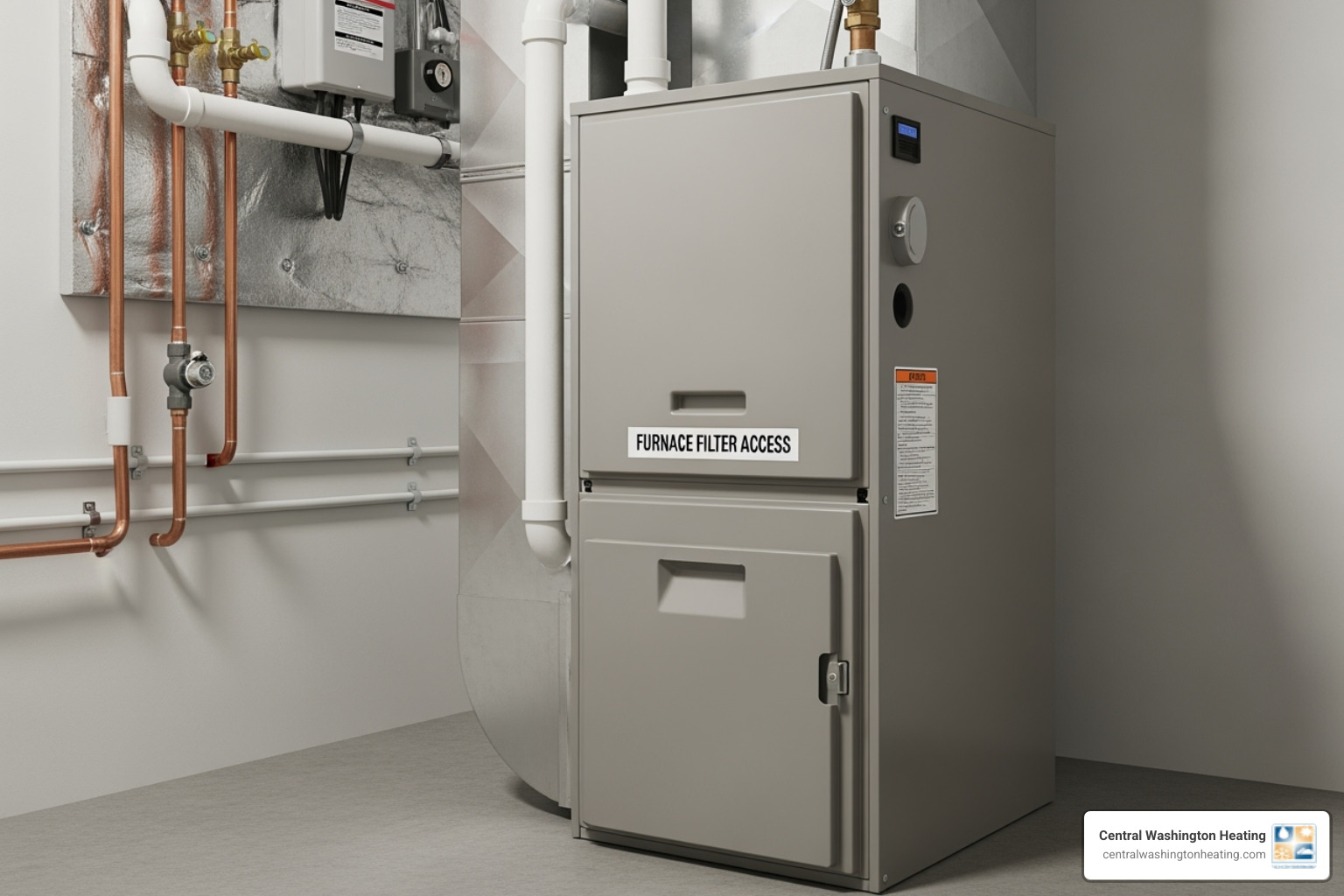
- Remove the Old Filter: Slide the old filter out. Note the direction of the airflow arrow printed on its frame.
- Prepare the New Filter: Use a marker to write today’s date on the new filter’s frame.
- Install the New Filter: Slide the new filter in, making sure the airflow arrow points toward the air handler/blower motor. It should fit snugly without being forced.
- Replace the Cover: Secure the access panel or door.
- Turn the Air handler Back On: Switch the power back on and set your thermostat to the desired temperature.
- Set a Reminder: Note on your calendar when the next replacement is due (1-3 months for 1-inch filters, 6-9 months for 4-inch filters).
A proper air filter replacement improves air quality, efficiency, and system longevity. For more tips, see this guide from Energy Trust.
The Importance of Airflow Direction
The airflow arrow on your filter’s frame is a critical detail. Installing the filter backward is a common mistake that can cause problems.

Filters are designed for air to flow in one direction. The arrow must always point toward the air handler’s blower motor.
Installing it backward can lead to:
- Restricted Airflow: The air handler works harder, increasing energy bills and system strain.
- Overheating: Severe restriction can cause the air handler to overheat and shut down.
- Poor Filtration: The filter won’t trap particles effectively, reducing indoor air quality. The filter media could even collapse.
To get it right: Always point the arrow toward the air handler. The dirty side of your old filter faced the incoming air; the arrow on the new filter should point away from that direction. Taking a moment to check the arrow ensures your system runs correctly.
Frequently Asked Questions about Air handler Filters
You’re not alone if you have questions about your air filter. We hear the same concerns from Central Washington homeowners all the time. Let’s clear up some of the most common confusion so you can keep your HVAC system happy and healthy.
How often should I change my air filter?
The ideal air filter replacement schedule depends on your filter type and household factors.
- Standard 1-inch filters: Replace every 1 to 3 months. They have less surface area and fill up quickly.
- Thicker 4-inch filters: Replace every 6 to 9 months. Their larger surface area allows them to last longer.
However, you may need to change your filter more often depending on your lifestyle:
- Homes with pets: Pet hair and dander clog filters faster, often requiring monthly changes.
- Allergies or asthma: Changing the filter every 30-45 days can help reduce symptoms.
- Other factors: Smoking indoors, large households, and local air quality (like dust or wildfire smoke in Central Washington) can all require more frequent changes.
The best practice is to check your filter monthly. If it’s visibly dirty or you can’t see light through it, it’s time for a new one, regardless of the recommended schedule.
What happens if my air filter is installed backwards?
Installing a filter backward causes significant issues. The main problem is restricted airflow, which forces your air handler’s blower motor to work much harder. This leads to:
- Reduced efficiency and higher energy bills.
- Increased strain on the system, potentially shortening its lifespan.
- System overheating, which can trigger safety shutoffs.
- Poor filtration, as the filter cannot trap particles effectively, worsening indoor air quality.
To avoid this, always ensure the arrow on the filter’s frame points toward the air handler’s blower motor.
Can I clean and reuse a disposable air filter?
It may be tempting to wash and reuse a disposable filter to save money, but the answer is a firm no.
Disposable filters are engineered for single use. Their delicate media is not designed to be cleaned. Washing or vacuuming a disposable filter can:
- Damage the filter media: This destroys its ability to trap particles, rendering it ineffective.
- Neutralize electrostatic charge: Many pleated filters use a static charge to capture fine particles, which is lost when washed.
- Promote mold growth: A damp filter can become a breeding ground for mold and mildew, which would then circulate through your home.
Only filters specifically labeled as “reusable” or “washable” should ever be cleaned. For all other filters, a proper air filter replacement is necessary. When a disposable filter is dirty, it’s time to replace it to ensure your system runs efficiently and your air stays clean.
Keep Your System Running Smoothly
You’ve now got the complete roadmap for air filter replacement—from understanding why it matters to mastering the simple steps yourself. This small routine task truly delivers outsized benefits for your Central Washington home, touching everything from your family’s comfort to your monthly energy bills.
Think of regular filter changes as an investment in your home’s future. Every time you slide in a fresh filter, you’re protecting your air handler from the dust and debris that can grind down its internal components over time. This simple act translates to fewer repair calls, lower energy consumption, and years of additional life from your heating system. And while your air handler is being protected, your family benefits too—cleaner air means fewer allergens, less dust settling on furniture, and a healthier indoor environment for everyone breathing it in.
The financial impact is real. A clogged filter can spike your energy use by up to 15%. That’s money literally disappearing through your vents. By staying on top of your air filter replacement schedule, you’re putting those dollars back in your pocket month after month.
Of course, while changing your filter is something any homeowner can handle, it’s just one element of keeping your HVAC system in top shape. Regular professional maintenance catches the issues you can’t see—worn belts, electrical connections, calibration needs—before they become expensive problems. Our experienced team at Central Washington Heating knows the unique demands of heating homes in our region, and we’re always here to ensure your system runs smoothly through every season.
Make filter replacement a habit you don’t have to think twice about. Set that phone reminder, mark your calendar, or simply check it monthly when you pay your utility bills. Your air handler will thank you with reliable warmth, your wallet will appreciate the savings, and your family will breathe easier in a cleaner home.
Ready to give your heating system the comprehensive care it deserves? Schedule your professional Air handler Maintenance in Chelan, WA with Central Washington Heating today. We’ll make sure everything is running exactly as it should.

Written by the Central Washington Heating and Air team
The techs and comfort advisors who've kept the Wenatchee Valley heated, cooled, and breathing easy for 30+ years — family & veteran owned, with 40+ years of combined industry experience.
- Licensed & insured · LIC# CENTRWH742JN
- Daikin Comfort Pro certified
- Wenatchee, WA
Last updated July 29, 2026
Ready for comfort you can count on?
Schedule service, request a free estimate, or call now for 24/7 emergency help. Our team is standing by across the Wenatchee Valley.
Get started today
Free estimates on installs · no-pressure, written quotes
Schedule My ServiceCall (509) 776-0247Mon–Fri: 8:00 AM – 4:30 PM · 24/7 for emergencies
Already have a quote? Get a free second opinion →