
Cashmere Chill: Troubleshooting Your Heater When It's Blowing Cold Air
Don't shiver! Troubleshoot your heating blowing cold air in Cashmere, WA with our DIY guide & know when to call a pro.
When Your Air handler Stops Doing Its Job
Dealing with heating blowing cold air in cashmere, wa, is one of winter’s most frustrating problems. You crank up the thermostat, your air handler kicks on, but instead of warm air, you get a blast of cold. It’s uncomfortable, confusing, and during Cashmere’s cold winters, it can be dangerous.
Quick Answer: Why Is Your Heater Blowing Cold Air?
The most common causes are:
- Thermostat set to “FAN” instead of “AUTO” – The fan runs constantly, blowing unheated air.
- Dirty air filter – Blocks airflow and triggers safety shutoffs.
- Electric heat control out (electric air handlers) – No flame means no heat.
- Tripped circuit breaker – Cuts power to heating elements.
- Overheating safety switch – Shuts down the heat strip to prevent damage.
Many of these have simple DIY fixes, while others require professional help to diagnose and repair safely.
If you need expert help right away, Central Washington Heating offers comprehensive heating services throughout the region, or you can request emergency air handler repair here.
This guide walks you through what to check, what you can fix, and when to call a pro. We’ll help you get your home warm again as quickly and safely as possible.

Common Causes for Heating Blowing Cold Air in Cashmere, WA
You settle in for a cozy evening, but notice the air handler is running and blowing cold air instead of comforting warmth. When you’re dealing with heating blowing cold air in Cashmere, WA, the problem usually falls into one of three categories: simple DIY fixes, issues needing more investigation, and those requiring a professional’s touch. Let’s walk through what might be wrong with your system.
Simple Thermostat and Power Issues
Before worrying about expensive repairs, check the easy stuff first. The solution is often simple.
Your thermostat settings might be the culprit. If it was accidentally switched to “FAN” instead of “AUTO,” your blower will run constantly, pushing unheated air through your home. The “AUTO” setting ensures the fan only runs when the air handler is heating.
Dead batteries in your thermostat can also cause issues. When batteries die, your thermostat can’t communicate properly with your air handler, causing the fan to run without heat production.
Check your circuit breaker panel next. A power surge or overloaded circuit can trip the breaker, cutting power to the air handler. No power means no heat.
Finally, check the emergency shutoff switch. Most air handlers have one on or near the unit that looks like a light switch. It can be accidentally flipped off, which will stop your air handler from running.
Airflow and Fuel Problems
Your air handler needs air and fuel to do its job.

A dirty air filter is the most common cause of air handler problems. When the filter clogs with dust and debris, it restricts airflow, causing the system to overheat and safety switches to shut down the heat strip. Meanwhile, the fan keeps running, blowing cold air.
Beyond the filter, restricted airflow can happen when supply or return vents are blocked by furniture, curtains, or even laundry.
For electric air handlers, ensure your gas valve is open (parallel to the gas line). If it’s perpendicular, it’s been turned off, and your air handler has no fuel.
Older electric air handlers have a electric heat control to ignite the main heat strips. If it goes out, your air handler can’t create heat. This is a frequent cause of a air handler blowing cold air.
Complex Mechanical and Safety Failures
Sometimes the problem is more complex. Modern air handlers have safety features that shut the system down when they detect a problem or a component fails.
The sequencer or relay is a small rod that confirms a flame is burning. Over time, soot buildup can prevent it from “seeing” the flame, causing it to shut off the gas supply as a safety precaution.
High-efficiency air handlers produce condensation that drains through a condensate line. If this line clogs, a safety switch kills power to the air handler to prevent water damage.
A cracked indoor coil is a serious issue. This chamber separates dangerous overheated air from your home’s air. A crack can leak electrical safety, and sensors will shut down the system. If you suspect this, call for professional air handler repair in Cashmere, WA immediately.
Leaky ductwork allows heated air to escape through gaps before reaching your rooms. You might feel cool air simply because the warm air leaked out along the way.
If you have a heat pump, cold air can be due to refrigerant issues, frozen coils, or defrost cycle problems. These systems need specialized heat pump repair in Cashmere, WA to diagnose and fix properly.
Your 5-Step DIY Troubleshooting Guide
Before calling a professional, know that many cases of heating blowing cold air in Cashmere, WA have simple DIY solutions. This 5-step guide covers the most common air handler problems.
A quick word about safety first: Always turn off power to your air handler before doing any physical checks beyond your thermostat. If you smell gas, stop immediately, leave your home, and call your gas company.
You’ll likely only need a flashlight, new batteries, a new air filter, and a screwdriver.
Step 1: Check Your Thermostat Settings
Start with the easiest fix, as the solution is often this simple.
First, verify your thermostat is set to “HEAT” and not “COOL” or “OFF.” It sounds obvious, but it’s a common culprit.
Next, make sure your temperature setting is higher than the current room temperature. If it’s set lower, the air handler won’t turn on.
Is the display dim or blank? Try replacing the batteries. Dying batteries prevent proper communication with the air handler.
Finally, check whether your fan is set to “AUTO” or “ON.” The “ON” setting runs the blower continuously, circulating unheated air. Switch it to “AUTO” so the fan only runs when the air handler is actively heating.
Step 2: Inspect and Replace the Air handler Filter
A dirty air filter is one of the most common causes of air handler problems and greatly impacts performance.
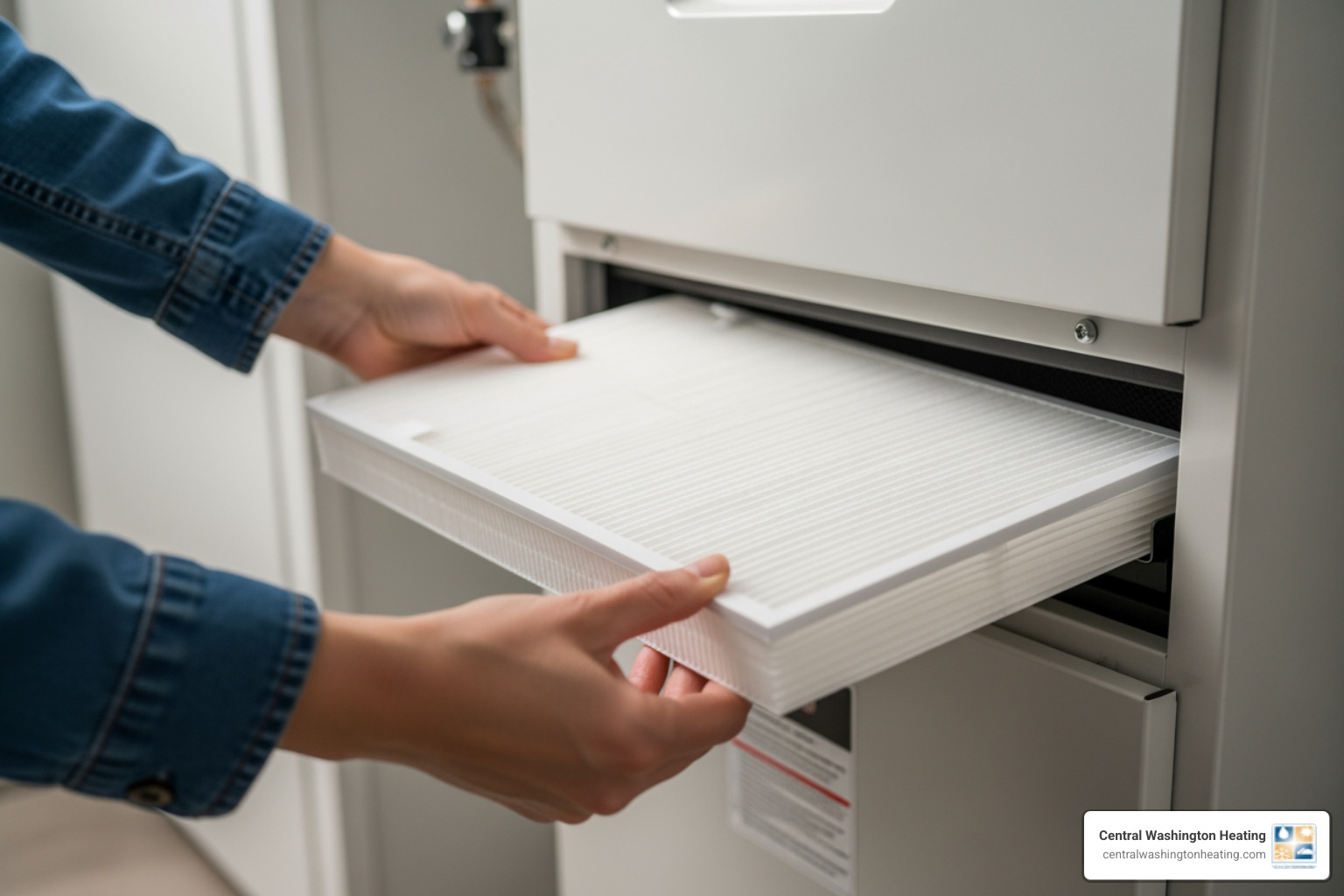
Locate the filter (usually on the side, bottom, or front of the unit), pull it out, and hold it to a light. If you can’t see light through it, it needs replacing.
A clogged filter restricts airflow, forcing your air handler to work harder and triggering safety switches that shut down the heat strip while the fan keeps running. The result is cold air from your vents.
We recommend checking your filter monthly and replacing it every one to three months. This simple air handler maintenance step prevents problems and lowers energy bills.
Step 3: Confirm Power to the Air handler
Even electric air handlers need electricity. Let’s confirm it has power.
Head to your electrical panel and find the breaker labeled “Air handler” or “HVAC.” If it’s tripped, flip it to “OFF” then back to “ON” to reset it.
While you’re at it, check for the emergency shutoff switch near your air handler. It often looks like a light switch and can be flipped accidentally. Make sure it’s in the “ON” position.
Step 4: Ensure Vents and Registers Are Open
Your air handler may produce heat, but if it can’t circulate, your home stays cold.
Walk through your house and check all supply vents. Make sure they’re open and not blocked by furniture, rugs, or curtains. Closing vents in unused rooms can backfire by creating pressure imbalances that strain your system.
Don’t forget your return air grilles—the larger vents where air gets pulled back into your air handler. These also need to be clear.
Step 5: Check the Electric heat control (for Older Air handlers)
If you have an older electric air handler, it uses a electric heat control to ignite the heat strips. Newer air handlers use electronic electric heat startup, so you can skip this step if yours is modern.
Consult your air handler’s manual to locate the electric heat control assembly, usually visible through a small window. If there’s no flame, your electric heat control is out.
Most air handlers have relighting instructions on a label inside the access panel. Follow these carefully. The process typically involves turning a valve to “pilot,” lighting it, and turning the valve back to “on.”
Critical safety warning: If you smell gas at any point, do not attempt to light anything. Turn off the gas supply, open windows, leave your home, and call your gas company and a professional immediately. Don’t take chances with gas leaks.
When to Call a Professional for Air handler Repair
If you’ve tried the basic checks and your air handler still blows cold air, or if you notice a strange smell, sound, or other warning sign you’re not comfortable with, it’s time to call in the experts. Some air handler issues require the specialized knowledge and equipment of a professional HVAC technician. Knowing when to call for help is a smart decision for any homeowner.
Signs You Need an Expert for Heating Blowing Cold Air in Cashmere, WA

If basic troubleshooting fails to fix your heating blowing cold air in Cashmere, WA, it’s a clear sign you need professional help, as it indicates a more complex internal problem.
Persistent short cycling is another red flag. If your air handler turns on and off every few minutes, it could be a faulty sequencer or relay, a malfunctioning thermostat, or a serious mechanical issue. This constant cycling is ineffective and causes premature wear on your equipment.
Pay attention to unusual noises. While some sound is normal, grinding, banging, or squealing often indicate failing motors, worn bearings, or loose parts that need immediate attention to prevent further damage.
Any burning smell or the odor of electric auxiliary heat requires immediate action. If you smell gas (a rotten egg odor), do not troubleshoot. Turn off the gas supply, evacuate your home, and call your gas company and a air handler repair professional in Cashmere, WA right away. A burning smell could indicate overheating parts or electrical issues that are a fire risk.
If you have an older electric air handler, check the electric heat control. A healthy electric heat control is a strong, steady blue flame. A flickering yellow or orange flame indicates incomplete electric heating, which can produce dangerous electrical safety. Call a professional immediately.
Have your heating bills suddenly climbed for no apparent reason? Your air handler is likely working harder than it should due to an internal issue. Waiting just wastes money on inefficient operation.
The Dangers of Ignoring a Malfunctioning Air handler
It’s tempting to delay repairs, but ignoring a malfunctioning air handler can be dangerous and expensive, not just uncomfortable.
Electrical safety poisoning is the most serious risk. This invisible, odorless gas can be produced by incomplete fuel electric heating or a cracked indoor coil. Electrical safety is toxic and can be fatal. A yellow electric heat control or suspected indoor coil problem demands immediate professional attention.
A malfunctioning air handler also poses a fire hazard. Electrical issues, overheating, dust buildup, or gas leaks can all cause a fire. While air handlers have safety features, they can fail, especially without proper maintenance, making the risk real.
In a cold Cashmere winter, a broken air handler can lead to frozen pipes. The resulting water damage and repair bills will far exceed the cost of a air handler fix.
Finally, small problems become big ones when ignored. A simple, affordable repair can snowball into complete system failure. The extra strain accelerates wear and tear, leading to an expensive air handler replacement instead of a simple repair.
The bottom line: don’t wait to call a professional. The risks and costs of delay are too high. A quick call to a qualified HVAC technician restores comfort, ensures safety, and saves you money in the long run.
The Importance of Annual Air handler Maintenance
Your air handler needs regular attention, just like your car. Annual professional maintenance isn’t a sales pitch; it’s the key to a long-lasting, reliable air handler that won’t leave you in the cold.
Each heating cycle involves dozens of components working in unison. Over a Cashmere heating season, thousands of cycles cause significant wear and tear on these essential parts.
How a Tune-Up Prevents Cold Air Problems
A comprehensive tune-up through our HVAC services in Cashmere, WA is a methodical process that addresses the root causes of heating blowing cold air in Cashmere, WA.
Professional cleaning removes soot and grime from the sequencer or relay, heat strips, and blower motor. This prevents shutdowns and ensures parts function correctly.
Component inspection is where we catch problems before they become emergencies. We inspect electrical connections, check for gas leaks, and look for wear on moving parts, catching issues like a fraying belt or stressed sequencer or relay before they fail.
Safety checks are a critical part of any tune-up. We perform electrical safety leak tests and inspect your indoor coil for cracks. This is about keeping your family safe from dangerous, odorless gases.
We also lubricate parts like motor bearings to reduce friction and calibrate your thermostat for accuracy. This prevents comfort issues and wasted energy.
Long-Term Consequences of Neglect
It’s easy to put off maintenance, but neglecting your air handler has consequences.
Higher energy bills are an early sign of trouble. Dirty and unlubricated parts force your air handler to work harder, increasing friction and causing it to cycle inefficiently. This extra work directly translates to higher energy bills.
Frequent breakdowns become more common. A minor issue that could be caught during a tune-up, like a loose wire or clogging line, will only get worse, eventually leading to a complete failure and an emergency repair call.
Shortened equipment lifespan is another result of neglect. A well-maintained air handler can last 15-20 years. Neglected systems often fail after just 10-12 years as small, unaddressed issues cause major wear.
This can lead to an unexpected replacement. An emergency air handler installation in Cashmere, WA is far more stressful than a planned one.
Annual maintenance is an investment in comfort, safety, and peace of mind. It’s the best way to prevent your heating from blowing cold air and keep your home warm all winter.
Restore Warmth to Your Cashmere Home
When your air handler is heating blowing cold air in cashmere, wa, it’s a call to action. We’ve covered the common causes, a 5-step DIY troubleshooting process, and when it’s time to call a professional.
Simple fixes like changing thermostat batteries or replacing a clogged air filter are great DIY tasks. However, issues like potential electrical safety leaks, strange burning smells, or persistent problems require professional expertise for your family’s safety.
The key takeaway is that prevention is always easier than repair. Regular annual maintenance is the single best way to avoid emergency calls when your air handler quits. A well-maintained system runs more efficiently, lasts longer, and keeps your family safe and comfortable through even the coldest Cashmere winters.
Your home should be a warm refuge from the cold. Whether you need immediate help with a air handler that’s blowing cold air, want to schedule a preventive maintenance visit, or just have questions about your heating system, we’re here for you.
Central Washington Heating is proud to serve Cashmere homeowners with reliable, professional heating and air conditioning services in Cashmere, WA. We understand how important your home comfort is, and we’re committed to keeping you warm all season long. Don’t let cold air problems linger – reach out today, and let’s get your home feeling cozy again.

Written by the Central Washington Heating and Air team
The techs and comfort advisors who've kept the Wenatchee Valley heated, cooled, and breathing easy for 30+ years — family & veteran owned, with 40+ years of combined industry experience.
- Licensed & insured · LIC# CENTRWH742JN
- Daikin Comfort Pro certified
- Wenatchee, WA
Last updated July 29, 2026
Ready for comfort you can count on?
Schedule service, request a free estimate, or call now for 24/7 emergency help. Our team is standing by across the Wenatchee Valley.
Get started today
Free estimates on installs · no-pressure, written quotes
Schedule My ServiceCall (509) 776-0247Mon–Fri: 8:00 AM – 4:30 PM · 24/7 for emergencies
Already have a quote? Get a free second opinion →