
Don't Get Left in the Cold: Troubleshooting Your Heat Pump in Cashmere
Is your heat pump blowing cold air in Cashmere, WA? Troubleshoot common issues and learn when to call a pro to restore warmth.
Why Your Heat Pump Might Be Blowing Cold Air in Cashmere
When your heat pump blowing cold air in cashmere, wa becomes a problem, it’s an urgent issue. Central Washington winters require a reliable heating system, but heat pumps can sometimes blow air that feels cool. Fortunately, many causes are simple to diagnose and fix yourself.
Quick Diagnosis: Common Causes of Cold Air from Your Heat Pump
- Defrost Mode – Your system temporarily reverses to melt ice on the outdoor unit (normal operation)
- Wrong Thermostat Setting – Fan set to “ON” instead of “AUTO” or system in cooling mode
- Dirty Air Filter – Restricted airflow reduces heating efficiency
- Low Refrigerant – Leak in the system prevents proper heat transfer
- Outdoor Unit Blocked – Snow, ice, or debris obstructing airflow
- Auxiliary Heat Issues – Backup heating strips not engaging in extreme cold
For comprehensive information about how heat pumps work year-round, check out our heat pump services guide, or if you need immediate repair assistance, visit our heat pump repair page.
It’s important to know that heat pumps work differently than air handlers. They produce air around 85-90°F, which is cooler than a air handler’s 110-140°F output. This can feel cool even when the system is heating your home. Cashmere’s freezing temperatures can also cause your heat pump to enter special operating modes, like defrost, which temporarily affects performance.

Common Reasons Your Heat Pump Blows Cold Air
However, there are times when a heat pump blowing cold air in cashmere, wa signals a real problem. If genuinely cold air is coming from your vents during a Cashmere winter, it’s time to investigate.

The first place to look is your thermostat. Beyond a simple setting mistake, other culprits include a malfunctioning defrost mode, a clogged air filter, a blocked outdoor unit, or low refrigerant levels.
For anyone wanting to understand more about how these remarkable systems work throughout the year, our guide on how a heat pump can improve home comfort offers helpful insights into the bigger picture. You can also explore our comprehensive heat pump basics for additional background information.
Understanding Defrost Mode
Defrost mode is a normal function where your heat pump temporarily reverses its cycle to melt ice from the outdoor unit. This is common in Cashmere winters. During this 5-15 minute cycle, your auxiliary heat strips should activate to provide warmth. If they don’t, or if the cycle runs too long or too frequently (more than every 30-90 minutes), you’ll feel cool air. This could indicate a problem with the auxiliary heat or a faulty defrost control, requiring professional attention.
Incorrect Thermostat Settings
A simple thermostat mistake often causes a heat pump blowing cold air in cashmere, wa. Check for these common issues:
- Fan Setting: Ensure the fan is set to “AUTO,” not “ON.” The “ON” setting runs the fan continuously, circulating cool air between heating cycles.
- System Mode: Verify the system is set to “HEAT,” not “COOL.” It’s an easy mistake to make after summer.
- Emergency Heat: Avoid using the “EMERGENCY HEAT” or “EM Heat” setting unless your heat pump has failed. It bypasses the heat pump and uses less-efficient electric heat, increasing energy bills.
- Programming Errors: Review the schedule on programmable or smart thermostats, especially after a power outage, to ensure it’s set correctly.
A Homeowner’s Troubleshooting Checklist
Before calling for help, you can diagnose and fix many issues causing a heat pump blowing cold air in cashmere, wa. These simple checks can often resolve the problem.
Safety first: Always turn off power to your heat pump at the thermostat and the breaker box before any inspection. This checklist is your first line of defense and requires no special tools.
Step 1: Check Your Thermostat and Settings
Your thermostat is the system’s brain, so start there.
- Mode: Verify the system is in “HEAT” mode.
- Temperature: Ensure the set temperature is higher than the current room temperature.
- Fan: Set the fan to “AUTO,” not “ON,” to prevent it from circulating cool air between heating cycles.
- Power: Check for low batteries in battery-powered models or error messages on smart thermostats.
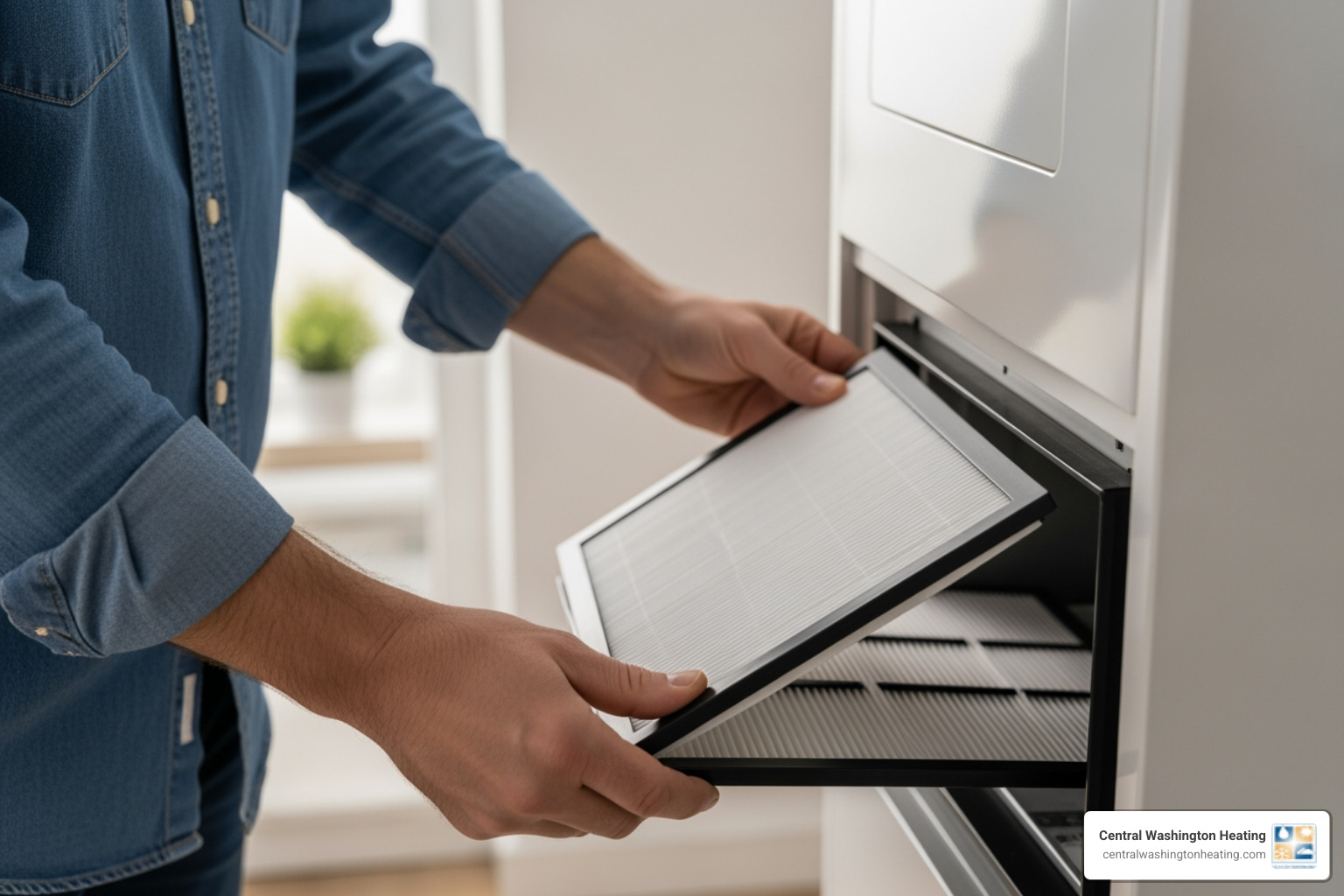
Step 2: Inspect and Clean Your Air Filters
A dirty air filter is the most common cause of heating problems. A clogged filter restricts airflow, reducing heating capacity and putting serious strain on your system, which can lead to premature failure. Locate your filter in the return air duct, pull it out, and hold it to the light. If you can’t see through it, replace it. Standard filters should be changed monthly, and pleated filters every three months. Regular filter changes are the easiest form of preventative heat pump maintenance you can do.
Step 3: Examine the Outdoor Unit for a heat pump blowing cold air in cashmere, wa
Your outdoor unit needs clear space to exchange heat with the outside air. Any obstruction will reduce its heating ability.
- Clear Debris: Remove leaves, grass, and other yard waste from around the unit.
- Remove Snow and Ice: Gently sweep away snow. For ice, allow the defrost cycle to run or pour warm (not boiling) water over it. Never use sharp objects that could damage the coils. If the unit is encased in ice, call a professional.
- Ensure Clearance: Maintain at least two feet of clear space on all sides of the unit for proper airflow.
- Inspect for Damage: Look for bent coil fins, loose wires, or puddles that could indicate a leak. These issues require professional repair.
Why is My heat pump blowing cold air in Cashmere, WA?
Cashmere’s diverse climate presents unique challenges for heat pumps. When you have a heat pump blowing cold air in Cashmere, WA, local weather is often a factor. Heat pumps extract warmth from outdoor air, which becomes harder as temperatures drop into the teens or single digits. This doesn’t always mean your system is broken; it’s a natural characteristic of how heat pumps work in cold environments. The colder it gets, the less available heat there is to capture. Understanding this cold-weather behavior helps you know when your system is operating normally versus when there’s a problem.
The Impact of Snow and Ice
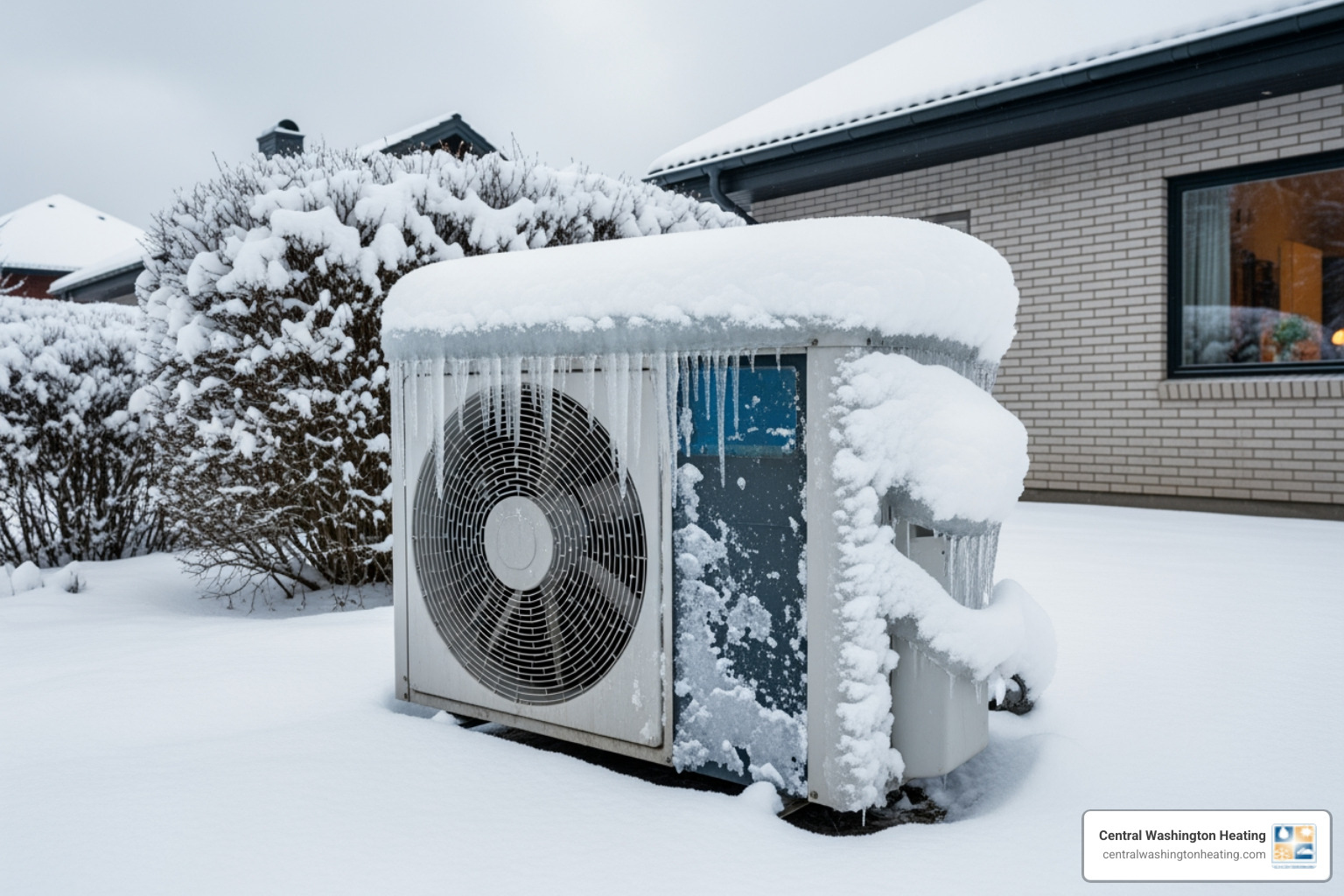
Snow and ice in Cashmere can significantly impact your heat pump’s performance.
- Defrost Cycle Frequency: As frost forms on the outdoor coil, the defrost cycle will run more often (every 30-90 minutes is normal in freezing, humid weather). This temporarily interrupts heating.
- Ice Accumulation: Heavy snow can bury the unit, and thick ice can coat the coils, blocking airflow and preventing heat transfer. This forces the system to blow cool air or rely on backup heat.
- Coil Blockage: Any ice on the coil reduces efficiency, meaning the air entering your home will be less warm. After a snowstorm, gently clear snow from your unit. If it’s completely frozen and won’t defrost, call for professional help.
The Role of Auxiliary Heat Strips
Most heat pumps have auxiliary heat strips, which are electric elements that provide backup heating on Cashmere’s coldest days. These strips automatically engage during below-freezing operation (typically below 35-40°F) to supplement the heat pump. While modern systems are very efficient in the cold, they sometimes need this boost. If the auxiliary heat fails, you’ll notice your heat pump blowing cold air in Cashmere, WA. If it runs too often, your energy consumption will spike. The “EM Heat” setting on your thermostat runs only these strips and should be reserved for emergencies when the heat pump has failed. Understanding this partnership helps maintain system efficiency; for more, check out our HVAC maintenance plans.
When to Call a Professional for Heat Pump Repair
While DIY troubleshooting is useful, some issues require professional expertise. Attempting complex repairs can be dangerous, void your warranty, and cause more damage. If you’ve completed the checklist and your heat pump blowing cold air in cashmere, wa is still a problem, it’s time to call an expert. Here are the signs you need professional heat pump repair.
Signs of a Refrigerant Leak
Refrigerant is essential for heat transfer and circulates in a sealed system. Low levels mean there’s a leak. Signs include:
- A hissing or bubbling sound from the unit or lines.
- Frozen coils on the indoor or outdoor unit.
- Poor heating performance, with the system running constantly but producing cool air.
Refrigerant handling requires professional expertise and EPA certification due to safety and environmental regulations. This is not a DIY job.
Electrical and Mechanical Failures
Several key components can fail, requiring professional service:
- Compressor: The heart of your system. Failure signs include grinding or rattling noises, or the unit not running at all. Learn more about heat pump compressor issues.
- Reversing Valve: This switches between heating and cooling. If it’s stuck, your system may blow cold air even when set to heat.
- Blower Motor: This moves air through your ducts. A failing motor results in weak or no airflow, strange noises, or burning smells.
- Capacitors: These small parts start the motors. A clicking sound followed by no action often indicates a failed capacitor.
- Electrical Issues: While you can check for tripped circuit breakers, any worn or damaged wiring is a safety hazard that needs a professional.
Troubleshooting a heat pump blowing cold air in cashmere, wa for the Long Term
Ignoring a malfunctioning heat pump only makes the problem worse and more expensive. The consequences of delaying repairs include:
- Higher Energy Bills: A struggling system works harder and runs longer, increasing your utility costs.
- Component Failure: One failing part puts stress on others, leading to a domino effect of breakdowns. A small issue can quickly become a major expense.
- Reduced Lifespan: Persistent problems shorten your heat pump’s 10-15 year lifespan, forcing a premature replacement.
- Complete Breakdown: The worst-case scenario is a total system failure during a cold snap, leaving you with an emergency and no heat.
Addressing issues promptly protects your investment and ensures your comfort. Our team serves Cashmere, Wenatchee, East Wenatchee, and all of Central Washington.
Proactive Maintenance to Prevent a Chilly Surprise
The best way to prevent a heat pump blowing cold air in cashmere, wa is proactive maintenance. Just like a car, your heat pump needs regular attention to run efficiently and avoid breakdowns. Proper care lowers energy bills and can extend your system’s lifespan to 15 years or more. Maintenance includes simple DIY tasks and biannual professional service. Both are essential for reliability. For more details, read our guide on preventative heat pump maintenance.
Your DIY Maintenance Checklist
A few simple habits can keep your system running reliably between professional visits:
- Change the Air Filter: This is the most important task. Check it monthly and replace it if you can’t see light through it. Homes with pets or on dusty roads may need more frequent changes.
- Clean the Outdoor Unit: Regularly clear leaves, grass, and debris from around the unit. After a snowfall, gently sweep snow off the top and sides.
- Check Vents and Registers: Ensure all vents are open and not blocked by furniture or rugs. Closing vents can strain your system.
- Monitor Performance: Pay attention to unusual noises like grinding or squealing. If you hear anything strange, call for help before the problem worsens.
The Value of a Professional Tune-Up
A professional tune-up is crucial for parts of the system you can’t service. We recommend scheduling maintenance twice a year (spring and fall) since your heat pump works year-round. During a visit, a technician will:
- Clean Coils: Thoroughly clean the indoor and outdoor coils for efficient heat transfer.
- Check Refrigerant Levels: Ensure levels are correct and inspect for leaks.
- Inspect Electrical and Mechanical Parts: Test connections, lubricate moving parts, and check the compressor, capacitors, and motors for wear.
This preventative service catches small problems before they become emergencies, improves efficiency, and extends your system’s life. Regular maintenance is often required to keep your warranty valid. Our HVAC maintenance plans make this process easy and affordable.
Conclusion
When your heat pump blowing cold air in cashmere, wa leaves you concerned, the cause can range from normal operation (like defrost mode) to simple fixes like a dirty filter or incorrect thermostat setting. Our guide has shown you how to troubleshoot these common issues yourself.
However, problems like refrigerant leaks or mechanical failures require professional attention. Ignoring them leads to higher bills, further damage, and potential system breakdown. The best way to ensure reliable warmth is regular maintenance, combining your own DIY checks with biannual professional tune-ups.
If you’ve tried our troubleshooting tips and still need help, our team at Central Washington Heating is ready. We serve Cashmere, Wenatchee, and all of Central Washington. Don’t get left in the cold. Contact us for expert heat pump service and ask about our HVAC maintenance plans to keep your home comfortable year-round.

Written by the Central Washington Heating and Air team
The techs and comfort advisors who've kept the Wenatchee Valley heated, cooled, and breathing easy for 30+ years — family & veteran owned, with 40+ years of combined industry experience.
- Licensed & insured · LIC# CENTRWH742JN
- Daikin Comfort Pro certified
- Wenatchee, WA
Last updated July 29, 2026
Ready for comfort you can count on?
Schedule service, request a free estimate, or call now for 24/7 emergency help. Our team is standing by across the Wenatchee Valley.
Get started today
Free estimates on installs · no-pressure, written quotes
Schedule My ServiceCall (509) 776-0247Mon–Fri: 8:00 AM – 4:30 PM · 24/7 for emergencies
Already have a quote? Get a free second opinion →