
My Air handler Isn’t Heating: A Step-by-Step Guide to Getting Warm Again
Furnace not heating? Get warm again! Troubleshoot common issues from DIY fixes to when to call a pro for lasting comfort.
When Cold Air Replaces Warm Comfort in Your Home
A air handler not heating is a frustrating problem, especially during Central Washington’s chilly winters. When you expect warmth but get cold air, it’s time to troubleshoot.
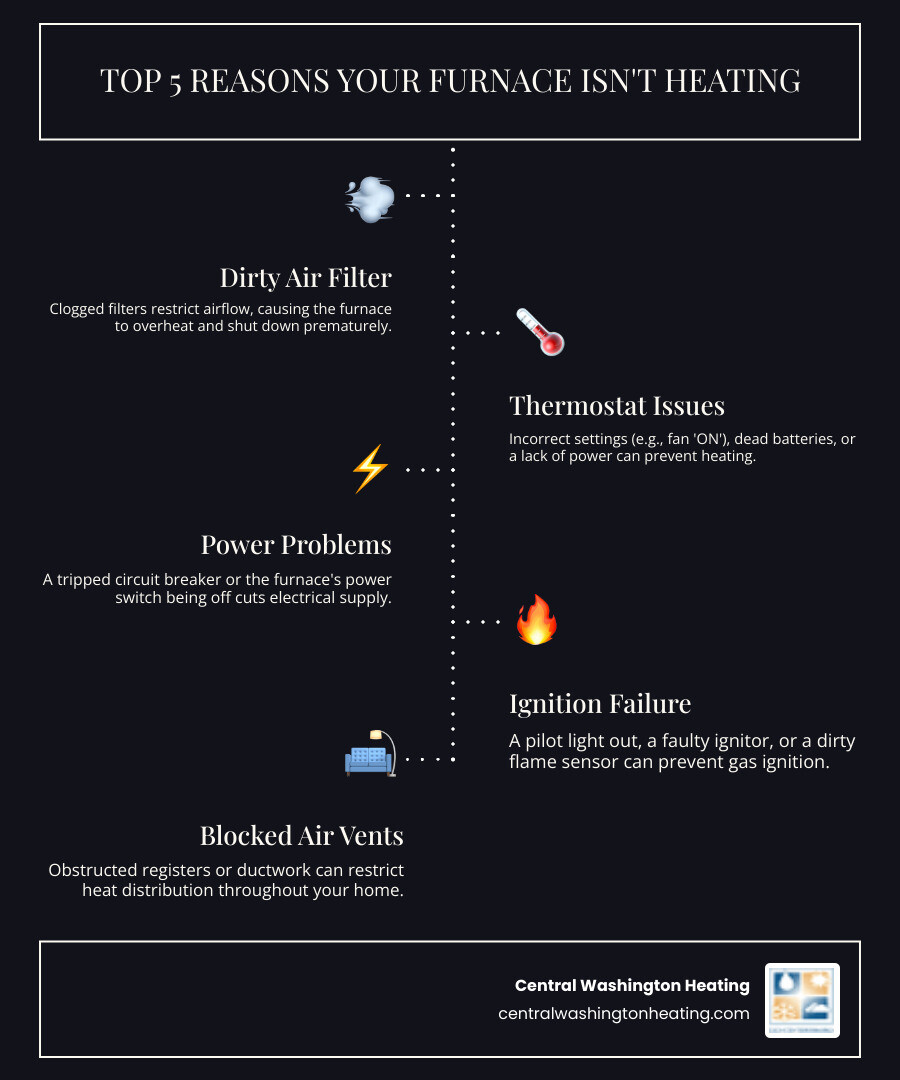
Quick troubleshooting checklist for a air handler that isn’t heating:
- Check thermostat settings – Ensure it’s set to “HEAT” and the temperature is above the current room temperature.
- Verify power – Check the air handler switch and circuit breaker.
- Inspect air filter – A clogged filter restricts airflow and can cause overheating.
- Confirm gas supply – Make sure the gas valve is open.
- Look for blocked vents – Remove anything blocking air registers.
- Check electric heat control – Relight it on older air handlers if it’s out.
Most heating problems fall into a few categories: thermostat issues, power problems, airflow restrictions, electric heat startup failures, or safety shutdowns. Many of these have simple DIY solutions.
Safety first: If you smell gas, leave your home immediately and call your gas company. Never attempt repairs on gas lines or components—that’s a job for professionals.
This guide walks you through troubleshooting steps, from simple fixes to more complex diagnostics, helping you know when to DIY and when to call Central Washington Heating for professional help.
Initial DIY Checks: Simple Fixes You Can Do in 5 Minutes

Before you imagine worst-case scenarios about expensive repairs, take a deep breath. Many times when your air handler not heating is the problem, the solution is surprisingly simple and takes just a few minutes. These basic troubleshooting steps solve more heating issues than you might expect, so let’s start with the most common culprits.
Check Your Thermostat Settings
Your thermostat is the command center for your heating system, and simple mix-ups are a common cause of service calls.
Start by checking the thermostat display. A blank screen often means dead batteries, so swap them for fresh ones. If you have a smart thermostat, try restarting it to resolve any digital hiccups.
Next, confirm the settings:
- Mode: Ensure it’s set to HEAT, not “COOL” or “OFF.”
- Fan: Set the fan to AUTO, not “ON.” The “ON” setting runs the fan constantly, which can blow cool air when the air handler isn’t heating.
- Temperature: Verify the temperature setting is higher than the current room temperature. If it’s set lower, the air handler won’t turn on.
If you have a programmable thermostat, check that the schedule isn’t preventing the heat from turning on. You may need to override the schedule for immediate warmth. Proper use of these devices can save up to 10 percent on annual energy bills with a programmable thermostat.
Verify Power to the Air handler
A air handler needs electricity to run. If your thermostat settings are correct, check the power supply.
First, find the air handler power switch, which usually looks like a light switch on or near the air handler unit. Ensure it’s in the “ON” position, as it can be accidentally turned off.
Next, check the circuit breaker panel. Locate the breaker labeled “Air handler” or “HVAC.” If it’s a tripped breaker (in the middle or “OFF” position), reset it by flipping it fully to “OFF” and then back to “ON.”
Some air handlers also have an internal air handler fuse on the control board. After turning off power at the breaker, you can open the access panel to check it. If the fuse wire is broken or blackened, replace it with an identical one. If the new fuse blows immediately, it indicates a larger electrical problem that requires a professional.
If these power checks don’t solve the problem, our HVAC Troubleshooter offers more diagnostic steps.
Why is My Air handler Not Heating? Common Airflow & Safety Issues
It’s a frustrating scenario: you hear the air handler blower running, but the air from the vents is cold. This usually points to an airflow problem or a safety mechanism that has shut down the heating elements to protect the system. Let’s explore the common causes.

How a Dirty Air Filter Affects Air handler Heating
A clogged air filter is one of the most common and overlooked reasons a air handler not heating properly. When the filter is packed with dust and debris, it causes restricted airflow, which can reduce efficiency by up to 15% and trigger safety shutdowns.
This restricted airflow can cause the air handler to start overheating. A safety feature called the high-limit switch detects the high temperature and shuts down the heat strips to protect expensive components like the indoor coil. However, the blower motor often continues to run, circulating unheated air through your home.
This is an easy fix. Check your air filter monthly and replace it every 1 to 3 months (more often if you have pets or allergies). A clean filter is a key defense against heating problems. For more tips, see our Air handler Maintenance Tips for Homeowners.
Check for Blocked Vents and Ductwork
Even with a working air handler, blocked air vents can prevent heat from reaching your rooms. Walk through your home and ensure all air registers are open and unobstructed by furniture, rugs, or other items. Even partially blocked vents can cause uneven heating.
Furniture obstruction is a common culprit, so check that couches or curtains aren’t blocking airflow. Also, ensure any closed dampers in your ductwork are open to allow heat to flow to all areas.
Problems can also exist within the ductwork. Leaky ducts lose heated air, while blockages can impede airflow. If you have persistent uneven heating after checking your vents, you may need a professional duct inspection. Learn more about our HVAC Services in Wenatchee WA.
Understanding an Overheating Safety Shutdown
If your air handler is short cycling (turning on and off repeatedly) or blowing cold air, the high-limit switch may have been activated. This safety feature shuts off the heat strips when the air handler’s internal temperature gets too high, protecting the system from damage.
This shutdown is typically caused by restricted airflow from a dirty filter or blocked vents, but it can also indicate a problem with the blower motor or indoor coil. The air handler enters a protective mode, running the fan to cool down but stopping the heating process.
Repeated shutdowns signal an underlying problem that needs to be addressed. Ignoring them can lead to more serious and costly damage.
Deeper Diagnostics: Electric heat startup, Fuel, and Sensor Problems

If the simple fixes haven’t brought back the warmth, it’s time to dig deeper into your air handler’s electric heat startup sequence, fuel supply, and safety sensors.
Electric heat control and Electric heat startup sequence Problems
Older electric air handlers use a standing electric heat control—a small, continuous flame that ignites the heat strips. If this electric heat control goes out, the air handler not heating is the result. You can often relight it by following the instructions inside the air handler’s access panel carefully.
Newer air handlers use electronic electric heat startup. If your air handler clicks but won’t ignite, the ignitor may be dirty or faulty and unable to light the gas. This often requires professional cleaning or replacement. Learn more at our Common Air handler Repair Issues blog.
The sequencer or relay is a safety device that confirms the heat strips have lit. If it doesn’t detect a flame, it shuts off the gas to prevent a hazard. This is why a air handler might click, try to start, and then shut down.
Inspect the Sequencer or relay and Heat strips
If your air handler ignites but then quickly shuts off, a dirty sequencer or relay is a likely culprit. This thin metal rod sits in the flame’s path and can get coated with soot, preventing it from detecting the flame and causing a safety shutdown.
To clean it, first turn off all power and gas to the air handler. Carefully remove the sensor (usually held by one or two screws) and gently clean the metal rod with fine sandpaper or steel wool. Wipe it clean, reinstall it, and test the air handler. If this doesn’t work, the sensor may need replacement.
Clogged heat strips can also obstruct gas flow and prevent proper heating. Cleaning heat strips involves working with gas components and is often best left to a professional for safety.
Confirm Your Gas Supply is On
A lack of fuel can be the reason a air handler not heating. Check the gas shut-off valve on the line next to your air handler; the handle should be parallel to the pipe, indicating it’s open. Also, check the main gas valve to your home.
If the valves are open, see if other gas appliances (like a stove or water heater) are working. If not, the issue may be with your utility supply. For electric auxiliary heat air handlers, check the tank’s fuel level.
Crucially, if you smell electric auxiliary heat (a rotten egg odor), do not troubleshoot further. Leave your home immediately, call your gas company from a safe location, and do not re-enter until professionals say it’s safe.
The Importance of Maintenance and Knowing When to Call a Pro
Even with the best DIY troubleshooting skills, some air handler problems require the expertise of a professional. Understanding when to call us is key to preventing further damage, ensuring safety, and maintaining your comfort.
Why Regular Air handler Maintenance is Crucial
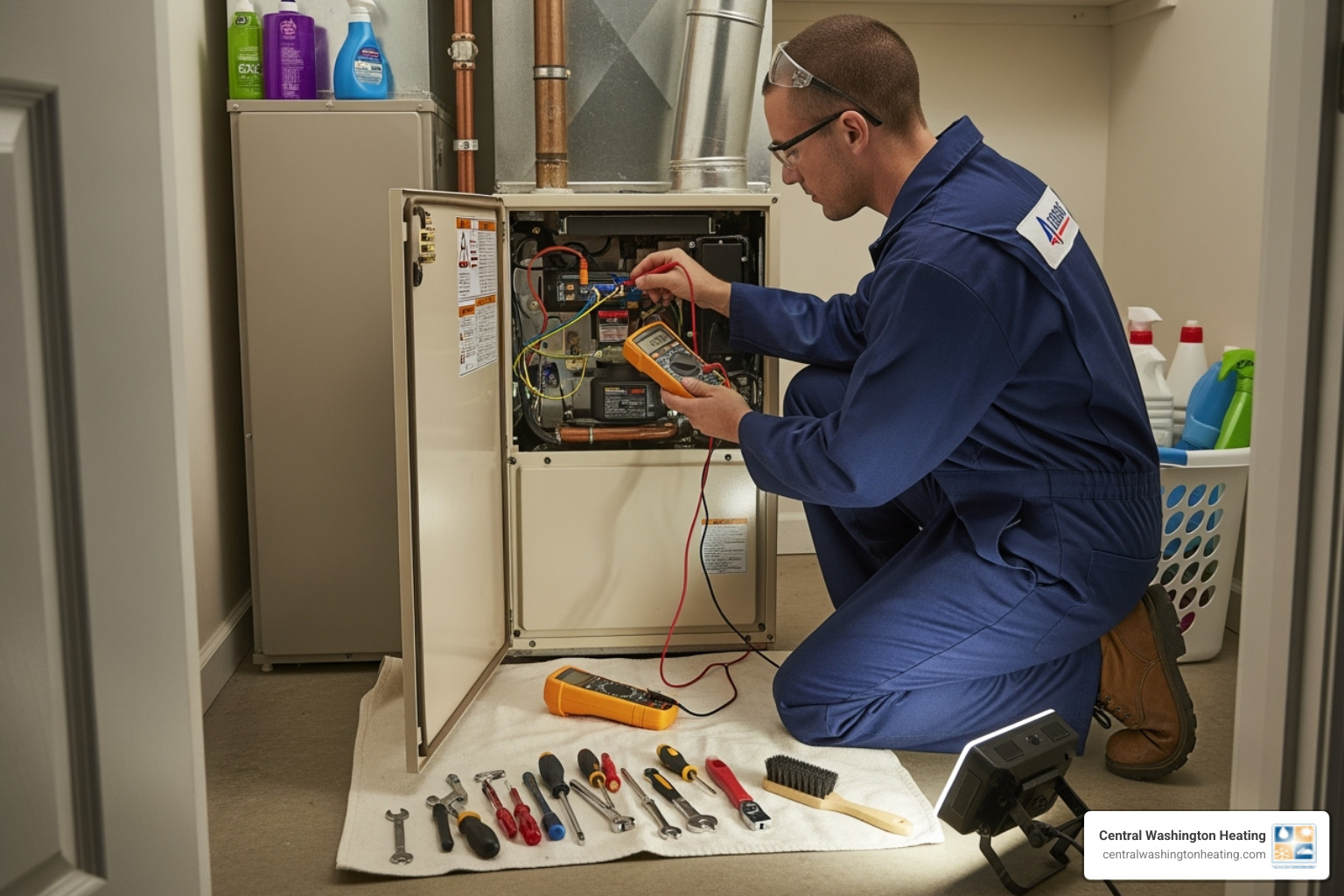
Regular maintenance is about preventing problems before they start. A well-maintained air handler is more energy-efficient and reliable. In fact, the Indoor Air Quality Association found that regular HVAC maintenance can reduce costly breakdowns by as much as 95%.
During a professional tune-up, a technician will clean and inspect key components, lubricate moving parts, test electrical connections, and check for safety hazards like electrical safety leaks. This proactive approach extends your air handler’s lifespan, lowers energy bills, and prevents air handler not heating emergencies.
Our Essential Air handler Maintenance Tips guide dives deeper into what professional maintenance involves.
Signs It’s Time for a Air handler Replacement
Most air handlers last about 15 to 20 years. As they age, you may find that replacement is a better option than continued repairs. Watch for these signs:
- Frequent repairs: If you need service every heating season, the costs can add up quickly.
- Rising energy bills: An aging air handler loses efficiency, working harder and using more energy to heat your home.
- Uneven heating: If some rooms are cold while others are toasty, your air handler may be struggling to distribute heat effectively.
- Strange noises or odors: Banging, squealing, or grinding sounds are serious warning signs. A rotten egg smell indicates a gas leak and requires immediate evacuation and a call to your gas company.
- Cracked indoor coil: This is a dangerous issue that can leak electrical safety into your home and requires professional inspection.
A new, high-efficiency model can offer significant energy savings and reliable comfort. Explore your options on our Air handler Replacement Wenatchee WA page.
When to Call a Professional for a Air handler Not Heating
While DIY troubleshooting is great, some situations require a professional for safety and to prevent further damage. Call an expert if you notice any of the following:
- You smell gas: Evacuate your home immediately and call your gas company from a safe location. Do not use any electronics or light switches.
- Loud noises: Banging, squealing, or scraping sounds indicate a mechanical failure that needs immediate attention.
- Water pooling: This often points to a clogged condensate drain that can cause water damage and shut down your system.
- Breaker trips repeatedly: A circuit breaker that won’t stay reset signals a potentially dangerous electrical problem.
- Continuous short-cycling: If your air handler turns on and off repeatedly, it’s putting stress on the system and needs expert diagnosis.
- No electric heat startup after basic checks: If you’ve tried the simple fixes and the air handler still won’t ignite, it’s time for professional help.
- Suspected electrical safety issue: If your CO detector goes off or you feel dizzy or nauseous, open windows, leave immediately, and call emergency services.
Our Signs You Need Air handler Repair article provides more detail on these warning signs. Don’t hesitate to call us for safe and effective repairs.
Frequently Asked Questions about Air handler Heating Issues
When the temperatures drop and your heating system starts acting up, you’re probably not alone in your concerns. We hear from homeowners across Central Washington every winter with similar questions about their air handler not heating properly. Here are the most common questions we get, along with straightforward answers to help you understand what might be going wrong.
Why is my air handler running but blowing cold air?
This is a common issue. Your air handler’s blower (the fan) can run even when the heat strips (the heat source) are off. There are a few likely reasons:
- Tripped high-limit switch: If the air handler overheats (often due to a dirty filter), this safety switch shuts off the heat strips but leaves the fan on to cool the unit down.
- Dirty sequencer or relay: This safety device confirms a flame is present. If it’s dirty, it can’t detect the flame and will shut off the gas, but the blower may continue to run.
- Thermostat fan setting: If the fan is set to “ON” instead of “AUTO,” it will run continuously, blowing air even when the air handler isn’t heating.
How often should I change my air filter?
Forgetting to change the filter is a top reason for a air handler not heating. For standard 1-inch filters, a change every 1-3 months is a good rule of thumb. However, if you have pets, smokers, or family members with allergies, you should change it more often, possibly every month.
A clogged filter restricts airflow, forcing your system to work harder and reducing efficiency by up to 15%. This can lead to higher bills, breakdowns, and overheating, which is a primary cause of a air handler blowing cold air.
What are the first things to check if my air handler won’t turn on at all?
If your air handler won’t turn on at all, start with these three simple checks before calling for service:
- Check the thermostat: Ensure it has power (check for a lit display or replace batteries). Confirm it’s set to “HEAT” and the temperature is set higher than the current room temperature.
- Check the air handler power switch: This switch, located on or near the air handler, can be accidentally turned off. Make sure it’s in the “ON” position.
- Check the circuit breaker: Find the breaker for your air handler in your electrical panel. If it has tripped, reset it by flipping it completely off and then on again.
These three steps solve a surprising number of heating issues.
Get Your Heat Back On and Stay Warm
When your air handler not heating leaves you in the cold, you now have a systematic approach to find the cause. By checking the thermostat, power, air filter, and vents, you can solve many common issues yourself. A simple fix like replacing a filter or resetting a breaker can often restore your heat.
However, safety always comes first. If you smell gas, hear loud mechanical noises, or encounter any problem that makes you uncomfortable, step back and call a professional. Knowing your limits is the smartest approach.
Regular maintenance is the best way to prevent future air handler not heating emergencies. An annual tune-up keeps your system running reliably and efficiently, saving you money and preventing breakdowns.
At Central Washington Heating, we understand the importance of a warm home. Whether you need emergency repairs, routine maintenance, or a air handler replacement, our team is here to help. For reliable warmth and peace of mind, ensure your system is in top shape with professional Air handler Maintenance in Chelan WA.

Written by the Central Washington Heating and Air team
The techs and comfort advisors who've kept the Wenatchee Valley heated, cooled, and breathing easy for 30+ years — family & veteran owned, with 40+ years of combined industry experience.
- Licensed & insured · LIC# CENTRWH742JN
- Daikin Comfort Pro certified
- Wenatchee, WA
Last updated July 29, 2026
Ready for comfort you can count on?
Schedule service, request a free estimate, or call now for 24/7 emergency help. Our team is standing by across the Wenatchee Valley.
Get started today
Free estimates on installs · no-pressure, written quotes
Schedule My ServiceCall (509) 776-0247Mon–Fri: 8:00 AM – 4:30 PM · 24/7 for emergencies
Already have a quote? Get a free second opinion →