
No Heat? Your Ultimate Guide to Air handler Fixes
Furnace blowing cold air? Diagnose & fix common problems with our guide. Get quick DIY solutions & know when to call a pro for warmth.
When Your Air handler Blows Cold Air Instead of Heat
A air handler blowing cold air is a frustrating problem, especially during Central Washington’s cold winters. When you expect warmth and get a blast of cold air, it’s a clear sign something is wrong with your heating system.
Quick diagnosis for a air handler blowing cold air:
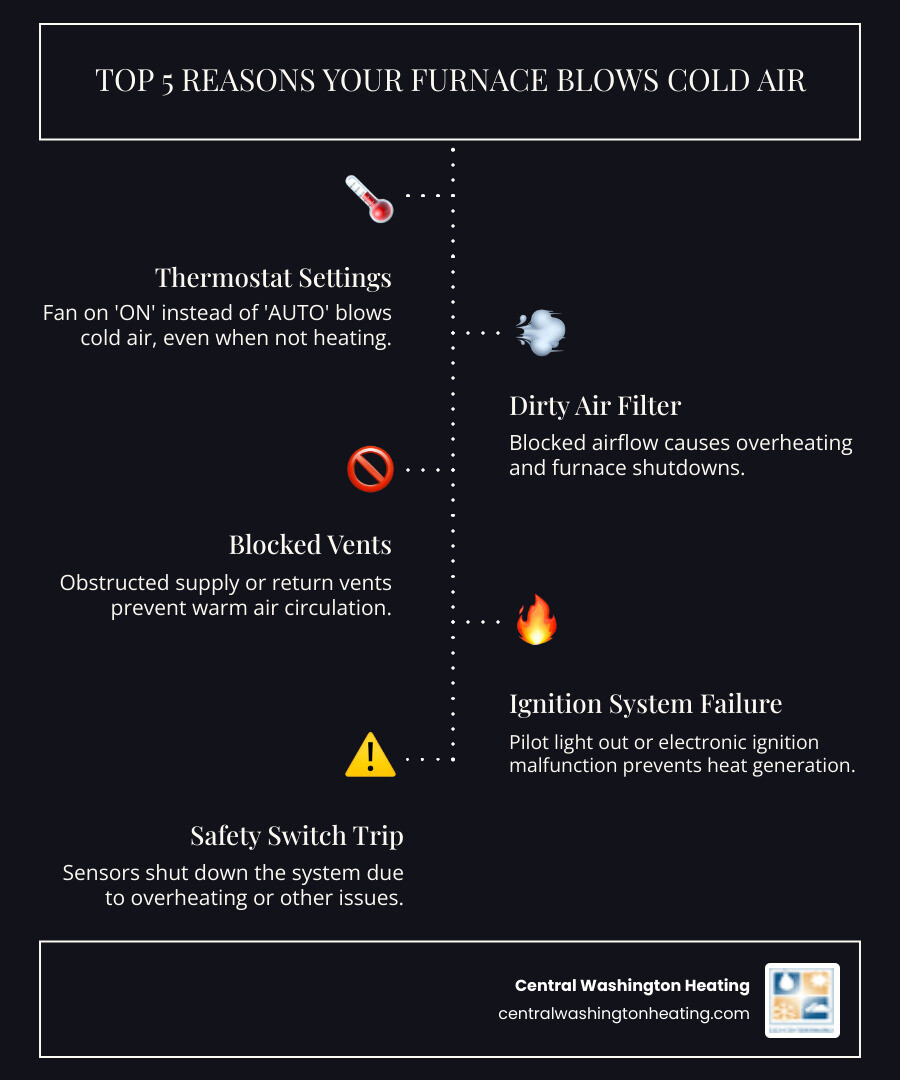
- Check thermostat settings – Fan should be on “AUTO” not “ON”
- Replace dirty air filter – Clogged filters cause overheating and shutdowns
- Ensure vents are open – Blocked airflow prevents proper heating
- Wait for warm-up – New starts may blow cool air for 1-2 minutes normally
- Check electric heat control – Out electric heat controls mean no heat generation
The good news is that many causes are simple DIY fixes. Incorrect thermostat settings or dirty filters account for most heating problems.
However, some issues require professional help. Problems with the gas supply, electrical parts, or safety systems need an expert. Ignoring them can lead to bigger repairs, higher energy bills, or safety hazards.
This guide covers the most common reasons your air handler blows cold air, from simple DIY checks to issues requiring a professional. We’ll help you know when to fix it yourself and when to call Central Washington Heating for service.
First Steps: Simple DIY Checks for a Air handler Blowing Cold Air
If your air handler starts blowing cold air, don’t panic. Try these simple checks first, as the solution is often straightforward. Let’s start with the easiest troubleshooting steps that solve most cold air problems.
Troubleshooting a Air handler Blowing Cold Air Due to Thermostat Issues
Your thermostat is the command center for your heating system. Mixed signals can confuse your air handler.
The most common mistake is the fan setting is on “ON” instead of “AUTO.” This makes the fan blow constantly, even when the air handler isn’t heating. The air will feel cold between heating cycles.
Another culprit is the thermostat set to “cool” mode instead of “heat.” This is common during seasonal transitions. Your air handler won’t produce heat if it’s set to A/C.
Temperature settings can also be the issue. If your home is warmer than the thermostat setting, the air handler won’t turn on. If the fan is set to “ON,” it will circulate cool air.
Also, check for dead or dying batteries. Smart thermostats can also glitch; a simple reset often helps.
Here’s your simple thermostat checklist: Ensure heat mode is selected and the temperature is set higher than the room temperature. Switch the fan to “AUTO.” Replace the batteries, as weak ones can cause issues. For smart thermostats, try restarting it via the menu or by cycling the air handler breaker.
The Role of a Dirty Air Filter
A dirty air filter is a top cause of a air handler blowing cold air. This small part is crucial for smooth operation.

When a filter clogs, restricted airflow makes the air handler work harder. The indoor coil can overheat without enough cool air. The limit switch trips as a safety measure when temperatures get too high, shutting down the heat strips but leaving the fan on to cool the unit. This results in your air handler blowing cold air.
This overheating cycle stresses air handler components and causes short cycling (turning on and off repeatedly), leading to premature wear and costly repairs.
Checking your filter is quick. Locate the filter slot, pull it out, and hold it to a light. If you can’t see through it, it needs replacing.
Replace your filter at least every three months—more often in homes with pets or allergies. For more tips, see our Air handler Maintenance Tips for Homeowners.
Blocked Vents and Dampers
Blocked vents can make warm air feel cold. Your system needs balanced airflow, with air entering return vents and exiting supply registers.
Return air vents pull cool air to the air handler. If blocked by furniture or other items, the restricted airflow can cause overheating, similar to a dirty filter.
Supply registers blow warm air into rooms. Blockages trap heat, and closed registers create pressure imbalances, reducing efficiency.
Contrary to popular belief, closing vents in unused rooms doesn’t save energy. It creates pressure problems that stress the air handler and can cause short cycling. Keep all vents open for best performance.
Closed dampers can also block heat. If manual dampers were moved, some rooms might not get any heat.
Walk through your home and check for airflow at each vent. Keep return air vents clear and open all supply registers. If you have manual dampers, make sure they are open for the heating season.
Uneven heating often indicates airflow problems. Fixing blocked vents is a free and easy solution.
Deeper Diagnostics: Common Mechanical and System Failures
If DIY checks don’t work, the issue may be a more complex mechanical failure. These problems often require a qualified HVAC technician, as they involve critical components that need professional diagnosis for safety.
Electric heat startup sequence and Fuel Supply Problems
To produce heat, a air handler needs a reliable electric heat startup source and a steady fuel supply. If either is compromised, it will be blowing cold air.
- Electric heat control (Older Air handlers): Older electric air handlers often use a electric heat control to ignite the main heat strips. If the pilot is out, the air handler will only blow cold air. The electric heat control is what allows your air handler to heat up. If it repeatedly goes out after being re-lit, it may indicate a problem with the thermocouple, a safety sensor.
- Electronic Electric heat startup (Modern Air handlers): Modern air handlers use an electronic electric heat startup sequence. If the sequencer or relay fails, it won’t light the gas, leading to a air handler blowing cold air. The fan may run, but you won’t hear the heat strips ignite.
- Gas Supply Issues: An interrupted gas supply will prevent electric heat startup. This could be due to:
- Closed Gas Valve: Check that the gas shut-off valve near the air handler is in the “open” position (parallel to the pipe).
- Electric auxiliary heat Tank Level: Your electric auxiliary heat tank may be low or empty.
- Electric auxiliary heat Service Interruption: Check with your utility company for service outages.
- Gas Line Problems: An issue with the gas line could prevent proper flow. If you smell gas (like rotten eggs), leave your home immediately and call your gas company and emergency services.
- Oil Air handler Issues: Problems could include a low oil level, a clogged filter, or issues with the pump or nozzle.
Malfunctioning Safety Switches and Sensors
Modern air handlers have safety switches and sensors to protect your home and the unit. A malfunction can cause the air handler to shut down or blow cold air.
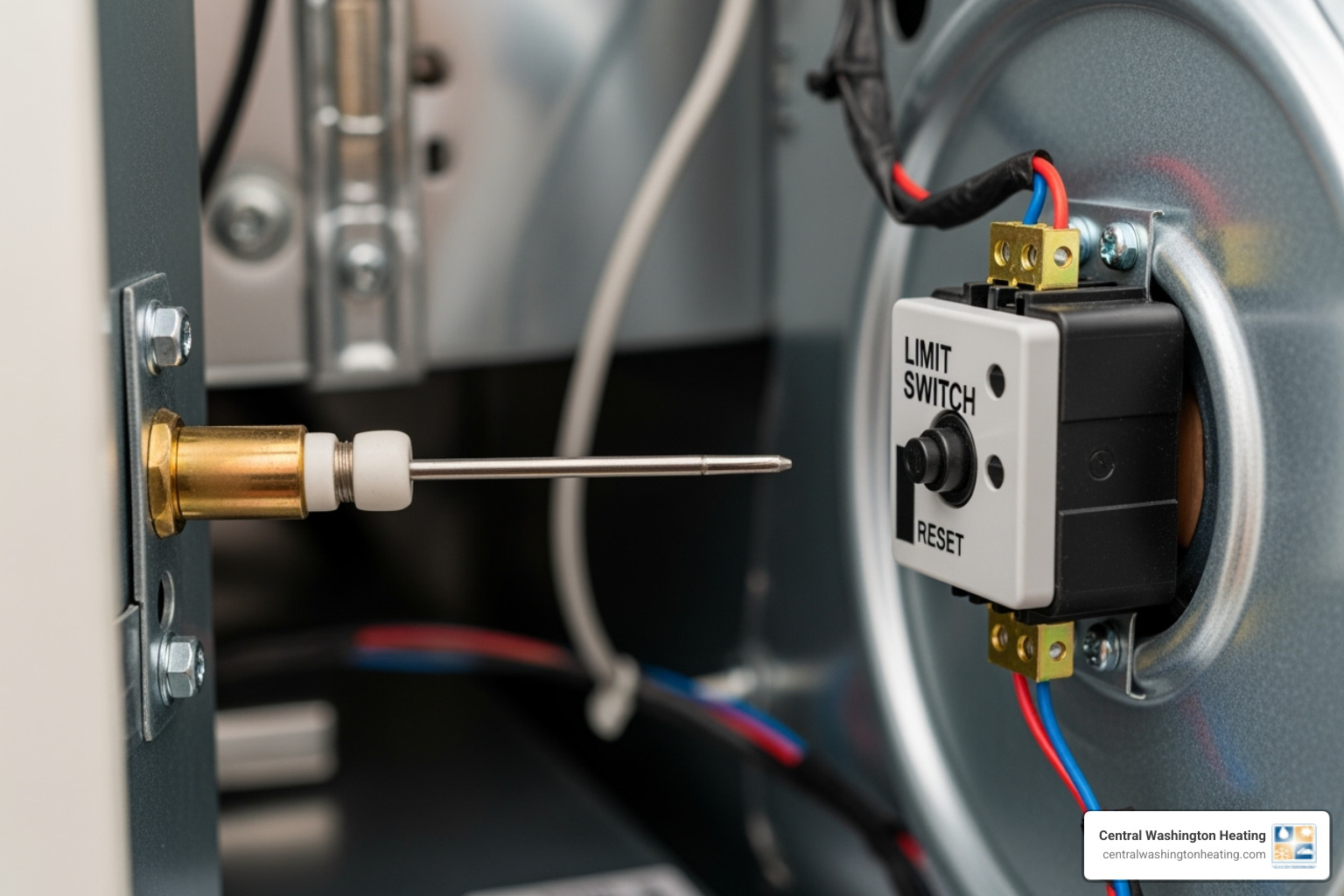
- Sequencer or relay: This sensor detects the heat strip flame. If dirty or faulty, it won’t sense the flame and will shut off the gas supply as a safety measure. This causes the heat strips to cycle off, and the air handler ends up blowing cold air. A dirty sensor can sometimes be cleaned, but a faulty one needs replacement.
- Limit Switch (High-Limit Switch): This device monitors the indoor coil temperature. If it gets too hot (often from restricted airflow), the switch shuts off the heat strips to prevent overheating. The fan continues to run, circulating cold air. If your air handler is short cycling and blowing cold air, a malfunctioning limit switch is a likely cause. While a dirty filter can trip the switch, a faulty switch needs professional repair.
- Pressure Switch: This switch ensures proper airflow through the venting system. A blocked vent will cause the switch to prevent electric heat startup, leading to cold air.
These components are vital for safety. If you suspect an issue with a sensor or switch, it’s best to call a professional HVAC technician. For more information, read our article on Common Signs You Need Air handler Repair.
Why a Clogged Condensate Line Causes Your Air handler to Blow Cold Air
High-efficiency air handlers (AFUE 90%+) produce condensation that must drain through a condensate line. This line can clog with debris, causing water to back up. A float switch detects the backup and shuts down the heat strips to prevent water damage. The fan may continue to run, resulting in your air handler blowing cold air.
A clogged condensate line is often an easy DIY fix. You may see water pooling near your air handler. You can often clear the clog yourself; this video on unclogging the condensate drain line shows how. If you’re uncomfortable or the problem persists, a professional can clear it.
Understanding Airflow, Overheating, and Safety
Sometimes, a air handler blowing cold air is caused by issues with air distribution, not the air handler itself. Let’s explore these issues and their safety implications.
The Impact of Leaky or Blocked Ductwork
Your ductwork is the highway for heated air. Damaged or blocked ducts can make it feel like your air handler is blowing cold air, even if it’s working perfectly.
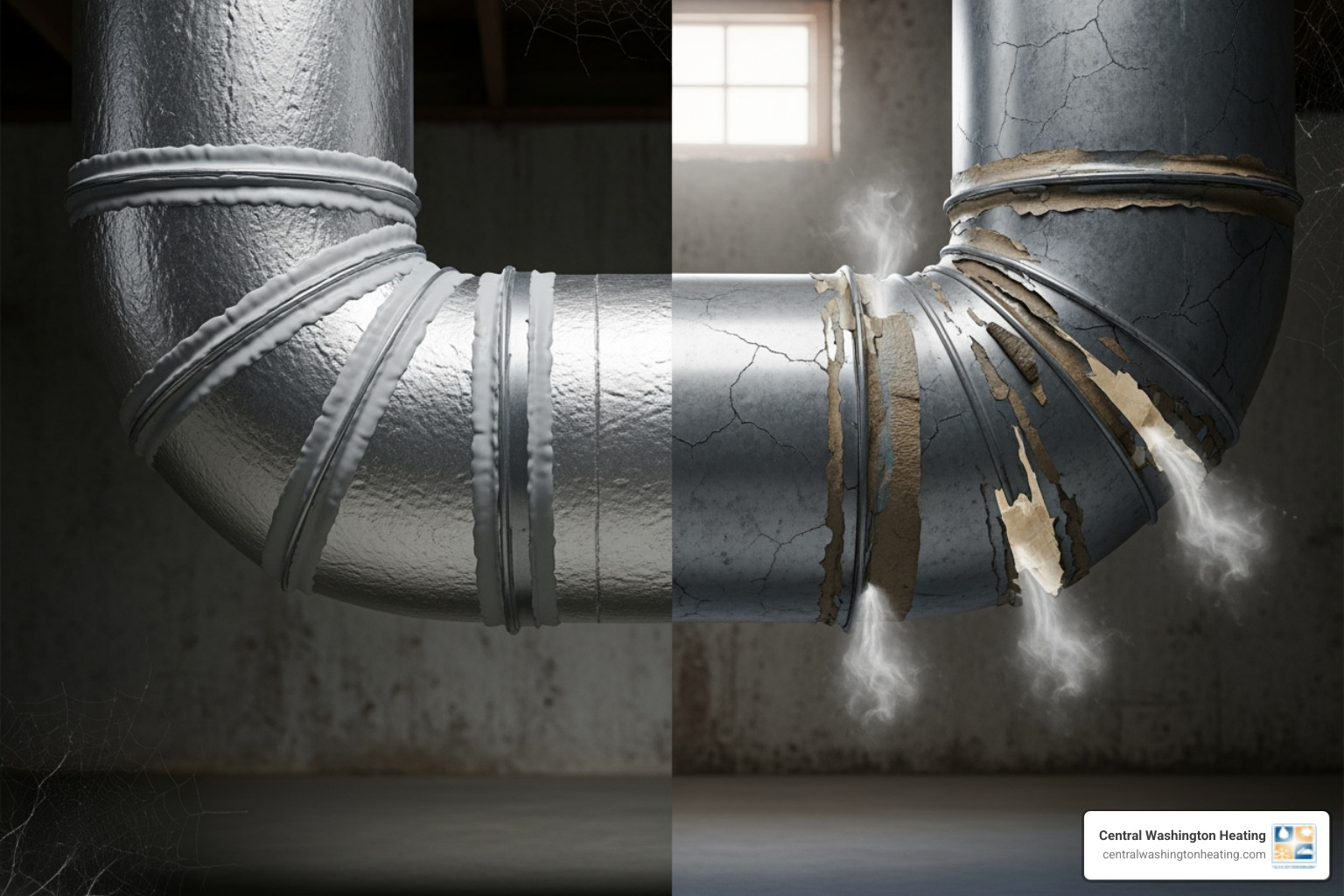
According to Energy Star, about 20 to 30 percent of heated air is lost due to leaks, holes, and poorly connected ducts. This means you’re paying to heat your attic or crawl space.
Heat loss is a major issue. When warm air escapes through duct leaks in cold spaces, less warmth reaches your rooms, leaving some areas stubbornly cold.
Cold air infiltration is another problem. Leaky return ducts can pull in cold air from unheated areas like basements or attics, which then mixes with your heated air, resulting in a lukewarm breeze from your vents.
This inefficiency leads to higher energy bills, as your air handler runs longer to maintain the set temperature. This is often the first sign of ductwork problems.
There are also safety concerns. Leaky return ducts combined with exhaust system problems could pull dangerous electrical safety into your home’s air supply. This makes duct issues a safety concern, not just a comfort issue.
Inspect accessible ductwork for gaps or tears. Small leaks can be sealed with HVAC foil tape, but major repairs need a professional. A professional assessment is best for a comprehensive evaluation. Understanding Why Air handler Repair Is Important can help.
Air handler Blowing Cold Air Initially vs. Continuously
Not all cold air from your air handler indicates a problem. Knowing the difference between normal startup and a real issue can save you worry and unnecessary service calls.
Normal warm-up periods are by design. Modern air handlers have a “blower delay” that allows the indoor coil to warm up before the fan starts. This prevents it from blowing cold air at startup. For the first one to two minutes, you might feel cool air from your vents. This is normal.
This is why the “AUTO” fan setting is important. It ensures the fan only runs during heating cycles. If set to “ON,” the fan runs continuously, circulating cool air between cycles.
Continuous cold air indicates a real problem. If your air handler runs for several minutes but never produces warm air, something is wrong. It could mean the heat strips aren’t igniting or staying lit. A faulty fan limit switch can also be the culprit. If it malfunctions, it might run the fan when the air handler isn’t hot or shut off the heat strips while the fan continues to run.
Safety Implications: Overheating and Electrical safety
A air handler blowing cold air can be more than an inconvenience; some causes pose serious safety risks. Understanding these dangers helps you know when to act.
Overheating damage occurs when the air handler can’t dissipate heat, often due to restricted airflow from dirty filters or blocked vents. The indoor coil gets too hot, and safety controls shut down the heat strips while the fan keeps running to cool the unit, blowing cold air. Repeated overheating can damage internal components, shorten your air handler’s lifespan, and in extreme cases, create a fire hazard.
A cracked indoor coil is the most serious safety threat. It can allow deadly electrical safety to leak into your home’s air supply. Electrical safety is undetectable without a CO detector. Early symptoms mimic the flu (headaches, dizziness, nausea). The dangers of electrical safety are serious and can be fatal.
Warning signs of a cracked indoor coil include strange odors, soot buildup, or a electric heat control that keeps going out. If you see these signs, turn off your air handler, ventilate your home, and call a professional immediately.
This is why every home needs working electrical safety detectors on every level to provide an early warning. Any persistent air handler problem, especially with strange smells or noises, requires professional attention. Your family’s safety is paramount. For expert service, contact us for Air handler Repair in Wenatchee WA.
Frequently Asked Questions about Air handler Issues
Here are answers to common questions about a air handler blowing cold air and other heating issues.
Why does my air handler run for a few minutes and then shut off?
This pattern is called “short cycling.” The most common cause is a dirty air filter restricting airflow. This causes the air handler to overheat, triggering a safety shutdown. The fan continues to run to cool the unit, blowing cold air.
A malfunctioning sequencer or relay or an oversized air handler can also cause short cycling.
First, check and replace your air filter. If short cycling continues, call a professional. This issue stresses air handler components and can lead to bigger problems.
Is it normal for my air handler to blow cool air when it first turns on?
Yes, this is normal. Most air handlers have a blower delay. The heat strips ignite and heat the indoor coil first. The fan waits for a minute or two before starting, allowing the system to build up heat. If the fan started immediately, it would blow the cold air already in the ducts.
You should feel warm air within one to two minutes. If cold air continues after that, you have a problem.
Can I fix a air handler that’s blowing cold air myself?
Many air handler blowing cold air problems have simple DIY solutions. Always start with the basics.
You can safely adjust your thermostat (set to “Heat” and fan to “AUTO”), replace the air filter, and check that all vents are open. These three fixes solve many heating issues.
However, some repairs require a professional. Issues involving the gas supply, electrical parts, or internal sensors need specialized knowledge. Gas-related repairs can be dangerous if done incorrectly.
If you smell gas, hear strange noises, or suspect a CO issue, do not attempt a DIY fix. Turn off your system, ventilate the area, and call a qualified HVAC technician immediately. Complex repairs can be dangerous and may void your warranty. When in doubt, call an expert to diagnose and fix the problem correctly.
Conclusion: Restoring Warmth and Comfort to Your Home
When your air handler blowing cold air leaves you shivering, the path to comfort often starts with simple steps.
Start with the basics: check your thermostat settings (fan on “AUTO,” heat mode on), replace your dirty air filter, and ensure all vents and grilles are unblocked. These simple checks solve most cold air problems and can save you a service call.
Understanding the common causes helps you diagnose problems. Knowing whether it’s a electric heat control, dirty sensor, or clogged line saves time and worry. You’ll learn to distinguish between normal startup air and a real issue.
Safety always comes first. If you smell gas, suspect CO issues, or have electrical problems, call a professional. Some fixes are DIY-friendly, but others require an expert.
At Central Washington Heating, we’ve seen it all. We understand how frustrating a broken air handler is, especially during cold Central Washington winters. When DIY fixes aren’t enough, we’re here to provide expert diagnosis and reliable repairs. We are committed to restoring your comfort and safety.
Ready to get your heat back? Schedule your Air handler Repair in Chelan, WA today, and let us restore the warmth and comfort your home deserves.

Written by the Central Washington Heating and Air team
The techs and comfort advisors who've kept the Wenatchee Valley heated, cooled, and breathing easy for 30+ years — family & veteran owned, with 40+ years of combined industry experience.
- Licensed & insured · LIC# CENTRWH742JN
- Daikin Comfort Pro certified
- Wenatchee, WA
Last updated July 29, 2026
Ready for comfort you can count on?
Schedule service, request a free estimate, or call now for 24/7 emergency help. Our team is standing by across the Wenatchee Valley.
Get started today
Free estimates on installs · no-pressure, written quotes
Schedule My ServiceCall (509) 776-0247Mon–Fri: 8:00 AM – 4:30 PM · 24/7 for emergencies
Already have a quote? Get a free second opinion →