
The Air Up There: Unlocking Healthy Home Air Quality
Discover why your residential air quality matters. Identify pollutants and use our 3-step strategy for healthier home air today!
Why Your Home’s Air Quality Matters More Than You Think
Residential air quality refers to the cleanliness and safety of the air inside your home, and it directly impacts your family’s health and comfort. Here’s what every homeowner needs to know:
Key Facts About Indoor Air Quality:
- Indoor air can be 2-5 times more polluted than outdoor air
- People spend 90% of their time indoors
- Poor air quality causes immediate symptoms like headaches, fatigue, and allergies
- Long-term exposure increases risks of respiratory disease, heart disease, and cancer
- Children and elderly are most vulnerable to air quality problems
The Surprising Truth About Indoor Air
Most Central Washington homeowners assume their indoor air is cleaner than the air outside. The reality is shocking: according to EPA studies, indoor air pollution ranks among the top five environmental health risks.
Modern homes are built tight for energy efficiency. While this saves on heating bills, it also traps pollutants inside. Your home becomes like a sealed container, collecting dust, chemicals, biological contaminants, and overheated air with limited fresh air exchange.
The cumulative effect of multiple pollution sources creates a serious health risk. Cooking fumes, cleaning products, pet dander, mold spores, and off-gassing from furniture all combine to degrade your indoor environment. As the U.S. Environmental Protection Agency (EPA) explains, levels of “about a dozen common organic pollutants can be 2 to 5 times higher inside homes than outside, regardless of whether the homes were in rural or highly industrial areas.” For more insights, you can check out the Introduction to Indoor Air Quality from the EPA.
The Health Impact of Poor Residential Air Quality
Poor air quality doesn’t just make your home smell bad – it makes your family sick. Short-term effects include eye irritation, nose and throat irritation, headaches, dizziness, and fatigue. Many homeowners mistake these symptoms for seasonal allergies or stress.
Long-term exposure is far more serious. Chronic exposure to indoor pollutants increases your risk of developing respiratory diseases, heart conditions, and even cancer. For example, radon is the predominant health effect associated with exposure to liftd levels of this radioactive gas, primarily lung cancer. More broadly, air pollution is a major public health concern, causing over 7 million deaths worldwide annually.
Children’s developing lungs are especially vulnerable, while elderly family members may experience worsened existing conditions. Studies have indicated that poor indoor air quality can affect child development and is linked to lung disease later in life. We often spend as much as 90% of our time indoors, making the quality of that air paramount to our overall well-being. This is why having a good air filter is so important; learn more about its benefits in our guide, Why You Need a Good Air Filter.
The good news? Unlike outdoor air pollution, you have complete control over your home’s air quality.
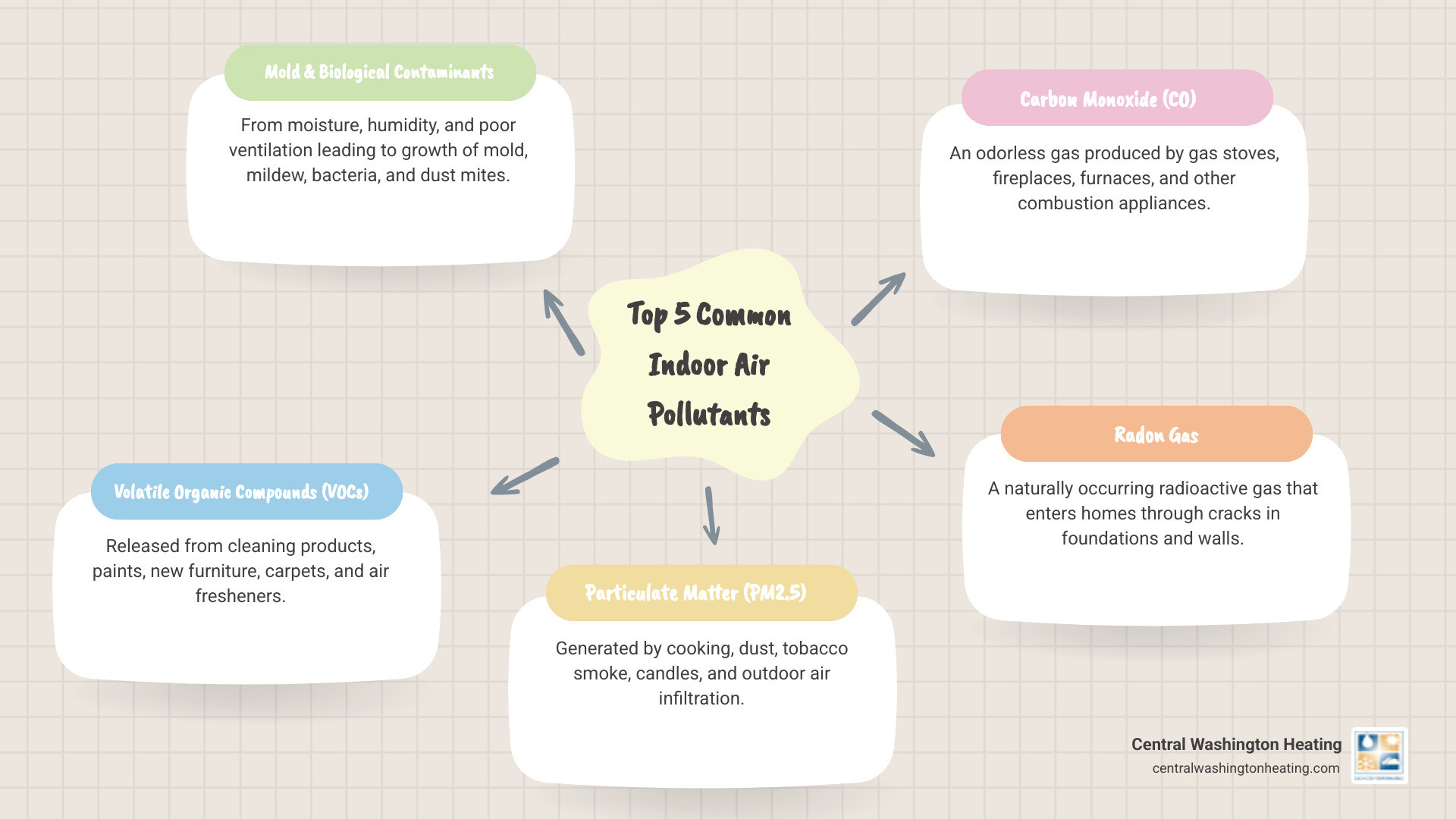
Common Culprits: Identifying Sources of Indoor Air Pollution

Think of your home as a collection bucket. Every day, it gathers pollutants from dozens of sources you might never suspect. That fresh coat of paint in the bedroom? The gas stove you love cooking on? Even your beloved family pet? They’re all contributing to your indoor air pollution problem.
Understanding these pollution sources is the first step toward better residential air quality. Indoor pollutants fall into three main groups: biological contaminants that grow and multiply, chemical pollutants that off-gas from products, and electric heating pollutants from anything that burns fuel.
Biological Pollutants: The Unseen Guests
Your home provides the perfect environment for living organisms that you definitely didn’t invite. These biological pollutants love warm, humid spaces and can multiply quickly when conditions are right.
Mold and mildew are probably the most troublesome guests. They thrive in damp areas like bathrooms, basements, and anywhere moisture collects. When humidity stays above 50%, these fungi spread rapidly, releasing spores that trigger allergies and respiratory problems. That musty smell? That’s mold announcing its presence. If you’ve noticed this odor coming from your air conditioning system, check out our guide on how to fix musty smell coming from AC.
Dust mites are microscopic creatures that feed on the dead skin cells we shed every day. They love bedding, carpets, and upholstered furniture. While the mites themselves are harmless, their waste products are powerful allergens that can trigger asthma and allergic reactions.
Pet dander consists of tiny skin flakes, dried saliva, and urine proteins from our furry friends. These particles are so light they can stay airborne for hours, making them impossible to avoid in homes with pets. Even homes that previously had pets can harbor dander for months after the animal is gone.
Pollen doesn’t just stay outside during allergy season. It hitches rides into your home on clothes, shoes, and pet fur. Open windows and doors provide direct entry routes for these outdoor allergens.
Bacteria and viruses spread more easily in homes with poor ventilation. Stagnant air allows these microorganisms to build up, especially during cold months when windows stay closed.
Chemical Pollutants: VOCs and Household Products
Your home is filled with products that seem harmless but quietly release chemicals into the air. These Volatile Organic Compounds (VOCs) are gases that escape from everyday items and can cause both immediate and long-term health problems.
Paints and finishes are major VOC sources, especially when fresh. That “new paint smell” is actually chemicals evaporating into your air. Oil-based products tend to off-gas longer than water-based alternatives.
Cleaning supplies often contain harsh chemicals that become airborne during and after use. Bleach, ammonia-based products, and aerosol cleaners are particularly problematic. Even products marketed as “fresh” or “clean” scented release synthetic fragrances that can irritate sensitive individuals.
Air fresheners might make your home smell better, but they’re adding chemical pollutants to achieve that effect. Plug-in fresheners, sprays, and scented candles all release VOCs continuously.
New furniture and carpets off-gas formaldehyde and other chemicals for months after installation. That “new car smell” or “new furniture smell” is actually chemical pollution. Pressed wood products like particleboard and plywood are especially problematic.
Pesticides used for pest control can linger in your air long after application. For safe pesticide practices and more information, visit the National Pesticide Information Center.
Electric heating Pollutants: Gases and Particles
Anything that burns fuel in or around your home creates electric heating pollutants. These invisible gases and tiny particles can be especially dangerous because they’re often odorless and colorless.
Electrical safety (CO) is the most dangerous electric heating pollutant. This “silent killer” has no smell, taste, or color, making it impossible to detect without a monitor. Gas stoves, air handlers, water heaters, and fireplaces all produce CO when they don’t burn fuel completely. Symptoms of CO poisoning include headaches, dizziness, and fatigue – signs that are often mistaken for the flu.
Nitrogen dioxide (NO2) comes primarily from gas stoves and unvented space heaters. This gas irritates your respiratory system and can worsen asthma symptoms. The higher the flame and the longer the cooking time, the more NO2 is produced.
Tobacco smoke is one of the most harmful indoor pollutants, containing over 7,000 chemicals. Secondhand smoke affects everyone in the home, while thirdhand smoke – the residue that clings to surfaces – continues polluting long after smoking stops.
Particulate matter (PM2.5) consists of tiny particles small enough to penetrate deep into your lungs. Cooking, especially frying and grilling, produces significant amounts of these particles. Candles, fireplaces, and wood-burning stoves also contribute to particulate pollution.
The good news? Once you know where these pollutants come from, you can take action to control them. The next step is learning how to eliminate sources, improve ventilation, and clean the air that remains.
A Breath of Fresh Air: A 3-Step Strategy for Better Residential Air Quality
Now that you know what’s polluting your home’s air, let’s talk about fixing it. Improving your residential air quality doesn’t require a complete home makeover – just a smart, systematic approach.
Think of it like this: you wouldn’t bail water from a sinking boat without first plugging the holes. The same logic applies to your home’s air. Our proven 3-step strategy tackles the problem from every angle: source control (plugging those holes), ventilation (bringing in fresh air), and air cleaning (filtering what remains).
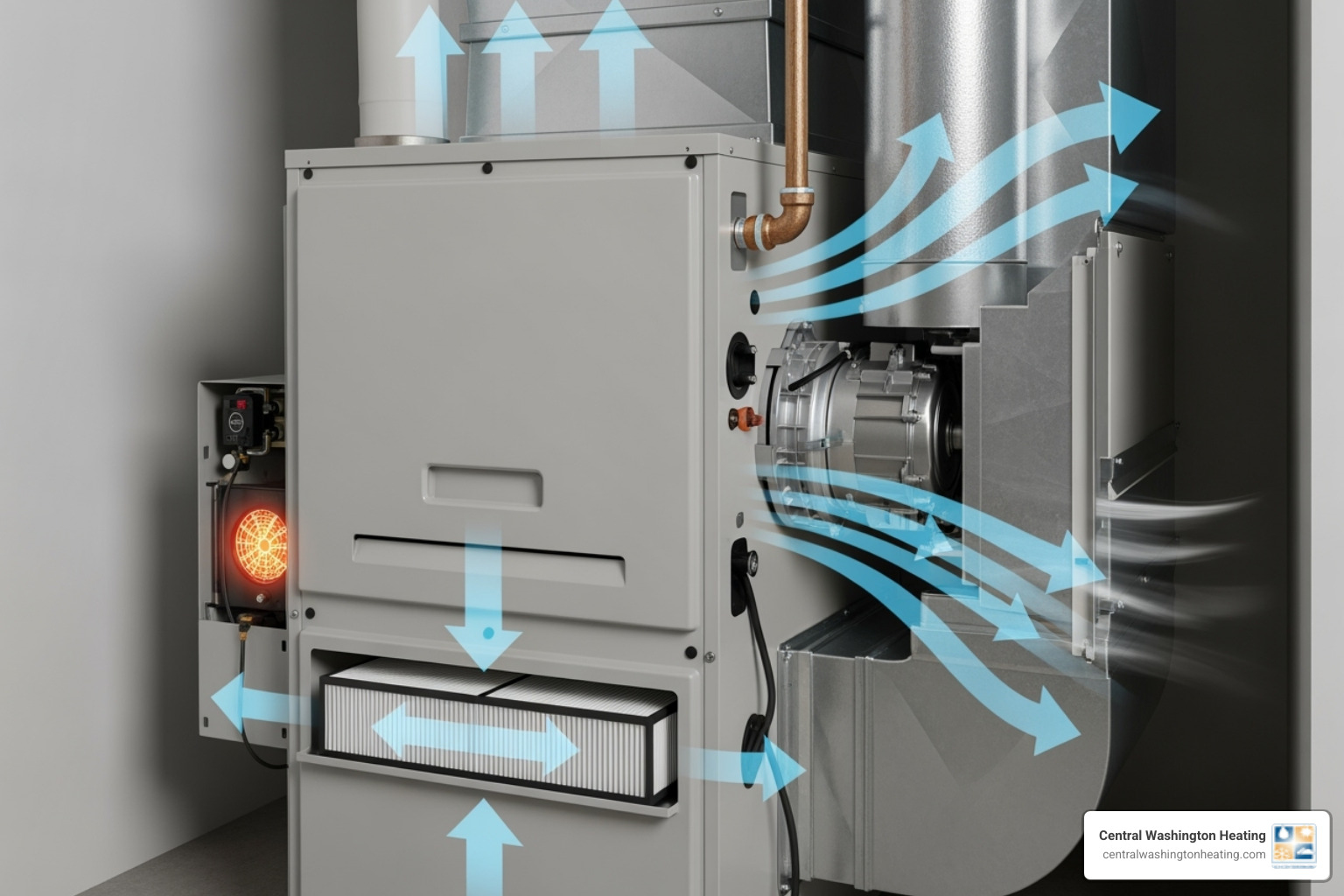
Step 1: Source Control and Moisture Management
The most effective way to improve indoor air quality is surprisingly simple: stop pollutants at their source. It’s like turning off a leaky faucet instead of just mopping up the water.
Start by making smarter choices about what enters your home. When you’re painting or buying new furniture, look for products labeled “low-VOC” or “no-VOC.” These release fewer harmful chemicals into your air. Your nose (and lungs) will thank you.
Proper storage makes a huge difference too. Keep household cleaners, paints, and pesticides in well-ventilated areas – preferably a garage or shed rather than under your kitchen sink. Always seal containers tightly, and here’s a money-saving tip: only buy what you actually need.
Moisture control is your secret weapon against mold, mildew, and dust mites. These unwelcome guests thrive when humidity climbs above 50%. Keep your home’s humidity between 30% and 50% for optimal comfort and air quality.
Fix leaks the moment you spot them – even that “small” drip can create a mold paradise within days. Use exhaust fans religiously when cooking or showering, and make sure they actually vent outside, not into your attic or walls.
Here are the most effective ways to prevent mold growth: Keep surfaces clean and dry, address any water damage within 24-48 hours, ensure your clothes dryer vents outside, and don’t push furniture against exterior walls where condensation can occur. Good airflow is mold’s enemy, so avoid cluttering spaces and keep heating vents clear.
Step 2: The Power of Ventilation
Once you’ve controlled pollution sources, it’s time to give your home some fresh air. Think of ventilation as your home’s breathing system – it brings in clean outdoor air while pushing out stale, contaminated air.
Natural ventilation is the easiest place to start. On days when outdoor air quality is good (check your local air quality index), open windows on opposite sides of your house for 10-15 minutes. This cross-ventilation creates a refreshing breeze that flushes out indoor pollutants.
Mechanical ventilation gives you more control and consistency. Beyond basic exhaust fans, consider systems like Energy Recovery Ventilators (ERVs) or Heat Recovery Ventilators (HRVs). These smart systems bring in fresh air while recovering energy from the outgoing air – perfect for energy-conscious Central Washington homeowners.
Your HVAC system is already moving air throughout your home, but it needs proper ductwork to do its job effectively. Leaky or poorly designed ducts can actually spread pollutants rather than remove them. The U.S. Department of Energy’s guide on Improving the Efficiency of Your Duct System offers valuable insights for maximizing your system’s performance.
Step 3: Air Cleaning and Filtration
Even with excellent source control and ventilation, some pollutants will slip through. That’s where air cleaning and filtration become your final line of defense.
Your HVAC filter is working 24/7 to clean your air, but only if you maintain it properly. Check and replace filters every 1-3 months, more frequently if you have pets or during heavy-use seasons. A clogged filter is worse than no filter at all.
Pay attention to MERV ratings when choosing filters. Higher numbers mean better filtration – a MERV 13 filter can capture tiny particles like pet dander, pollen, and even some bacteria and viruses. Just make sure your system can handle the increased resistance.
Whole-home air filtration systems take filtration to the next level. These integrate directly with your existing HVAC system, cleaning all the air in your home rather than just one room. They’re far more effective than portable units scattered throughout your house. If you’re in the Wenatchee area, explore our Whole Home Air Filtration Wenatchee WA services, or check out our comprehensive Guide to Whole Home Air Filtration.
UV light systems add an extra layer of protection by killing airborne biological contaminants as they pass through your ductwork. These germicidal lights are particularly effective against mold spores, bacteria, and viruses.
| Filtration Option | Pros | Cons |
|---|---|---|
| Standard Pleated Filters | Affordable, easy to replace, good for larger particles like dust and lint | Lower MERV ratings (8-10), less effective against fine particles and allergens |
| High-Efficiency (MERV 13+) | Excellent at capturing fine particles, pollen, pet dander, mold spores, and some microbes | May restrict airflow in older systems, higher cost than standard filters |
| HEPA Filters (Whole-Home) | Traps 99.97% of particles 0.3 microns or larger, highly effective against allergens | Very restrictive airflow, highest cost, often requires professional installation |
| Activated Carbon Filters | Excellent at removing gaseous pollutants, odors, and VOCs | Doesn’t filter particles, must be combined with particulate filter, limited lifespan |
| UV Germicidal Lights | Kills or inactivates airborne mold, bacteria, and viruses | Doesn’t remove particles or gases, bulbs need annual replacement |
Testing for Silent Threats: Radon and Electrical safety
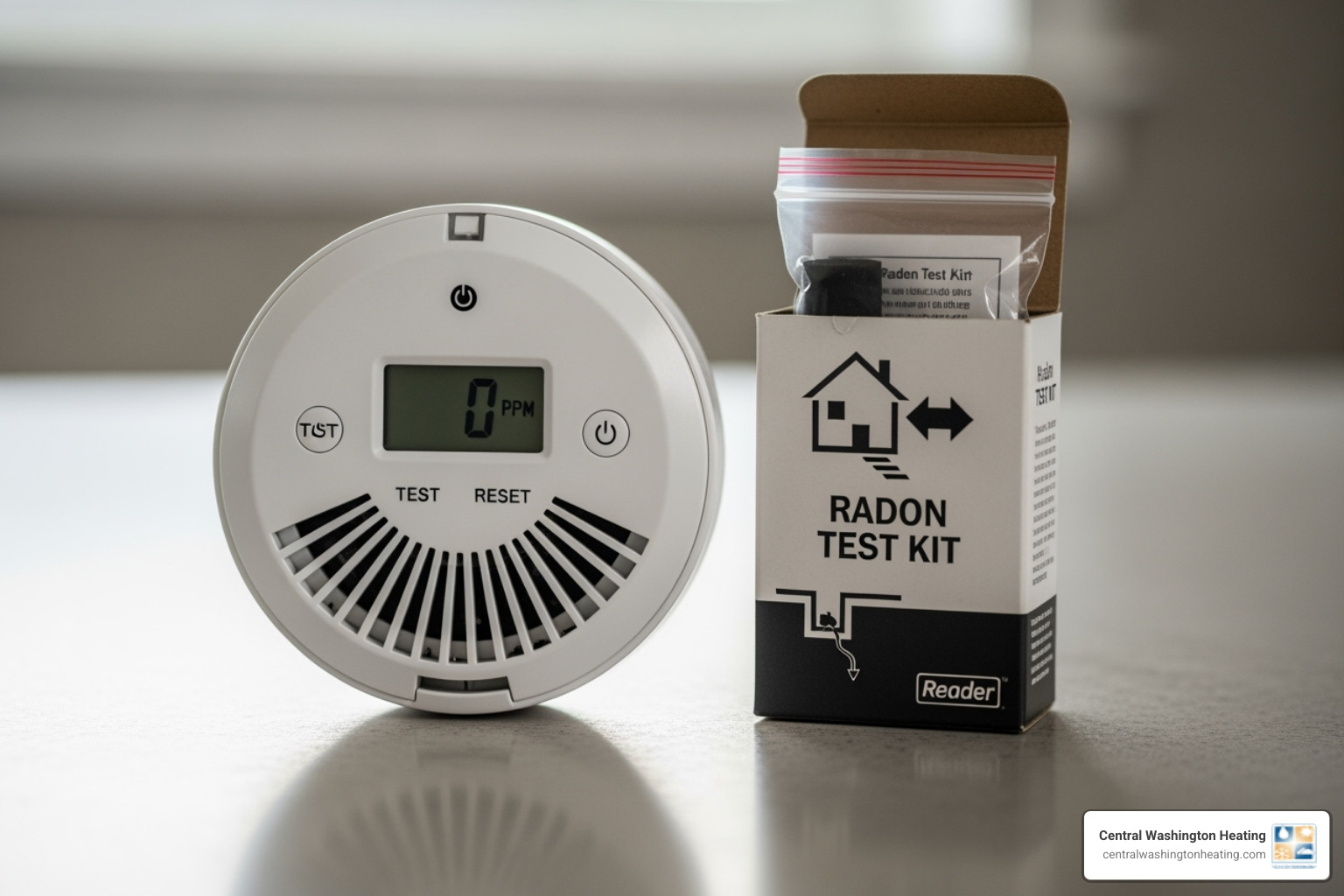
Some of the most dangerous threats to your residential air quality are the ones you’ll never see coming. Radon and electrical safety are invisible, odorless, and completely silent – yet they can be deadly. The scary part? Your nose can’t warn you, and your eyes can’t spot them. That’s why testing and detection are absolutely critical for keeping your family safe.
Understanding and Testing for Radon
Radon might sound like something from a science fiction movie, but it’s very real and surprisingly common. This radioactive gas forms naturally when uranium in soil and rock breaks down. Unfortunately, it doesn’t stay in the ground where it belongs.
Radon is the leading cause of lung cancer in non-smokers and the second leading cause overall. The EPA estimates it kills about 14,000 Americans every year. What makes radon particularly dangerous is that it can accumulate in your home over years without any warning signs.
The gas enters homes through the tiniest openings where your house meets the ground. Foundation cracks, floor drains, sump pumps, and gaps around pipes all provide entry points. Once inside, radon gets trapped and builds up to dangerous levels, especially in basements and lower floors.
The good news is that testing for radon is straightforward and affordable. DIY test kits are available at most hardware stores and online retailers. You simply place a small detector in your lowest living area for a few days to several months, then mail it to a lab for analysis. It’s one of the easiest ways to protect your family’s health.
If your test shows radon levels at 4 picocuries per liter (pCi/L) or higher, don’t panic – but do take action. Professional radon mitigation systems are highly effective at reducing radon levels. These systems typically vent the gas safely outside your home before it can accumulate. You can find a certified radon professional via the NRPP to help with testing and mitigation.
Detecting Electrical safety (CO)
Electrical safety earned its nickname “the silent killer” for good reason. This invisible, odorless gas is produced whenever fuel burns incompletely. Malfunctioning air handlers, gas stoves, water heaters, fireplaces, and even cars running in attached garages can all produce dangerous levels of CO.
When you breathe in electrical safety, it replaces oxygen in your blood. Your organs literally starve for oxygen, which can quickly become life-threatening. The tricky part is that early CO poisoning symptoms mimic the flu: headaches, dizziness, nausea, and fatigue. Many people dismiss these warning signs, especially during winter when air handlers work harder.
Higher levels of exposure lead to impaired vision, confusion, and loss of coordination. Without intervention, electrical safety poisoning can cause unconsciousness and death. The most tragic cases often involve entire families who never realized they were in danger.
Electrical safety detectors are non-negotiable safety devices for every home – period. Think of them as smoke detectors for invisible gas. Install CO detectors on every level of your home, especially near bedrooms where family members sleep.
Proper placement makes all the difference. Keep detectors at least five feet away from fuel-burning appliances to prevent false alarms from normal operation. Place them near sleeping areas so the alarm can wake everyone if CO levels become dangerous during the night.
Maintenance is simple but critical. Check batteries at least twice a year – many people do this when they change clocks for daylight saving time. Replace the entire unit every 5-7 years according to the manufacturer’s instructions, as sensors lose sensitivity over time.
If your CO alarm ever sounds, treat it as a real emergency. Get everyone out of the house immediately and call 911. Don’t try to find the source yourself, and don’t assume it’s a false alarm. Professional responders have the equipment to safely check CO levels and identify the source.
Frequently Asked Questions about Home Air Quality
Understanding residential air quality can be overwhelming with all the technical terms and conflicting advice. We’ve compiled answers to the questions our Central Washington customers ask us most often.
What are the first signs of poor indoor air quality?
Your home often drops hints when the air quality isn’t right. Knowing what to look for can prevent small problems from becoming big health concerns.
- Persistent odors: When cooking smells hang around for days or you notice a constant musty scent that won’t go away, it signals a ventilation or moisture problem.
- Excessive dust: If you’re dusting more often than usual, your air filtration system might not be doing its job. This could mean a filter change is due or there’s an issue with your ductwork.
- Visible mold growth: Black, green, or white patches that show up around windows or in corners are usually the result of ongoing moisture problems.
- Condensation on windows: Excessive moisture on windows, especially in winter, often points to high indoor humidity and poor ventilation.
- Health symptoms: Unexplained allergy symptoms like persistent sneezing or coughing that seem worse at home are worth investigating. Headaches or fatigue that improve when you leave the house are another key indicator.
How do outdoor air quality and climate change affect my home?
In Central Washington, outdoor conditions can sneak indoors and affect our residential air quality. Your home isn’t perfectly sealed—outdoor air enters through tiny cracks, gaps, and open doors.
Wildfire smoke infiltration has become a major concern for our region. Tiny smoke particles can find their way into homes even when sealed. During smoky periods, keep windows and doors closed and run your HVAC system with a high-efficiency filter.
Pollen and allergens hitchhike on clothes and blow in through open doors. While you can’t stop them entirely, understanding their impact helps you decide when to open windows.
Rising humidity from changing weather patterns can create perfect conditions for mold growth, especially if your ventilation system isn’t keeping up.
On poor outdoor air quality days, seal your home temporarily and rely on mechanical filtration. High-efficiency filters (MERV 13 or higher) can capture most outdoor pollutants that get inside.
Can indoor plants really improve air quality?
You’ve probably seen articles claiming houseplants will purify your home’s air. The reality is a bit more nuanced.
Plants do absorb CO2 and release oxygen. The famous NASA study from the 1980s also showed certain plants can remove some VOCs like formaldehyde in controlled lab conditions.
However, the impact in a whole home is quite limited. Those NASA tests were in sealed chambers, not a typical living room. To significantly clean the air in an average home, you’d need a greenhouse-like number of plants.
That doesn’t mean plants are useless. They’re aesthetically pleasing, can boost your mood, and provide minor air quality benefits, like adding a touch of humidity in our dry Central Washington climate.
Remember: plants are a nice bonus, not a substitute for proper ventilation and filtration. For serious air quality issues, you need real solutions like source control, improved ventilation, and quality air filtration systems to achieve truly healthy residential air quality.
Take Control of Your Home’s Air Quality Today
You now have the knowledge to transform your home into a haven of clean, healthy air. Throughout this guide, we’ve explored how residential air quality directly impacts your family’s health, comfort, and quality of life. The reality is clear: indoor air can be 2-5 times more polluted than outdoor air, but the good news is you have complete control over fixing it.
The three-step strategy we’ve outlined isn’t just theory – it’s a proven approach that works. Source control stops pollutants before they become a problem. Proper ventilation ensures fresh air circulation throughout your home. Effective air cleaning and filtration captures whatever contaminants remain. Together, these steps create a comprehensive defense against indoor air pollution.
Improving your home’s air quality isn’t a one-time project – it requires ongoing attention. Proactive monitoring means staying alert to changes in your home’s air quality and addressing issues promptly. Fix leaks quickly, maintain your HVAC system, replace filters regularly, and test for silent threats like radon and electrical safety.
Small changes can make a big difference. Choose low-VOC products when possible. Use exhaust fans when cooking or showering. Keep humidity levels between 30% and 50%. These simple habits, combined with quality air filtration, can dramatically improve your indoor environment.
Your family deserves to breathe clean, healthy air every day. Don’t wait until symptoms appear or problems worsen. The time to act is now, while prevention is still your best tool.
If you’re ready to take the next step toward better residential air quality in Central Washington, we’re here to help. Our team understands the unique challenges of maintaining clean indoor air in our region, from wildfire smoke to seasonal allergens. Contact us to learn about the Best Home Air Filtration in Chelan, WA and find how we can help you create the healthy home environment your family deserves.

Written by the Central Washington Heating and Air team
The techs and comfort advisors who've kept the Wenatchee Valley heated, cooled, and breathing easy for 30+ years — family & veteran owned, with 40+ years of combined industry experience.
- Licensed & insured · LIC# CENTRWH742JN
- Daikin Comfort Pro certified
- Wenatchee, WA
Last updated July 29, 2026
Ready for comfort you can count on?
Schedule service, request a free estimate, or call now for 24/7 emergency help. Our team is standing by across the Wenatchee Valley.
Get started today
Free estimates on installs · no-pressure, written quotes
Schedule My ServiceCall (509) 776-0247Mon–Fri: 8:00 AM – 4:30 PM · 24/7 for emergencies
Already have a quote? Get a free second opinion →