
Frugal and Toasty: Your Guide to Saving on Home Heating
Save on heating costs with our ultimate guide! Discover no-cost tips, DIY hacks, HVAC maintenance, and smart upgrades for a warm home.
Why Heating Costs Are Draining Your Wallet
Save on heating costs without sacrificing comfort by combining simple no-cost fixes with smart upgrades. Here’s what actually works:
- Seal air leaks around windows, doors, and outlets – saves up to 30% on energy bills
- Change air filters monthly – improves efficiency by up to 20%
- Lower your thermostat by 7-10°F for 8 hours daily – saves 10% annually
- Upgrade to a programmable thermostat – saves approximately $100/year
- Insulate your attic properly – can cut heating bills by one-third
- Schedule annual HVAC maintenance – prevents 25% fuel waste from neglected systems
Almost half of your home’s annual energy bill goes toward heating and cooling. For the average American household, that’s more than $900 per year. In Central Washington’s cold winters, that number can climb even higher.
Your heating costs depend on several factors working together. Your home’s size matters, but how well it holds heat matters more. Poor insulation and air leaks force your air handler to work overtime. The type of heating system you use – and how old it is – also plays a major role.
Here’s the good news: you don’t need to replace your entire heating system to see real savings. Many of the most effective strategies cost little or nothing to implement. Even simple changes like sealing drafts or adjusting your thermostat can make a noticeable difference in your monthly bills.
The key is understanding where your heat goes and stopping it from escaping. When you combine quick fixes with smart upgrades and proper maintenance, you can stay warm all winter while keeping more money in your pocket.
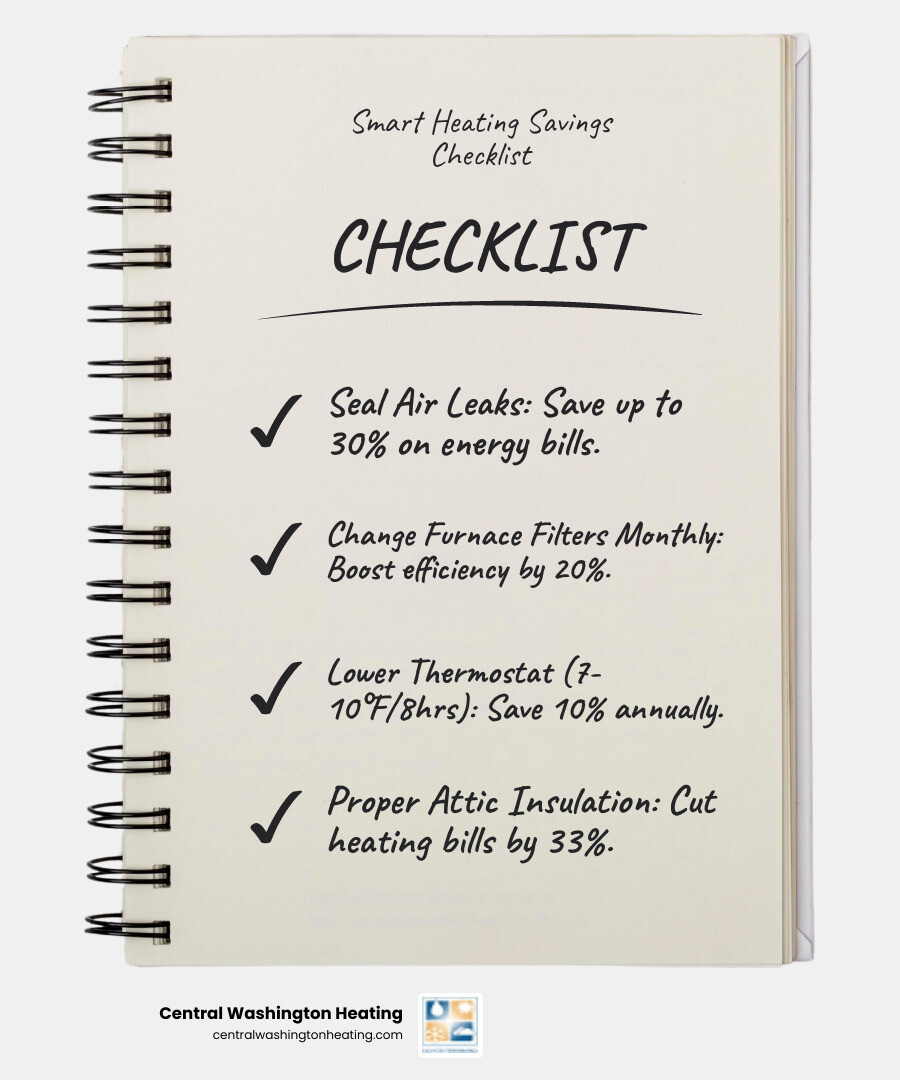
Save on heating terms to remember:
No-Cost & Low-Cost Ways to Lower Your Heating Bill
The best part about learning to save on heating costs? Many of the most effective strategies won’t cost you a dime. Others require just a few dollars and an hour of your time. These simple changes can make a real difference in your monthly bills while keeping your home just as cozy.
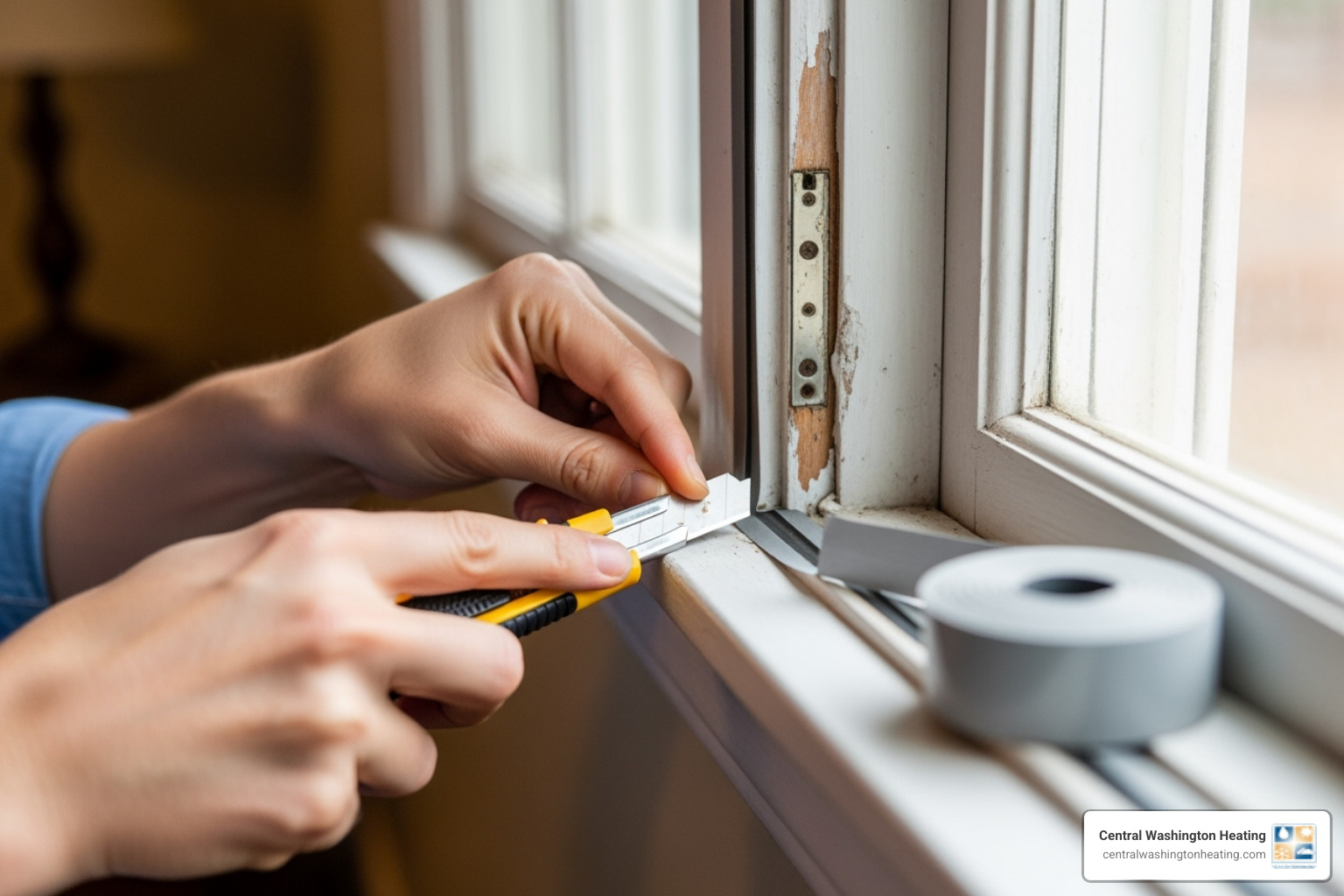
Think of your home as a bucket with holes in it. No matter how much heat your air handler pumps in, if warm air is constantly escaping through cracks and gaps, you’re essentially heating the outdoors. The good news? Finding and fixing these leaks is surprisingly straightforward.
Start by playing detective. Hold a lit incense stick, a ribbon, or even your damp hand near windows, doors, electrical outlets, and baseboards. Any movement or draft reveals where your precious heat is sneaking out. Once you’ve identified the culprits, you can seal them up.
Weatherstripping works beautifully for anything that moves – windows you open and doors you walk through. It creates a tight seal when closed, blocking drafts without getting in your way. For stationary spots like window frames that don’t open or where walls meet trim, caulking provides a permanent solution that lasts for years.
Don’t overlook the bottom of your doors. A simple door sweep or a draft stopper can block cold air from whistling under. And those electrical outlets on exterior walls? They’re sneakier than you’d think. Pop off the cover plates and you’ll feel cold air coming through. Foam outlet gaskets cost less than $10 for an eight-pack and take minutes to install.
Your windows can actually help heat your home during the day. Open those curtains and blinds on south-facing windows when the sun is shining – this passive solar heating is completely free. Just remember to close them at night to add an extra insulating layer against the cold.
Here’s the easiest way to save on heating right now: grab a sweater. Dressing in layers, pulling on thick socks, and keeping a cozy blanket nearby means you can comfortably lower your thermostat by 7-10°F, especially at night or when you’re away. This simple habit can save up to 10% on your annual heating costs. Your wallet will thank you, even if your toes need an extra pair of socks.
DIY Tips to Save on Heating Bills
Ready to roll up your sleeves? A few weekend projects can deliver surprising savings without requiring a contractor.
Those older, drafty windows that rattle in the wind don’t need replacing just yet. Temporary clear plastic film kits create an insulating air gap that acts like a second pane of glass. They’re not the prettiest solution, but they work remarkably well at reducing heat loss until you’re ready for permanent upgrades.
Your hot water system is quietly wasting energy right now. Slip foam sleeves around your hot water pipes, especially in unheated spaces like basements or crawl spaces. This prevents heat from escaping as water travels to your faucets and can save up to $80 per year. As a bonus, it reduces the risk of frozen pipes during cold snaps. Similarly, wrapping an insulation blanket around your water heater can significantly reduce standby heat loss.
Think strategically about which rooms you’re actually using. Closing doors to unused rooms stops your heating system from warming spaces nobody’s occupying. Your air handler can focus its energy where you actually need it.
And here’s a clever trick: reverse your ceiling fan direction in winter. Set it to rotate clockwise at low speed, and it’ll gently push warm air that’s risen to the ceiling back down where you can feel it. It’s a small change that makes a noticeable difference in comfort.
Managing Your Water Heater
While we’re focused on space heating, let’s not forget that water heating is the second-biggest energy user in most homes. A few adjustments here can add up to real savings.
Check your water heater’s thermostat setting. Many are factory-set at 140°F, but lowering it to 120°F is perfectly adequate for most households. You won’t notice a difference in your shower, but you’ll see the impact on your energy bills. For standard boilers with hot water cylinders, aim for 50-60°C (120-140°F) to prevent overheating and reduce heat loss by up to 15%.
If your hot water cylinder is warm to the touch, it’s losing heat constantly. Insulating your hot water cylinder with a blanket and wrapping visible pipes (especially the first few feet from the tank) could slash your hot water bill by up to 40%. That’s a significant return on a small investment.
Be strategic about when you heat water. Instead of keeping it hot around the clock, time your hot water to heat for just a couple of periods daily when you actually need it. This could save another 15% on hot water costs. For combination boilers, optimizing the temperature can help them operate more efficiently in condensing mode, saving up to 8% on hot water bills alone.
Finally, consider installing flow restrictors on shower hoses and aerators on taps. These inexpensive devices limit water flow without a noticeable drop in pressure, reducing hot water consumption by up to 35%. Less hot water used means less energy spent heating it.
For more detailed strategies on managing your heating costs efficiently, check out Save on Heating Costs with ENERGY STAR.
Master Your HVAC System to Save on Heating
Your air handler works hard all winter long, and how well you care for it makes all the difference in your heating bills. Think of your HVAC system as the heart of your home’s comfort – when it’s healthy and well-maintained, everything runs smoothly and efficiently.
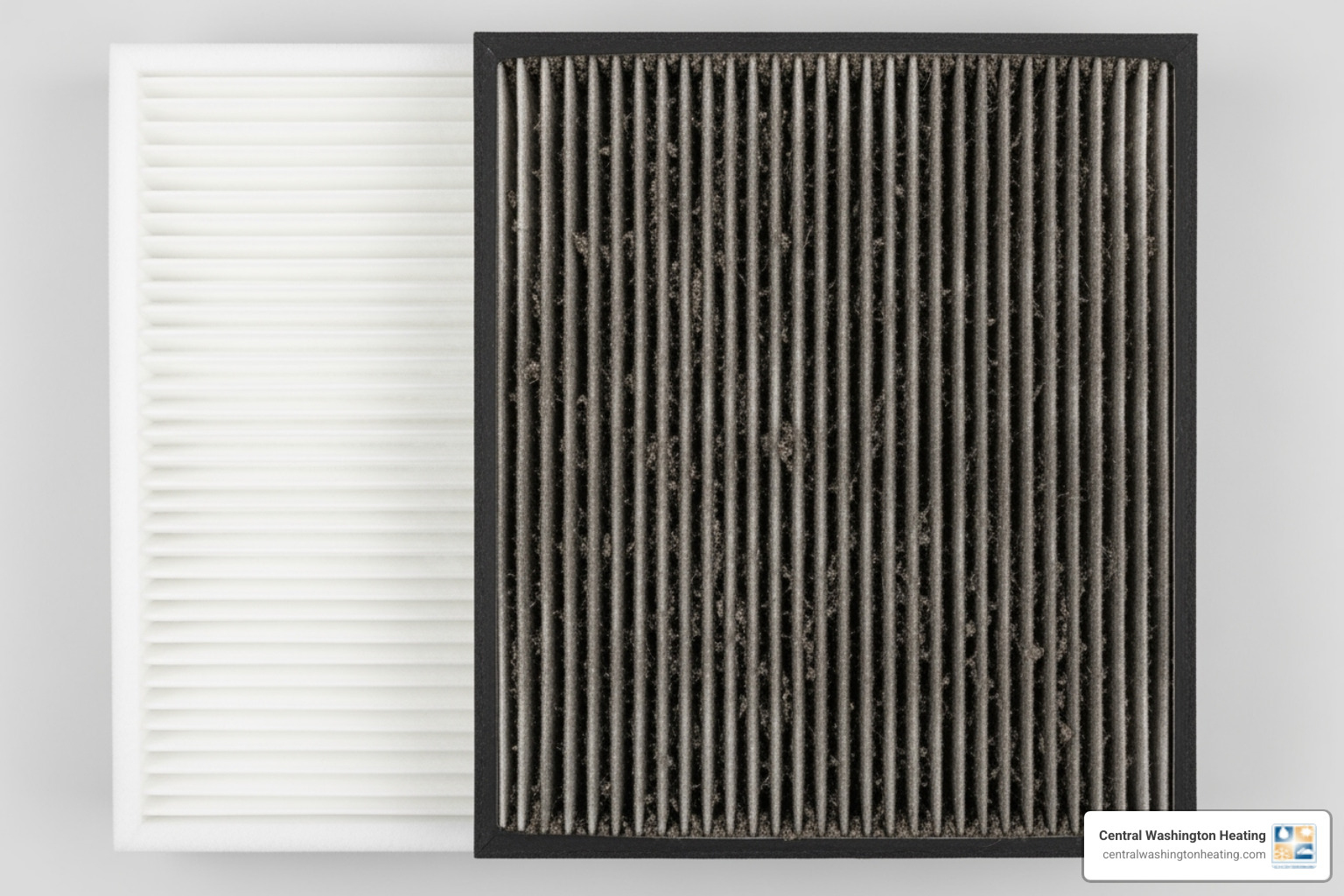
Here’s something that might surprise you: a neglected heat pump can use up to 25 percent more fuel than one that’s properly maintained. That’s like throwing money out the window every time your system kicks on! Regular maintenance doesn’t just save on heating costs – it extends the life of your equipment and prevents those dreaded middle-of-winter breakdowns.
The single most important thing you can do yourself is change your air filters regularly. We recommend checking your filter every month, especially during winter when your system is working overtime. If it looks dirty, replace it. At minimum, swap it out every three months. A clogged filter forces your air handler to strain and work harder, wasting energy and driving up your bills. It’s like trying to breathe through a scarf – exhausting and inefficient.
While changing filters is straightforward, professional tune-ups are where the real magic happens. An annual professional servicing catches small problems before they become expensive emergencies. Your technician will check for everything from airflow issues to safety concerns like electrical safety leaks. These check-ups are an investment that pays for itself in improved efficiency and prevented repairs. Learn more about the Benefits of Regular Air handler Maintenance, and if you’re experiencing issues right now, we’re here to help with Air handler Repair Wenatchee WA.
How Smart Thermostats Help You Save on Heating
Remember the days of manually adjusting your thermostat every time you left the house? Those days are thankfully behind us. Smart thermostats have revolutionized how we manage home comfort and energy use.
Unlike their older programmable cousins that simply follow a rigid schedule, smart thermostats actually learn your habits. They notice when you typically wake up, when you leave for work, and when you prefer to snuggle in for the evening. Then they automatically adjust temperatures to match your lifestyle. Many use geofencing technology, which detects when your phone leaves the area and turns down the heat accordingly. No more heating an empty house all day!
The convenience factor alone is worth celebrating – you can control your home’s temperature from anywhere using your smartphone. Forgot to turn down the heat before your weekend trip? No problem. Want to warm things up before you get home? Done. But the real win is in the savings. ENERGY STAR certified smart thermostats can reduce heating and cooling costs by up to 15 percent, with typical savings around $100 per year for homes with high heating bills. These devices also provide detailed energy usage reports, giving you insights into your consumption patterns and helping you make smarter choices. For help choosing the right model, check out the Smart Thermostat Buying Guidance.
When to Consider an HVAC Upgrade
Sometimes, despite our best maintenance efforts, an aging air handler simply can’t deliver the efficiency we need. How do you know when it’s time to say goodbye to your old system?
Age is the first clue. If your heating system has been faithfully serving you for more than 10 years, newer technology could offer substantial savings. Rising repair costs are another red flag – when you’re calling for fixes multiple times a season, those bills add up fast. Poor performance like inconsistent temperatures or your air handler blowing cold air signals that your system is struggling.
Modern ENERGY STAR certified equipment can cut your annual energy bill by nearly $140 compared to older models. High-efficiency air handlers boast an Annual Fuel Utilization Efficiency (AFUE) of 90% or more, meaning they convert over 90% of their fuel into usable heat. That’s a dramatic improvement over older systems that might waste 20-30% of their fuel.
Here’s something critical: even the best air handler won’t perform well if it’s improperly installed. Poor installation can reduce system efficiency by up to 30 percent, costing you money every month and potentially shortening your equipment’s lifespan. That’s why professional installation isn’t optional – it’s essential. Our team specializes in Air handler Replacement Wenatchee WA and can walk you through Choosing the Best Air handler Installation for your home and budget.
Major Home Improvements for Long-Term Savings
While quick fixes help us save on heating immediately, sometimes the most powerful changes require a bigger commitment. These major home improvements might feel like a stretch initially, but they create lasting comfort and dramatically lower bills year after year. Think of them as gifts to your future self—and your wallet.

Let’s start with something many homeowners overlook: the ductwork hidden in our attics, crawl spaces, and basements. These passages carry heated air throughout our homes, but they’re often poorly sealed and uninsulated. The result? Up to 20 percent of our heated air escapes before it ever reaches our living spaces. That’s like paying to heat our attic instead of our bedroom!
Sealing heating and cooling ducts makes an enormous difference. We should use mastic sealant or metal-backed tape—not standard duct tape, which ironically fails on ducts—to close up leaks at joints and connections. Once sealed, wrapping those ducts with insulation prevents heat from bleeding away as it travels through cold spaces. The payoff is immediate: warmer rooms and lower bills without asking our air handler to work any harder. For professional help with this improvement, our team provides comprehensive Heating Services Wenatchee WA. You can also find detailed guidance through duct sealing information from ENERGY STAR.
The Power of Proper Insulation
If our home were a person, insulation would be its winter coat. Without enough of it, we’re essentially trying to stay warm in a t-shirt during a snowstorm. Heat naturally flows from warm areas to cold ones, and proper insulation is what slows that escape to a crawl.
Attic insulation deserves top priority because warm air rises. If we can see our floor joists in the attic, or if the insulation sits below their level, we’re losing heat by the hour. The stack effect pulls warm air up and out through our roof while drawing cold air in below. Adding adequate insulation—about 300mm of loft insulation—can slash our heating bill by a third. That’s real money staying in our pockets instead of floating up into the winter sky.
Our basement and crawl spaces matter too, though they’re trickier. Uninsulated basement walls can account for up to one-third of total heat loss in the average home. These areas often have complex moisture and ventilation issues, so professional installation usually makes sense here. A certified contractor knows how to insulate these spaces safely without creating problems down the road. The Department of Energy insulation guide offers helpful information about recommended insulation levels for different climates.
Proper insulation doesn’t just save on heating costs—it makes our homes more comfortable. We’ll notice fewer cold spots, less drafts, and more even temperatures throughout every room.
Upgrading to an Air Source Heat Pump
Here’s something exciting: what if one system could heat our home in winter and cool it in summer, all while using far less energy than traditional equipment? That’s exactly what air source heat pumps do, and they’ve become incredibly effective even in our cold Central Washington winters.
An air source heat pump works by moving heat rather than creating it. In winter, it extracts warmth from outdoor air—yes, even when it’s freezing outside—and pumps it inside. In summer, it reverses direction, pulling heat from inside and releasing it outdoors. Think of it as a heat shuttle running back and forth, delivering comfort year-round.
Modern cold climate heat pumps have changed the game for those of us in colder regions. These advanced systems operate efficiently even when temperatures drop well below freezing, making them a practical heating solution rather than just a mild-climate luxury. The energy efficiency benefits are remarkable: switching from an electric air handler or baseboard heating to a cold climate heat pump could cut the heating portion of our electricity bills by up to 50 percent.
Beyond savings, heat pumps offer genuine quality-of-life improvements. They provide consistent, even heating without the blasts of hot air from traditional air handlers. Many models also dehumidify and filter the air, improving indoor air quality. And because they run on electricity rather than burning fuel, they’re a cleaner choice for our environment.
Some homeowners even qualify for government programs or incentives that help with installation costs, making the switch more affordable. If you’re considering a new heating system, we’re here to discuss whether a heat pump fits your home and budget. Our expertise in Air handler Installation Wenatchee WA extends to heat pump systems as well, and we can help you explore all your options for efficient, comfortable heating.
Frequently Asked Questions about Saving on Heating
We get a lot of questions from homeowners about the best ways to save on heating costs. Let’s address some of the most common concerns and clear up any confusion about what actually works.
How much can I really save by weatherizing my home?
The savings from weatherizing can be impressive. When we properly seal air leaks, add insulation, and upgrade our windows and doors, the Department of Energy estimates we’ll see about a 30 percent reduction in our energy bills. That’s real money staying in our pockets each month.
Think about it this way: every gap around a window, every crack in our foundation, every unsealed outlet is like leaving a door cracked open all winter long. When we address these issues, we’re not just saving money—we’re also reducing our environmental impact. Sealing and insulating our ductwork alone can boost our heating and cooling system’s efficiency by up to 20 percent.
The beauty of weatherization is that many of these improvements are affordable and accessible. We’re literally stopping ourselves from heating the great outdoors and focusing that warmth where it belongs—inside our homes with our families.
Is it better to turn my heat down or off when I leave?
This question comes up all the time, and the answer might surprise us. For most situations, turning our heat down is better than turning it off completely when we leave for a few hours.
Here’s why: when we turn our thermostat back by 7°-10°F for about 8 hours a day, we can save on heating costs by up to 10% annually. But if we shut the system off entirely, our home’s temperature plummets. Then when we return, our air handler has to work overtime to bring everything back to a comfortable level. That initial surge can eat up much of the savings we thought we were getting.
Smart thermostats really shine in this scenario. They learn our routines and can automatically adjust temperatures when we’re away, then warm things back up just before we return. It’s the perfect balance of comfort and efficiency.
Now, if we’re heading out for a week-long vacation, that’s different. In that case, we can turn the heat way down or off (just not so low that our pipes risk freezing—that would be a costly mistake). The extended time away makes the energy savings worthwhile.
What is the single most effective way to reduce heating costs?
We wish we could give a simple one-word answer, but the truth is more nuanced. There’s no magic bullet for cutting heating costs. The most significant savings come from combining several strategies that work together.
That said, if we had to focus on the top priorities, here’s where we’d start: Regular HVAC maintenance sits at the foundation. When our heating system receives annual professional tune-ups and we change filters regularly, it operates at peak efficiency. A well-maintained air handler simply doesn’t have to work as hard—or burn as much fuel—to keep us warm.
Sealing air leaks ranks right up there too. This is often something we can tackle ourselves on a weekend, and the return on investment is outstanding. Every draft we eliminate means less heated air escaping and less cold air sneaking in.
Finally, proper insulation acts as our home’s thermal blanket. Whether it’s in our attic, walls, or basement, good insulation keeps the heat where we want it. These three elements—maintenance, air sealing, and insulation—form the core of an effective heating cost reduction strategy.
When we layer in smart thermostat usage, good daily habits like lowering the temperature at night, and maybe some of those DIY improvements we discussed earlier, we create a comprehensive approach that delivers real, lasting savings. No single fix will transform our bills overnight, but together, these strategies make a substantial difference.
Your Partner in a Warmer, More Efficient Home
Throughout this guide, we’ve walked through dozens of practical ways to save on heating costs—from the simplest fixes like hanging a door sweep to major investments like upgrading to a high-efficiency heat pump. The beauty of this approach is that you don’t have to do everything at once. Even small changes add up.
Think of it as building layers of protection for your home and your wallet. Sealing those drafty windows keeps the warmth inside. Regular maintenance ensures your air handler isn’t wasting fuel. A smart thermostat learns your schedule so you’re not heating an empty house. And proper insulation wraps your entire home in a cozy blanket of efficiency.
The key is taking that first step. Maybe it’s changing your air filter today or scheduling a professional tune-up for next week. Perhaps you’ll spend Saturday afternoon applying weatherstripping, or you’ll start researching whether a new heating system makes sense for your home’s future. Every action moves you toward lower bills and greater comfort.
Here at Central Washington Heating, we understand that navigating these decisions can feel overwhelming. That’s exactly why we’re here—to be your trusted partner through every season. Whether you need routine maintenance to keep your current system running smoothly, expert repairs when something goes wrong, or guidance on upgrading to more efficient equipment, our team brings the knowledge and care your home deserves.
We’ve helped countless Central Washington families find the right balance between comfort and cost. From Heating Services Wenatchee WA to specialized expertise in system upgrades, we’re committed to making your home as efficient as it is comfortable.
Ready to start saving on heating costs this season? We’d love to help. You can easily Request Service online or Contact us directly with any questions. For expert advice and professional air handler maintenance in Chelan, WA, our experienced technicians are just a phone call away. Let’s work together to make your home the warm, efficient sanctuary you deserve—without the sky-high heating bills.

Written by the Central Washington Heating and Air team
The techs and comfort advisors who've kept the Wenatchee Valley heated, cooled, and breathing easy for 30+ years — family & veteran owned, with 40+ years of combined industry experience.
- Licensed & insured · LIC# CENTRWH742JN
- Daikin Comfort Pro certified
- Wenatchee, WA
Last updated July 29, 2026
Ready for comfort you can count on?
Schedule service, request a free estimate, or call now for 24/7 emergency help. Our team is standing by across the Wenatchee Valley.
Get started today
Free estimates on installs · no-pressure, written quotes
Schedule My ServiceCall (509) 776-0247Mon–Fri: 8:00 AM – 4:30 PM · 24/7 for emergencies
Already have a quote? Get a free second opinion →