
From Air to Comfort: A Simple Guide to Heat Pump Operation
Learn how heat pumps work for efficient heating & cooling. Explore types, benefits, and FAQs for year-round home comfort.
The All-in-One Climate Solution
How heat pumps work is surprisingly simple: they move heat from one place to another instead of creating it from scratch. Think of them as incredibly efficient heat movers that can work in reverse – cooling your home in summer by moving heat outside, and warming it in winter by extracting heat from outdoor air (yes, even cold air contains heat energy).
Quick Answer: How Heat Pumps Work
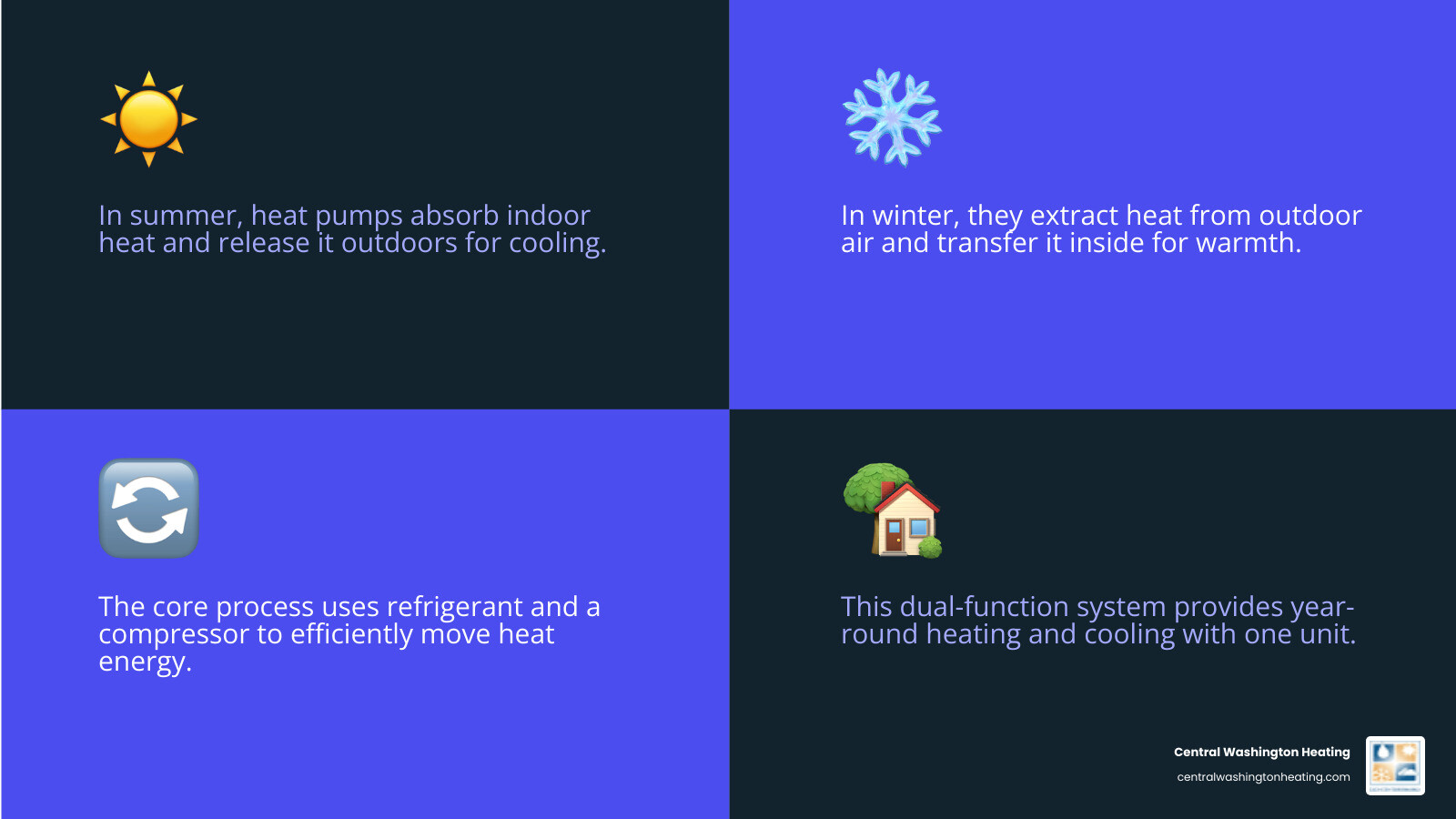
- Summer (Cooling): Absorbs heat from inside your home and releases it outdoors
- Winter (Heating): Extracts heat from outdoor air and transfers it inside
- Key Process: Uses refrigerant and a compressor to move heat energy efficiently
- Dual Function: One system handles both heating and cooling year-round
Unlike traditional systems that burn fuel or use electric resistance to create heat, heat pumps simply transfer existing heat energy. This makes them 2-3 times more energy efficient than conventional heating systems.
The magic happens through a refrigeration cycle – similar to how your refrigerator works, but designed to heat and cool your entire home. A special component called a reversing valve allows the system to switch between heating and cooling modes seamlessly.
For Central Washington homeowners dealing with temperature swings and rising energy bills, heat pumps offer an neat solution: one system that provides year-round comfort while potentially cutting your heating and cooling costs significantly.
How Heat Pumps Work: The Magic of the Refrigeration Cycle
How heat pumps work is actually based on a simple yet brilliant concept: they don’t create heat – they move it around. Think of your heat pump as the ultimate heat thief, stealing warmth from one place and delivering it to another. This heat transfer principle is what makes heat pumps so incredibly efficient, using 2-3 times less energy than traditional heating systems.
The whole operation revolves around something called the refrigeration cycle. Your heat pump uses a special fluid called refrigerant that has an amazing superpower – it can absorb and release massive amounts of heat as it changes from liquid to gas and back again.
Here’s a fun way to think about it: you know how a refrigerator keeps your food cold? It’s not actually making “cold” – it’s stealing heat from inside the fridge and dumping it into your kitchen (that’s why the back of your fridge feels warm). A heat pump works on this exact same principle, but it’s clever enough to work in reverse too.
In summer, your heat pump acts like a giant refrigerator for your whole house, moving hot air outside. In winter, it flips the script and becomes a “reverse refrigerator,” pulling heat from outdoor air and bringing it inside. Even when it’s freezing outside, there’s still plenty of heat energy in the air – your heat pump is just really good at finding it and bringing it indoors.
This year-round operation means you get both heating and cooling from one system. Pretty neat, right? For a deeper dive into the technical details, check out this resource on How Does a Heat Pump Work? | Eversource.
Key Components of a Heat Pump System
To understand how heat pumps work, let’s meet the key players that make this magic happen. Each component has an important job in the heat-moving process:
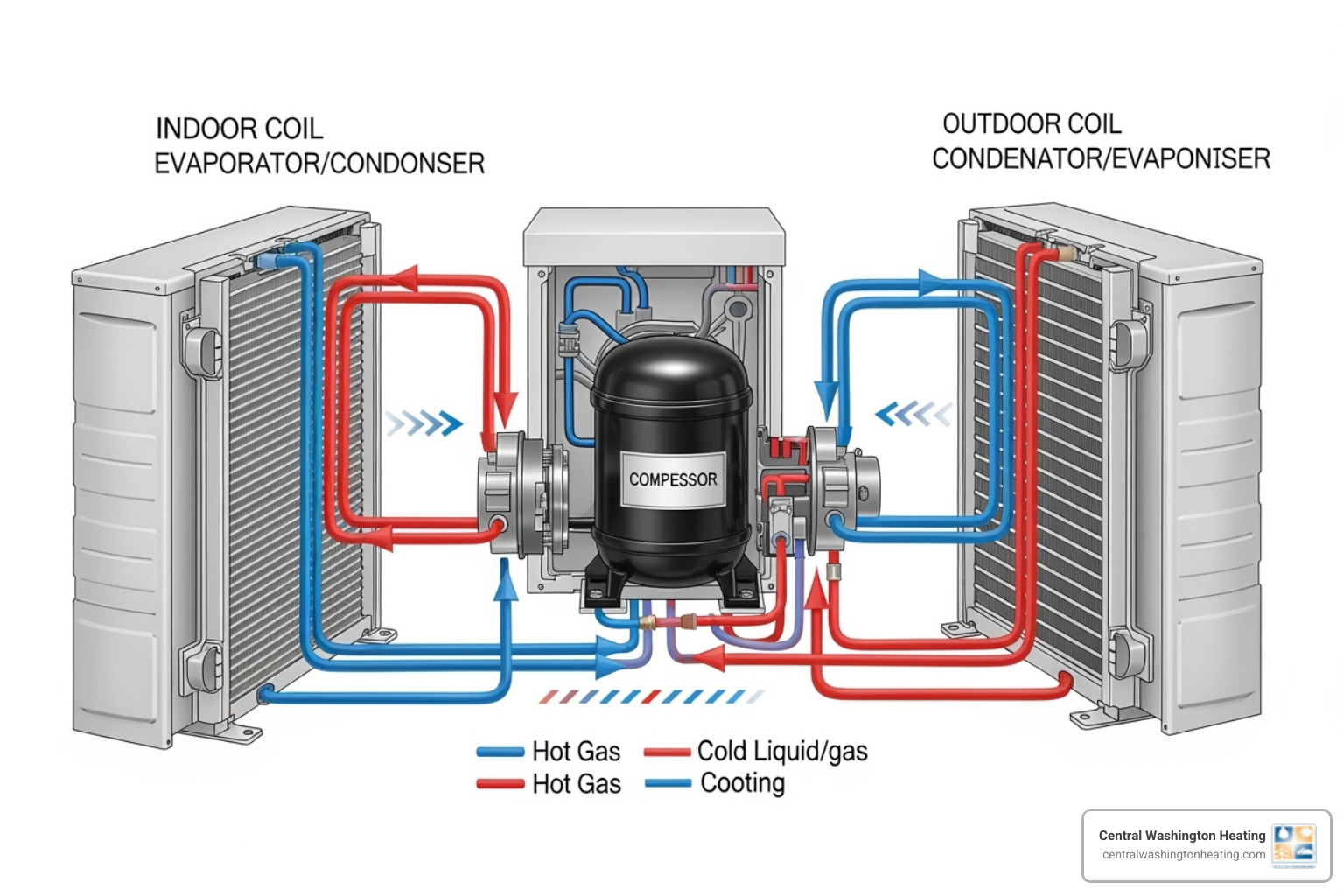
The outdoor unit sits outside your home and does the heavy lifting of exchanging heat with outdoor air. Inside, you’ll find the indoor unit (also called an air handler) that distributes the conditioned air throughout your home, usually through your existing ductwork.
The star of the show is the refrigerant – this special fluid flows through the entire system, soaking up heat in one place and releasing it in another. The compressor acts like the heart of the system, pumping and pressurizing the refrigerant to make the whole process work.
What makes a heat pump different from a regular air conditioner is the reversing valve – this clever device can flip the direction of refrigerant flow, switching between heating and cooling modes. The evaporator and condenser coils are where the actual heat exchange happens, and they literally swap jobs depending on whether you’re heating or cooling.
Finally, the expansion valve controls the pressure of the refrigerant as it moves through the system, ensuring everything operates smoothly and efficiently.
Cooling in the Summer: How a Heat Pump Works Like an AC
When summer heat hits Central Washington, your heat pump switches into cooling mode and works exactly like a traditional air conditioner. The process is all about absorbing indoor heat and releasing it outdoors.
Here’s what happens: warm air from your home flows over the cold indoor coil, where the refrigerant eagerly absorbs all that unwanted heat. As the refrigerant soaks up the heat, it transforms from a liquid into a gas and travels outside to the compressor.
The compressor squeezes this gaseous refrigerant, making it even hotter and sending it to the outdoor coil. A fan blows outdoor air over this hot coil, allowing the refrigerant to dump all that absorbed heat outside. As it releases the heat, the refrigerant cools down and turns back into a liquid, ready to head back inside and repeat the cycle.
One bonus feature of modern heat pumps is superior dehumidification. High-efficiency heat pumps also dehumidify better than standard air conditioners, so your home feels more comfortable and less sticky. If you’re experiencing temperature differences throughout your house, our guide on Solving Uneven Cooling Issues with Heat Pump can help.
Heating in the Winter: How a Heat Pump Works to Warm Your Home
This is where how heat pumps work gets really interesting. When winter arrives, the reversing valve flips the entire process around. Now your heat pump becomes a heat detective, extracting heat from cold air outside and bringing it indoors.
“But wait,” you might think, “how can you get heat from cold air?” Here’s the secret: even freezing air contains heat energy. As long as the temperature is above absolute zero (which is -460°F), there’s heat to be found. Your heat pump is just really good at finding it.
The outdoor coil now becomes the heat collector, with refrigerant flowing through it that’s even colder than the outside air. As outdoor air blows over this coil, the refrigerant absorbs whatever heat is available and turns into a gas. The compressor then squeezes this gas, dramatically increasing its temperature – hot enough to warm your entire home.
This hot, pressurized refrigerant flows to the indoor coil, where it releases heat indoors to keep you cozy. A fan circulates your home’s air over this warm coil, distributing comfortable heat throughout your living space.
Thanks to cold climate technology, today’s heat pumps are incredibly capable. Consumer Reports writes, heat pumps “can keep your home toasty even amid bone-chilling cold”, with some models working efficiently even when temperatures drop to -22°F. If you notice any unusual behavior from your system, our Troubleshoot Heat Pump Issues guide can help you identify common problems.
Types of Heat Pumps: Finding the Right Fit for Your Home
Understanding how heat pumps work is just the first step – now comes the fun part of choosing which type best suits your Central Washington home! Think of it like picking the perfect winter coat: you want something that fits your lifestyle, works with what you already have, and keeps you comfortable no matter what Mother Nature throws your way.
The good news? While the core principle of moving heat around stays the same, heat pumps come in several varieties designed for different situations. Whether you’re working with existing ductwork, dealing with a home addition, or facing those occasional brutal Central Washington winters, there’s likely a heat pump solution that’s just right for you. Our team offers comprehensive Heat Pump Services Wenatchee WA to help guide you through these options and find your perfect match.
Air-Source Heat Pumps
When most people think about heat pumps, they’re picturing air-source models – and for good reason! These workhorses are the most popular type because they’re incredibly versatile and effective in a wide range of climates. As their name suggests, they transfer heat between your house and the outside air.
Ducted systems are perfect if you already have ductwork from an existing air handler or central air system. They work through the same familiar vents and registers you’re already used to, providing whole-home comfort without any major changes to how air flows through your house. It’s like upgrading your car’s engine while keeping the same body – everything looks and feels familiar, but performs much better.
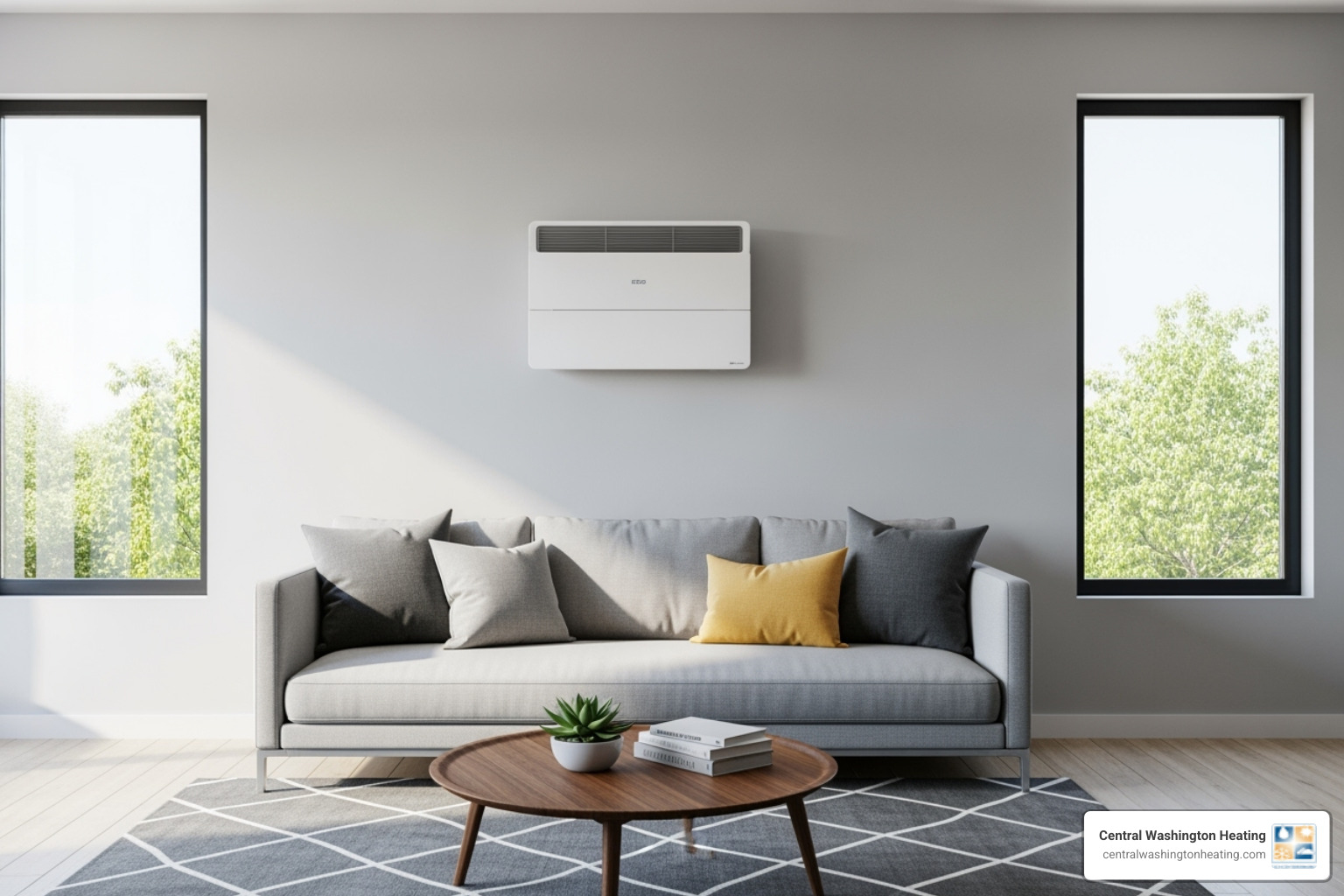
Ductless (mini-split) systems are where things get really interesting! These clever setups consist of an outdoor unit connected to one or more sleek indoor units that mount on walls or ceilings. No ductwork? No problem! Adding a room addition? Perfect solution!
The real magic of ductless systems lies in their zoned comfort capabilities. Each indoor unit can be controlled independently, so you can keep the living room cozy at 72°F while letting the guest bedroom stay cooler. This means you’re only conditioning the spaces you’re actually using, which translates to real energy savings. Plus, no more family arguments about the thermostat – everyone gets their own! The Advantages of Mini Split AC systems make them increasingly popular with homeowners who want precise control over their comfort.
Geothermal (Ground-Source) Heat Pumps
While air-source heat pumps are busy extracting heat from the ever-changing outdoor air, geothermal systems take a completely different approach. They tap into one of nature’s most reliable resources: the stable ground temperature that exists just a few feet beneath your yard.
Here’s what makes this so clever: while the air temperature might swing from scorching summer heat to freezing winter cold, the ground maintains a remarkably consistent temperature year-round. It’s like having a natural battery of thermal energy right under your feet!
Geothermal systems use underground loops filled with a circulating liquid to exchange heat with the earth. In winter, this liquid absorbs heat from the warmer ground and brings it to your home. Come summer, the process flips, pulling heat from your house and depositing it into the cooler ground. It’s like having the earth itself as your personal climate control partner.
The standout benefit of geothermal heat pumps is their exceptional high efficiency. Because they’re working with such stable ground temperatures, they don’t have to work nearly as hard as air-source units. In fact, ENERGY STAR-certified heat pumps use 61% less energy compared to standard models when it comes to geothermal systems! While the initial installation involves more excavation work for those underground loops, the long-term savings in energy bills often make the investment worthwhile for many homeowners.
Hybrid (Dual-Fuel) Systems
Sometimes the best solution combines the strengths of two different approaches. Enter hybrid systems – the Swiss Army knife of home heating! These smart setups pair an efficient electric heat pump with a air handler, typically running on electric auxiliary heat or electric auxiliary heat.
Here’s how heat pumps work in a hybrid setup: For most of the year, especially during those mild Central Washington days, the heat pump handles both heating and cooling with its superior energy efficiency. But when temperatures really plummet – say, below 25°F – the system features automated switching that kicks in the air handler to take over heating duties.
This tag-team approach ensures you always have reliable warmth, even during extreme cold performance conditions, while still maximizing energy savings during the heat pump’s sweet spot. It’s like having a fuel-efficient car for daily driving and a pickup truck for when you need to haul something heavy – you get the best tool for each job automatically.
The beauty of hybrid systems lies in their intelligence. You don’t have to think about when to switch between systems – it happens seamlessly based on outdoor temperature and efficiency calculations. Just remember that the air handler component still needs attention, so don’t forget about the Benefits Regular Air handler Maintenance to keep your backup heating running smoothly.
The Benefits of a Heat Pump: Efficiency, Savings, and Sustainability
Now that we’ve demystified how heat pumps work, let’s talk about why they’re becoming the go-to choice for homeowners seeking efficient, comfortable, and environmentally friendly climate control. While there’s an upfront investment, the long-term value heat pumps offer is truly compelling.

Best Energy Efficiency
Here’s where heat pumps really shine – and it all comes back to that fundamental principle of how heat pumps work. Instead of burning fuel or using electric coils to create heat from scratch, they simply relocate existing heat energy. It’s like the difference between manufacturing a product versus just moving it from one warehouse to another – moving is always going to be more efficient!
For every unit of electricity a heat pump consumes, it can deliver two to three times more heat output than it uses in energy input. In ideal conditions, some heat pumps can even achieve efficiency ratings of 400-500%! Compare that to traditional electric resistance heating (like baseboard heaters), which maxes out at 100% efficiency.
This incredible efficiency translates to reduced electricity use – we’re talking about potential savings of up to 75% on your heating bills compared to electric resistance systems. When shopping for a heat pump, you’ll see efficiency ratings like SEER for cooling performance and HSPF for heating performance. Higher numbers mean greater efficiency, which means more comfort for less energy.
Year-Round Comfort and Improved Air Quality
Beyond the impressive energy savings, heat pumps deliver a superior living experience that many homeowners absolutely love once they make the switch.
The single system solution means you’re done juggling separate heating and cooling equipment. One heat pump handles everything, which simplifies maintenance schedules and can even free up valuable space in your home. No more coordinating service calls for two different systems!
Heat pumps excel at consistent temperature control, avoiding those uncomfortable temperature swings that traditional air handlers often create. You know that cycle – air handler kicks on, house gets toasty, air handler shuts off, house gradually cools down until it kicks on again. Heat pumps maintain steadier temperatures, creating a more comfortable environment throughout your home.
Here’s a bonus that many people don’t expect: superior dehumidification. High-efficiency heat pumps remove moisture from your indoor air more effectively than standard central air conditioners. During those muggy Central Washington summers, this means your home doesn’t just feel cooler – it feels less sticky and more pleasant overall. For even better indoor air quality, consider pairing your heat pump with our recommendations for Essential Benefits of Whole Home Air Filtration.
Potential Considerations
While heat pumps offer tremendous advantages, it’s important to go in with realistic expectations about a few key factors.
The upfront investment can sometimes be higher than traditional air handler or AC installations. However, this initial expense is typically offset by significant long-term energy savings, plus many areas offer rebates or incentives that help reduce the initial investment.
Proper sizing is absolutely crucial for heat pump performance. An undersized unit will struggle to keep your home comfortable during extreme weather, while an oversized system will cycle on and off too frequently, reducing both efficiency and equipment lifespan. This is where professional expertise becomes invaluable.
Professional installation isn’t just recommended – it’s essential. Heat pump systems involve refrigerant handling, electrical connections, and precise calibration that require certified HVAC technicians. Proper installation ensures your system operates safely and at peak efficiency from day one. Once installed, regular Preventative Heat Pump Maintenance keeps your system running smoothly and efficiently for years to come.
Frequently Asked Questions about Heat Pump Operation
When homeowners first learn how heat pumps work, they naturally have questions. After years of helping Central Washington families make the switch, we’ve noticed the same concerns come up again and again. Let’s clear up some of the most common misconceptions and provide you with straight answers.
At what temperature does a heat pump stop being effective?
Here’s where old myths meet modern reality! If you’ve heard that heat pumps become useless once temperatures drop below freezing, you’re thinking of heat pump technology from decades past. Those older systems did struggle when Jack Frost came calling, but today’s heat pumps are completely different animals.
Modern cold-climate heat pumps are specifically engineered to laugh in the face of winter weather. Thanks to incredible advances like variable-speed compressors, improved refrigerants, and smarter controls, these systems are designed to operate efficiently in sub-zero temperatures. We’re talking about models that can function effectively down to temperatures as low as -22°F – that’s colder than most Central Washington winters will ever throw at you!
Yes, their efficiency does decrease slightly as temperatures plummet (physics is physics, after all), but they certainly don’t stop working. The key is choosing the right cold-climate model and having it properly installed by professionals who understand your local weather patterns.
Do heat pumps bring in outside air?
This is one of those questions that makes perfect sense when you think about how heat pumps work – after all, they’re doing something with that outdoor air, right? But here’s the thing: heat pumps don’t actually bring outside air into your home.
Think of it like this: your heat pump operates more like a magical heat messenger than an air delivery service. It circulates and conditions the air that’s already inside your cozy home, passing it over the indoor coil to either warm it up or cool it down. The outdoor unit is busy exchanging heat with the ambient outdoor air through the refrigerant system, but that outdoor air stays outside where it belongs.
The heat transfer happens through the refrigerant flowing between the coils – it’s like having a thermal telephone line between indoors and outdoors. The refrigerant carries the heat messages back and forth, but the actual air stays put on its respective side of your walls.
Is a heat pump noisy?
Nobody wants their peaceful evening disrupted by a mechanical symphony in their backyard. The good news is that modern heat pumps are designed with your tranquility in mind. Most newer models run more quietly than traditional air conditioners, and often quieter than the blower fan on a typical air handler.
Manufacturers have made remarkable strides in noise reduction over the years. They’ve developed quieter compressors, improved fan blade designs, and added sound-dampening materials. Many homeowners are pleasantly surprised by how whisper-quiet their new heat pump operates.
However, if your heat pump starts making loud or unusual sounds – like persistent buzzing, humming, grinding, or banging – that’s your system trying to tell you something’s not quite right. These noises often indicate issues that need professional attention sooner rather than later. Our guide on Heat Pump Making Buzzing or Humming Sounds can help you identify what those sounds might mean and when it’s time to call in the experts.
Is a Heat Pump Right for Your Central Washington Home?
After exploring how heat pumps work, you might be wondering if this technology is the right fit for your home. The answer for most Central Washington homeowners is a resounding yes! These remarkable all-in-one systems offer a perfect solution for our region’s climate, where we need reliable cooling during hot summers and efficient heating when winter temperatures drop.
The beauty of understanding how heat pumps work lies in recognizing their incredible versatility. Unlike traditional systems that force you to choose between a air handler for heating and an air conditioner for cooling, a heat pump handles both jobs with impressive efficiency. This means fewer systems to maintain, more space in your utility room, and the convenience of year-round comfort from a single solution.
From an environmental perspective, heat pumps represent a genuinely eco-friendly choice. By moving existing heat rather than burning fossil fuels or using energy-hungry electric resistance heating, you’re significantly reducing your home’s carbon footprint. It’s one of those rare situations where doing the right thing for the planet also saves you money on utility bills.
The importance of professional installation cannot be overstated when it comes to heat pumps. These sophisticated systems require precise sizing calculations, proper refrigerant handling, and expert setup to deliver their promised efficiency and comfort. A system that’s too small will struggle to keep up with demand, while an oversized unit will cycle on and off too frequently, wasting energy and reducing its lifespan.
Our team at Central Washington Heating brings years of expertise to every installation, ensuring your heat pump system is perfectly matched to your home’s unique needs. We understand the local climate challenges and can guide you through the process from initial consultation to ongoing maintenance. For expert advice and professional heat pump installation in Chelan, WA, contact our team today.
Ready to take the next step? Our comprehensive guide on Understanding Heat Pump Installation can help you prepare for the process and understand what to expect. We’re here to ensure your home stays comfortable, efficient, and healthy for years to come.

Written by the Central Washington Heating and Air team
The techs and comfort advisors who've kept the Wenatchee Valley heated, cooled, and breathing easy for 30+ years — family & veteran owned, with 40+ years of combined industry experience.
- Licensed & insured · LIC# CENTRWH742JN
- Daikin Comfort Pro certified
- Wenatchee, WA
Last updated July 29, 2026
Ready for comfort you can count on?
Schedule service, request a free estimate, or call now for 24/7 emergency help. Our team is standing by across the Wenatchee Valley.
Get started today
Free estimates on installs · no-pressure, written quotes
Schedule My ServiceCall (509) 776-0247Mon–Fri: 8:00 AM – 4:30 PM · 24/7 for emergencies
Already have a quote? Get a free second opinion →