
Cooling & Heating Face-Off: Heat Pump, AC, and Air handler Compared
"Heat pump vs AC": Choose wisely! Compare efficiency, climate suitability & cost for your home's heating & cooling.
Understanding Your Home Comfort Options
When comparing Heat pump vs AC systems, the key difference is functionality: heat pumps provide both heating and cooling in one unit, while air conditioners only cool and require a separate air handler for heating.
Quick Comparison:
- Heat Pump: All-in-one heating and cooling system that transfers heat rather than generating it
- Air Conditioner + Air handler: Separate systems – AC for cooling, air handler for heating
- Energy Efficiency: Heat pumps are typically 3x more efficient at heating than traditional systems
- Climate Suitability: Heat pumps excel in moderate climates; AC + air handler better for extremely cold regions
- Lifespan: AC units last 15-20 years; heat pumps last 10-15 years due to year-round use
For Central Washington homeowners, this choice affects your comfort, energy bills, and long-term maintenance needs. More than half of home energy use goes to heating and cooling, making this decision crucial for your household budget.
Heat pumps work by transferring existing heat from outside air (even in cold weather) rather than generating heat like a air handler. This fundamental difference explains why they can reduce electricity use for heating by about 50% compared to traditional systems.
The right choice depends on your local climate, existing home infrastructure, and whether you prioritize an all-in-one solution or prefer specialized systems for heating and cooling.
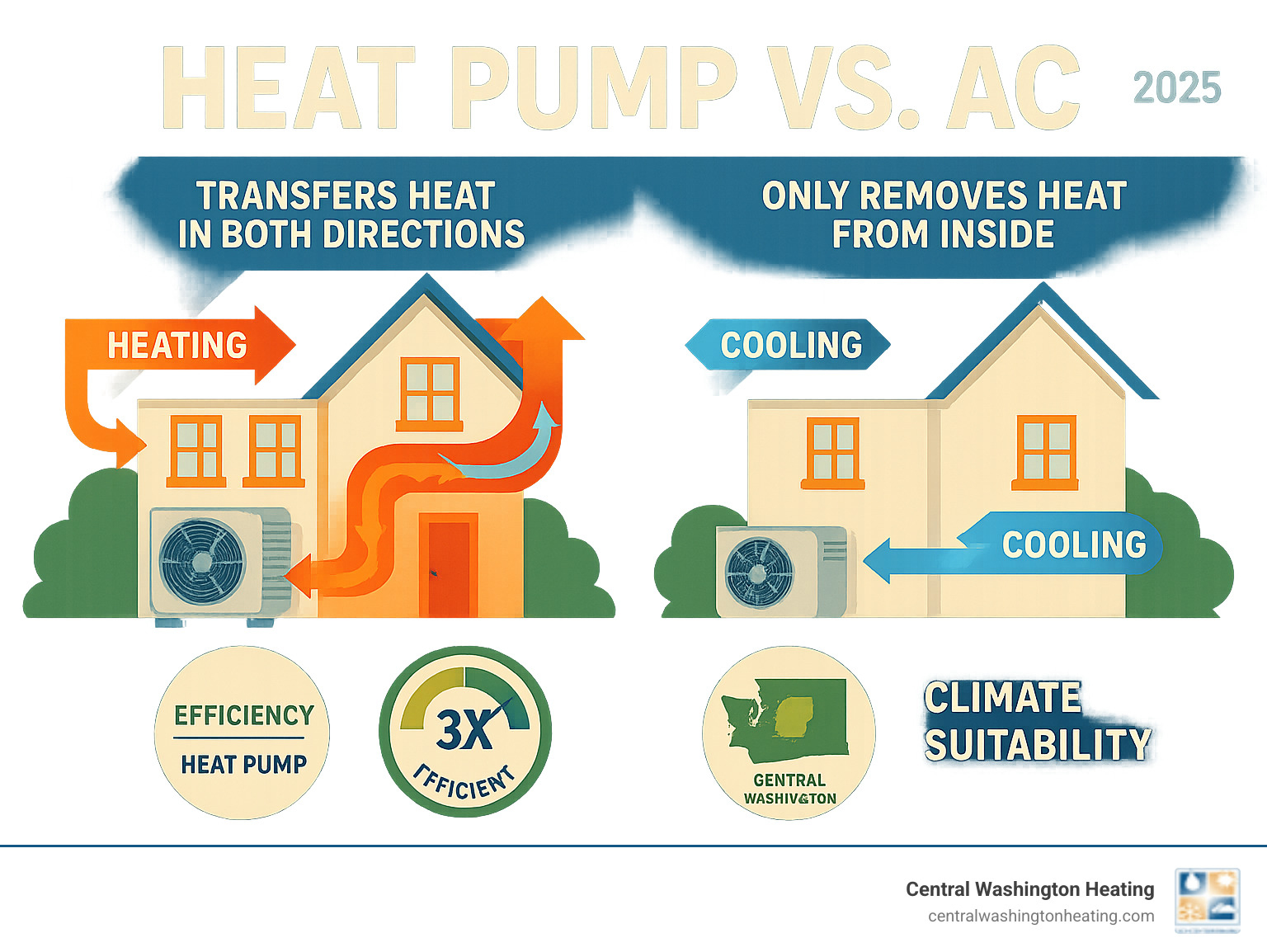
How HVAC Systems Work: The Fundamental Differences
Understanding how your home comfort system operates is the first step in making an informed decision. While both heat pumps and traditional air conditioners aim to keep your indoor environment pleasant, their fundamental methods of achieving this comfort are quite different. It’s a bit like comparing a multi-tool to a specialized hammer and screwdriver – both get jobs done, but in distinct ways!
The core distinction lies in how they handle heat. A heat pump’s superpower is its ability to simply move heat from one place to another, rather than creating it. This concept is incredibly efficient. Traditional air conditioners, on the other hand, are designed specifically to remove heat.
Both systems use a refrigerant cycle, which is a closed loop where a special fluid (refrigerant) circulates, absorbing and releasing heat as it changes states between liquid and gas. This is the common ground where their paths diverge.
Air Conditioner and Air handler Operation
Let’s start with the classic combo: an air conditioner paired with a air handler.
An AC unit is a cooling-only system. When the Central Washington summer heats up, your AC springs into action to provide relief. It works by drawing warm, humid air from inside your home across a cold indoor coil (the evaporator coil). The refrigerant inside this coil absorbs the heat and humidity from the air, cooling it down. This now-cooled air is then circulated back into your home, making you feel refreshed. The heat absorbed by the refrigerant is then carried outside to the outdoor coil (the condenser coil), where it’s released into the ambient air. This process repeats until your desired indoor temperature is reached. It’s a one-way street for heat – always out!
For heating, a separate air handler takes over. Air handlers typically operate by burning a fuel source, such as electric auxiliary heat, electric auxiliary heat, or oil, to generate heat. This heat is then transferred to a indoor coil, and a fan blows air across the heated exchanger, distributing warm air throughout your home via ductwork. So, in this setup, you have two distinct systems, each specialized for its particular task: cooling in summer and heating in winter. If you’re curious about the ins and outs of getting one installed, you can find More info about AC Installation on our site.
Heat Pump Operation
Now, let’s talk about the versatile heat pump. This system is truly a marvel of engineering because it’s a dual-function unit, capable of both cooling and heating your home. Think of it as an all-in-one comfort solution for year-round climate control.
In cooling mode, a heat pump operates almost identically to a traditional air conditioner. It extracts heat from your indoor air and releases it outdoors, effectively cooling your home during those warm Central Washington days.
The magic happens in heating mode. Unlike a air handler that generates heat, a heat pump simply reverses its process. It absorbs heat from the outdoor air, even when temperatures are quite chilly, and transfers that heat indoors to warm your home. How does it do this? With a special component called a reversing valve. This valve allows the refrigerant to flow in the opposite direction, enabling the system to either absorb heat from inside and release it outside (cooling) or absorb heat from outside and release it inside (heating).
This ability to extract ambient heat from the air, even in colder temperatures, is what makes heat pumps so energy-efficient. They’re not creating heat; they’re just moving it from where it’s not needed to where it is. It’s like borrowing warmth from nature! To dig deeper into this fascinating technology, check out our guide on How Heat Pumps Work.
Heat Pump vs AC: A Detailed System Comparison
When we dig deeper into the Heat pump vs AC debate, three critical factors emerge that can make or break your comfort and budget: energy efficiency, how well they handle Central Washington’s unique climate, and their long-term durability. These aren’t just technical specifications – they’re the real-world differences that affect your daily comfort and monthly utility bills.
Energy Efficiency and Environmental Impact
Here’s where heat pumps really show off! The efficiency advantage is remarkable. According to U.S. Department of Energy research on heat pump savings, they can reduce your electricity use for heating by about 50% compared to traditional air handlers and baseboard heaters. Think about it this way: they’re not working harder, they’re working smarter by moving heat instead of creating it from scratch.
The numbers tell an impressive story. Heat pumps can produce 3 to 4 times more heat energy than the electricity they consume, making them up to 75% more efficient than conventional electrical heating systems. It’s like getting four dollars of heating for every dollar you spend!
Understanding the efficiency ratings helps you make sense of what you’re buying. SEER ratings measure cooling efficiency for both heat pumps and air conditioners – the higher the number, the more efficient your cooling. HSPF ratings are specific to heat pumps and measure their heating performance. Then there’s the COP (Coefficient of Performance), which shows how much heat output you get per unit of energy input. Modern heat pumps can achieve a COP of 4, meaning they’re incredibly efficient at their job.
The environmental benefits are equally compelling. Because heat pumps transfer existing heat rather than burning fuel to generate it, they have a significantly lower carbon footprint. This advantage becomes even more pronounced when your electricity comes from renewable sources. Plus, heat pumps naturally dehumidify your air more effectively than standard AC units, creating a more comfortable indoor environment while using less energy overall.
For homeowners ready to maximize these efficiency benefits, our guide on Understanding Heat Pump Installation provides valuable insights into getting the most from your system.
Climate Suitability for Central Washington
Central Washington’s diverse climate – from scorching summer days to snowy winter nights – creates unique challenges for any HVAC system. The good news is that both options can work well here, but each has its sweet spot.
Heat pumps thrive in moderate climates, and much of Central Washington fits this description perfectly. During our mild winters and hot summers, a single heat pump system can handle both heating and cooling duties efficiently. It’s like having a year-round comfort companion that adapts to whatever Mother Nature throws at us.
But let’s be honest about cold weather performance. While modern cold-climate heat pumps have made incredible advances – many can extract heat from air temperatures as low as -15°F – they do work harder as it gets colder. When temperatures drop significantly, your heat pump might call for backup from supplemental heat sources like electric resistance coils or auxiliary heat strips.
For homes that experience Central Washington’s coldest winter snaps, dual-fuel systems offer the best of both worlds. Picture this: your heat pump handles the majority of your heating and all your cooling throughout the year, operating at peak efficiency. But when temperatures plummet below a preset point (typically around 20-30°F), a traditional air handler automatically takes over to provide robust, reliable warmth. You get efficiency when you can and reliability when you need it most.
During our hot summers, both heat pumps and traditional air conditioners excel at keeping you cool and comfortable. The choice here often comes down to your heating needs and overall efficiency goals rather than cooling performance.
If you’re weighing these climate considerations for your specific situation, our resource on Choosing the Right AC System can help guide your decision.
Lifespan & Maintenance: Heat Pump vs AC Durability
When you’re investing in home comfort, you want to know what you’re getting for your money over the long haul. The durability comparison between Heat pump vs AC systems reveals some interesting trade-offs.
Air conditioners typically enjoy longer lifespans, averaging 15 to 20 years of reliable service. Why? They get to take a break! Since they only work during cooling season, they experience less wear and tear over their lifetime. It’s like having a seasonal job – less stressful, longer career.
Heat pumps, on the other hand, are the workhorses of the HVAC world, operating year-round to keep you comfortable. This dedication comes with a trade-off: they typically last 10 to 15 years. They’re essentially doing double duty – both heating and cooling – which means they accumulate operational hours roughly twice as fast as a seasonal AC unit.
The maintenance schedules reflect these different workloads. Air conditioners benefit from annual professional service, usually a spring tune-up before the cooling season begins. This preventive care helps catch small issues before they become expensive problems, and you can learn more about the Benefits of Regular AC Maintenance on our blog.
Heat pumps, being year-round systems, typically need biannual professional service – spring preparation for cooling season and fall preparation for heating season. While this might seem like more maintenance, it’s really just proportional to their increased workload. Think of it as caring for a car that drives twice as many miles per year.
The key to maximizing any system’s lifespan is consistent, proper maintenance. Regular filter changes, professional tune-ups, and addressing minor issues promptly can significantly extend your investment’s life, regardless of which system you choose. Our team is ready to help with your Heat Pump Maintenance needs to keep your system running efficiently year after year.
Making the Right Choice for Your Home
Choosing the right system for your Central Washington home isn’t just about picking between heat pump vs AC – it’s about finding the perfect match for your unique situation. Think of it like choosing the right vehicle: a versatile SUV might be perfect for one family, while another might prefer a specialized truck and car combo.
Your decision comes down to several key factors that work together to determine what makes the most sense for your home. Your climate plays a huge role – the temperature swings you experience throughout the year will heavily influence which system performs best. Your existing system matters too, especially if you have a newer air handler that’s still running strong.
Then there are your efficiency goals – how important are energy savings and reducing your environmental footprint? Your home’s insulation is another piece of the puzzle, since well-insulated homes don’t work their HVAC systems as hard. Finally, consider the long-term value by weighing upfront considerations against ongoing operational savings and how long each system will serve you faithfully.
When to Choose a Heat Pump
A heat pump often emerges as the winner when you’re looking for simplicity, efficiency, and year-round comfort from a single system. It’s like having a Swiss Army knife for your home’s climate control!

Heat pumps shine brightest when your Central Washington home experiences mild to moderate winters where temperatures don’t consistently plummet far below freezing for weeks on end. In these conditions, a heat pump can efficiently extract heat from the outdoor air, keeping your home cozy while using significantly less energy than traditional heating methods.
If energy savings are a priority for your family, a heat pump’s efficiency is hard to beat. Since it transfers existing heat rather than generating new heat, it can slash your heating electricity use dramatically. This translates to lower utility bills and a smaller carbon footprint – a win for both your wallet and the environment.
The convenience factor is huge too. Having one system handle both heating and cooling means seamless transitions between seasons. No more coordinating maintenance schedules for separate systems or dealing with different equipment breaking down at inconvenient times. Your heat pump simply switches modes as needed, maintaining consistent comfort year-round.
Heat pumps are particularly smart choices when you’re replacing both an aging air handler and AC unit. Instead of installing two separate systems, you get one streamlined solution that often provides better indoor air quality and more consistent temperatures than traditional setups. If this sounds like your ideal scenario, exploring Heat Pump Installation might be your next best step.
When an Air Conditioner and Air handler is a Better Fit
Sometimes the tried-and-true combination of a dedicated air conditioner and air handler is exactly what your Central Washington home needs. There’s definitely wisdom in having specialized tools for specific jobs!
The AC and air handler combo really shines when your area experiences extremely cold winters with temperatures that frequently dive well below freezing for extended periods. In these harsh conditions, a air handler’s ability to generate powerful, consistent heat becomes invaluable. While modern heat pumps have improved dramatically in cold weather performance, a air handler still delivers that robust, reliable warmth when Mother Nature throws her worst at you.
If you already have a newer, reliable air handler that’s been keeping your family comfortable, it often makes more financial sense to pair it with a dedicated air conditioner rather than replacing both systems. Why fix what isn’t broken? This approach lets you upgrade your cooling while keeping your proven heating solution in place.
Some homeowners simply prefer specialized systems that excel at their specific functions. There’s something reassuring about having a air handler designed purely for heating and an AC unit focused solely on cooling. Each system can be optimized for its particular job, and if one needs repair, you still have the other system operational.
The powerful heating that air handlers provide is also ideal if maintaining very warm indoor temperatures during winter is your top priority. Air handlers don’t rely on extracting heat from cold outdoor air – they generate their own heat, delivering consistent performance regardless of how frigid it gets outside.
Even with a traditional setup, keeping your systems running smoothly is essential. If your AC starts acting up during those hot Central Washington summers, our team is ready for your AC Repair needs.
Frequently Asked Questions about Heat Pumps and ACs
We hear a lot of great questions from homeowners trying to make the best decision for their comfort. Let’s tackle some of the most common ones about Heat pump vs AC systems – these are the questions that come up time and again when families are weighing their options!
Can a heat pump effectively replace both an air conditioner and a air handler?
Yes, in many climates, a heat pump is an all-in-one solution for heating and cooling. This means you can say goodbye to having two separate systems and hello to streamlined comfort! A single heat pump unit can handle both your summer cooling needs and your winter heating requirements.
However, in very cold regions like parts of Central Washington, it might be paired with a supplemental heat source for optimal performance during the coldest days. This creates what we call a dual-fuel system. Think of it as having a reliable backup dancer ready to step in when the main performer needs a little help. You get the heat pump’s incredible efficiency for most of the year, plus the air handler’s robust power when Mother Nature really tests your heating system.
How do modern heat pumps perform in freezing weather?
Modern cold-climate heat pumps have advanced significantly and can efficiently extract heat from the air in temperatures well below freezing. These systems are truly impressive – they can find warmth in air that feels absolutely frigid to us humans! Many newer models are designed to work effectively in temperatures as low as -15°F or even colder.
While their efficiency decreases as it gets colder (just like your car might work a bit harder on a cold morning), they remain effective. Many homeowners use them year-round without issue, constantly amazed by their heat pump’s ability to keep the house cozy even when there’s frost on the windows. It’s like having a system that can squeeze warmth from a winter day – pretty remarkable when you think about it!
Which system is better at dehumidifying the air?
Both systems dehumidify as a natural part of the cooling process. When warm, humid air passes over the cold indoor coil, moisture condenses and drains away – it’s like how a cold glass of water gets droplets on the outside on a humid day.
However, high-efficiency, variable-speed heat pumps often have a slight edge as they can run for longer periods at lower speeds. This longer, gentler operation is more effective at removing humidity from the air. Instead of running hard and fast like a sprint, they work more like a marathon runner – steady and consistent. This approach often results in better moisture control and a more comfortable indoor environment, especially during those muggy Central Washington summer days.
Your Partner for Year-Round Comfort
Making the right HVAC decision for your Central Washington home doesn’t have to feel overwhelming. We’ve walked through the ins and outs of Heat pump vs AC systems together, and now you have the knowledge to make a choice that’ll keep your family comfortable for years to come.
Think of it this way: whether you choose the versatile heat pump that does double duty or prefer the specialized tag-team approach of an AC and air handler, you’re investing in your home’s comfort and your family’s well-being. Both options have their sweet spots, and the “perfect” system is simply the one that matches your unique situation.

We’ve covered the fundamentals of how these systems work, compared their energy efficiency and environmental impact, and explored how they perform in our unique Central Washington climate. We’ve also looked at what to expect in terms of lifespan and maintenance – because nobody likes surprise repair bills!
Heat pumps shine when you want that all-in-one convenience and live in our more moderate climate zones. They’re energy-efficient champions that can significantly reduce your electricity use while keeping you comfortable year-round.
Air conditioners paired with air handlers are your go-to when you need specialized power, especially if you’re dealing with those really cold Central Washington winters or already have a reliable air handler that’s still going strong.
Your home’s insulation, your efficiency goals, and your existing system all play important roles in this decision. There’s no one-size-fits-all answer, but there is a perfect fit for your specific needs.
Ready to take the next step toward year-round comfort? We’re here to help you steer these choices with expert advice custom to Central Washington’s unique climate. Get expert help with your Heat Pump Installation in Chelan, WA and let’s find the perfect heating and cooling solution for your home!

Written by the Central Washington Heating and Air team
The techs and comfort advisors who've kept the Wenatchee Valley heated, cooled, and breathing easy for 30+ years — family & veteran owned, with 40+ years of combined industry experience.
- Licensed & insured · LIC# CENTRWH742JN
- Daikin Comfort Pro certified
- Wenatchee, WA
Last updated July 29, 2026
Ready for comfort you can count on?
Schedule service, request a free estimate, or call now for 24/7 emergency help. Our team is standing by across the Wenatchee Valley.
Get started today
Free estimates on installs · no-pressure, written quotes
Schedule My ServiceCall (509) 776-0247Mon–Fri: 8:00 AM – 4:30 PM · 24/7 for emergencies
Already have a quote? Get a free second opinion →