
Don't Get Coiled Up: Easy Steps to a Cleaner AC
Improve AC efficiency & air quality. Our guide makes AC coil cleaning easy, saving you money & extending unit life.
AC coil cleaning is a critical maintenance task that restores your system’s efficiency and lowers your energy bills. If your AC struggles to cool or your bills are rising, dirty coils are a likely culprit.
Quick AC Coil Cleaning Overview:
- What: Removing dirt and debris from your AC’s evaporator and condenser coils.
- Why: Dirty coils can reduce efficiency by 30% and increase energy costs by 40%.
- When: Annually, or more often in dusty Central Washington areas.
- How: Turn off power, apply a specialized coil cleaner, and rinse (or use a no-rinse formula for indoor coils).
- Safety: Always wear gloves and goggles and never use household cleaners.
Your AC’s coils—the evaporator coils inside and condenser coils outside—are essential for moving heat out of your home. When they get clogged with dirt, dust, and pollen, your system works harder, costing you money and comfort.
While many homeowners can perform AC coil cleaning themselves, doing it incorrectly can damage your system or void your warranty. This guide will walk you through the proper steps, the right cleaners, and when it’s best to call a professional.

Glossary for AC coil cleaning:
Your AC’s Unsung Heroes: Understanding Condenser and Evaporator Coils
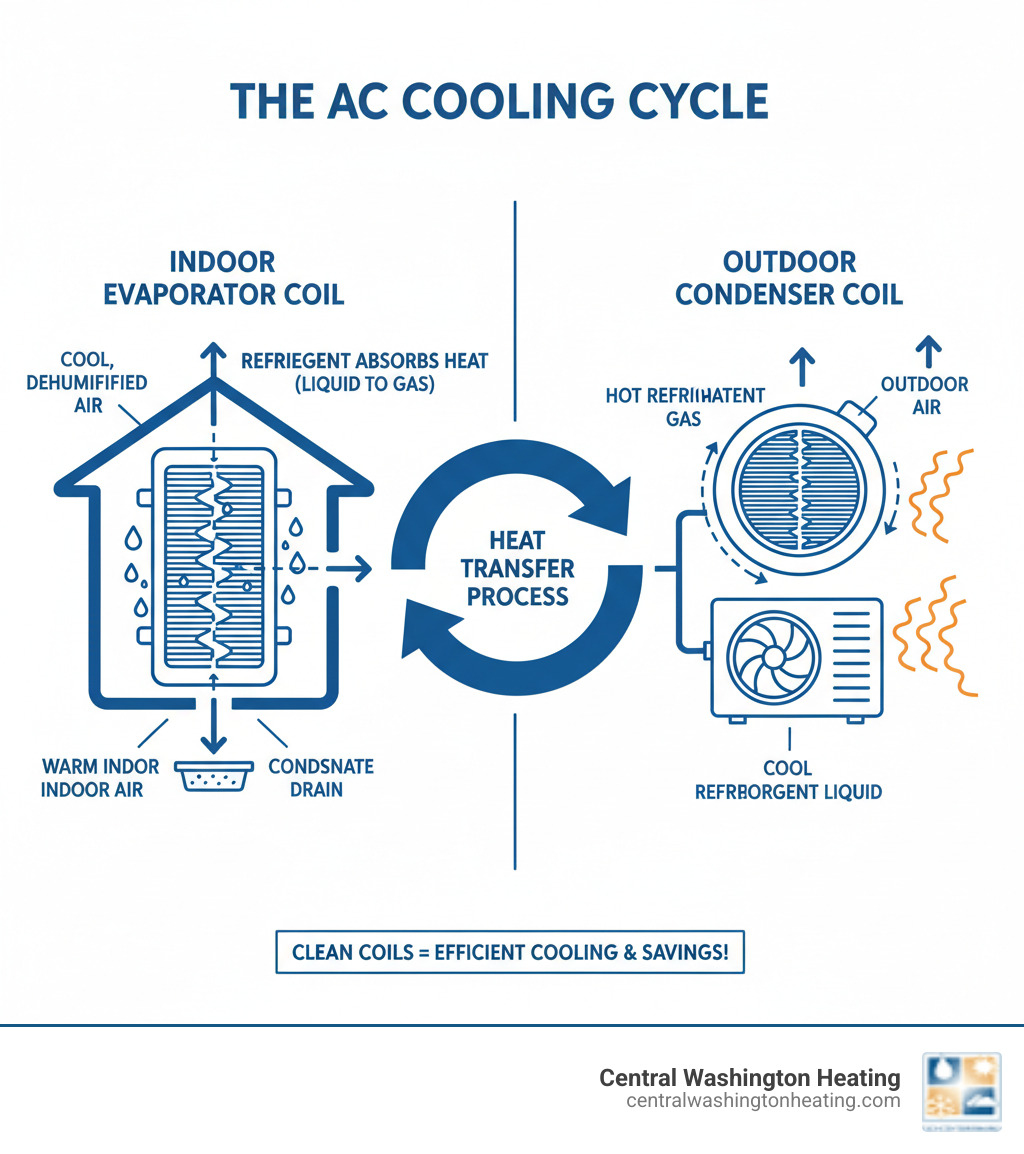
Your air conditioner relies on two sets of coils to cool your home: the evaporator coils and condenser coils. Understanding their roles shows why AC coil cleaning is vital for your comfort and budget.
The Indoor Champion: Evaporator Coils
Located inside your home’s air handler or air handler, evaporator coils act as heat sponges. As warm indoor air passes over these cold coils, the refrigerant inside absorbs heat. At the same time, moisture from the air condenses on the coils, which removes humidity and makes your home feel more comfortable. This moisture collects in a drain pan and is carried away.
The Outdoor Workhorse: Condenser Coils
Your condenser coils are in the outdoor unit and have the opposite job: releasing heat. The refrigerant, now hot from absorbing indoor heat, travels to the condenser coils. A large fan blows outdoor air across the coils, allowing the refrigerant to release its heat and return to a cool liquid state before cycling back indoors.
The Heat Exchange Process
Both coil sets consist of copper tubing with thin aluminum fins to maximize surface area for heat transfer. The refrigerant is the substance that carries heat from inside to outside, but the coils are where the actual exchange happens. When clean, this process is highly efficient.
When Dirt Crashes the Party
Central Washington’s dust, pollen, pet dander, and leaves stick to these coil fins, acting like an insulating blanket. This buildup prevents proper heat transfer. Dirty evaporator coils can’t absorb heat well, and dirty condenser coils can’t release it effectively. Your AC is forced to work harder and run longer, struggling to cool your home.
This buildup also harms air quality, as mold and bacteria can grow on damp, dirty evaporator coils and circulate through your home.
Why Clean Coils are a Cool Idea: The Big Benefits
Regular AC coil cleaning offers significant rewards, including lower energy bills, a longer lifespan for your system, and improved home comfort.
- Save Money: A dirty coil forces your AC to work harder. The U.S. Department of Energy states that a dirty AC coil can reduce the unit’s efficiency by up to 30%, which can increase your energy bills by as much as 40%. Clean coils allow your system to cool your home efficiently.
- Extend System Lifespan: Constant strain from dirty coils wears out the compressor and other vital components, leading to premature failure. Regular cleaning is a key part of Maximizing AC Lifespan with Regular Maintenance.
- Improve Comfort: Dirty coils can reduce cooling power by 30% or more, leading to uneven temperatures and stuffy rooms. Cleaning restores your system’s ability to deliver cool air effectively.
- Breathe Cleaner Air: Damp, dirty evaporator coils are a breeding ground for mold, mildew, and bacteria, which can be circulated through your home. Clean coils contribute to healthier indoor air.
- Prevent Costly Repairs: Many common AC issues, like ice buildup and poor cooling, stem from dirty coils. A simple cleaning can prevent these problems from escalating into expensive repairs.
Signs Your Coils Need a Scrub
Your AC will often show signs of distress when its coils are dirty. Look out for these clues:
- Reduced Cooling: The AC runs constantly but your home never feels cool enough.
- Higher Energy Bills: A sudden, unexplained increase in your electricity costs during cooling season.
- Constant Operation: The system runs continuously or cycles on and off in short bursts.
- Ice on Coils: Ice forming on the indoor evaporator coils is a major red flag indicating restricted airflow. If you see ice, turn the AC off immediately. Learn more about Why is there ice forming on AC unit.
- Strange Noises: Hissing or bubbling can indicate a system under stress.
- Musty Odors: A foul smell from your vents often points to mold growth on the evaporator coils.
- Visible Grime: You can see a layer of dirt, leaves, or pollen on the outdoor condenser coils.
How Often to Clean Your AC Coils
For most homes in Central Washington, cleaning your AC coils once a year is sufficient, preferably in the spring before summer begins.
However, you may need more frequent cleanings if you have:
- Pets: Pet dander and hair can quickly clog indoor coils.
- High Pollen or Dust: Homes near construction, gravel roads, or in areas with heavy pollen may need cleaning twice a year.
- Debris-Heavy Areas: If your outdoor unit is surrounded by trees or cottonwood, check it more often.
A good practice is to check your air filter monthly and visually inspect your outdoor unit each season. If you notice performance issues, don’t wait for your annual cleaning—inspect the coils right away.
The Ultimate Guide to DIY AC Coil Cleaning
With the right tools and a focus on safety, most homeowners can perform AC coil cleaning. This guide will walk you through the process to restore your system’s efficiency.

Essential Tools and Materials
Gather these items before you begin:
- Safety Equipment: Safety goggles and work gloves are non-negotiable to protect from chemicals and sharp fins.
- Cleaning Tools: A soft-bristled brush and a fin comb for straightening bent fins.
- Coil Cleaner: A commercial AC coil cleaner specifically made for HVAC systems.
- Rinsing: A garden hose with an adjustable spray nozzle for outdoor coils.
- Other Tools: A screwdriver or nut driver for access panels and a wet/dry shop vacuum (optional but helpful).
Choosing the Right Cleaner: Foaming vs. Non-Foaming
Using the correct cleaner is crucial. There are two main types:
- Foaming Cleaners: These expand to penetrate deep into the coil fins, lifting stubborn dirt. Many are “self-rinsing” on indoor evaporator coils, as the system’s natural condensation washes them away over time. This makes them ideal for indoor use.
- Non-Foaming Cleaners: These liquid sprays work well for routine cleaning but usually require thorough rinsing. They are a good choice for outdoor condenser coils.
Never use household cleaners like Simple Green or 409. Their chemical composition can corrode the delicate aluminum and copper in your coils, causing permanent damage and leaving a residue that attracts more dirt.
Step-by-Step DIY AC Coil Cleaning
Follow these steps for a safe and effective cleaning. The process involves assessment, dry cleaning, and wet cleaning, as outlined by standards like the ACR, The NADCA Standard.
Step 1: Turn Off the Power
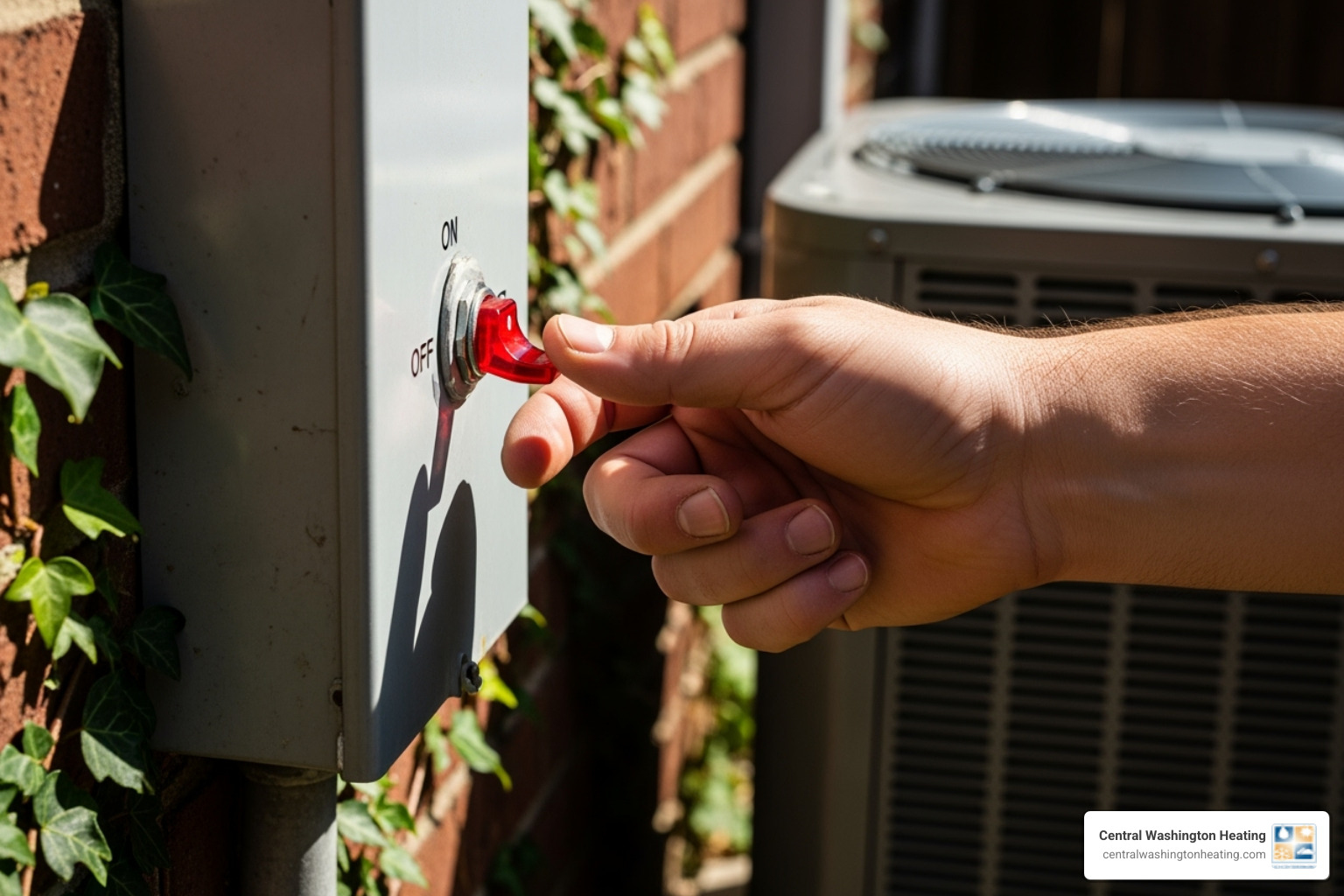
Safety first. Set your thermostat to “Off.” Then, turn off the power at the outdoor disconnect box (a metal box near the condenser unit) and at the main circuit breaker panel inside your home.
Step 2: Access and Prepare the Condenser Coils (Outdoor Unit)
Remove the outer grille or access panels on your outdoor unit. Use a shop vacuum or your hands to clear away large debris like leaves, grass, and twigs from inside and around the unit. Trim any nearby plants to ensure at least two feet of clearance for airflow.
Step 3: Straighten Fins and Apply Cleaner
Use a soft brush to gently sweep dust from the coil fins. Carefully inspect for bent fins and use a fin comb to gently straighten them. Spray the commercial coil cleaner generously onto the coils, following the product’s directions. Let it sit for the recommended time (usually 5-10 minutes).
Step 4: Rinse the Condenser Coils
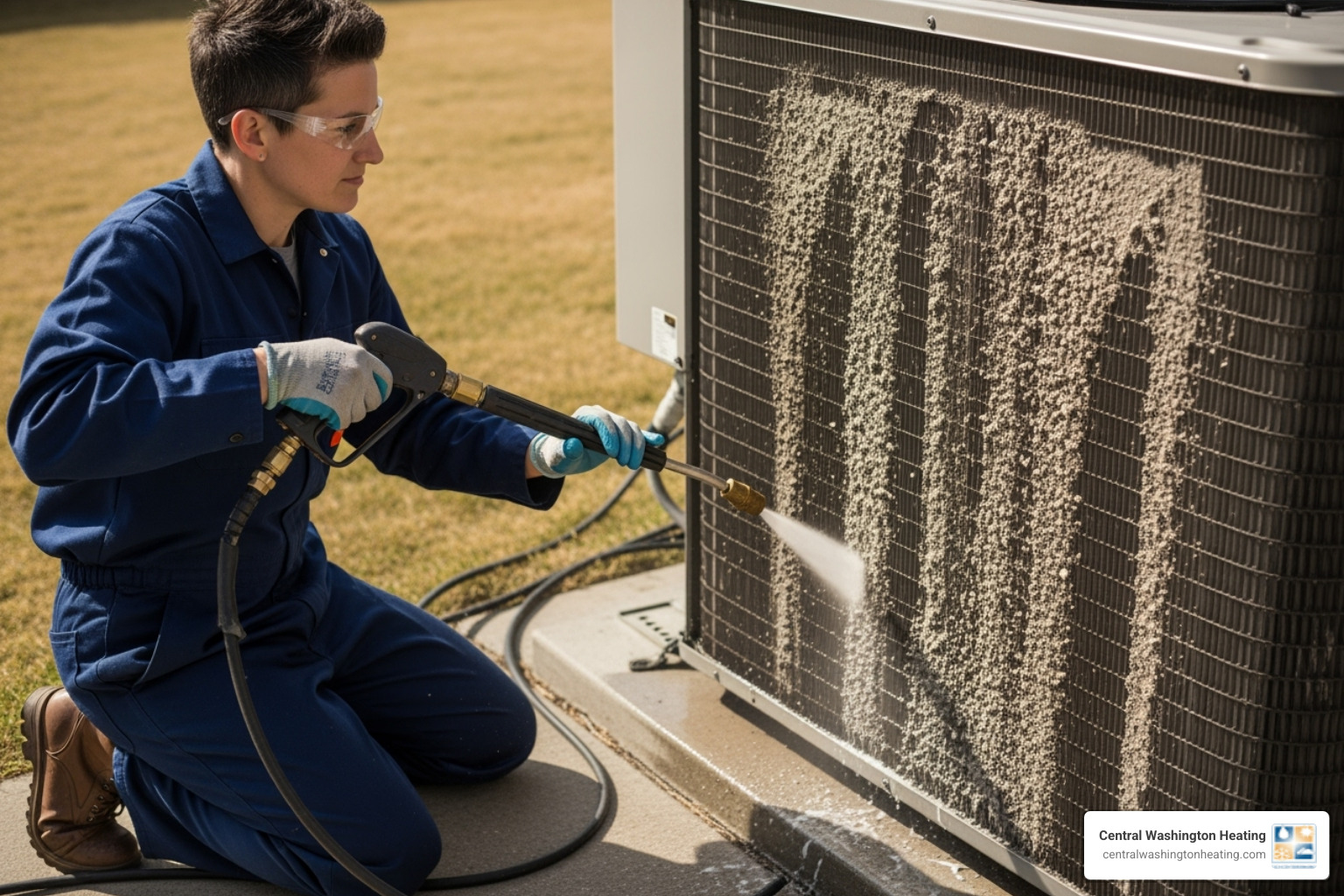
Using a garden hose with a gentle spray, rinse the coils from the inside out. This pushes dirt and cleaner away from the unit, rather than deeper into the fins. Rinse until the water runs clear, being careful to avoid spraying the fan motor and electrical components.
Step 5: Clean the Evaporator Coils (Indoor Unit)
Locate the access panel for the evaporator coils on your indoor air handler or air handler. After removing the panel, use a no-rinse foaming coil cleaner. This type of cleaner is designed to be washed away by the natural condensation your AC produces, which then drains out. While you’re there, check the condensate drain pan for clogs or buildup and clean it if necessary.
Step 6: Reassemble and Test
Allow the coils to dry completely. This can take 1-2 hours for outdoor coils on a warm day, but it’s safer to wait 4-6 hours, especially after cleaning indoor components. Once dry, reattach all panels and grilles. Restore power at the breaker and disconnect box, then set your thermostat to “Cool.” Your AC should run quietly and produce cool air.
Knowing Your Limits: When to Call a Professional
While DIY AC coil cleaning is manageable for many, some situations are best left to a professional. Attempting a complex job without the right expertise can lead to costly mistakes.
Risks of Improper DIY Cleaning
- Bent Fins: Using a high-pressure hose can easily flatten the delicate aluminum fins, severely restricting airflow.
- Electrical Damage: Water can short out fan motors, control boards, and other electrical components if not handled carefully.
- Chemical Damage: Using the wrong cleaner or failing to rinse properly can corrode coils and refrigerant lines.
When to Call a Professional
It’s time to call for help if you encounter any of the following:
- Significant Mold Growth: Professionals have the right equipment and chemicals to safely remove mold without spreading spores through your home.
- Heavily Impacted Dirt: Years of caked-on grime may require industrial-strength cleaners and tools.
- Inaccessible Coils: If you can’t easily access the coils without significant disassembly, a technician should handle it.
- Signs of a Refrigerant Leak: Hissing sounds or a lack of cooling after cleaning point to a larger issue that requires a certified technician.
- Lack of Confidence or Time: If you feel unsure about the process or don’t have the time to do it thoroughly, calling a pro is the safest bet.
Even if you handle routine cleanings, scheduling annual professional maintenance is a wise choice. A technician can spot underlying issues you might miss. For comprehensive care, schedule your AC Maintenance in Chelan, WA with our team.
Frequently Asked Questions about AC Coil Cleaning
Here are answers to the most common questions we receive about AC coil cleaning.
How do evaporator and condenser coils differ, and do they require different cleaning methods?
Yes, they are very different. Evaporator coils are located inside your home and absorb heat and humidity from your indoor air. Condenser coils are in the outdoor unit and release that collected heat outside.
Their cleaning methods differ due to location. Indoor evaporator coils require a gentle approach, typically with a no-rinse foaming cleaner that uses the system’s natural condensation to self-clean. Outdoor condenser coils can be rinsed with a garden hose after a cleaner is applied.
Can household cleaners like Simple Green be used to clean AC coils?
No, it is not recommended. Household cleaners often contain harsh chemicals that can corrode the delicate aluminum fins and copper tubing of your AC coils. This can lead to leaks and permanent damage. They can also leave a residue that attracts more dirt. Always use a cleaner specifically formulated for HVAC systems to protect your investment.
How long should I wait to turn on the AC after cleaning the coils?
You must wait until the coils are completely dry. For outdoor condenser coils, this may take 1-2 hours on a warm day. However, to be safe, especially after cleaning indoor coils, it’s best to wait 4-6 hours. Turning the system on while components are still wet can cause electrical shorts and damage your AC.
Keep Your Cool with Regular Maintenance
AC coil cleaning is a smart investment in your home’s comfort and your budget. A clean system runs more efficiently, lasts longer, and provides healthier indoor air. Spending a little time on this task once a year can save you from high energy bills and unexpected repair costs.
Regular maintenance is key. Whether you follow our DIY guide or prefer to call a professional, the important thing is to ensure it gets done. Annual cleaning is the standard, but homes in Central Washington with pets, high pollen, or dusty conditions may need more frequent attention.
Your AC works hard during our hot summers. A little preventative care ensures it runs reliably when you need it most. Clean coils lead to longer system life, lower energy bills, and peace of mind.
Don’t let dirty coils compromise your comfort. For comprehensive care and professional service, schedule your AC Maintenance in Chelan, WA today. We’ll help you keep your cool all season long.

Written by the Central Washington Heating and Air team
The techs and comfort advisors who've kept the Wenatchee Valley heated, cooled, and breathing easy for 30+ years — family & veteran owned, with 40+ years of combined industry experience.
- Licensed & insured · LIC# CENTRWH742JN
- Daikin Comfort Pro certified
- Wenatchee, WA
Last updated July 29, 2026
Ready for comfort you can count on?
Schedule service, request a free estimate, or call now for 24/7 emergency help. Our team is standing by across the Wenatchee Valley.
Get started today
Free estimates on installs · no-pressure, written quotes
Schedule My ServiceCall (509) 776-0247Mon–Fri: 8:00 AM – 4:30 PM · 24/7 for emergencies
Already have a quote? Get a free second opinion →