
Out with the Old, In with the Cool: Your Guide to a Complete AC Overhaul
Don't just repair; replace entire AC system for ultimate comfort & savings. Discover signs, benefits, & what to expect from an AC overhaul.
When Your AC System Needs a Complete Overhaul
Deciding to replace entire AC system is a major investment in your home’s comfort and efficiency. Knowing when to replace versus repair can save you money and prevent future headaches.
Here are the key signs it’s time to replace your entire AC system:
- Age: Your system is 10-15 years old or older
- Frequent repairs: You’re calling for service multiple times per year
- High energy bills: Your cooling costs keep climbing despite normal usage
- Outdated refrigerant: Your system uses R-22 (Freon), which is being phased out
- Uneven cooling: Some rooms are too hot while others are too cold
- Expired warranty: Major components are no longer covered
An average AC unit lasts about 15 years, but factors like climate and usage affect its longevity. In Central Washington’s hot summers, systems work hard. As your unit ages, you’ll face the critical decision: repair or replace?
Many homeowners don’t realize that replacing just one component often isn’t an option. New efficiency standards require that indoor and outdoor units must be properly matched per Air Conditioning, Heating, and Refrigeration Institute (AHRI) standards. Mismatched parts lead to poor performance, higher energy bills, and premature system failure.
A complete AC system replacement brings immediate benefits: improved efficiency, lower utility bills, better comfort, and peace of mind with a new warranty.
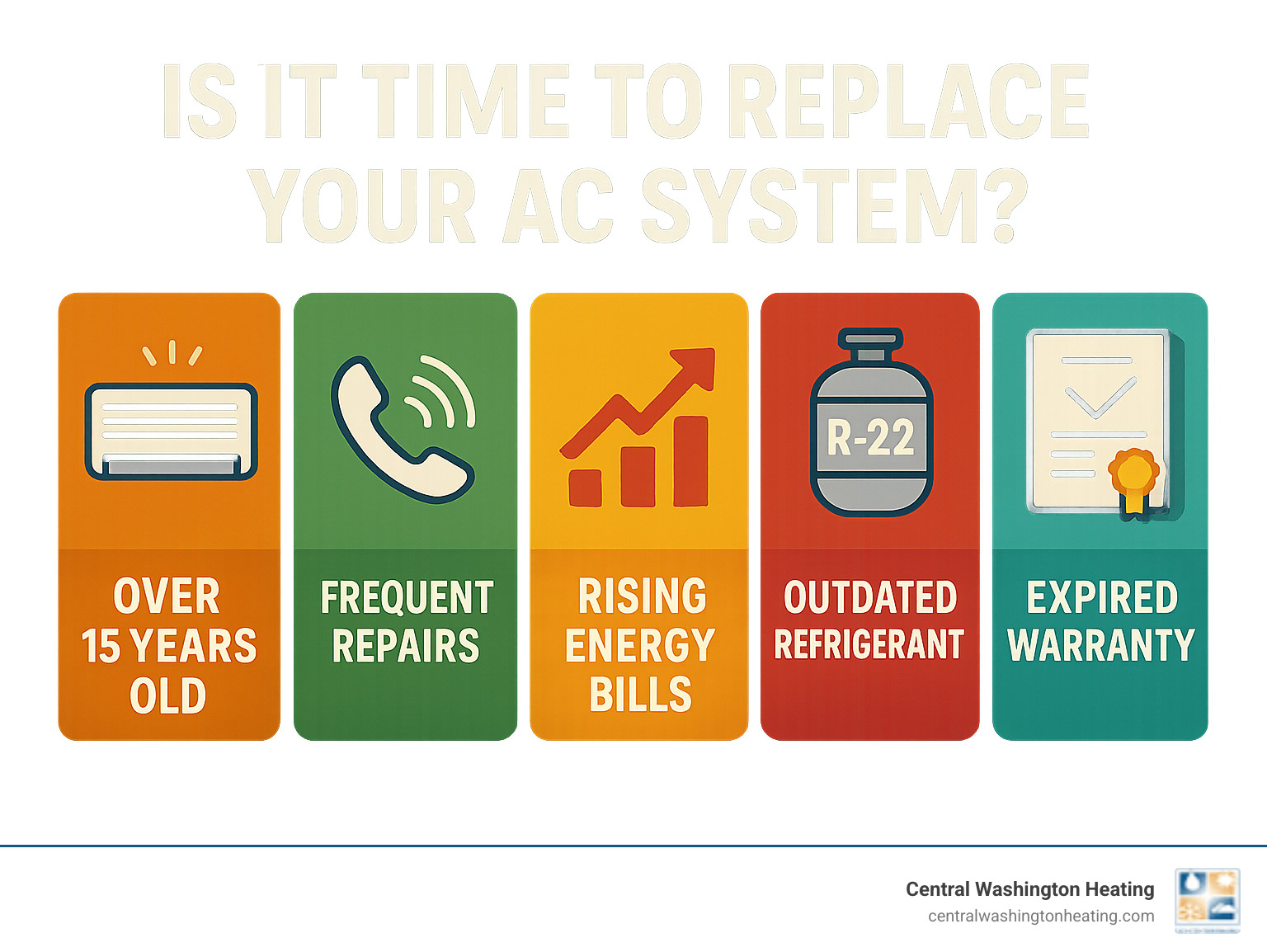
Key Indicators: Is It Time to Replace Your AC System?
When your air conditioner acts up, you face the dilemma: fix it or replace entire AC system? There are clear warning signs that point toward replacement.
Age is often the biggest telltale sign. Most AC units last 10-15 years. If yours is over 10 years old, its efficiency is likely declining, and breakdowns become more common, especially with the demands of a Central Washington summer.
Frequent repair calls are another strong signal. While individual repairs might seem reasonable, the costs add up and suggest widespread component failure is imminent. You can learn more about the Signs AC is About to Break Down to stay ahead of major failures.
Rising energy costs are a red flag. If your electricity bills climb without increased usage, your system is losing efficiency. Older units simply can’t compete with modern technology.
If your system uses R-22 refrigerant (Freon), it’s outdated. The EPA phased out new R-22 production in 2020, making it scarce and expensive. A refrigerant leak can lead to a shocking repair bill. Modern systems use the more available and environmentally friendly R-410A.
Finally, check if your warranty has expired. Most last 5-10 years. Once it expires, you’re responsible for all repair costs. Facing a major repair without a warranty often makes replacement the more financially sound choice.
The Repair vs. Replace Calculation
A helpful rule of thumb is the “$5,000 rule.” Multiply your system’s age by the estimated repair cost. If the total exceeds $5,000, replacement is usually the smarter long-term choice. For example, a $500 repair on a 12-year-old system (12 x $500 = $6,000) suggests replacement. A $300 repair on the same system (12 x $300 = $3,600) might be reasonable.
System age plays a huge role. A costly repair on an older unit can be throwing good money after bad, because other components are likely to fail soon. If you do need repairs, our team is ready to help with professional AC Repair Wenatchee WA services.
When a Partial Fix is a Reasonable Option
While complete replacement is usually best for major failures, a partial fix can make sense in rare cases.
New system defects are one exception. If a component on a recently installed system fails due to a manufacturing defect, the manufacturer warranty coverage should replace the part. Since the replacement is identical, compatibility isn’t an issue.
The other situation is if you have plans to move soon. If you plan to sell your home within a year, a partial fix might be a practical short-term solution to get the system running for the sale.
Outside of these specific scenarios, the complexity of modern HVAC systems makes partial replacements a risky and often ineffective choice.
The Mismatch Problem: Why a Partial Fix Often Fails
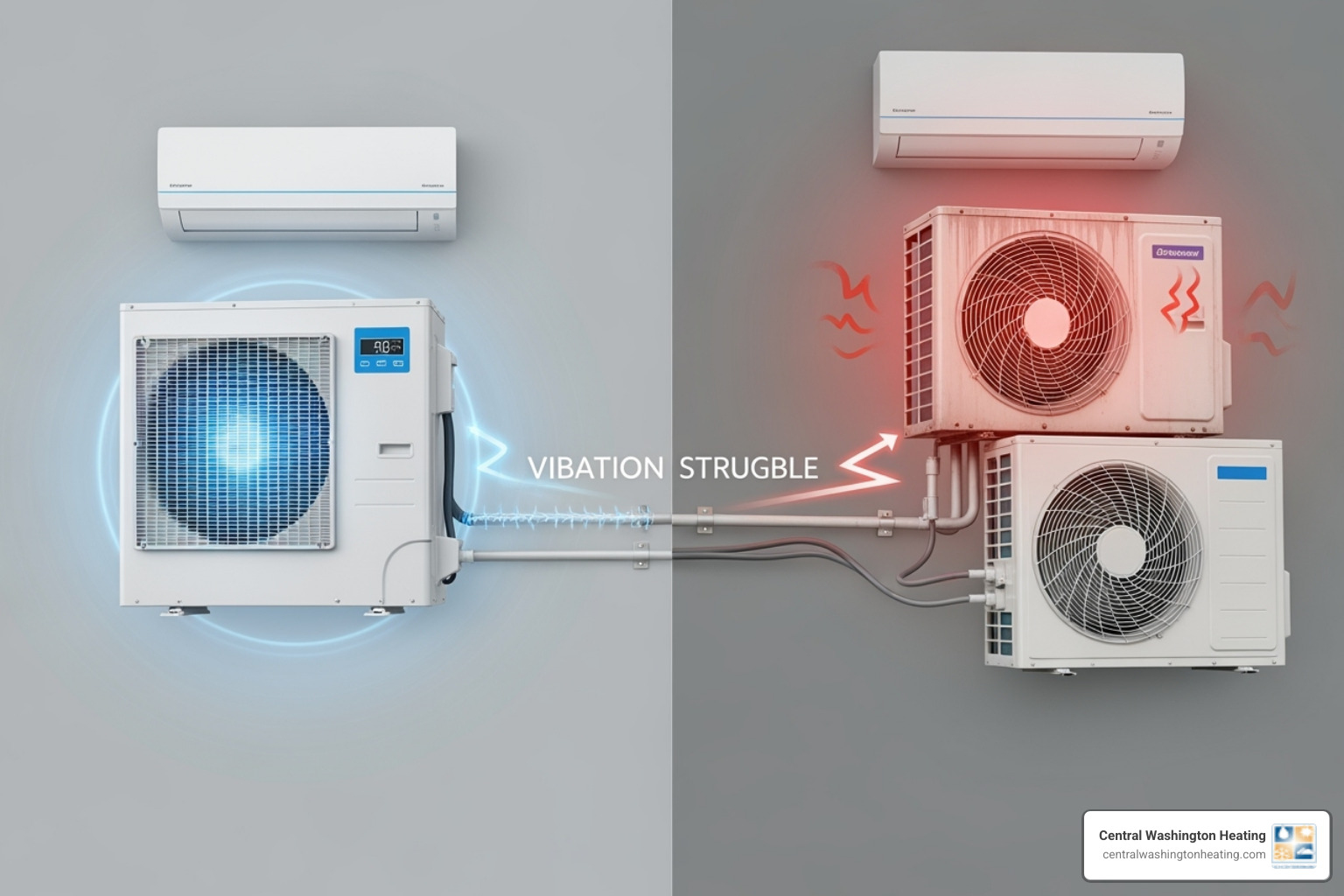
AC systems are integrated systems designed to work in harmony. When you replace entire AC system, you get a perfectly matched set of components. However, trying to pair a new component with an old one often leads to problems.
Your old indoor unit is calibrated for its original outdoor partner. A new outdoor unit has different specifications. This mismatch of incompatible components leads to system inefficiency and premature failure as they struggle to work together.
How SEER Ratings and Refrigerants Impact Your Decision
Two technical factors make a complete replacement the best choice: SEER ratings and refrigerant types.
SEER stands for seasonal energy efficiency ratio (SEER). It’s like miles per gallon for your AC; a higher number means better efficiency. Today’s minimum standard is 13, with high-efficiency models reaching 20 or more. If you pair a new, high-SEER outdoor unit with an old, low-SEER indoor unit, you won’t get the efficiency you paid for. The system’s performance will be limited by the older component.
This mismatched efficiency also creates increased strain on components, causing them to wear out faster.
The refrigerant issue is even more critical. The R-22 phase-out means older systems are on borrowed time. New systems use R-410A as the standard, and the two refrigerants are incompatible. You cannot mix R-22 and R-410A components; doing so will cause immediate system failure.
The Critical Role of AHRI Matched Systems
This brings us to AHRI matched systems. AHRI (the Air Conditioning, Heating, and Refrigeration Institute) certifies specific combinations of indoor and outdoor units that work together properly. You can check these Air Conditioning, Heating, and Refrigeration Institute (AHRI) matchups online.
Most manufacturers require the installation of AHRI-matched components to honor their warranties. Mismatching parts will likely result in voided warranties, a significant financial risk.
Beyond warranty protection, AHRI matching provides a performance guarantee and system reliability. It ensures the system delivers the promised efficiency, as all components were designed and tested to work together from the start.
The Process to Replace Entire AC System: What to Expect
Deciding to replace entire AC system is a significant home improvement project, but with the right team, it’s a straightforward process that can often be completed in a single day.
Professional Consultation: Our process begins with a thorough home assessment. Our technicians will check your ductwork, evaluate your current system, and discuss your comfort concerns to design a customized solution for your Central Washington home.
System Selection: We’ll guide you through choosing a properly sized AC system with the right SEER rating, explaining the options in plain English so you can make an informed decision.
Installation Day: Our team works efficiently and respects your home, coordinating with you to minimize disruption. We handle all technical details with precision.
Testing and Calibration: We don’t just flip a switch. We thoroughly check every connection and setting to ensure your new system is running perfectly before we consider the job done. For more details, see our Expert AC Installation Services Wenatchee guide.
Sizing Your New Unit for Optimal Performance

Proper sizing is critical. An oversized unit cools too quickly, leaving the air feeling cold and clammy. An undersized unit will run constantly on hot days, struggling to keep up and increasing your energy bills.
That’s why we perform a detailed Manual J load calculation. This industry-standard assessment goes beyond home size and layout to include factors like insulation levels, window types and orientation, local climate considerations, and the number of occupants. This ensures your system is perfectly matched to your home’s specific cooling needs.
Key Steps in a Professional Installation
A professional installation ensures your system performs beautifully for years. Here are the key steps we take:
- Safe Removal of Old Unit: We safely remove your old unit, including the proper recovery and disposal of old refrigerants like R-22.
- New Unit Placement: We ensure the new indoor and outdoor units are placed for optimal airflow, accessibility, and performance.
- Electrical Connections: Our certified technicians handle all electrical work, ensuring safe and correct connections.
- Ductwork Inspection: We inspect your ductwork for leaks or damage. Addressing any issues now ensures your new system performs as expected.
- Refrigerant Line Installation: We install new refrigerant lines and use a vacuum pump to remove all contaminants, ensuring a clean system for maximum efficiency.
- System Charging and Testing: We charge the system with the precise amount of refrigerant and conduct comprehensive tests to verify performance.
This meticulous approach protects your investment. Explore our Comprehensive Guide to AC Installation for more information.
Open uping the Benefits of a Complete AC Overhaul

When you replace entire AC system with a modern unit, you’re not just fixing a problem—you’re upgrading your home’s comfort. Imagine consistent cooling, lower energy bills, and peace of mind, no matter how hot it gets in Central Washington.
Improved Efficiency and Long-Term Savings
Modern AC systems with high SEER ratings offer impressive efficiency gains, delivering powerful cooling while using significantly less energy. This reduced energy use leads to lower monthly utility bills. The Department of Energy states that new systems can use up to 30–50% less energy than older ones, providing substantial long-term savings.
A more efficient system also means a lower carbon footprint. Additionally, a modern AC can improve your home value, as today’s buyers appreciate updated, energy-efficient systems.
Why You Should Replace Entire AC System for Superior Comfort
Energy savings are great, but the daily comfort improvements are what you’ll appreciate most.
- Consistent Temperatures: A new, properly sized system provides even temperatures throughout your home, eliminating hot and cold spots.
- Better Humidity Control: Modern systems effectively remove excess moisture from the air, making your home feel more comfortable.
- Quieter Operation: Newer units offer much quieter operation, eliminating the loud, disruptive noise of older systems.
- Peace of Mind: Enjoy the confidence that comes with new warranty protection and fewer breakdowns. A reliable new system lets you relax, knowing your home will stay cool. You’ll find that situations qualifying as an AC Emergency become rare.
Frequently Asked Questions about AC Replacement
It’s natural to have questions before you replace entire AC system. Here are answers to the most common ones we hear.
Can I replace just the outdoor unit if the indoor one still works?
This is a common question, but replacing only one component is rarely a good idea with modern HVAC systems for three key reasons:
- System Compatibility: A new, high-efficiency outdoor unit won’t perform well when paired with an old, low-efficiency indoor unit. You won’t get the energy savings you’re paying for.
- Refrigerant Incompatibility: Older systems use R-22 refrigerant, while new ones use R-410A. They are incompatible and cannot be mixed.
- Voided Warranties: The Air Conditioning, Heating, and Refrigeration Institute (AHRI) certifies compatible equipment pairs. Mismatching components often voids the manufacturer’s warranty.
The bottom line: a partial replacement is a risky gamble that leads to poor performance, higher long-term costs, and voided warranties.
How long does it take to replace an entire AC system?
Most complete AC system replacements take just one full day. The timeline can be affected by factors like system complexity, unit accessibility, and the need for ductwork modifications. Our team always aims to complete the installation with minimal disruption to your routine.
Should I replace my air handler at the same time as my AC?
Yes, especially if your air handler is the same age as your AC. Replacing them together is highly recommended for several reasons:
- Matched Performance: Your air handler’s blower circulates cool air in the summer. An old blower can’t support a new, high-efficiency AC, limiting its performance and efficiency.
- Shared Components: Both systems use the same blower and ductwork. Replacing them together ensures total system compatibility and consistent airflow.
- Convenience and Savings: You’ll have one installation process and a fully integrated system designed for peak efficiency. It also prevents you from facing another major replacement in just a few years.
Your Partner for a Cool and Comfortable Home
Deciding to replace entire AC system is a smart investment in your home. It’s not just a new appliance; it’s an investment in years of reliable comfort, lower energy bills, and peace of mind during Central Washington’s hot summers.
The long-term benefits are significant: consistent temperatures, better humidity control, quieter operation, lower utility bills, and the security of a robust warranty. The importance of professional installation is crucial. A properly sized and matched system, installed by experienced technicians, ensures your system runs efficiently, lasts longer, and delivers the comfort you expect.
At Central Washington Heating, we understand that every home is unique. We’re not just here to sell you equipment; we’re here to be your trusted partner in creating a comfortable home environment. Our team will guide you through every step of the process, from the initial assessment to the final system testing.
When you’re ready to take the next step toward a cooler, more efficient home, we’re here to help. For expert guidance and a seamless upgrade, explore our AC Replacement Chelan WA services. Your family’s comfort is our priority.

Written by the Central Washington Heating and Air team
The techs and comfort advisors who've kept the Wenatchee Valley heated, cooled, and breathing easy for 30+ years — family & veteran owned, with 40+ years of combined industry experience.
- Licensed & insured · LIC# CENTRWH742JN
- Daikin Comfort Pro certified
- Wenatchee, WA
Last updated July 29, 2026
Ready for comfort you can count on?
Schedule service, request a free estimate, or call now for 24/7 emergency help. Our team is standing by across the Wenatchee Valley.
Get started today
Free estimates on installs · no-pressure, written quotes
Schedule My ServiceCall (509) 776-0247Mon–Fri: 8:00 AM – 4:30 PM · 24/7 for emergencies
Already have a quote? Get a free second opinion →