
The Shocking Truth: Your Guide to Mini Split Electrical Requirements
Your complete guide to mini split electrical requirements. Learn safe wiring, breaker sizing & dedicated circuits for a perfect install.
Why Electrical Safety is Non-Negotiable
Mini split electrical requirements are far more complex than plugging in a window unit – these systems demand dedicated circuits, proper wire sizing, and professional-grade electrical connections to operate safely and efficiently.
Quick Answer: Essential Mini Split Electrical Requirements
| BTU Size | Voltage | Wire Gauge | Breaker Size | Circuit Type |
|---|---|---|---|---|
| 9,000-12,000 BTU | 110-120V | 12 AWG | 15-20 amp | Dedicated |
| 18,000 BTU | 220-240V | 10 AWG | 20 amp | Dedicated |
| 24,000 BTU | 220-240V | 10 AWG | 25-30 amp | Dedicated |
| 36,000+ BTU | 220-240V | 10 AWG | 30+ amp | Dedicated |
Although mini splits are easier to install than central air conditioning systems, they are not “plug ‘n play” like window units or space heaters. Every mini split system requires a dedicated electrical line to your home’s main electrical panel, proper wire gauge selection, and a disconnect switch near the outdoor unit.
The stakes are high when it comes to electrical safety. Using the wrong wire gauge can cause dangerous overheating and fire risks. Skipping the dedicated circuit can overload your existing wiring. And improper connections can damage expensive equipment or create safety hazards for your family.
Most homeowners find that their mini split’s electrical needs depend heavily on the system’s BTU rating. Smaller systems may work with standard 110-volt service, but larger units – anything over 12,000 BTUs – typically require 220-volt power with heavier gauge wiring and larger breakers.

Core Power Needs: Voltage and Dedicated Circuits
Understanding mini split electrical requirements starts with voltage – and it’s simpler than you might think. Just like choosing the right fuel for your car, your mini split’s power needs depend on its size and capacity.
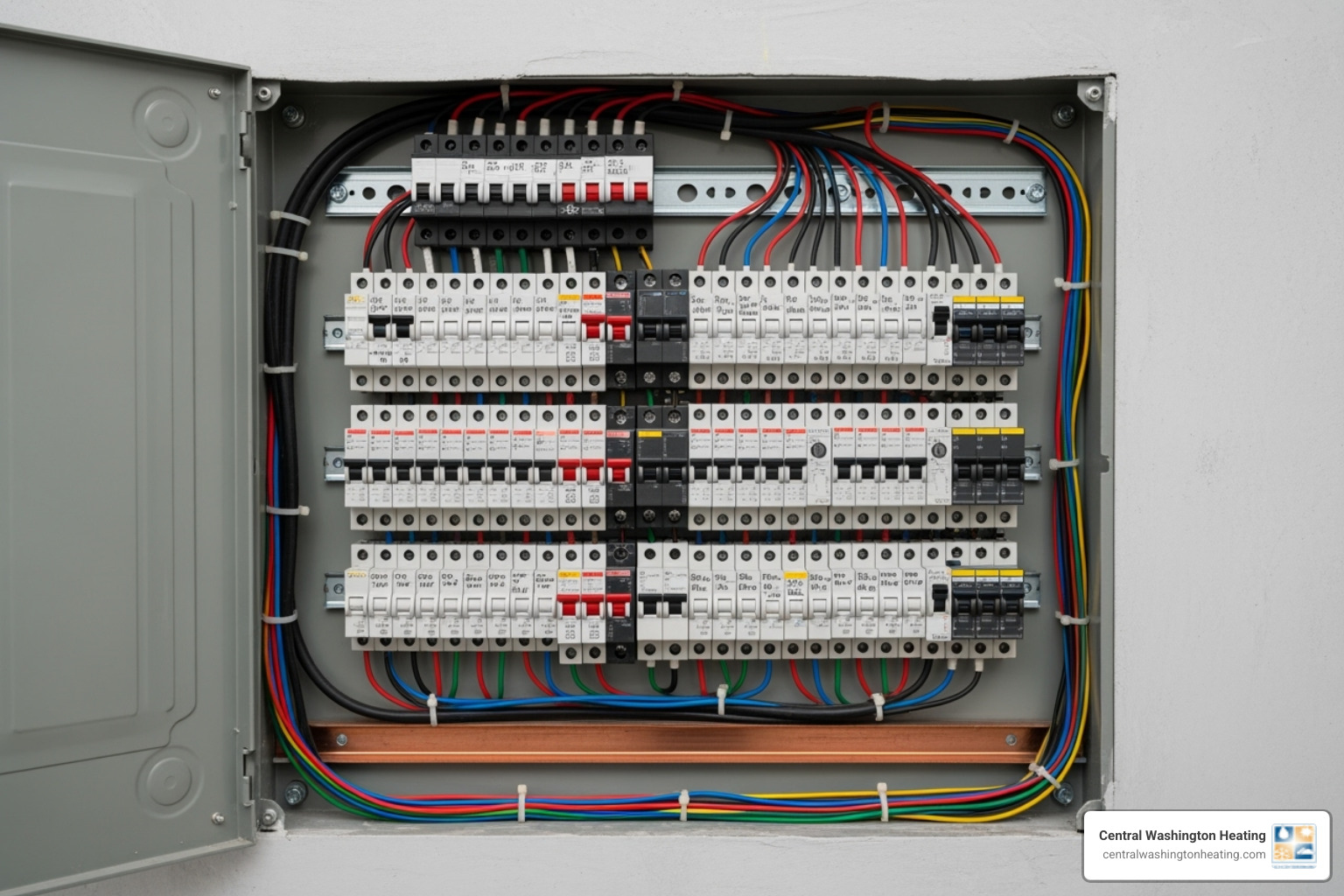
Smaller mini splits in the 9,000 to 12,000 BTU range often run on standard 110-120V systems – the same voltage that powers most of your household appliances. These work great for single rooms or small additions where you want targeted comfort.
But here’s where things get interesting: most mini splits, especially anything above 12,000 BTUs, need the extra power that comes from 208-240V systems. Think of it like the difference between a regular garden sprinkler and a fire hose – bigger jobs need more power. Many high-efficiency units specifically require 208-230 volts, regardless of their BTU rating.
Always check your manufacturer’s specifications before making assumptions. Some smaller 6,000 BTU units still require 208/230V power, so size alone won’t tell you everything you need to know.
Now, let’s talk about something that’s absolutely non-negotiable: dedicated circuit importance. Every mini split system must have its own dedicated circuit breaker in your electrical panel. This isn’t just a good idea – it’s a safety requirement that protects your home and ensures optimal performance.
Preventing overloads is the main reason behind this requirement. When your mini split shares a circuit with other appliances, it’s like trying to drink a milkshake through a coffee stirrer – there’s just not enough power to go around. The National Electrical Code requires major appliances to have dedicated circuits for exactly this reason.
Without a dedicated circuit, you’ll face constantly tripping breakers, poor system performance, and potential safety hazards. Your mini split needs consistent, uninterrupted power to maintain the precise temperature control and efficiency that makes people choose mini split systems in the first place.
Multi-zone systems add another layer of complexity to your electrical planning. These impressive setups can connect multiple indoor units to a single outdoor condenser, but they require careful electrical consideration. While the outdoor unit still uses one dedicated circuit, the combined BTU capacity of all indoor units determines the total power draw.
This means your multi-zone outdoor unit will likely need higher voltage and a larger breaker than a single-zone system. The more indoor units you connect, the more power your system will demand. It’s like the difference between cooking for two people versus hosting a dinner party – you need more capacity to handle the load.
Getting these core power requirements right sets the foundation for a safe, efficient mini split installation that will keep you comfortable for years to come.
Think of your mini-split’s electrical system like the foundation of a house – you can’t see most of it, but everything depends on getting it right. When you’re selecting the right mini split AC, understanding these electrical components isn’t just technical knowledge – it’s the difference between a system that works safely for decades and one that causes headaches (or worse).
Let’s walk through each piece of this electrical puzzle, starting with what might seem like a simple question: what size breaker do you need?
Breaker Sizing for Your Mini Split System
Your circuit breaker is essentially the bouncer at an exclusive club – it decides how much electrical current gets through and cuts things off when there’s trouble. Getting the breaker size right is absolutely critical for mini split electrical requirements.
Here’s where it gets interesting: you can’t just guess based on your unit’s BTU rating. A 12,000 BTU mini split might need a 15-amp breaker on a 110-120V circuit, while an 18,000 BTU system typically requires a 20-amp breaker on a 220-240V circuit. Step up to 24,000 BTUs, and you’re looking at a 25-30 amp breaker.
But here’s the real insider knowledge: every mini-split has two crucial specifications printed on its nameplate. The Minimum Circuit Ampacity (MCA) tells you the smallest wire and circuit size you can use. The Maximum Overcurrent Protection (MOP) tells you the largest breaker size allowed.
Your breaker must be equal to or less than the MOP, but the circuit must be sized for at least the MCA. It’s like Goldilocks – not too big, not too small, but just right. Get this wrong, and you’ll either have a breaker that trips constantly or one that won’t protect your expensive equipment when it should.
Choosing the Correct Wire Gauge and Type
Wire sizing might seem straightforward, but it’s where many DIY projects go sideways. Think of electrical wire like a garden hose – the thicker it is, the more water (or in this case, electricity) can flow through safely.

The American Wire Gauge (AWG) system works backwards from what you might expect. Higher numbers mean thinner wire. So 14-gauge wire handles about 15 amps, 12-gauge wire can carry 20 amps, and 10-gauge wire handles 30 amps.
But here’s where it gets tricky: the distance from your electrical panel to your mini-split matters too. The longer the run, the thicker wire you might need to prevent voltage drop. It’s like trying to sip a thick milkshake through a long, thin straw – the longer the straw, the harder it becomes.
What happens if you use wire that’s too small? The consequences are serious. Overheating wire creates a genuine fire risk. Beyond safety concerns, undersized wire leads to poor system performance, frequent breaker trips, and potential damage to your mini-split’s sensitive electronics. It’s simply not worth the gamble.
For the connection between your indoor and outdoor units, most systems use what’s called 14/4 cable – that’s 14-gauge wire with four conductors. Two carry power, one handles communication, and one provides grounding. This communication wire is what lets your indoor and outdoor units “talk” to each other about temperature, fan speeds, and system status.
Understanding Key Mini Split Electrical Requirements and Components
Beyond breakers and wires, several other components work together to create a safe, code-compliant installation. Each plays a specific role in keeping your system running smoothly.
The electrical whip might sound intimidating, but it’s simply a flexible, weatherproof conduit that protects the high-voltage wires connecting your disconnect box to the outdoor unit. Think of it as an armored jacket for your electrical connections, keeping them safe from weather and physical damage.
Every mini-split installation requires a disconnect switch within sight of the outdoor unit. This isn’t just a code requirement – it’s a crucial safety feature that allows technicians to quickly shut off power during maintenance or emergencies. You’ll encounter two types: fused disconnects include their own fuses for extra protection, while non-fused disconnects rely on your main panel’s breaker for overcurrent protection. Most professionals prefer non-fused options since your panel breaker already provides protection, and breakers can be reset instead of requiring fuse replacement.
The communication wire between your indoor and outdoor units operates at low voltage (typically 24-30 volts) and serves as your system’s nervous system. This wire carries the constant stream of information that keeps your mini-split operating efficiently – temperature readings, operational commands, and even diagnostic codes when something needs attention.
Finally, while not always required, a surge protector is like insurance for your mini-split investment. These systems contain sensitive electronic components that can be damaged by voltage spikes from lightning strikes or power grid fluctuations. A quality surge protector provides essential defense against these unpredictable events, protecting both your investment and your peace of mind.
Understanding these components helps you appreciate why professional mini split installation in Wenatchee, WA involves more than just mounting units and connecting a few wires. Each component must work in harmony to deliver the reliable, efficient comfort you expect from your system.
DIY vs. Professional Installation: Critical Electrical Considerations
I get it – when you see those YouTube videos of homeowners installing their own mini-splits, it can look pretty straightforward. And compared to installing a full central air system, mini-splits do seem more manageable. But here’s the thing: when it comes to mini split electrical requirements, even the most handy homeowner can find themselves in over their head pretty quickly.
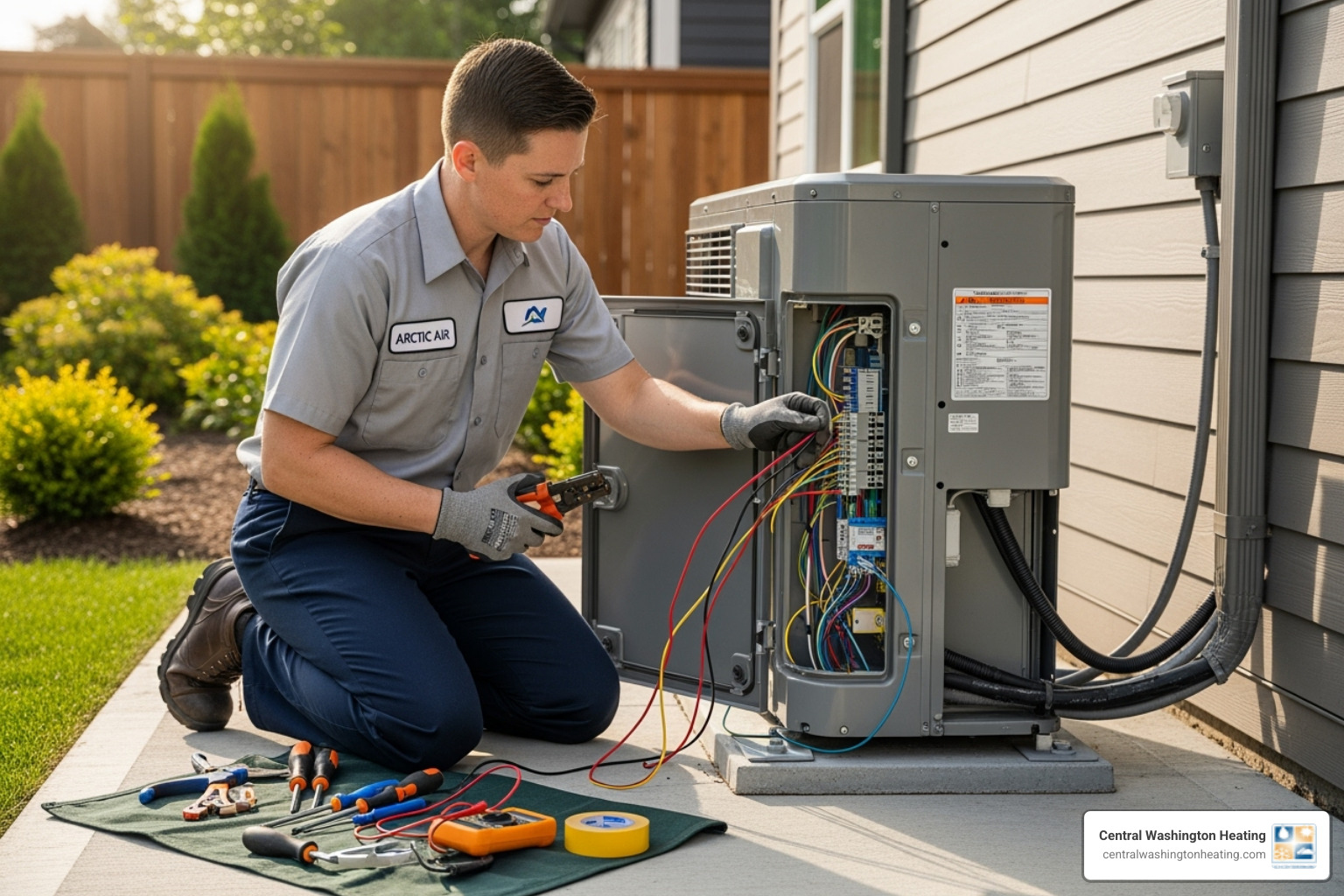
The electrical side of mini-split installation isn’t like wiring a ceiling fan or installing a new outlet. You’re dealing with high voltage – often 220-240 volts – and the margin for error is practically zero. One wrong connection or undersized wire, and you could be looking at serious problems.
The risks of DIY electrical work are genuinely scary. Using the wrong wire gauge or making improper connections can cause wires to overheat, creating a real fire hazard in your home. And let’s not forget about electrocution – high voltage systems don’t forgive mistakes. I’ve seen too many homeowners who thought they could save a few bucks end up spending far more fixing problems that could have been avoided.
Here’s something many DIYers don’t realize until it’s too late: most manufacturers require professional installation to keep your warranty valid. If something goes wrong with your unit and they find improper electrical work, you could be stuck with expensive repair bills that should have been covered.
Code compliance is another major hurdle. Every electrical installation must meet local building codes and the National Electrical Code. In Washington State, you’ll need to follow specific regulations like those outlined in the Washington State energy codes. Getting a permit and passing inspection isn’t optional – it’s required. Code violations can create headaches when you try to sell your home, and fixing non-compliant work often costs more than doing it right the first time.
Even if you manage to avoid immediate safety issues, incorrect wiring can cause your mini-split to perform poorly. You might notice higher energy bills, inconsistent temperatures, or premature equipment failure. What seemed like a money-saving project can quickly become an expensive lesson.
Professional installation offers peace of mind you simply can’t get with DIY. Licensed electricians and HVAC technicians bring years of training and experience to your project. They know how to assess whether your electrical panel can handle the additional load – something many homeowners overlook. Older homes with 100-amp service panels often need upgrades to 200-amp service to safely accommodate a mini-split along with other modern appliances.
Professionals also understand the nuances that can trip up even experienced DIYers. Different manufacturers like Mitsubishi have specific wiring diagrams and component requirements that vary from the general guidelines. A professional installer has worked with multiple brands and knows these brand-specific details inside and out.
When you hire a professional, you’re not just paying for installation – you’re investing in safety, code compliance, and warranty protection. As we explain in our guide on how professionals install mini split AC, the process involves careful planning, precise calculations, and attention to details that ensure your system operates efficiently for years to come.
In Central Washington, we’ve seen how proper electrical installation makes the difference between a mini-split that provides reliable comfort and one that becomes a source of ongoing frustration. Sometimes the smartest DIY decision is knowing when to call in the professionals.
Frequently Asked Questions about Mini Split Electrical Needs
When it comes to mini split electrical requirements, we field dozens of questions every week from homeowners who want to make sure they’re doing things right. And honestly, we love these questions! They show that people are taking electrical safety seriously, which is exactly what we want to see.
Let’s tackle the most common concerns we hear:
Does a mini-split need a dedicated electrical circuit?
Absolutely, yes! Every single mini-split system needs its own dedicated circuit running straight back to your main electrical panel. Think of it like giving your mini-split its own private highway instead of making it share a crowded side street with your microwave, refrigerator, and washing machine.
This isn’t just a best practice – it’s actually required by the National Electrical Code. Mini split electrical requirements are pretty strict on this point because these systems need consistent, uninterrupted power to operate efficiently and safely.
When your mini-split shares a circuit with other appliances, you’re asking for trouble. The system might not get the steady power it needs, which can lead to poor performance or even damage to those expensive electronic components inside the unit.
What happens if I use the wrong size wire for my mini-split?
This is where things can get scary, fast. Using wire that’s too small for your mini-split’s electrical load is like trying to push a river through a garden hose – something’s got to give.
When wire is undersized, it heats up under the electrical load. We’re talking about real heat here, the kind that can start fires inside your walls. Beyond the fire risk, you’ll also see your mini-split struggling to perform properly. The unit’s sensitive electronics can get damaged when they don’t receive adequate power, and you’ll definitely fail any electrical inspection.
On the flip side, using wire that’s too thick won’t hurt anything, but it’ll cost you more money and can be trickier for your electrician to work with. The key is getting it just right based on your specific unit’s power requirements.
Should I use a surge protector with my mini-split system?
We can’t recommend surge protection strongly enough! Your mini-split represents a significant investment in your home’s comfort, and it’s packed with sophisticated electronic components that don’t play well with power surges.
Lightning strikes, power grid fluctuations, and even your neighbor’s electrical issues can send voltage spikes racing through the power lines toward your home. A quality surge protector acts like a bouncer at the door, stopping these unwanted electrical guests before they can damage your system.
While a surge protector won’t save your unit from a direct lightning strike (nothing really can), it provides excellent protection against the more common power surges that can slowly degrade your system’s components over time. It’s like insurance for your mini-split – you hope you’ll never need it, but you’ll be grateful it’s there when trouble comes calling.
Ensuring a Safe and Efficient Mini Split Installation
Getting your mini split electrical requirements right isn’t just about following rules – it’s about protecting your family and your investment while open uping all the incredible benefits these systems offer.
Throughout this guide, we’ve walked through the essential electrical elements that make mini splits work safely and efficiently. You now understand why every system needs its own dedicated circuit, how BTU ratings determine voltage requirements, and why choosing the correct wire gauge and breaker size matters so much. We’ve also explored the critical components like disconnect switches and communication wires that keep everything running smoothly.
The electrical foundation of your mini split system truly determines everything else. When done correctly, these systems deliver remarkable energy efficiency – often 2-4 times more efficient than traditional air handlers when used for heating. They also eliminate the 20-30% energy loss that Energy Star says is common with ducted systems, since there are no ducts to leak conditioned air.
These impressive advantages of mini split AC systems make them a smart choice for Central Washington homeowners seeking zoned comfort and lower energy bills. However, all these benefits depend entirely on proper electrical installation.
Professional installation becomes especially important when you consider what’s at stake. Incorrect wiring can create fire hazards, damage expensive equipment, void warranties, and fail electrical inspections. The high-voltage connections required by most mini split systems aren’t forgiving of mistakes.
When you work with certified professionals, you’re getting more than just technical expertise. You’re getting peace of mind knowing your system will operate safely, efficiently, and reliably for years to come. Professional installers understand local codes, manufacturer specifications, and the unique electrical challenges that Central Washington homes can present.
Ready to enjoy efficient, zoned comfort in your home? Our team at Central Washington Heating specializes in safe, code-compliant mini split installations that maximize your system’s performance and longevity. Learn more about our mini-split air conditioner services in Chelan, WA and schedule your professional consultation today.
Your comfort and safety are worth doing it right the first time.

Written by the Central Washington Heating and Air team
The techs and comfort advisors who've kept the Wenatchee Valley heated, cooled, and breathing easy for 30+ years — family & veteran owned, with 40+ years of combined industry experience.
- Licensed & insured · LIC# CENTRWH742JN
- Daikin Comfort Pro certified
- Wenatchee, WA
Last updated July 29, 2026
Ready for comfort you can count on?
Schedule service, request a free estimate, or call now for 24/7 emergency help. Our team is standing by across the Wenatchee Valley.
Get started today
Free estimates on installs · no-pressure, written quotes
Schedule My ServiceCall (509) 776-0247Mon–Fri: 8:00 AM – 4:30 PM · 24/7 for emergencies
Already have a quote? Get a free second opinion →