
Is Your Heat Pump Acting Up? Fix Freezing, Leaking, and More!
Is your heat pump not cooling? Learn DIY fixes for common issues like freezing & leaks. Get professional repair tips to restore comfort.
When Your Heat Pump Stops Keeping You Cool
Heat pump not cooling properly can turn your comfortable home into an uncomfortable sauna, especially during Central Washington's warm summer months. When you're dealing with a system that's running but not producing cold air, you need answers fast.
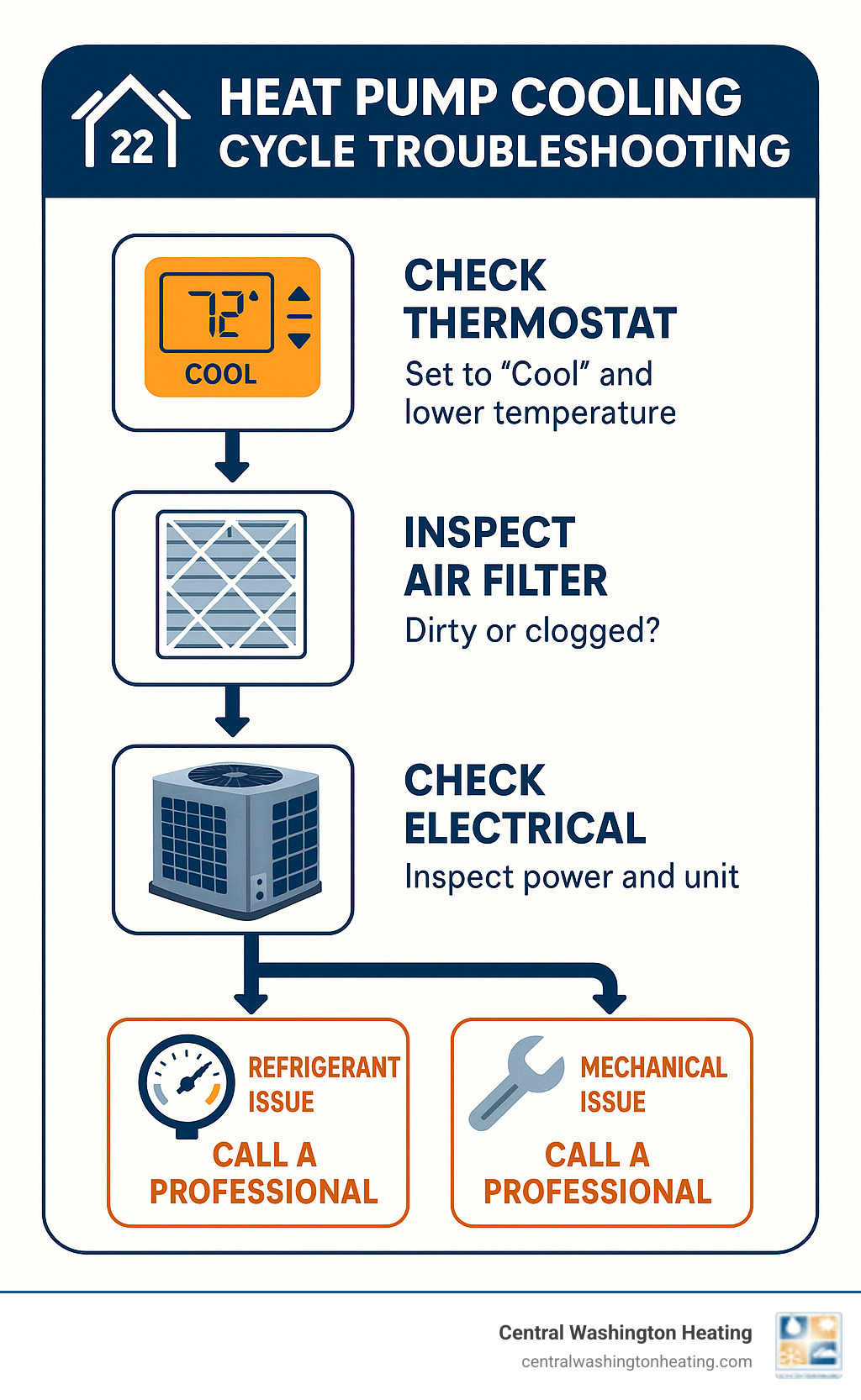
Quick troubleshooting checklist for a heat pump not cooling:
- Check thermostat settings - Ensure it's set to "Cool" mode and temperature is below room temperature
- Inspect air filter - Replace if dirty or clogged (should be changed every 1-3 months)
- Verify power supply - Check circuit breakers and outdoor unit disconnect switch
- Examine outdoor unit - Look for ice buildup, debris, or fan not spinning
- Listen for unusual sounds - Hissing, clicking, or grinding noises indicate specific problems
- Feel refrigerant lines - Large line should be cold, small line should be warm (not hot)
Most heat pump cooling problems fall into two categories: simple fixes you can handle yourself (like thermostat settings or dirty filters) and complex mechanical issues that need professional attention (like refrigerant leaks or compressor failure).
The key is knowing which problems you can safely troubleshoot and when to call for help. A heat pump that's been running for six years without issues, like one customer mentioned in a recent service call, can suddenly stop cooling due to something as simple as a bad capacitor - or something more complex like refrigerant system problems.
First Steps: Simple DIY Checks for Your Heat Pump
Before worrying about expensive repairs, let's walk through some simple fixes. Often, a heat pump not cooling issue is a basic problem that takes minutes to check, like a thermostat accidentally switched to the wrong mode. These initial checks verify the basics before diving into complex diagnostics.
The Role of the Thermostat
Your thermostat is the command center for your cooling system. Incorrect settings are a common cause of service calls, so let's ensure it's telling your heat pump to cool your home.
Check your mode setting first. Look for "Cool," "Heat," or "Auto" on your display. If it's on "Heat," your heat pump is doing what it's told, just not what you want. Switch it to "Cool" and set your target temperature several degrees below the current room temperature.
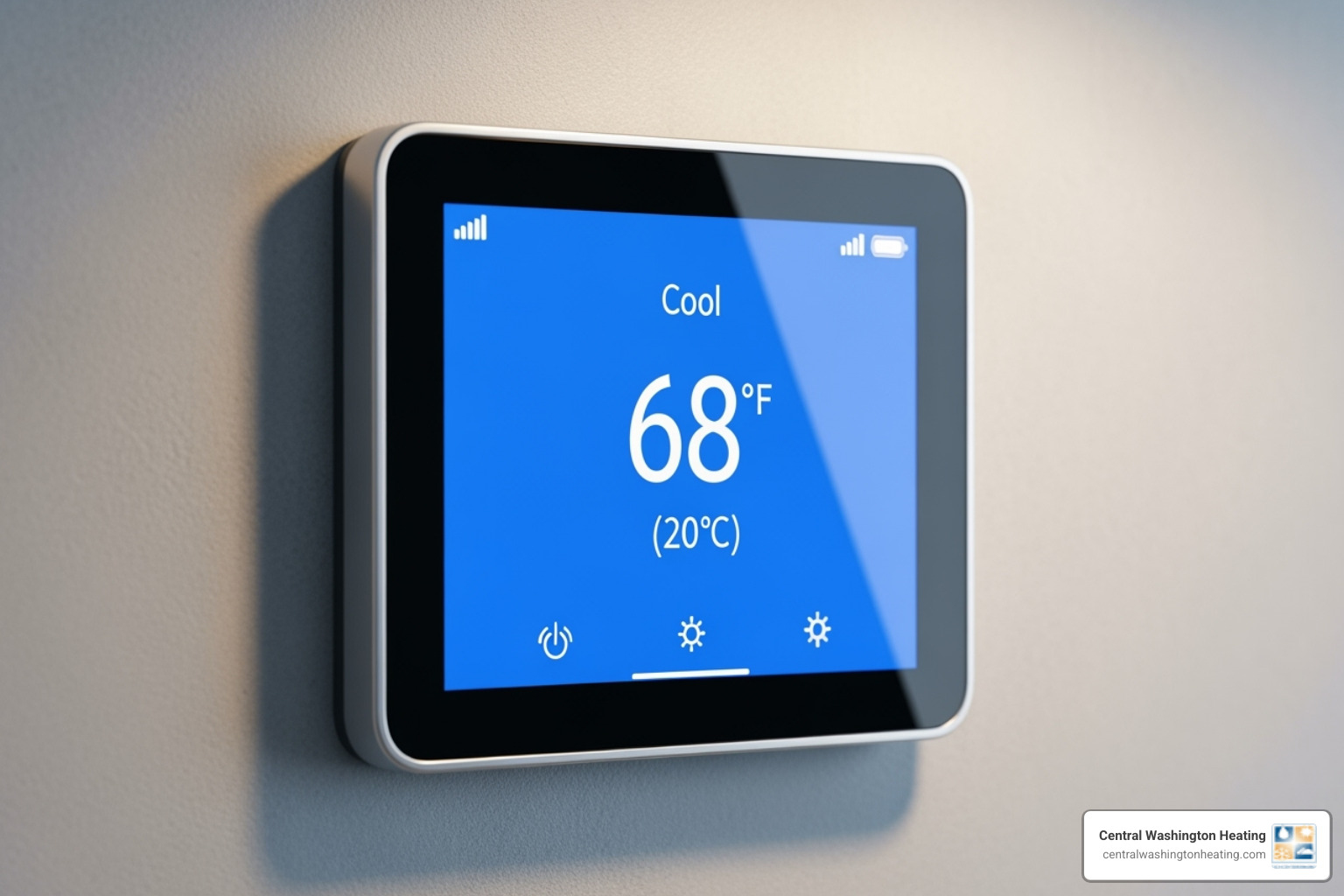
Dead batteries can silently sabotage your comfort. If your thermostat screen is dim or blank, pop in fresh batteries. Even smart thermostats sometimes rely on backup batteries.
Smart thermostats have their own quirks. They can have scheduling or energy-saving modes that override your manual settings. Check for any active schedules or alerts on the screen.
If your thermostat seems to be sending the right signals but your heat pump isn't responding, you might have a communication issue. We have more info about thermostat issues that can help you troubleshoot these trickier problems.
How a Dirty Air Filter Restricts Cooling
Your heat pump needs to breathe, and a dirty air filter clogs the system. When the filter is clogged with dust, pet hair, and other particles, your cooling system struggles.
Restricted airflow creates a domino effect. Less air moving through your system means less heat is removed from your home, forcing your heat pump to work harder while accomplishing less.

The most serious consequence is frozen coils. When airflow drops too low, your indoor coil can freeze, turning into a block of ice that can't absorb heat. This is counterintuitive, but your cooling system literally gets too cold to cool your house.
Check your filter monthly, replace it every one to three months. If you have pets or allergies, you might need to change it more frequently. This simple task prevents many cooling problems and keeps energy bills down.
The general heat pump maintenance tips from the Department of Energy emphasize filter replacement as a key homeowner task.
Checking for Electrical Issues
Your heat pump needs electricity to cool your home. Electrical issues aren't always complete outages; a single tripped breaker can knock out part of your system, leaving it running but not cooling.
Start with your home's main electrical panel. Look for circuit breakers labeled for your heat pump or HVAC system. A tripped breaker is usually in the middle position. Reset it by pushing it firmly to "off," then back to "on."
Don't ignore the outdoor disconnect switch. Near your outdoor unit is a separate electrical disconnect, usually a small box with a switch or pull-out fuse. Make sure it's in the "on" position.
Check your indoor unit's power switch too. Your air handler has its own power switch, often resembling a light switch, that can be accidentally flipped off.
If a breaker trips again immediately, stop. This signals a serious electrical problem that needs professional attention. Never force a breaker that won't stay reset.
If your heat pump not cooling issue persists after these checks, it's time to look at more complex problems that require professional expertise.
Common Reasons Your Heat Pump is Not Cooling
If the initial DIY checks don't solve the problem, the issue likely runs deeper within the system. Your heat pump moves heat from inside your home to the outside through a heat transfer process involving refrigerant, an indoor unit, and an outdoor unit. When this process is disrupted, your heat pump not cooling becomes the frustrating reality. The key is to know if you're facing a simple problem or a complex problem that needs a professional.
Signs of a Refrigerant Leak
Refrigerant is the fluid that carries heat outdoors. It circulates in a closed loop and doesn't get "used up." If your system is low on refrigerant, it almost always means there is a leak.
A heat pump not cooling effectively, even when running constantly, often points to refrigerant issues. The air from your vents may feel lukewarm, not cold.
- Hissing or bubbling sounds near the outdoor unit or refrigerant lines can indicate escaping refrigerant or air in the system.
- Ice buildup on the refrigerant lines or outdoor coils can happen when refrigerant levels are low, causing the remaining fluid to become too cold.
- Oily residue on lines around valves or connections can pinpoint the source of a leak, as refrigerant contains oil.
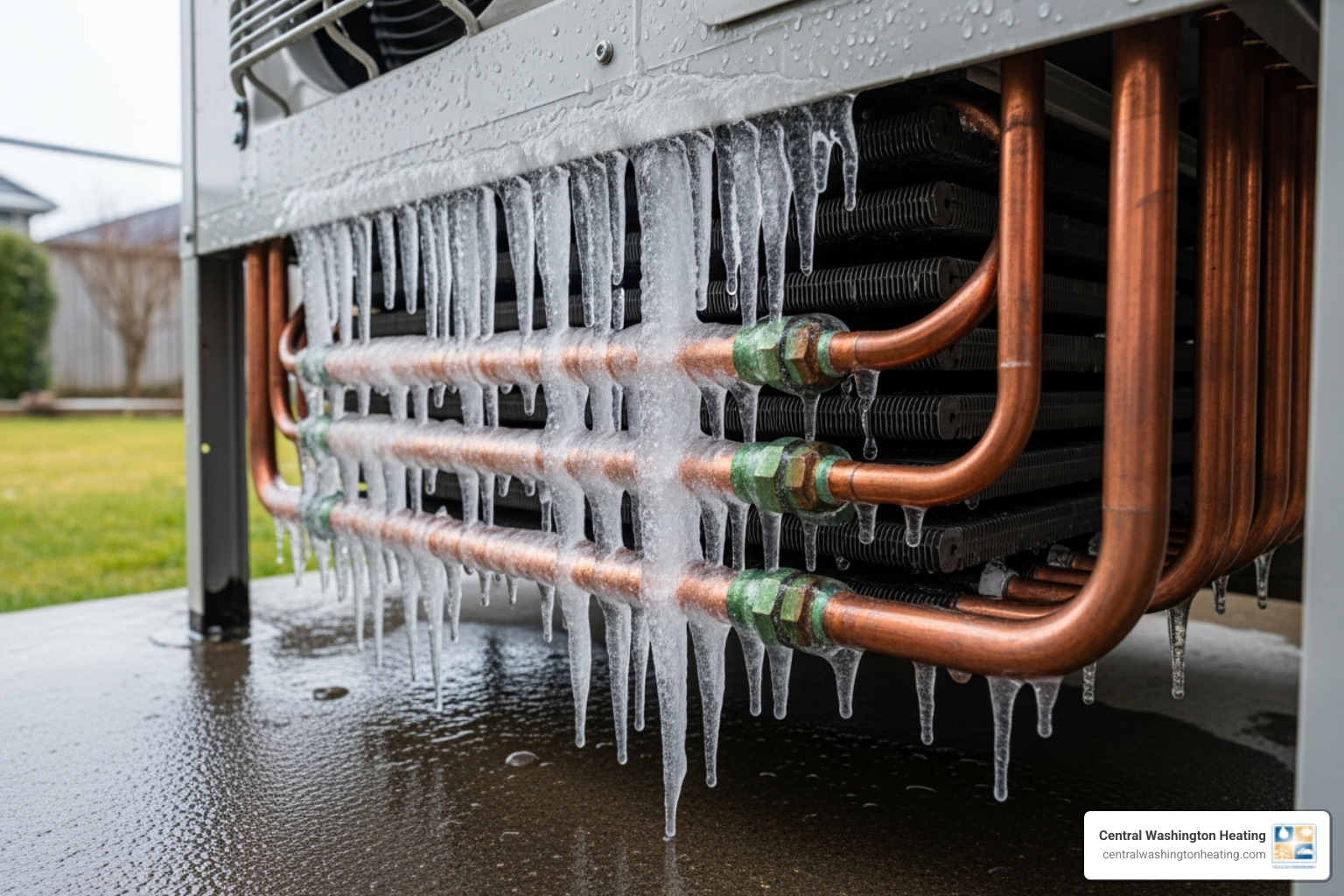
If you suspect a refrigerant leak, call a professional. Only an EPA-certified HVAC professional can safely handle this regulated substance. Simply adding more refrigerant without fixing the leak is a temporary fix that is harmful to the environment.
The Impact of Dirty or Frozen Coils
Your heat pump has two critical coils for cooling: the indoor evaporator coil and the outdoor condenser coil. When they can't function properly due to dirt or ice, the entire system suffers.
Dirty coils prevent efficient heat transfer. A dirty indoor coil has blocked heat absorption, while a dirty outdoor coil has poor airflow to release heat. Both lead to reduced efficiency and a system that works harder for less cooling.
| Symptom | Dirty Indoor Coil | Dirty Outdoor Coil |
|---|---|---|
| Airflow from Vents | Reduced, weak | Normal, but air isn't cold |
| Air Temperature | Warm or lukewarm | Warm or lukewarm |
| System Behavior | Runs continuously, straining | Runs continuously, straining |
| Energy Bills | Higher than usual | Higher than usual |
| What You Can See | Requires professional access to inspect | Visible dirt, debris on exterior fins |
| Potential Problems | May freeze, stopping cooling entirely | Compressor may overheat |
Frozen coils are a bigger problem. A frozen indoor coil becomes a block of ice that can't absorb heat, resulting in weak or lukewarm airflow. If you find a frozen coil, turn the system off or to "Fan Only" to let it thaw. Once melted, check the air filter and ensure all vents are open.
You can gently clean the outdoor unit with a garden hose, avoiding high pressure and electrical parts. For the indoor coil or a thorough cleaning, it's best to call a professional.
Advanced Mechanical Failures Requiring a Professional
When simple fixes don't work, the problem likely requires professional expertise. These issues involve complex components like compressors, fan motors, capacitors, and reversing valves that need specialized tools to diagnose and repair safely. When one part fails, it can cause a domino effect. Professional HVAC technicians have the experience to quickly identify the issue and restore your comfort. For more info on troubleshooting complex issues, our blog dives deeper into these repairs.
A Malfunctioning Reversing Valve
A malfunctioning reversing valve is frustrating when your heat pump not cooling. This component acts like a switch, directing refrigerant flow for either heating or cooling.

The most common issue is the valve getting stuck in heating mode. If you set your thermostat to "Cool" but get warm air, your system may be pulling heat from outside and pumping it indoors. You might also hear clicking noises from the outdoor unit as the valve unsuccessfully tries to switch modes.
If you get hot air from your vents on the cool setting, the reversing valve is a likely culprit. This is not a DIY repair and requires a professional with EPA certification to handle the refrigerant system safely.
Problems with the Outdoor Unit
The outdoor unit houses critical parts that must work in harmony. When one fails, your heat pump not cooling is the result.
- Fan not spinning: The large fan on top releases heat from your home. If it's not spinning, the heat has nowhere to go, and the system can get overwhelmed. The cause could be a simple debris obstruction or a mechanical failure.
- Worn-out fan motor: Grinding or squealing noises can signal a failing fan motor. These motors wear out over time, especially during warm months.
- Faulty start capacitor: This part provides the electrical jolt to start the fan motor and compressor. When a capacitor fails, you might hear humming or clicking as the motor tries but fails to start.
- Compressor failure: The compressor is the heart of the system, circulating refrigerant. If it fails, the heat pump won't cool at all. You may hear loud buzzing or clicking, but the fan won't move and no cold air will be produced. This is one of the most significant repairs a heat pump can need.
Diagnosing these outdoor unit problems requires specialized testing equipment and expertise to determine if parts can be repaired or need replacement.
Frequently Asked Questions about Heat Pump Cooling Issues
When your heat pump not cooling becomes a daily frustration, you're probably searching for answers. We hear the same concerns from homeowners throughout Central Washington, and honestly, many of these questions reveal simple solutions that can save you time and worry. Let's tackle the most common scenarios you might be facing.
Why is my heat pump running but not blowing cold air?
This has to be one of the most maddening situations – you can hear your heat pump humming away outside, everything sounds normal, but your home feels like a sauna. When your heat pump not cooling despite running continuously, the problem usually lies with the heat transfer process rather than a complete system failure.
The key is understanding that your outdoor unit has two main moving parts: the fan and the compressor. Just because you see the fan spinning doesn't mean the compressor is doing its job. The fan simply moves air over the coil, but it's the compressor that actually circulates refrigerant and makes the magic happen. If the compressor isn't running, you'll get plenty of air movement but zero cooling power.
Refrigerant issues are often the culprit here. When your system is low on refrigerant due to a leak, it simply can't absorb enough heat from your home's air. You might notice the air from your vents feels lukewarm instead of refreshingly cold, and there could be ice forming on the refrigerant lines – which seems backwards but is actually a telltale sign.
Dirty coils can also cause this problem. Both your indoor and outdoor coils need to be spotless for proper heat exchange. When they're covered in grime, your system works overtime but delivers disappointing results.
Here's a simple test you can try: feel the copper refrigerant lines coming out of your outdoor unit. The larger, insulated line should feel cold to the touch, while the smaller line should be warm (not scalding hot). If both lines are the same temperature or the large line isn't cold, you're likely dealing with a refrigerant or compressor issue that needs professional attention.
How is troubleshooting a heat pump not cooling different from one not heating?
While heat pumps use the same basic refrigeration cycle year-round, the troubleshooting process changes because the direction of heat flow reverses completely. In summer, your system absorbs heat from inside your home and dumps it outside. In winter, it does the exact opposite.
The reversing valve is the star player here. This component acts like a railroad switch, directing refrigerant flow to either heat or cool your home. When it malfunctions, it can get stuck in one mode. A valve stuck in heating mode during summer means you get hot air when you desperately want cold air.
Common failure points shift with the seasons too. During summer cooling season, we typically see problems with dirty outdoor coils that can't reject heat properly, low refrigerant levels, or reversing valves stuck in heating mode. The compressor and outdoor fan are working their hardest to move heat out of your home.
Winter heating issues often involve different components. The outdoor coil might freeze up as it tries to extract heat from frigid air, or the defrost cycle might malfunction. Speaking of defrost cycles – this is something unique to heating mode that doesn't apply when your heat pump not cooling in summer. The system periodically reverses itself to melt ice buildup on the outdoor coil, which is completely normal in winter but would indicate a serious problem in cooling season.
When should I repair versus replace my heat pump?
This decision keeps many Central Washington homeowners up at night, and rightfully so – it's a significant investment either way. The good news is that several clear factors can guide your choice.
Age matters more than you might think. Heat pumps typically last about 15 years, but once yours hits the 10-12 year mark and starts having major issues, replacement often makes more financial sense. Think of it like an aging car – at some point, you're throwing good money after bad.
Your repair history tells a story too. If you've been calling for service multiple times in recent years, especially for expensive fixes, those costs add up quickly. We've seen homeowners spend thousands on repairs for a system that fails again six months later. That's not just frustrating – it's financially draining.
Energy efficiency has improved dramatically over the years. Modern heat pumps have much higher SEER ratings than units from even a decade ago. If your energy bills keep climbing despite normal usage, a new, efficient heat pump could pay for itself through lower operating costs.
The cost of the current repair compared to replacement value is crucial. When a major component like the compressor fails, the repair cost might be a substantial chunk of what you'd pay for a brand-new system. At that point, replacement gives you a fresh start with a full warranty and improved efficiency.
Sometimes the decision gets made for you – parts availability can be a real challenge for older units. If we can't find the parts needed to fix your system, replacement becomes your only option.
For more detailed guidance on making this important decision, check out our comprehensive guide on signs you may need a replacement. We're always honest about whether repair or replacement makes the most sense for your specific situation and budget.
Get Your Comfort Back with Professional Heat Pump Repair
When your heat pump not cooling leaves you sweltering in your own home, we know how quickly comfort can turn into frustration. The good news? Many homeowners can tackle some basic troubleshooting on their own. Checking your thermostat settings, replacing that grimy air filter, flipping tripped circuit breakers, and making sure power switches are on can sometimes work miracles.
These simple DIY checks we've covered - from ensuring your thermostat is actually set to "Cool" mode to clearing debris from around your outdoor unit - solve more problems than you might expect. Sometimes the fix really is that straightforward!
But let's be honest: heat pumps are sophisticated machines with complex refrigeration systems, electrical components, and mechanical parts. When you've worked through our troubleshooting checklist and your home is still uncomfortably warm, or when you notice refrigerant leaks, frozen coils that won't thaw, reversing valve problems, or a compressor that won't start, it's time to call in the cavalry.
Regular maintenance is your heat pump's best friend. Think of it like taking your car in for oil changes - a little preventive care goes a long way. Professional tune-ups in spring and fall catch small issues before they become big headaches. Our technicians clean those hard-to-reach coils, check refrigerant levels, test electrical connections, and spot potential problems that could leave you high and dry (or rather, hot and bothered) later.
At Central Washington Heating, we've seen it all - from simple thermostat mix-ups to complex compressor failures. Our experienced technicians understand how Central Washington's unique climate affects your heat pump, and we're committed to getting your system back to peak performance quickly and efficiently.
Don't suffer through another sweltering day wondering if your heat pump will cooperate. Professional diagnosis takes the guesswork out of repairs and ensures the job gets done right the first time.
Contact us for expert heat pump repair in Chelan and throughout Central Washington. We're here to restore your cool comfort when you need it most!

Written by the Central Washington Heating and Air team
The techs and comfort advisors who've kept the Wenatchee Valley heated, cooled, and breathing easy for 30+ years — family & veteran owned, with 40+ years of combined industry experience.
- Licensed & insured · LIC# CENTRWH742JN
- Daikin Comfort Pro certified
- Wenatchee, WA
Last updated July 29, 2026
Ready for comfort you can count on?
Schedule service, request a free estimate, or call now for 24/7 emergency help. Our team is standing by across the Wenatchee Valley.
Get started today
Free estimates on installs · no-pressure, written quotes
Schedule My ServiceCall (509) 776-0247Mon–Fri: 8:00 AM – 4:30 PM · 24/7 for emergencies
Already have a quote? Get a free second opinion →