
Is Your AC Blowing Hot Air? Don't Sweat It, We've Got the Answers
Don't sweat it if your AC is blowing hot air! Discover DIY fixes, common causes, and when to call experts for cool relief.
Your Guide to a Cooler Home
When your AC blowing hot air instead of the cool comfort you expect, it can be incredibly frustrating. This guide will walk you through the most common causes, simple DIY solutions, and when it’s time to call for professional help.
Most Common Causes:
- Thermostat Settings – Incorrect mode or fan setting.
- Dirty Air Filter – Restricts airflow and strains the system.
- Low Refrigerant – Indicates a leak in the system.
- Frozen Evaporator Coil – Blocks airflow and prevents cooling.
- Electrical Issues – Tripped breakers or failed components.
Quick DIY Checks:
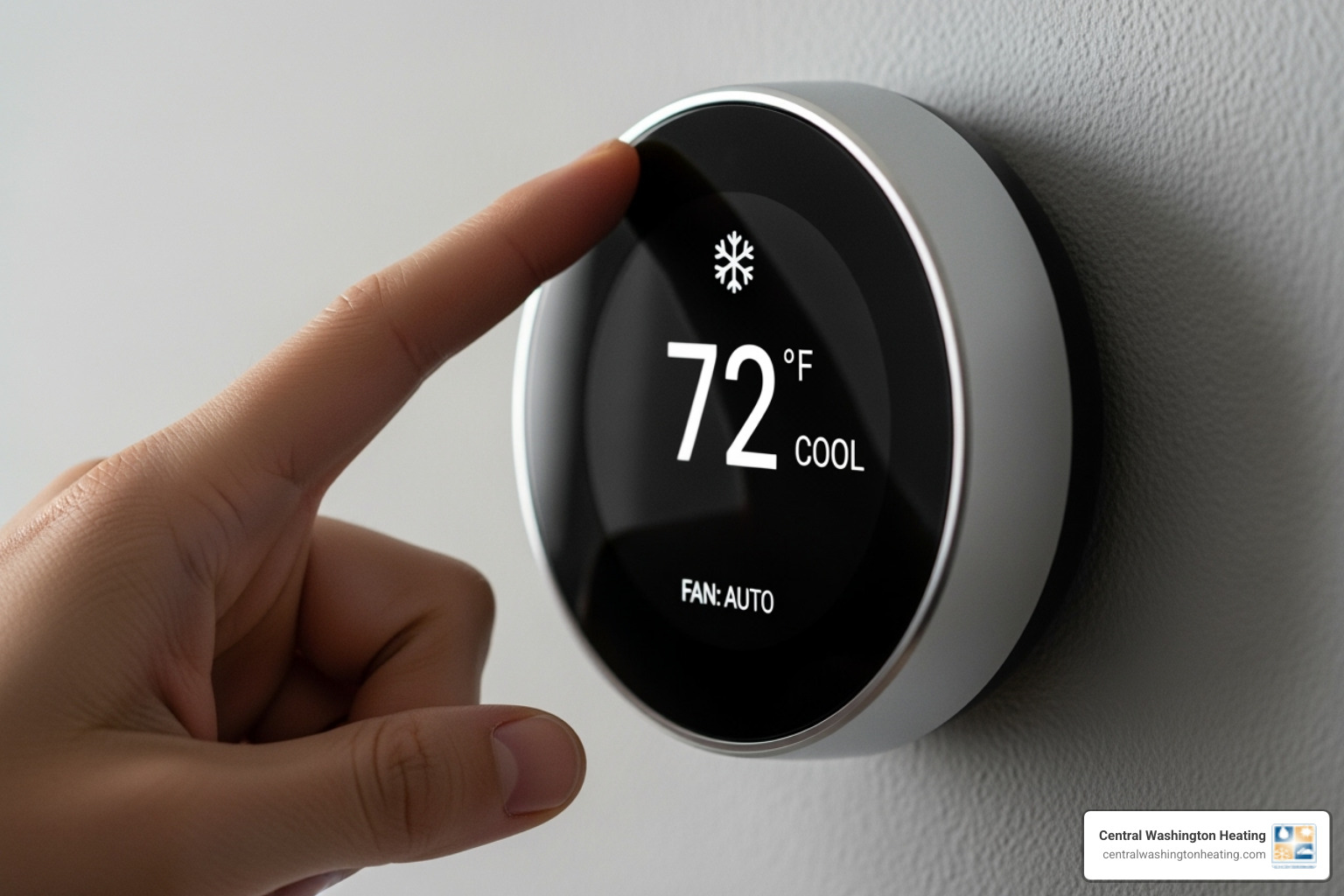
- Verify thermostat is on “cool” and fan is on “auto.”
- Replace a dirty air filter.
- Check your circuit breakers.
- Clear debris from around the outdoor unit.
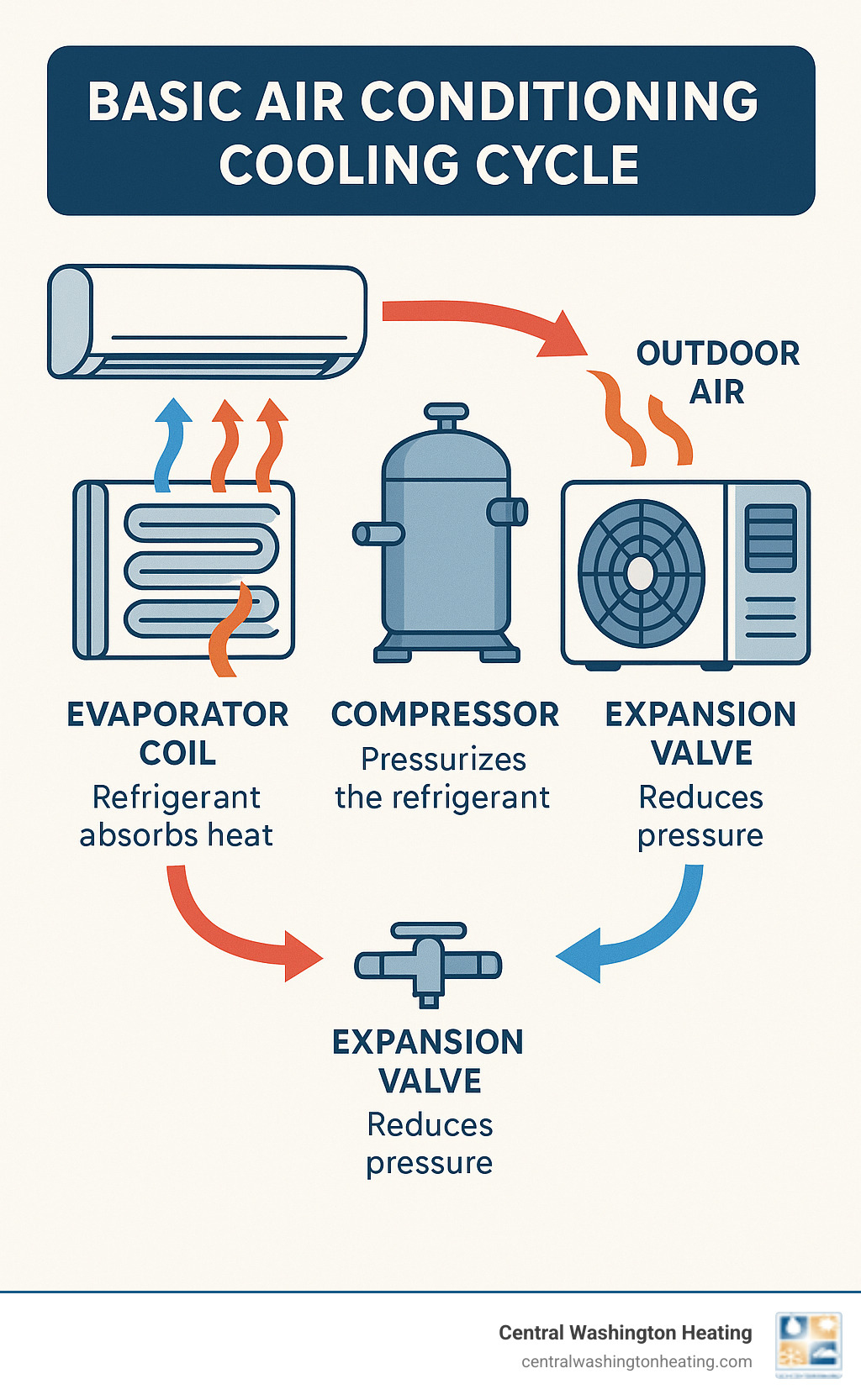
Understanding how your AC works is the first step to fixing it. An air conditioner absorbs heat from inside your home and transfers it outside using a chemical called refrigerant. Warm indoor air is pulled over an evaporator coil, where the refrigerant absorbs the heat. The cooled air is then blown back into your home. The heated refrigerant travels to the outdoor unit, releases the heat, and returns to repeat the cycle.
First Steps: Simple DIY Troubleshooting
Before worrying about expensive repairs, perform these simple checks. Often, the solution to your AC blowing hot air is something you can fix in minutes.
Troubleshooting an AC Blowing Hot Air: Simple DIY Checks
-
Check Your Thermostat: An incorrect thermostat setting is a common culprit. Ensure it’s set to “cool” mode. Also, check the fan setting. If it’s on “ON,” the fan runs continuously, circulating uncooled air between cooling cycles. Switch the fan to “AUTO” so it only runs when the AC is actively cooling.
-
Check for Tripped Breakers: Your AC’s outdoor unit can sometimes trip a circuit breaker, cutting power to the cooling components while the indoor fan keeps running. Go to your electrical panel and look for a tripped breaker for your AC. Flip it fully off, wait 30 seconds, then flip it back on. If it trips again, it signals a more serious electrical issue that needs a professional.
-
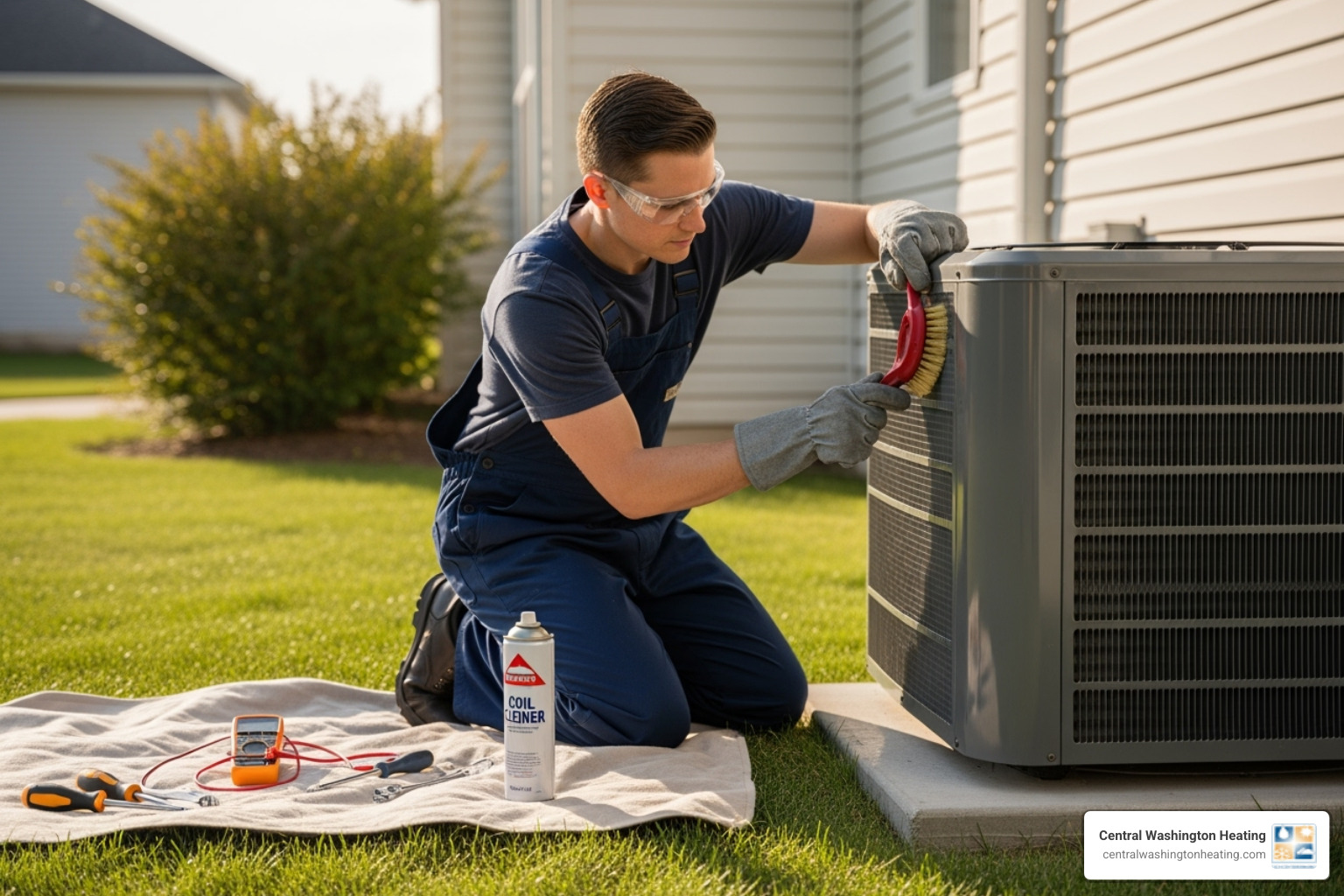
Clear the Outdoor Unit: Your outdoor condenser unit needs to release heat. Leaves, grass, and dirt can block airflow. Clear at least two feet of space around the unit. If it can’t release heat properly, your AC will blow hot air.
Check and Replace Your Air Filter
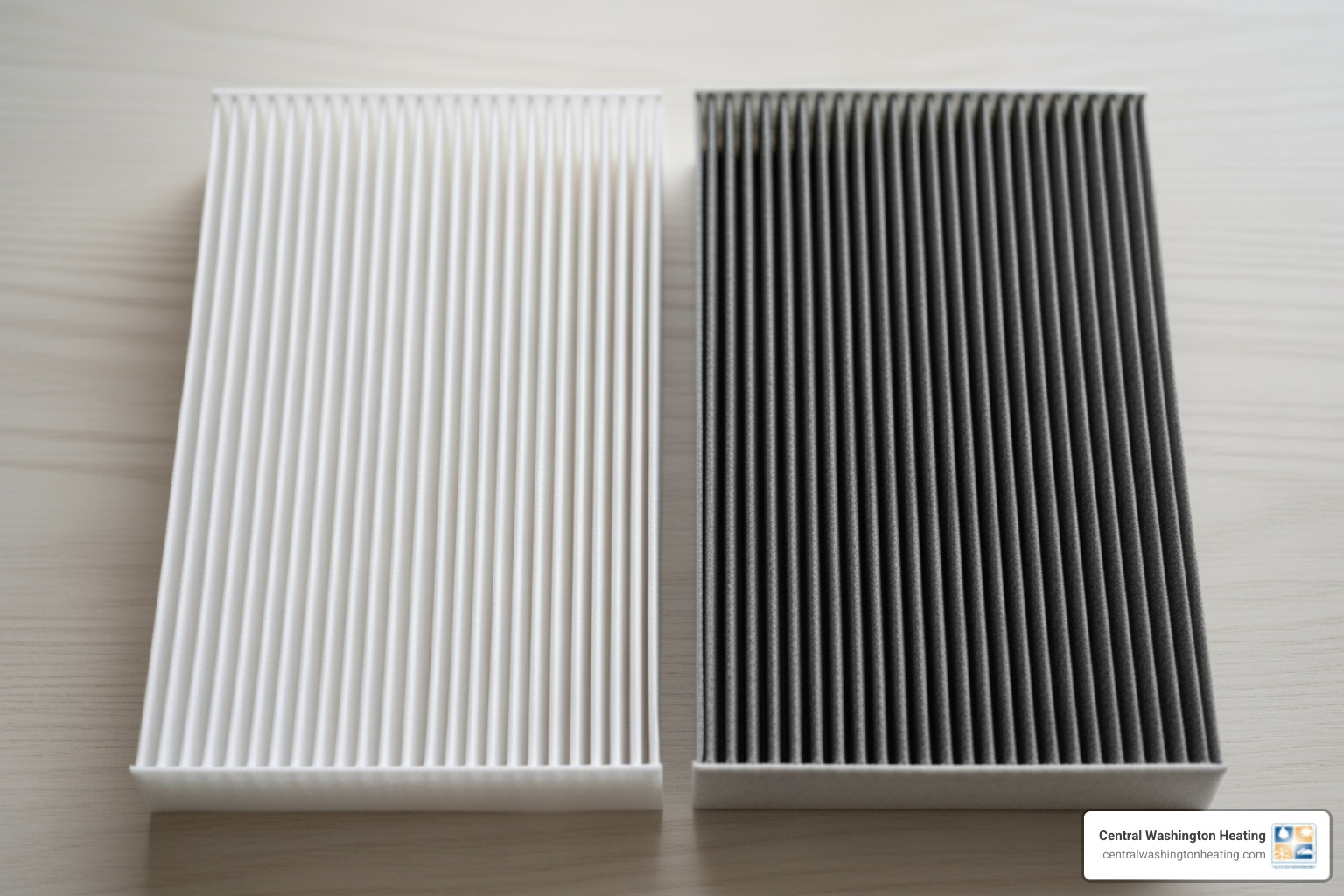
A dirty air filter is a small component that can cause big problems, including your AC blowing hot air. A clogged filter restricts airflow, forcing your system to work harder and reducing its cooling power. The U.S. Department of Energy states that regularly changing your filter can save between 5 and 15 percent on energy costs.
A severely clogged filter can also cause the evaporator coil to freeze. When the coil is covered in ice, air can’t pass over it to be cooled, resulting in warm air from your vents.
Check your air filter monthly and replace it every 1-3 months, or more often if you have pets or allergies. Replacing a filter is a simple task that can prevent major issues. Learn more in our guide: Why You Need a Good Air Filter.
Why Is Your AC Blowing Hot Air? 5 Common Culprits
If the basic checks didn’t work, it’s time to dig deeper. Several key components can malfunction and lead to your AC blowing warm air. Understanding these issues will help you diagnose the problem.
1. Low Refrigerant Levels
Refrigerant is the chemical that absorbs heat from your indoor air. Your AC system is sealed, so refrigerant doesn’t get “used up.” If your levels are low, it almost certainly means there’s a leak. When refrigerant levels drop, your system can’t absorb enough heat, and you’re left with your AC blowing hot air.
Signs of a leak include a hissing sound near your AC unit or ice forming on the refrigerant lines. Without enough refrigerant, the system can’t cool effectively, even if all other components are working.

Adding more refrigerant is not a DIY fix. Refrigerant is a toxic substance that requires professional handling. Simply topping it off without fixing the leak only masks the problem and can lead to more damage. A professional technician can find and repair the leak, then safely recharge your system to the correct level. Learn more about Glossary: Refrigerant and how to handle How to Resolve Heat Pump Refrigerant Leak Issues.
2. Dirty or Clogged Coils
Your AC has two sets of coils essential for heat exchange: the indoor evaporator coil and the outdoor condenser coil. When they get covered in dirt and grime, they can’t do their job, leading to poor performance and your AC blowing hot air.
A dirty evaporator coil can’t properly absorb heat from your home’s air. This is often caused by a neglected air filter, which allows dust and debris to build up directly on the coil.
Your outdoor condenser coil is responsible for releasing absorbed heat outside. If it’s caked with leaves, dirt, or grass clippings, it can’t release heat efficiently. This causes the entire cooling cycle to become sluggish.
You might notice your AC Constantly Running But Not Cooling when coils are dirty. While you can clear debris from your outdoor unit, professional cleaning is needed for a thorough job, especially for the delicate indoor evaporator coil. Regular maintenance includes cleaning these vital components.
3. Frozen Evaporator Coil
Ironically, a frozen evaporator coil can cause your AC blowing hot air. When the coil becomes encased in ice, it creates a barrier that blocks airflow. The air can’t make contact with the coil to be cooled, so it passes through your vents warm.
Restricted airflow is the most common cause of a frozen coil. A severely clogged air filter reduces the amount of warm air passing over the coil. Without enough heat to absorb, the coil’s temperature drops below freezing, and moisture in the air freezes onto its surface. Blocked vents or collapsed ducts can cause the same issue.
Low refrigerant levels can also cause freezing. A leak lowers the pressure in the system, causing the refrigerant to become excessively cold and freeze the coil.
Signs of a frozen coil include weak airflow, musty smells, and water leaks around your indoor unit from melting ice. If you suspect a frozen coil, turn off your AC system but leave the fan on “ON” to help it thaw. Do not chip away the ice. A recurring frozen coil often indicates a refrigerant leak or another serious problem that could lead to Signs AC is About to Break Down.

4. Electrical and Component Failure
Your AC system relies on a network of electrical components. A failure in any one of them can result in your AC blowing hot air.
-
Tripped circuit breakers are a common issue. The outdoor unit draws significant power and can trip its breaker. When this happens, the indoor fan may continue to circulate uncooled air. If you find yourself repeatedly resetting the breaker, it signals a deeper problem. Learn more about what to do when your AC Circuit Breaker Keeps Tripping.
-
Faulty capacitors act like batteries that give the motors the jolt they need to start. When a capacitor fails, the compressor or fan motors won’t start or run properly.
-
The compressor is the heart of your system, pressurizing and circulating refrigerant. If it fails, the entire cooling process stops. A silent outdoor unit is a common sign of compressor failure. Find out Why AC Compressor Suddenly Stopped Working.
-
Wiring problems like loose connections or corrosion can disrupt power and cause intermittent issues.
While checking a breaker is a simple DIY task, diagnosing and repairing other electrical failures requires professional expertise due to the high voltage involved.
5. The Risks of Running an AC System That Is Blowing Hot Air
When your AC is blowing hot air, it’s a sign that something is wrong. Continuing to run the system can turn a minor issue into a major, costly problem.
-
Compressor Damage: The compressor is the heart of your AC and the most expensive component. Forcing it to work overtime can cause it to overheat and fail completely.
-
Higher Energy Bills: An AC that’s running but not cooling is extremely inefficient. You’re paying for electricity without getting any comfort.
-
Complete System Failure: A simple issue like a dirty filter can lead to a frozen coil, which stresses the compressor and electrical parts. This domino effect can cause a total system breakdown.
-
Reduced Lifespan: Running a compromised system puts immense strain on all components, significantly shortening your unit’s lifespan.
-
Safety Concerns: Electrical faults can create fire hazards. Addressing HVAC problems quickly is crucial for safety, a point we also stress in our guide on Why Air handler Repair is Important.
Turn off your system if it’s blowing hot air and have it inspected to avoid these risks.
Preventative Maintenance: Your First Line of Defense
The best way to deal with an AC blowing hot air is to prevent it from happening in the first place. Regular maintenance keeps your system running efficiently and helps catch small problems before they become big ones.
-
Change filters regularly: A dirty filter is behind many AC problems. Check your filter monthly and replace it every 1-3 months.
-
Keep coils clean: Schedule annual professional cleaning for your evaporator and condenser coils to ensure proper heat transfer.
-
Clear debris from your outdoor unit: Regularly remove leaves, grass, and other obstructions from around your condenser unit. Ensure there’s at least two feet of clear space for airflow.
-
Schedule professional tune-ups: An annual tune-up is the cornerstone of prevention. A technician will inspect, clean, and lubricate components, check refrigerant levels, and identify potential issues before they cause a breakdown.
This proactive approach extends your unit’s lifespan and reduces the chances of a sudden failure. Learn more about the Benefits of Regular AC Maintenance and our AC Maintenance Wenatchee WA services.
Frequently Asked Questions about an AC Blowing Hot Air
Here are answers to the most common questions we get when someone’s AC blowing hot air.
Should I turn my AC off if it’s blowing hot air?
Yes, absolutely. Continuing to run your AC when it’s not cooling properly can cause serious damage, especially to the compressor, which is the most expensive part to replace. Turn the system off at the thermostat, then flip the AC’s circuit breaker to the “off” position to prevent further damage and stop wasting energy while you troubleshoot or wait for a professional.
How long should I wait to turn my AC back on after a reset?
After resetting a tripped circuit breaker, wait at least 30 minutes before turning the AC back on. This waiting period is crucial for the system’s internal circuits and safety mechanisms to reset properly. Restarting too quickly can cause the breaker to trip again or prevent the system from starting up correctly.
Can a dirty filter really cause my AC to blow hot air?
Yes. A severely clogged filter chokes off airflow to the evaporator coil. Without enough warm air flowing over it, the coil can get too cold and freeze over. This ice blocks airflow even more, creating a vicious cycle. The result is your AC blowing hot air because the air can no longer be cooled. Replacing the filter and allowing the coil to thaw (which can take several hours) often resolves the issue.
When to Call a Professional for Your AC
While you can handle simple DIY fixes like changing a filter, many causes of an AC blowing hot air require a certified HVAC technician. For complex issues involving refrigerant leaks or electrical failures, professional service is essential for safety and a proper repair.
Diagnosing a faulty compressor or other major component failures requires specialized tools and experience. Attempting these repairs yourself can be dangerous and may lead to further damage. If you’ve tried the basic troubleshooting steps and your system is still blowing warm air, it’s time to call for help.
Delaying professional service often turns a minor repair into a major one. The team at Central Washington Heating has the expert diagnosis tools and knowledge to quickly identify the root cause of the problem and get your home comfortable again. We prioritize safety concerns and ensure all repairs are done correctly.
Don’t let your AC blowing hot air ruin your summer. Request Service online for a fast diagnosis and repair. For emergency situations, contact us for 24-hour AC repair when you need us most.

Written by the Central Washington Heating and Air team
The techs and comfort advisors who've kept the Wenatchee Valley heated, cooled, and breathing easy for 30+ years — family & veteran owned, with 40+ years of combined industry experience.
- Licensed & insured · LIC# CENTRWH742JN
- Daikin Comfort Pro certified
- Wenatchee, WA
Last updated July 29, 2026
Ready for comfort you can count on?
Schedule service, request a free estimate, or call now for 24/7 emergency help. Our team is standing by across the Wenatchee Valley.
Get started today
Free estimates on installs · no-pressure, written quotes
Schedule My ServiceCall (509) 776-0247Mon–Fri: 8:00 AM – 4:30 PM · 24/7 for emergencies
Already have a quote? Get a free second opinion →