
Is Your AC on Ice? A Guide to Troubleshooting Frozen Coils
Here's an SEO meta description based on your outline, following all your guidelines: **Is your AC freezing up? Discover common causes, safe thawing steps, and expert prevention tips to keep your cool all summer.**
When Summer Heat Meets Frozen Coils: Understanding the Problem
AC freezing up might sound impossible when it's 90 degrees outside, but it's a common problem during peak cooling season.
Quick Answer: What to Do About AC Freezing Up
- Turn off cooling at your thermostat immediately.
- Set fan to ON to help melt the ice.
- Check your air filter and replace it if it's clogged.
- Wait for a complete thaw (can take 1-24 hours).
- Call a professional if freezing returns.
Your air conditioner removes heat from indoor air. When this process is disrupted by poor airflow, low refrigerant, or mechanical failures, the evaporator coil can drop below freezing. The result is ice buildup that blocks cooling and can damage expensive components like your compressor.
Ironically, your AC is most likely to freeze on the hottest days. A clogged filter or blocked vent forces your system to work overtime, creating the perfect conditions for ice. Don't ignore a frozen AC; continuing to run it can turn a simple fix into a costly repair.
Why is My AC Freezing Up? Uncovering the Common Culprits
An AC freezing up happens when your evaporator coil—the part that absorbs heat from your home's air—gets too cold and turns into an ice factory. When warm, humid air hits the super-cold coil, moisture freezes instantly, building up until the system is encased in ice.
Ironically, your AC is most likely to freeze when you need it most: during scorching Central Washington summer days when it's working overtime.
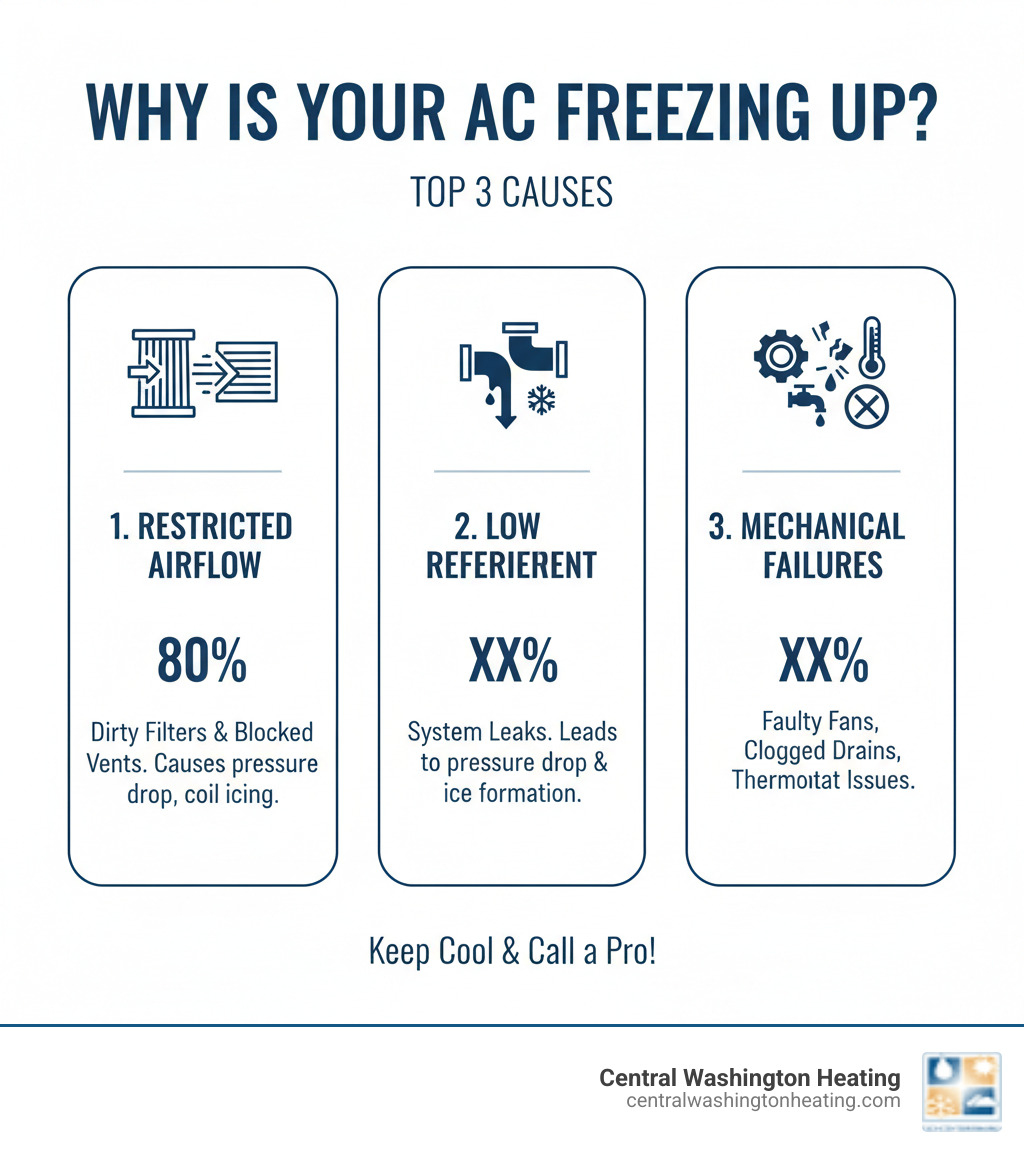
Restricted Airflow: The #1 Cause
When airflow is restricted, your evaporator coil doesn't get enough warm air passing over it. Without that warm air, the refrigerant inside gets too cold, and moisture in the air turns to ice.
Dirty air filters are the biggest troublemaker. A clogged filter severely restricts airflow. In many cases, a simple filter change can solve a frozen AC problem that had homeowners worried about major repairs.

Most filters need swapping every 1-3 months, but if you have pets or live in a dusty area, you might need to change them more often. You can learn how to replace an air conditioner filter or consider upgrading to a Best Home Air Filtration System for better air quality and fewer AC headaches.
Blocked return vents are another sneaky culprit. When furniture, curtains, or laundry blocks your return vents, your system starts gasping for air.
Obstructed supply registers can also throw off your system's balance. While it might seem smart to close vents in unused rooms, closing too many backfires. Your system expects a certain amount of airflow, and blocking too many outlets causes pressure to build and airflow to drop. Keep at least 75% of your vents open.
Dirty evaporator coils prevent proper heat transfer. Over time, dust and grime build up on the coils, acting as insulation. When coils can't absorb heat properly, they get too cold and freeze.
Low Refrigerant: A Sign of a Leak
Many homeowners don't realize that an AC is a sealed system and should never run low on refrigerant. If levels drop, you have a leak.
When refrigerant levels fall, the pressure in your system drops. This pressure drop causes the refrigerant to get much colder as it expands through the evaporator coil—cold enough to freeze any moisture it encounters due to the Joule-Thomson effect.
You might notice hissing or bubbling sounds or that your AC blows warmer air than usual. Reduced cooling is often the first sign before freezing starts.
Low refrigerant isn't a DIY fix. These chemicals require special handling, and it's illegal to vent them into the atmosphere. If you suspect a leak, call a professional. For heat pump owners, our guide on How to Resolve Heat Pump Refrigerant Leak Issues can be helpful.
Mechanical & Drainage Failures
Sometimes, other parts of your system can fail and cause freezing.
A malfunctioning blower fan means your evaporator coil doesn't get the airflow it needs. If the blower runs too slowly, makes odd noises, or doesn't run at all, condensation can build up and freeze. Our AC Condenser Fan Motor Failure Signs & Solutions guide covers the warning signs.
Clogged condensate drain lines can also contribute to freezing. Your AC removes humidity, and that water needs to drain. When lines get clogged, water backup occurs. If this water gets cold enough, it can freeze around the evaporator coil.
Thermostat issues can trigger freezing. A faulty thermostat might tell your AC to run constantly. Running AC in cold weather (below 60°F) can also cause problems, as the system isn't designed for those conditions.
AC freezing up signals an imbalance in your system. The good news is that many of these issues are preventable with proper maintenance.
First Response: What to Do When You Find a Frozen AC
Finding your AC covered in ice can be shocking, but taking the right steps immediately can prevent costly damage and get you back to cool living.
Step 1: Thaw Your AC Unit Safely
Your frozen AC needs time to recover safely.
Turn off cooling at your thermostat immediately. This is crucial, as running the cooling cycle with ice present can cause serious damage. Switch your system from "Cool" to "Off" to stop the compressor.
Next, set your fan to ON instead of "Auto." The fan will circulate warm indoor air over the frozen coils, gently melting the ice.
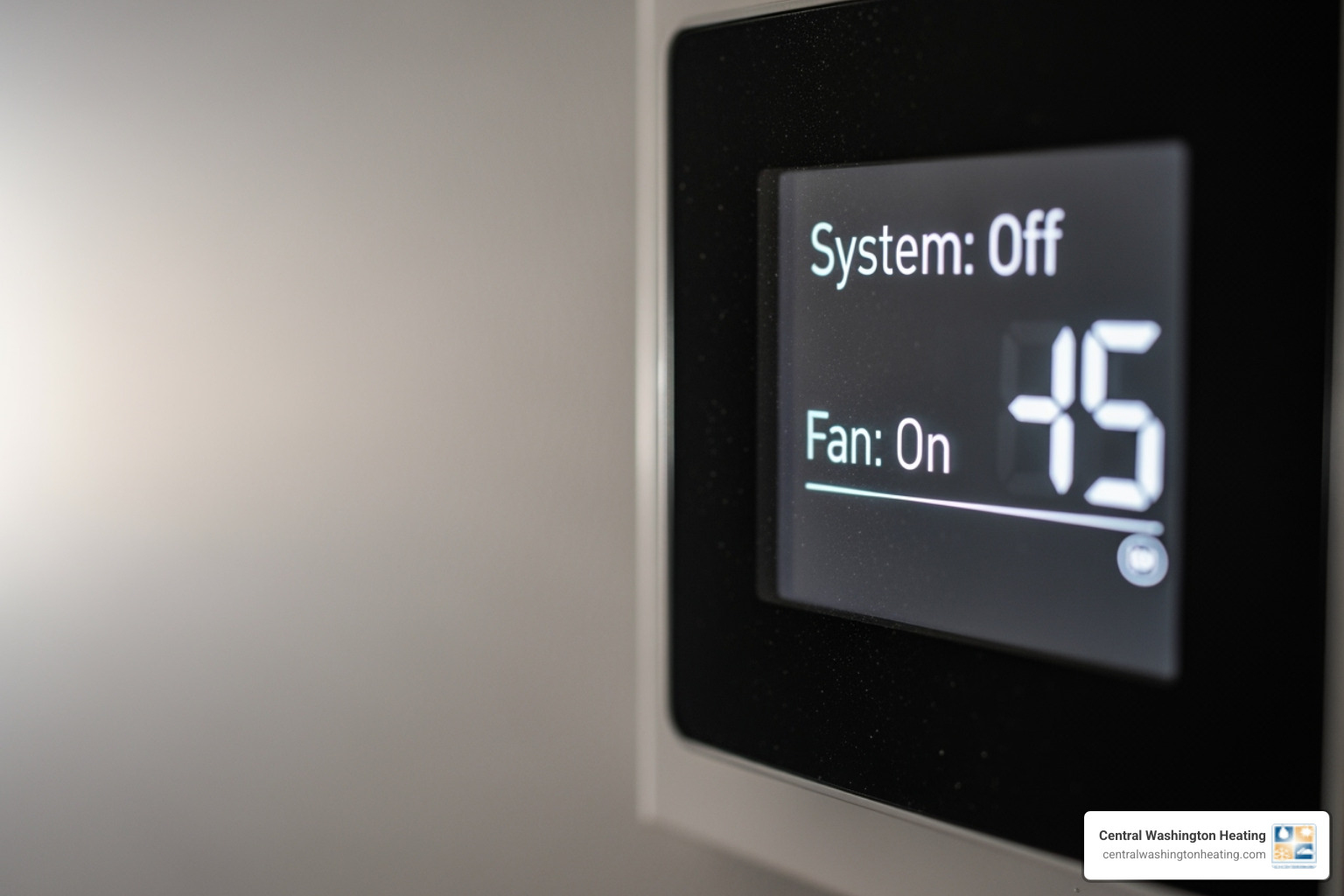
Now, wait for the ice to melt completely. This can take anywhere from one hour to a full day, depending on the ice buildup. Resist the urge to use an ice scraper or other tools. Those coils and refrigerant lines are delicate, and one wrong move can cause a major repair.
Step 2: Perform a Basic Inspection
While the unit thaws, you can inspect it for common culprits, which can save you time and money.
Start with the air filter—the usual suspect. Pull it out and hold it to the light. If you can't see through it, replace it with a fresh one.
Next, walk around your home and inspect all your vents for blockages. Ensure furniture, curtains, or other items aren't blocking return or supply vents.
Head outside to clear any debris from your outdoor unit. Leaves, grass clippings, and other yard waste can block the airflow your system needs. Give your outdoor unit some breathing room.
Finally, check your condensate drain line (usually a white PVC pipe from your indoor unit) for standing water or visible clogs. A backed-up drain can contribute to freezing.
These simple checks often reveal why your AC froze up. For more information, check out our guide on Why Is There Ice Forming on AC Unit?. Once the system has thawed, you can try running it again, but watch it closely to ensure the problem doesn't return.
Proactive Prevention: How to Stop Your AC From Freezing
The best time to think about AC freezing up is before it happens. With some planning and smart habits, you can keep your Central Washington home cool all summer without the frustration of a frozen air conditioner.
The Power of Routine Maintenance
Regular maintenance is like a check-up for your AC, catching small problems before they become expensive.
Changing your air filter regularly is the single most important thing you can do. A clean filter allows proper airflow over the evaporator coils, preventing them from getting too cold. Check your filter monthly and replace it every 1 to 3 months, depending on your household. If you have pets or kids, you might need to change it more often. This simple step can boost your system's efficiency by 5% to 15%.
Professional tune-ups are an annual physical for your AC. Schedule yours in spring before the heat hits. During these visits, technicians inspect and clean coils, check refrigerant levels, examine the blower fan, clear the condensate drain, and check electrical connections. We recommend checking refrigerant levels every six months and inspecting blower fans annually. These check-ups catch minor issues before they become major problems. You can read more about the Benefits of Regular AC Maintenance on our blog.
Keep your outdoor unit breathing easy by clearing away leaves, grass, and debris. Trim shrubs or plants to at least two feet away from the unit for good airflow.
Clean your condensate line a few times a year by pouring a cup of distilled vinegar mixed with water down the drain to kill algae and prevent clogs.
For more tips, check out this resource on maintaining your AC from energy.gov.
Smart Habits for Preventing an AC freezing up
Your daily choices also make a difference in preventing AC freezing up.
Programmable thermostats are game-changers. They let you set schedules and can automatically shut down your AC when outdoor temperatures drop below 60 degrees, as cool nights can cause freezing if the system keeps running. Smart thermostats help you operate your system efficiently.
Resist setting extreme temperatures, especially during heat waves. Cranking your thermostat down strains your system and increases freezing risk.
Keep all your vents open and clear. While it seems logical to close vents in unused rooms, this disrupts the pressure balance in your ductwork, leading to airflow problems that cause freezing. Keep at least three-quarters of your supply registers open.
Take a quick walk around your home to ensure furniture, drapes, or laundry isn't blocking your air vents. Your AC needs to pull in warm air just as much as it blows out cool air.

Combining regular professional maintenance with these smart habits sets you up for a reliable, frost-free cooling season.
When to Call a Professional for a Frozen AC
While thawing your unit and checking the air filter can solve simple AC freezing up issues, some problems require professional expertise. Knowing when to call can prevent a manageable repair from becoming a major expense.
Signs You Need Expert Help for an AC freezing up
If your AC keeps freezing up after you've thawed it, replaced the filter, and cleared the vents, it's time to call a professional.
Persistent freezing after basic fixes is a clear signal of a deeper problem. This could indicate a refrigerant leak or coils that need professional cleaning. When the same problem returns, it needs a professional diagnosis.
Suspected refrigerant leaks require expert attention. Hissing or bubbling sounds, or poor cooling despite good airflow, likely mean a leak. Your AC is a sealed system and shouldn't lose refrigerant. Handling these chemicals requires certification and special equipment, and venting them is illegal.
Strange noises like grinding or squealing are another red flag. Our guide on Why AC is Making Strange Noises can help you identify the sounds, but fixing them is a job for pros.
Electrical issues are serious safety concerns. Flickering lights, frequent breaker trips, or burning smells require an immediate call to a professional.
Fan motor problems are also beyond DIY repair. If your indoor blower isn't running or sounds like it's struggling, your system can't move air properly, leading to inevitable freezing. Fan motor repair requires specialized tools and knowledge.
When you're dealing with any of these issues in the Central Washington area, our team provides expert AC Repair in Wenatchee, WA and surrounding communities.
Why Ignoring an AC freezing up is a Costly Mistake
It's tempting to hope the problem resolves itself, but ignoring a frozen AC is a costly strategy.
Compressor damage is the biggest risk of persistent freezing. Your compressor is the heart of your AC and is designed to handle refrigerant vapor, not liquid. When coils freeze, liquid refrigerant can flow back to the compressor (a condition called "liquid slugging") and destroy this expensive component.
Reduced efficiency means your system works harder but accomplishes less. A frozen coil can't absorb heat, so your AC runs constantly without cooling your home.
Higher energy bills naturally follow when your system runs non-stop. Your utility costs will climb while your comfort level drops.
Complete system failure is the ultimate consequence. What starts as ice can cascade into multiple component failures, potentially requiring a full system replacement. Most AC freezing up problems are straightforward to fix when caught early. The longer you wait, the more complicated the solution becomes. If you notice these or other Signs Your AC is About to Break Down, take action promptly.
Frequently Asked Questions about a Frozen AC
When your AC is freezing up on a hot day, it's natural to have questions. Here are answers to the most common questions we receive from homeowners in Central Washington.
How long does it take for a frozen air conditioner to thaw?
Patience is key when your AC freezing up needs to recover. Most units take 1 to 24 hours to thaw completely, depending on several factors.
- Ice thickness is the biggest factor. A light frost may melt in an hour or two, while a thick layer of ice could take a full day.
- Ambient temperature also matters. The warmer your home, the faster the ice will melt. This is why we recommend setting the fan to "On" to circulate warm indoor air, which acts like a gentle hair dryer for the coils.
- Airflow from the fan creates the ideal environment for safe thawing. The fan keeps moving warm air over the ice, speeding up the process naturally.
It's crucial to wait until all ice has melted before restarting the cooling mode. Rushing this step will cause immediate refreezing and potential damage.
Can I just remove the ice and keep running my AC?
No. It's tempting to scrape the ice off, but manually removing it and running your AC is one of the worst things you can do.
- The ice is a symptom, not the problem. Scraping it away doesn't fix the root cause, whether it's a dirty filter, low refrigerant, or a mechanical issue. The coils will just freeze again.
- You risk serious damage to the delicate evaporator coils. Using sharp objects can puncture them, creating a refrigerant leak and a more expensive repair.
- The ice will return immediately if the underlying cause isn't addressed. We've seen coils freeze solid again within hours.
- Continuing to run a frozen system puts your compressor at risk. This is the most expensive component, and forcing it to work under these conditions can lead to complete failure.
Is a frozen AC unit an emergency?
A frozen AC is urgent but not an immediate safety hazard like a gas leak or electrical fire.
However, running your AC while it's frozen can quickly create an expensive emergency. Every minute the compressor struggles against the ice increases the risk of major component failure. What starts as a manageable issue can snowball into a complete system replacement if ignored.
The smart approach is to turn it off immediately and address the cause promptly. This prevents a manageable problem from becoming a costly disaster. If you're unsure about the urgency, our guide on What Qualifies as AC Emergency can help.
Your Guide to a Frost-Free AC System
Finding ice on your AC on a hot day is confusing, but this guide has armed you with the knowledge to tackle this common problem.
AC freezing up usually boils down to three main culprits: restricted airflow (often from a dirty filter), low refrigerant (signaling a leak), and mechanical hiccups like clogged drains or faulty thermostats.
If you find ice, remember to turn off the cooling immediately and let your fan do the thawing. Patience prevents a fixable problem from becoming an expensive disaster.
The real secret weapon is prevention. Regular filter changes, professional tune-ups, and keeping vents clear are your best defense against ice. Smart habits, like using a programmable thermostat and keeping furniture away from vents, also ensure proper airflow.
Don't let a frozen AC turn your Central Washington home into a sauna. If you've tried basic troubleshooting and the ice returns, or you hear strange noises or suspect a leak, it's time to call the experts.
At Central Washington Heating, we understand how frustrating AC problems are during our sweltering summers. We're here to diagnose issues quickly and restore your comfort. Schedule your AC maintenance in Chelan, WA and let us help you enjoy a frost-free cooling season.

Written by the Central Washington Heating and Air team
The techs and comfort advisors who've kept the Wenatchee Valley heated, cooled, and breathing easy for 30+ years — family & veteran owned, with 40+ years of combined industry experience.
- Licensed & insured · LIC# CENTRWH742JN
- Daikin Comfort Pro certified
- Wenatchee, WA
Last updated July 29, 2026
Ready for comfort you can count on?
Schedule service, request a free estimate, or call now for 24/7 emergency help. Our team is standing by across the Wenatchee Valley.
Get started today
Free estimates on installs · no-pressure, written quotes
Schedule My ServiceCall (509) 776-0247Mon–Fri: 8:00 AM – 4:30 PM · 24/7 for emergencies
Already have a quote? Get a free second opinion →