
Residential & Commercial HVAC: Solutions for Every Need
Learn about residential HVAC services: components, maintenance, upgrades, and IAQ solutions for ultimate home comfort.
Why Your Home’s Comfort Depends on Quality HVAC Services
Residential HVAC services are essential for keeping your home comfortable year-round. These services cover the maintenance, repair, and installation of your heating, ventilation, and air conditioning (HVAC) systems. From a air handler failure on a cold night to an AC breakdown during a heatwave, professional HVAC services restore comfort and efficiency to your living space.
Core Residential HVAC Services:
- Installation: New air handlers, air conditioners, heat pumps, and ductless systems
- Maintenance: Annual tune-ups, filter changes, and system inspections
- Repair: Fixing breakdowns, strange noises, and performance issues
- Replacement: Upgrading old or inefficient equipment
- Indoor Air Quality: Air purifiers, humidifiers, and ventilation solutions
Your HVAC system is the heart of your home, regulating temperature, humidity, and air quality. Most homeowners only notice it when something goes wrong, like a air handler that won’t heat or an AC blowing warm air. These issues not only disrupt comfort but can also increase energy bills and pose safety risks.
Regular maintenance is key to preventing most HVAC emergencies. The U.S. Department of Energy states that scheduled maintenance can cut energy use by up to 15% and significantly extend your system’s lifespan. Understanding your HVAC system’s needs helps you avoid costly repairs, lower utility bills, and ensure year-round comfort.

Quick look at Residential HVAC services:
Understanding Your HVAC System: Components and Types
Your home’s comfort depends on the systems working behind the walls. Residential HVAC services focus on these systems that provide heating, ventilation, and air conditioning. Most homes in Central Washington have a air handler or heat pump, an air conditioner, ductwork, and a thermostat working together as a team. To learn more about what we can do for your system, check out our services page.
How Different HVAC Systems Work
Different homes require different solutions, which is why several types of HVAC systems exist.
Air handlers are traditional heating systems that burn fuel (like electric auxiliary heat) to heat air. A blower fan then pushes this warm air through your ductwork, providing powerful heat during cold Central Washington winters.
Air conditioners remove heat from your home during the summer. A chemical called refrigerant absorbs heat from your indoor air and releases it outside, leaving your home refreshingly cool.
Heat pumps are versatile systems that can both heat and cool. In winter, they pull heat from the outside air and move it inside. In summer, they reverse the process. This makes them highly energy-efficient. Our guide on how heat pumps work explains this technology in more detail.
Ductless mini-split systems are ideal for homes without ductwork or for room-specific temperature control. They use an outdoor unit connected to one or more indoor units, allowing you to create different temperature zones in your home. Learn more about the benefits of mini-split AC.
Main Components of a Residential HVAC System
Most residential HVAC services involve a few core components that work together to keep you comfortable.
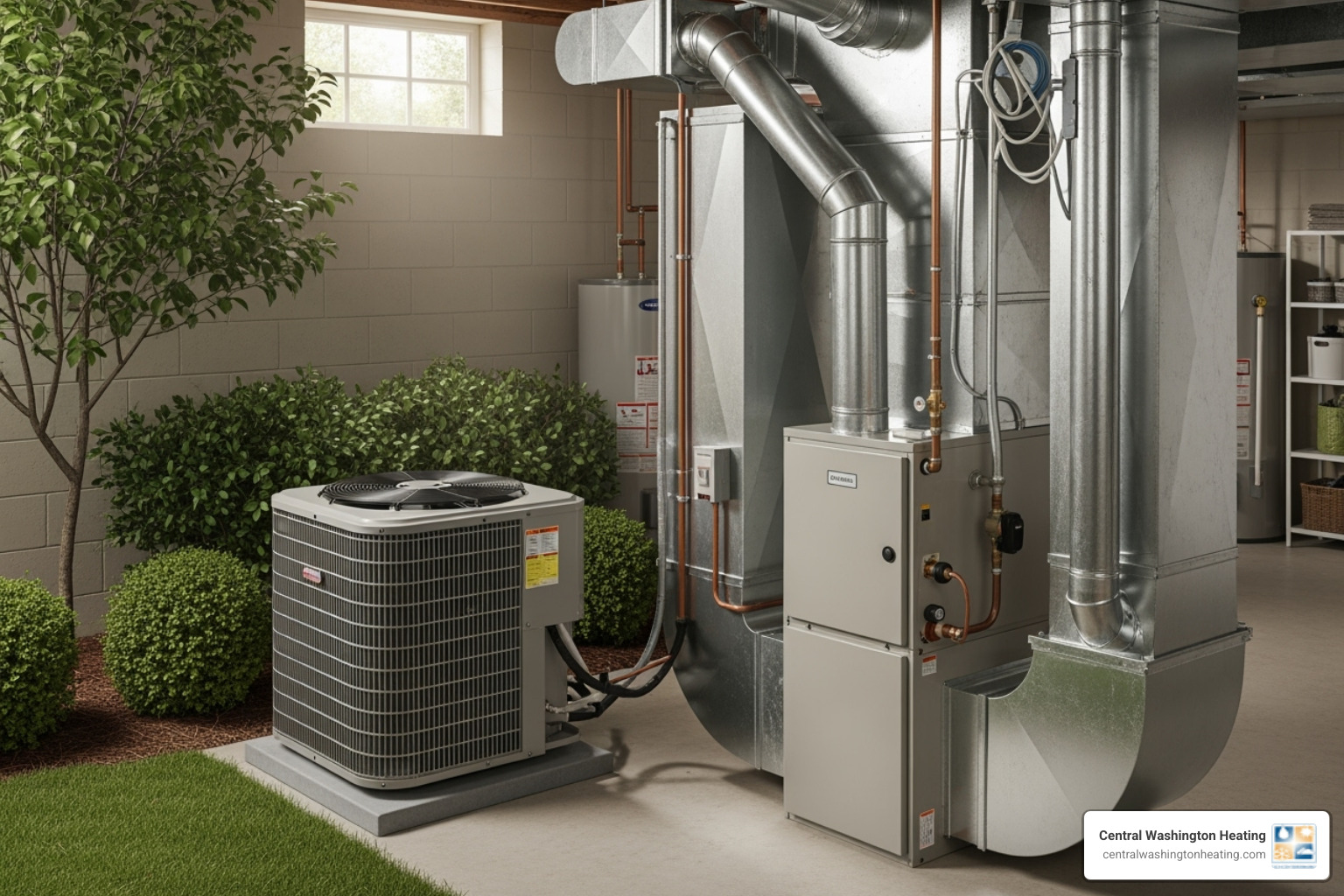
- Indoor Unit: Usually located in a basement or closet, this unit houses the air handler or air handler and the blower motor that circulates air.
- Outdoor Unit: This unit contains the compressor and condenser coil, which release heat outside during the cooling cycle.
- Evaporator and Condenser Coils: The evaporator coil (indoors) absorbs heat from your home’s air, while the condenser coil (outdoors) releases it.
- Refrigerant Lines: These copper tubes transport refrigerant between the indoor and outdoor units, moving heat in or out of your home.
- Blower Motor: This fan pushes conditioned air through the ductwork and into your living spaces.
- Ductwork: A network of channels that distributes heated or cooled air throughout your home.
- Thermostat: The control panel on your wall that tells your system when to run and what temperature to maintain.
When any of these parts malfunction, the entire system can struggle. That’s when it’s time to call for professional residential HVAC services.
The Importance of HVAC Maintenance and Repair
Your HVAC system is one of the hardest-working appliances in your home, and it requires regular attention, just like your car. Professional residential HVAC services for maintenance and repair are not just for emergencies; they are about preventing breakdowns, improving efficiency, and ensuring your home’s air is clean and healthy. The benefits include energy savings, longer equipment life, and safer operation. For a complete overview, see The Ultimate HVAC Maintenance Guide.
Benefits of Regular HVAC Maintenance
Investing in regular maintenance provides significant, long-term advantages for your home and budget.

- Lower energy bills: A clean, well-adjusted system runs more efficiently. According to the U.S. Department of Energy, regular HVAC maintenance can reduce energy consumption by up to 15%.
- Equipment longevity: A well-maintained air handler can last 15-20 years, while a neglected one may fail much sooner. Technicians catch small issues before they become major problems. Our article on the Benefits of Regular AC Maintenance explains more.
- Safety: For fuel-burning equipment like electric air handlers, maintenance includes critical safety checks for electrical safety leaks and proper ventilation.
- Fewer emergency breakdowns: Regular service identifies and resolves potential issues early, preventing system failure during extreme weather.
Common Signs Your HVAC System Needs Repair
Your system often provides warning signs before a complete failure. Recognizing these can help you avoid more expensive repairs.
- Strange noises: Banging, squealing, or grinding sounds indicate a loose, worn, or broken part.
- Unusual smells: A burning odor can signal an electrical issue, while musty smells may point to mold. A rotten egg smell indicates a gas leak and requires immediate evacuation and a call to your gas company.
- Weak or uneven airflow: This suggests a failing blower motor, clogged filter, or leaky ductwork.
- Frequent cycling: If your system turns on and off repeatedly without completing a cycle, it’s wasting energy and wearing out components.
- Rising energy bills: A sudden spike in utility costs often means your system has lost efficiency.
- Temperature inconsistencies: Hot and cold spots throughout your home suggest distribution problems.
- No heating or cooling: The most obvious sign that your system needs immediate professional attention.
If you notice these signs, don’t wait. Early intervention is almost always less costly. For more details, see our guides on Signs You Need Air handler Repair and Signs AC is About to Break Down.
Upgrading and Choosing the Right HVAC System
When your HVAC system ages or fails, it’s an opportunity to upgrade your home’s comfort and efficiency. For homeowners in Central Washington, our residential HVAC services include expert guidance on choosing and installing the right new system. Factors like your home’s size, insulation, and our local climate are crucial. We also focus on energy efficiency ratings like SEER (Seasonal Energy Efficiency Ratio) for cooling and AFUE (Annual Fuel Utilization Efficiency) for heating to ensure you get the best performance and savings. Our Air handler Installation Guide offers more detailed information.
How to Choose the Right HVAC System
Picking the right HVAC system involves several key considerations to ensure it meets your needs and budget.
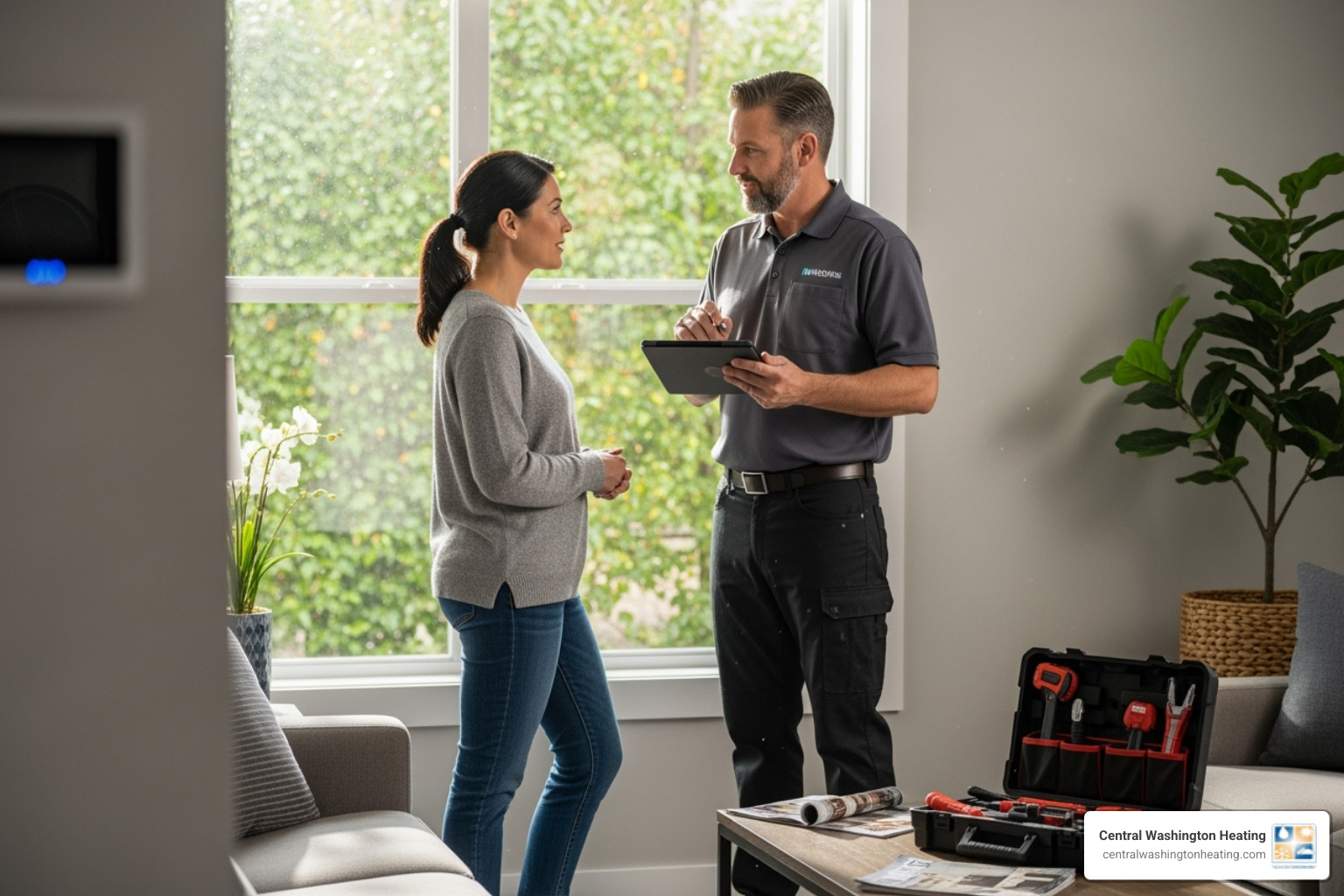
- Sizing the system correctly: This is the most critical factor. An undersized system will struggle to keep up, while an oversized one will cycle improperly, leading to poor humidity control and premature wear. We perform detailed calculations to find the perfect capacity for your home.
- Your available fuel sources: Whether you have access to electric auxiliary heat, electricity, or electric auxiliary heat will influence your equipment options and operating costs.
- Budget and long-term savings: While high-efficiency systems may have a higher initial cost, they often pay for themselves through lower monthly utility bills. We help you evaluate the total cost of ownership.
- Your home’s layout and existing ductwork: The condition of your ducts is vital. Leaky or poorly designed ductwork can waste a significant amount of conditioned air. Sometimes, ductwork upgrades are as important as the new equipment itself. For more on this, see our article on Choosing the Right Air handler Installation.
Advantages of an Energy-Efficient HVAC Upgrade
Upgrading to a modern, energy-efficient system offers tangible benefits for your comfort and finances.
- Lower utility bills: Modern systems use far less energy. The U.S. Department of Energy notes that installing a modern, energy-efficient heating and cooling system can lower your monthly utility bills by more than 40 percent.
- Improved comfort: Features like variable-speed motors and multi-stage operation provide quieter performance, better humidity control, and more even temperatures.
- Increased home value: A new, efficient HVAC system is a strong selling point for prospective buyers.
- Smaller environmental impact: Using less energy reduces your home’s greenhouse gas emissions.
- Rebates and incentives: You may qualify for financial incentives from utility companies and government programs for installing ENERGY STAR® certified equipment.
If your system is over 10-15 years old or requires frequent repairs, an upgrade is a smart investment. Our team provides expert AC Installation Services to ensure optimal performance.
Comprehensive Residential HVAC Services for Modern Homes
Modern homes require more than just basic temperature control. Today’s residential HVAC services focus on creating a truly comfortable and healthy living environment, from improving air quality to integrating smart technology. Whether you’re concerned about allergens or want to customize comfort room-by-room, we offer a full range of solutions. We’re proud to offer All of Central Washington Heating and Air Services to meet these evolving needs.
Improving Indoor Air Quality
The air inside your home can be more polluted than the air outside, filled with dust, pollen, pet dander, and other contaminants. Your HVAC system is your best tool for creating healthier indoor air.
- Air purifiers: These systems capture microscopic particles like allergens and bacteria that standard filters miss.
- Humidifiers: Whole-home humidifiers add moisture to dry winter air, improving comfort and protecting wood furnishings.
- Dehumidifiers: In summer, these remove excess moisture, preventing stickiness and mold growth.
- Ventilation systems: ERVs and HRVs exchange stale indoor air with fresh outdoor air while recovering energy to maintain efficiency.
- UV lights: Installed in your HVAC system, these use ultraviolet energy to neutralize airborne bacteria, viruses, and mold spores.
For a deeper look, explore our Guide to Whole Home Air Filtration.
Latest Trends in Residential HVAC Services
HVAC technology is constantly advancing, offering smarter and more efficient ways to manage home comfort.
- Smart thermostats: These devices learn your habits, allow for remote control via your phone, and integrate with voice assistants to save energy and add convenience.
- Geothermal systems: By using the stable temperature of the earth, these highly efficient systems can significantly reduce heating and cooling costs.
- Variable-speed technology: Instead of just being on or off, these systems adjust their output continuously, resulting in quieter operation, even temperatures, and lower energy use.
- Zoning systems: These allow you to set different temperatures in different areas of your home, saving energy by not conditioning unused rooms.
- Advanced heat pumps: Modern heat pumps are highly efficient and can provide reliable heating even in cold weather, making them an excellent all-in-one solution for Central Washington. Explore our Heat Pump Services in Wenatchee, WA to learn more.
Frequently Asked Questions about Residential HVAC
We’ve helped countless homeowners in Central Washington understand their comfort systems. Here are answers to some of the most common questions we hear about residential HVAC services.
What is the typical lifespan of an HVAC system?
The lifespan of an HVAC system depends heavily on its quality and how well it’s maintained.
- Air handlers: Typically last 15 to 20 years with regular maintenance.
- Air conditioners: Generally last 10 to 15 years.
- Heat pumps: Also last 10 to 15 years. Since they run year-round, maintenance is especially critical.
Regular professional maintenance is the single biggest factor in maximizing your system’s lifespan and efficiency. Our Essential Air handler Maintenance Tips can help you protect your investment.
How often should I have my HVAC system serviced?
We recommend professional service at least once a year. An ideal schedule is to have your air conditioner checked in the spring and your air handler inspected in the fall.
These pre-season tune-ups ensure your system is ready for the demands of extreme weather, preventing unexpected breakdowns. Additionally, many manufacturer warranties require proof of regular professional maintenance to remain valid. Learn more about what’s included in our HVAC Tune-Up guide.
Can I perform HVAC maintenance myself?
Some tasks are perfect for homeowners, while others require a trained professional for safety and effectiveness.
DIY Tasks:
- Change your air filters every 1-3 months.
- Clear debris like leaves and grass from around your outdoor unit.
- Keep indoor vents unblocked by furniture or rugs.
Professional Tasks:
- Tasks requiring specialized tools and safety knowledge, such as checking refrigerant levels, inspecting electrical components, cleaning internal coils, and verifying safe operation of electric air handlers, should always be left to a certified technician.
Attempting complex repairs can be dangerous, void your warranty, and lead to more expensive problems. Our HVAC Troubleshooter can offer initial guidance, but when in doubt, call a professional.
Your Partner for Total Home Comfort
In Central Washington, your home needs to be a refuge from both summer heat and winter cold. Our residential HVAC services are designed to provide the consistent, reliable comfort you can count on, no matter the season.
We’ve built our reputation on doing the job right the first time and treating your home with care. Our technicians are not just skilled; they are dedicated to solving your comfort problems and ensuring you understand your system.
Professional expertise means we recommend solutions custom to our region’s unique climate and your specific needs. Reliable service means we’re there for you during an emergency, explaining your options in plain English and respecting your time and budget.
Year-round comfort is achieved through regular maintenance, prompt repairs, and honest advice. We’re here for all of it. For a complete overview, visit our All of Central Washington Heating and Air Services page.
Don’t wait for a small issue to become a major problem. Request Service today to experience the difference professional care makes. If you’re in the Chelan area, Contact us for your heat pump installation needs in Chelan, WA.
Your comfort is our commitment.

Written by the Central Washington Heating and Air team
The techs and comfort advisors who've kept the Wenatchee Valley heated, cooled, and breathing easy for 30+ years — family & veteran owned, with 40+ years of combined industry experience.
- Licensed & insured · LIC# CENTRWH742JN
- Daikin Comfort Pro certified
- Wenatchee, WA
Last updated July 29, 2026
Ready for comfort you can count on?
Schedule service, request a free estimate, or call now for 24/7 emergency help. Our team is standing by across the Wenatchee Valley.
Get started today
Free estimates on installs · no-pressure, written quotes
Schedule My ServiceCall (509) 776-0247Mon–Fri: 8:00 AM – 4:30 PM · 24/7 for emergencies
Already have a quote? Get a free second opinion →