
Heat Pump TLC: Why Annual Service is a Must (and What to Do in an Emergency)
Unlock peak performance & savings with essential heat pump annual service. Learn maintenance benefits, DIY care, and emergency solutions.
Why Your Heat Pump Needs Annual TLC
Heat pump annual service is essential for keeping your system running efficiently year-round. Unlike air handlers or air conditioners that work seasonally, your heat pump operates continuously – heating in winter, cooling in summer – making regular maintenance critical for performance and longevity.
Quick Answer: What Heat Pump Annual Service Includes
- Frequency: At least once yearly (ideally twice – spring and fall)
- Key Tasks: Coil cleaning, refrigerant checks, electrical inspections, filter replacement
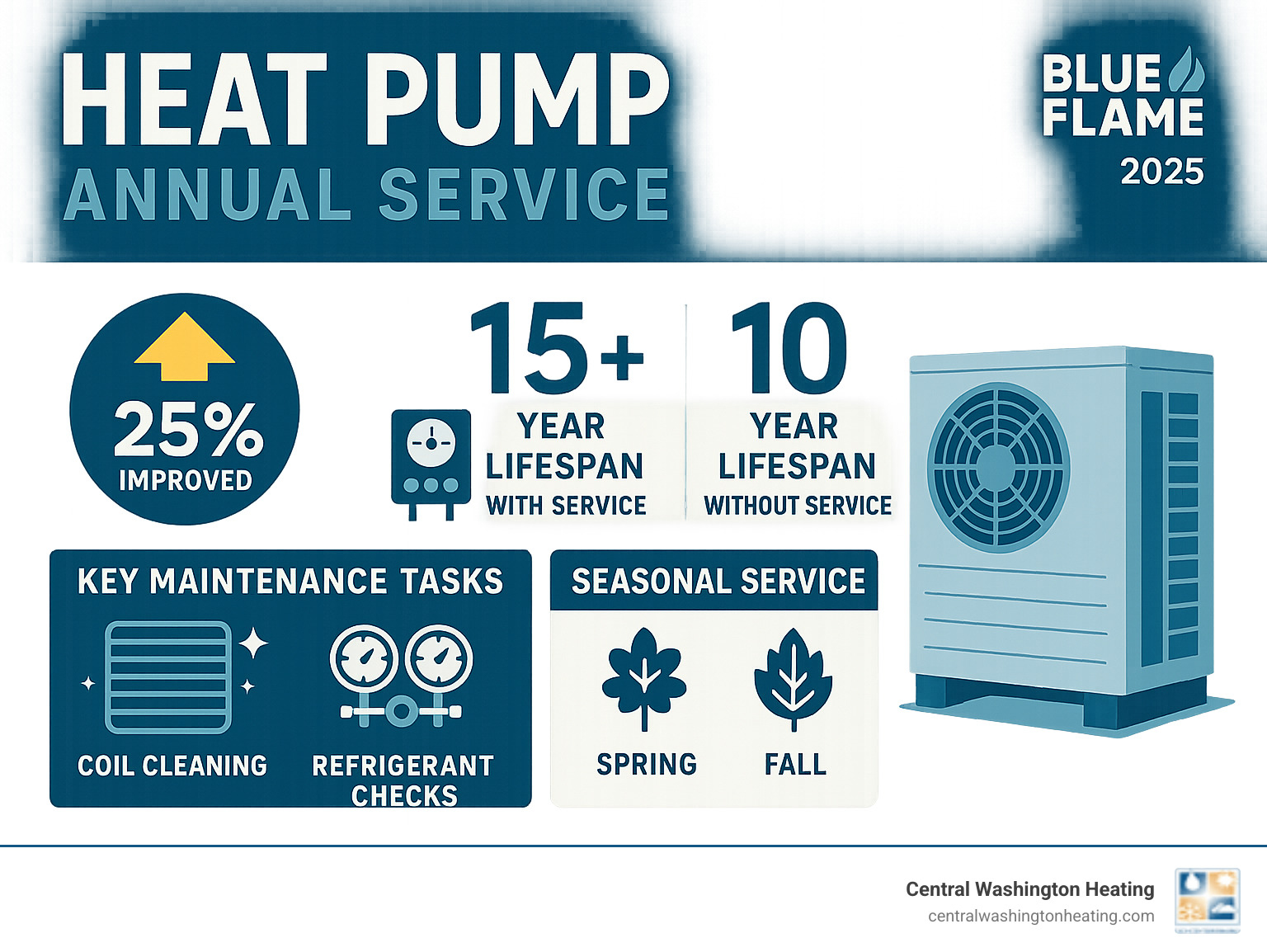
- Benefits: Up to 25% better efficiency, extended 15+ year lifespan vs. 10 years without service
- Professional vs. DIY: Complex tasks require technicians; homeowners handle filters and outdoor unit cleaning
Your heat pump works harder than most HVAC systems. Research shows the difference between a well-maintained and neglected heat pump can be 10-25% in energy consumption. That’s like driving your car for years without an oil change – eventually, something’s going to break down.
Heat pumps are built to last 15+ years with proper care. Skip the annual service, and you’ll be lucky to get 10 years out of your investment. The constant operation throughout Central Washington’s varied seasons puts stress on components like coils, motors, and refrigerant lines that only professional maintenance can address.
The good news? Annual service isn’t just about preventing breakdowns. It’s about keeping your energy bills low, your home comfortable, and your warranty valid. Many manufacturers require proof of regular maintenance to honor warranty claims.
Why Regular Maintenance is a Non-Negotiable Investment
We understand that scheduling regular maintenance for your heat pump might feel like just another item on the to-do list. But trust us, it’s a non-negotiable investment in your home’s comfort, your wallet, and the longevity of one of your most crucial home systems. Our heat pumps are the workhorses of our homes, providing both heating and cooling, often running year-round. This continuous operation, unlike a air handler or AC that rests for half the year, means your heat pump experiences more wear and tear.
Think of it this way: your heat pump is working hard every single day, quietly keeping your home cozy in the winter and cool in the summer. Just like any hardworking machine, it needs regular check-ups to stay in top shape. Without it, minor issues can quickly escalate into major, costly problems. According to the U.S. Department of Energy, proper operation and maintenance of your heat pump will save energy and ensure efficient performance. The difference between the energy consumption of a well-maintained heat pump and a severely neglected one can range from 10% to 25%. That’s a significant chunk of your energy bill going to waste!
Regular maintenance ensures system reliability and peak performance. It’s about proactive care, catching small issues before they become big headaches. We’re talking about avoiding that dreaded moment when your heat pump decides to take an unscheduled vacation on the coldest (or hottest) day of the year. By extending the life of your heat pump with regular maintenance, you protect your investment and ensure your family’s continuous comfort.
The Core Benefits of Heat Pump Annual Service
Let’s dive a little deeper into why we champion regular heat pump annual service. The benefits are truly profound and extend far beyond just keeping your system running:
- Increased Efficiency: This is a big one for your energy bills. Regular tune-ups can make your heat pump up to 25% more efficient. When components are clean, calibrated, and running smoothly, your heat pump doesn’t have to work as hard to maintain your desired temperature. This directly translates to lower utility bills. Imagine saving a quarter on every dollar you spend on heating and cooling!
- Lower Utility Bills: As mentioned, efficiency is directly tied to your energy consumption. A well-maintained heat pump uses less energy, which means more money stays in your pocket. Who doesn’t love that?
- Extended Lifespan: A heat pump is a significant investment. With proper care and regular heat pump annual service, your system can enjoy a lifespan of over 15 years. Without proper service, you’ll be lucky to get 10 years out of it. It’s like giving your heat pump a long, healthy life, rather than a short, stressful one.
- Fewer Breakdowns: This is perhaps the most immediate and appreciated benefit. Regular maintenance identifies and addresses minor issues—like a loose wire or a slightly low refrigerant level—before they can snowball into major malfunctions that leave you without heating or cooling. It reduces the chance of unexpected repairs, saving you stress and potential emergency service calls.
- Improved Home Comfort: An efficient heat pump provides consistent, even heating and cooling throughout your home. No more hot spots or cold zones! When your system is well-maintained, it delivers the precise comfort you expect, making your living space truly enjoyable.
- Validated Warranty: Many heat pump manufacturers require proof of professional annual maintenance to keep your warranty valid. Skipping service could mean that if a major component fails, you might be on the hook for the full replacement cost, rather than having it covered by the manufacturer. It’s a small annual investment to protect a much larger one.

How Often and When Should You Service Your Heat Pump?
Here’s where we get a little specific. Because your heat pump works so diligently year-round, operating as both your heating and cooling system, we generally recommend more frequent attention than a traditional air handler or air conditioner.
While a professional technician should service your heat pump at least once a year, ideally, we advise a bi-annual recommendation. That means two professional tune-ups per year:
- Spring Tune-Up: This service prepares your heat pump for the cooling season. After a long winter of heating, it’s crucial to ensure everything is ready to switch gears and efficiently cool your home as temperatures rise in Central Washington. This is when we check refrigerant levels, clean the outdoor coils of any winter grime, and make sure your system is ready for peak performance during the warmer months.
- Fall Check-Up: This is your heat pump’s pre-winter wellness visit. Before the chill truly sets in, we make sure your system is ready to handle the demands of heating your home efficiently. We’ll inspect electrical connections, check the heating elements, and ensure the defrost cycle is functioning correctly, all crucial for reliable operation when the mercury drops.
Scheduling these appointments strategically helps in preparing for extreme weather, ensuring your home remains comfortable no matter what Mother Nature throws our way. It also allows us to catch any potential issues before they become urgent problems, saving you from a chilly winter night or a sweltering summer day without comfort. For more insights on this, check out our guide on Preventative Heat Pump Maintenance.
What to Expect from a Professional Heat Pump Annual Service
When you schedule your heat pump annual service with us, you’re not just getting a quick once-over. You’re investing in a thorough, professional tune-up designed to optimize your system’s performance, extend its lifespan, and ensure your family’s safety and comfort. Our certified technicians follow a comprehensive checklist, leaving no stone unturned.
Here’s what a typical professional heat pump tune-up includes:
- Comprehensive Inspection: We start with a nose-to-tail inspection of your entire system, both indoor and outdoor units. This includes checking for any visible signs of wear, damage, or potential issues that could impact performance.
- System Calibration: We ensure all controls and settings are properly calibrated to deliver optimal performance and efficiency. This includes checking thermostat accuracy and ensuring it’s communicating correctly with your heat pump.
- Professional Cleaning: This is a crucial step! We carefully clean components that accumulate dirt and debris, which can significantly hinder efficiency. This includes both indoor and outdoor coils, which are vital for heat transfer.
- Safety Checks: We prioritize your safety. Our technicians perform thorough safety checks on electrical connections, wiring, and other components to ensure everything is operating safely and to prevent potential hazards.
Here’s a more detailed list of what we check and address during your professional heat pump annual service:
- Inspect and clean indoor/outdoor coils
- Check refrigerant levels and for leaks (low refrigerant can dramatically reduce efficiency and damage your compressor)
- Lubricate motors and moving parts to reduce friction and wear
- Inspect and tighten electrical connections to ensure safe and consistent power flow
- Test thermostat calibration and operation to ensure accurate temperature control
- Inspect blower components and belts for proper function and wear
- Clean condensate drain line to prevent clogs and water damage
- Verify proper airflow through the system and ductwork
- Test system controls and safety features to ensure all components are working as they should
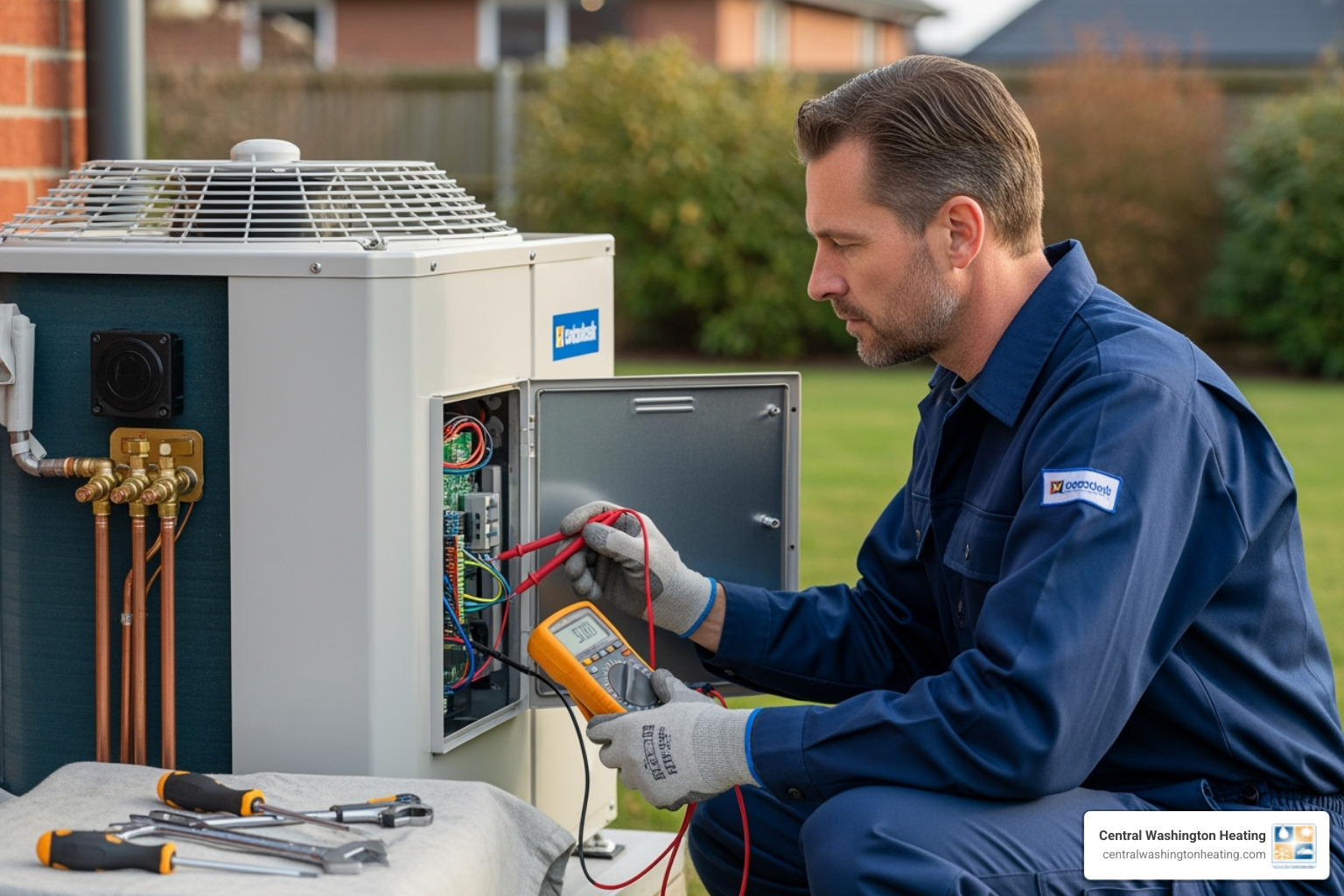
Our goal is to ensure every component of your heat pump is working in harmony, delivering efficient and reliable heating and cooling for your home in Central Washington. We adhere to industry best practices and manufacturer guidelines, ensuring your system receives the top-notch care it deserves.
Your Role: Simple DIY Tasks Between Professional Visits
While professional heat pump annual service is absolutely essential, there’s also a significant role you, as a homeowner, can play in keeping your system happy and healthy between our visits. Think of it as teamwork! These simple DIY tasks can make a big difference in maintaining efficiency, preventing minor issues, and extending the life of your heat pump.
The most critical aspect of homeowner maintenance revolves around airflow management. Your heat pump relies on unrestricted airflow to efficiently transfer heat. Any blockage, whether from a dirty filter or debris around the outdoor unit, forces your system to work harder, consuming more energy and increasing wear and tear.
We’ve put together some Essential Heat Pump Maintenance Tips that you can easily incorporate into your regular home upkeep routine. By staying on top of these tasks, you’ll complement the professional service perfectly, ensuring your heat pump runs smoothly all year long. A little proactive effort on your part can go a long way in maintaining your system’s performance and preventing unexpected headaches.
DIY Tasks to Complement Your Heat Pump Annual Service
Here are the key things you can do yourself to keep your heat pump humming along efficiently:
- Change Air Filters Regularly: This is probably the most important and easiest DIY task. Dirty air filters restrict airflow, making your heat pump work much harder and dramatically reducing its efficiency. We recommend cleaning or changing filters every 3 months or as recommended by the manufacturer or installer. However, if you have pets, allergies, or live in a dusty area of Central Washington, you might need to change them monthly. Better filtration is available from 1-inch pleated filters with higher MERV ratings, which improve indoor air quality. It’s a simple swap that makes a huge difference!

- Clean Outdoor Unit: Your outdoor heat pump unit is exposed to the elements, accumulating dirt, leaves, grass clippings, and other debris. Make sure to clear debris from around the outdoor unit. Keep shrubs at least 18 inches away from the heat pump. Gently rinse the outdoor unit with a hose to wash off dirt and pollen. This ensures proper airflow and prevents the unit from overheating.
- Clear Debris: In addition to keeping the area around the unit clear, make sure there’s no snow or ice buildup on or around the outdoor unit, especially during our colder Central Washington winters. This can significantly impede operation.
- Check Indoor Vents: Ensure all your indoor vents and registers are open and unobstructed. Furniture, rugs, or drapes can block airflow, leading to uneven heating or cooling and reduced system efficiency. If you find yourself with low airflow, our guide on Fixing Low Airflow from Your AC Vents might offer some helpful insights.
- Monitor for Unusual Sounds or Performance Changes: Your heat pump usually operates quietly. If you start hearing strange noises—like grinding, hissing, buzzing, or clicking—or notice a sudden drop in performance (e.g., higher energy bills without increased usage, inconsistent temperatures), it’s a sign that something might be amiss. While not a DIY fix, noticing these changes early allows us to address them before they become major issues.
By taking these small steps, you’re actively contributing to your heat pump’s efficiency, longevity, and your home’s overall comfort. You’re our eyes and ears on the ground, helping us ensure your system gets the care it needs!
Emergency Mode: Troubleshooting Common Issues
Even with the most diligent heat pump annual service and your best DIY efforts, sometimes systems can throw us a curveball. Unexpected problems can arise, and knowing some basic troubleshooting steps can often save you from unnecessary stress, or at least help us diagnose the issue more quickly when you call us for heat pump repair.
Your heat pump is a complex system, and a system malfunction can feel daunting. However, many common issues have straightforward solutions. We’ve seen it all, from minor glitches that a homeowner can resolve in minutes to more serious problems that require a professional touch. Don’t panic! Our goal is to empower you with the knowledge to handle immediate concerns and know when it’s time to call in the experts. For more general guidance on unexpected problems, our Troubleshoot Heat Pump Issues blog is a great resource. And when you know you need help, our guide on When to Call for Heat Pump Repair will come in handy.
What to Do if Your Heat Pump Stops Working
When your heat pump decides to take an unscheduled break, here’s a quick checklist of things you can do before picking up the phone:
- Check Thermostat Settings: It sounds simple, but this is often the culprit! Ensure your thermostat is set to the correct mode (heat or cool) and that the temperature setting is actually calling for heating or cooling. Sometimes, a simple setting change or a dead battery in a wireless thermostat can be the issue. If your Heat Pump is Not Responding to Thermostat Commands, this is your first step.
- Inspect Circuit Breaker: Head to your home’s electrical panel. Look for the circuit breaker labeled for your heat pump (it might be labeled “air handler,” “AC,” or “HVAC”). If it’s tripped (usually in the middle position), flip it completely off, wait a moment, and then flip it firmly back to the “on” position. Sometimes, a temporary power surge can cause a trip.
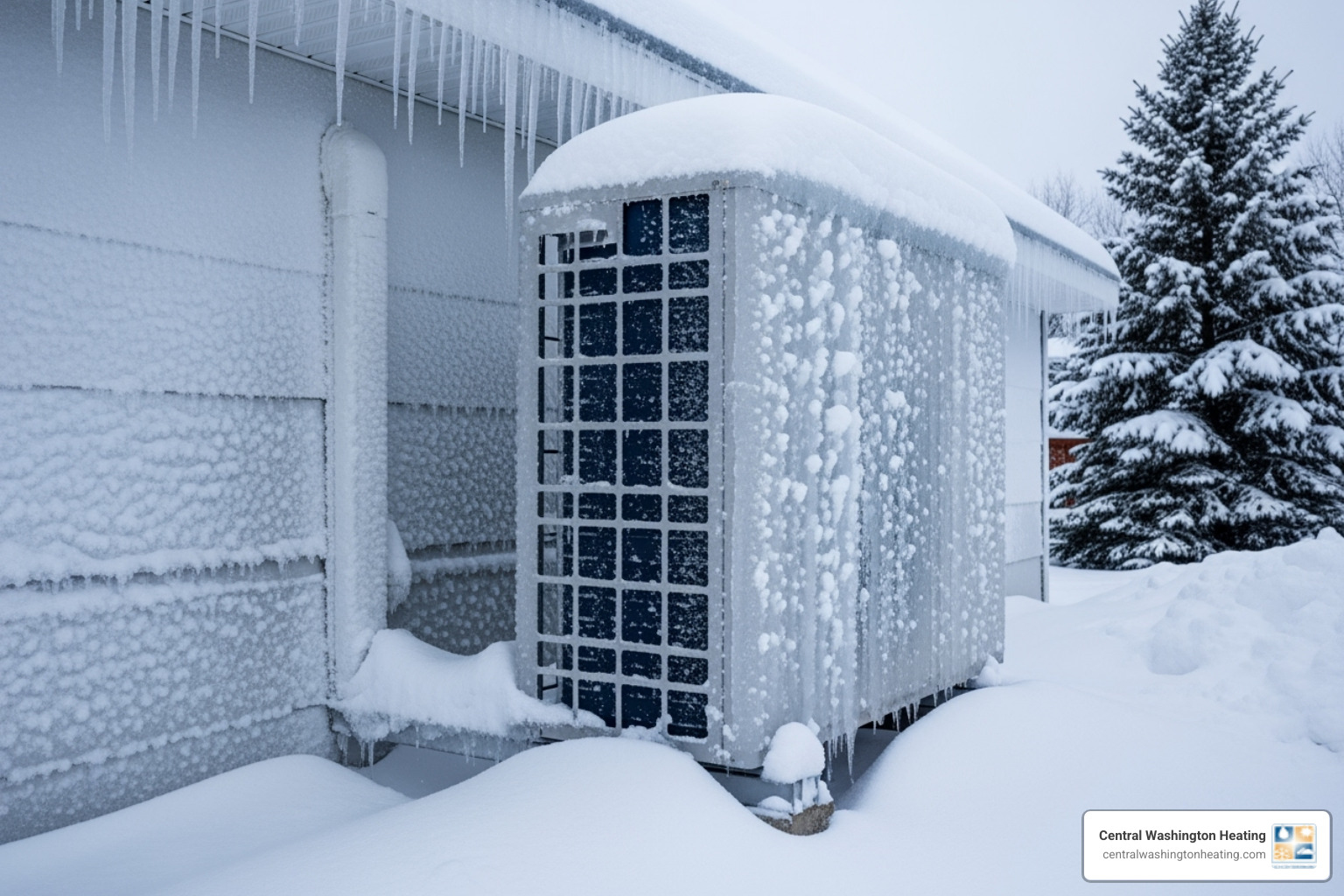
- Look for Ice Buildup: In winter, a little frost on the outdoor unit is normal, as heat pumps have a defrost cycle. However, if your outdoor unit is completely encased in ice, or if ice is forming on the refrigerant lines in summer, that’s a problem. A frozen heat pump in winter can be caused by a malfunctioning defrost cycle, a non-working outdoor fan, low refrigerant, or the outdoor unit being blocked. This usually indicates a more serious issue like a refrigerant leak or a defrost system malfunction, and it’s time to call us.
- Notice Strange Noises: Is your heat pump making unusual sounds—like grinding, hissing, buzzing, or humming? While some operational noises are normal, new or loud sounds can indicate a problem. Our Heat Pump Making Buzzing or Humming Sounds article can help you identify what those noises might mean and when it’s time to call for professional help. Loud noises often point to mechanical issues with motors, fans, or the compressor.
After going through these steps, if your heat pump is still not working, or if you’ve identified a problem beyond basic troubleshooting, it’s definitely time to give us a call. We’re here to help get your system back up and running smoothly, ensuring your comfort is restored as quickly as possible.
Frequently Asked Questions about Heat Pump Maintenance
We often get excellent questions from homeowners about their heat pump maintenance needs. Here are some of the most common ones, along with our expert answers, drawing from years of experience in Central Washington.
How is heat pump maintenance different from air handler or AC service?
This is a fantastic question that gets right to the heart of why heat pumps need special attention. Unlike a air handler (which only heats) or an air conditioner (which only cools), a heat pump is a dual-purpose system. It works year-round, heating your home in the winter and cooling it in the summer. This constant, year-long operation means your heat pump accumulates more wear and tear than a single-season unit.
Because it’s working double duty, a heat pump experiences stress on its components throughout the entire year. This continuous use necessitates more frequent and comprehensive maintenance. While a air handler or AC might get a single annual check-up before its primary season, a heat pump benefits immensely from at least one, and ideally two, service appointments per year – one before the heating season and one before the cooling season. This ensures all components are optimized for their respective tasks and can handle the ongoing demands placed upon them.
Can regular maintenance really extend my heat pump’s lifespan?
Absolutely, and we can’t stress this enough! Regular maintenance is the single most effective way to significantly extend your heat pump’s lifespan. A well-maintained heat pump can comfortably last 15 years or more. We’ve seen many systems in Central Washington exceed this with consistent care.
Conversely, neglecting service can dramatically shorten that lifespan. We’ve witnessed heat pumps fail prematurely, sometimes lasting less than 10 years, simply because they weren’t given the routine attention they needed. Components like the compressor, fan motors, and coils are under constant stress. Without regular cleaning, lubrication, and calibration, these parts work harder, wear out faster, and are more prone to failure.
Think of it like getting regular oil changes for your car. You wouldn’t expect your vehicle to last as long without them, right? The same principle applies to your heat pump. Proactive maintenance catches minor issues before they become major, catastrophic failures, protecting your significant investment and ensuring your system provides reliable comfort for many years to come.
Can I perform all the maintenance on my heat pump myself?
While we highly encourage homeowners to engage in certain DIY maintenance tasks, it’s crucial to understand that you cannot perform all the necessary maintenance on your heat pump yourself. There’s a distinct line between homeowner responsibilities and professional expertise.
As we discussed earlier, you absolutely should be changing your air filters regularly, keeping the outdoor unit clear of debris, and ensuring your indoor vents are unobstructed. These are vital tasks that contribute significantly to your system’s efficiency and health.
However, professional service is crucial for the more complex and technical aspects of heat pump maintenance. Our licensed technicians have the specialized tools, training, and knowledge to safely handle refrigerants (which require specific handling and disposal), check complex electrical components and wiring, and perform in-depth diagnostics. We can identify subtle issues like refrigerant leaks, calibrate sensitive controls, and clean internal components that are inaccessible to homeowners. Attempting these tasks yourself can be dangerous and could void your warranty, potentially causing more harm than good. So, while your DIY efforts are incredibly valuable, they complement, rather than replace, the essential professional heat pump annual service.
Keep Your Home Comfortable with Expert Heat Pump Care
At Central Washington Heating, we believe that your home should be a haven of comfort, regardless of the weather outside. Your heat pump plays a pivotal role in achieving that, and proactive maintenance is the key to its continued success. Annual service isn’t just an expense; it’s a smart, long-term investment in your system’s efficiency, longevity, and your family’s peace of mind.
By prioritizing regular heat pump annual service, you’re not just preventing breakdowns; you’re optimizing energy consumption, extending the life of your valuable equipment, and ensuring consistent, reliable heating and cooling for years to come. We’re here to help you protect your investment and maximize your comfort.
Don’t wait for a problem to arise. Let us help you keep your heat pump in peak condition. If you’re ready to schedule your next service or if you need assistance with a heat pump repair in Chelan WA, please don’t hesitate to reach out. You can easily Request Service through our website. We look forward to ensuring your home stays perfectly comfortable, season after season!

Written by the Central Washington Heating and Air team
The techs and comfort advisors who've kept the Wenatchee Valley heated, cooled, and breathing easy for 30+ years — family & veteran owned, with 40+ years of combined industry experience.
- Licensed & insured · LIC# CENTRWH742JN
- Daikin Comfort Pro certified
- Wenatchee, WA
Last updated July 7, 2026
Ready for comfort you can count on?
Schedule service, request a free estimate, or call now for 24/7 emergency help. Our team is standing by across the Wenatchee Valley.
Get started today
Free estimates on installs · no-pressure, written quotes
Schedule My ServiceCall (509) 776-0247Mon–Fri: 8:00 AM – 4:30 PM · 24/7 for emergencies
Already have a quote? Get a free second opinion →