
The Ductless AC Unit Demystified: What It Is and How It Works
Demystify the Ductless AC unit! Learn how it works, its benefits, types, and efficiency for zoned comfort & energy savings. Get insights now.
What is a Ductless AC Unit and Why Consider One?
A ductless AC unit is a versatile air conditioning system that cools (and often heats) your home without requiring traditional ductwork. Also known as mini-split systems, these units consist of an outdoor compressor connected to one or more indoor air-handling units through small refrigerant lines.
Key Features of Ductless AC Units:
- No ductwork required - perfect for older homes or room additions
- Individual room control - each indoor unit has its own thermostat
- Energy efficient - avoid the 30% energy loss common in ducted systems
- Dual function - many models provide both heating and cooling
- Quiet operation - indoor units run whisper-quiet
- Flexible installation - wall-mounted, ceiling, or floor options
These systems have gained popularity across Central Washington as homeowners find their ability to provide targeted comfort while reducing energy bills. Unlike central air that conditions your entire home through ducts, ductless units deliver conditioned air directly into specific rooms or zones.
Whether you're dealing with a room that's always too hot, considering an addition without existing ductwork, or looking to replace an aging HVAC system, ductless technology offers a modern solution that adapts to your home's unique needs.
The outdoor unit pumps refrigerant to indoor units, which then heat or cool the air in each room independently. This zoned approach means you're not wasting energy conditioning empty rooms - a smart choice for both your comfort and your utility bills.
How a Ductless Mini-Split System Works
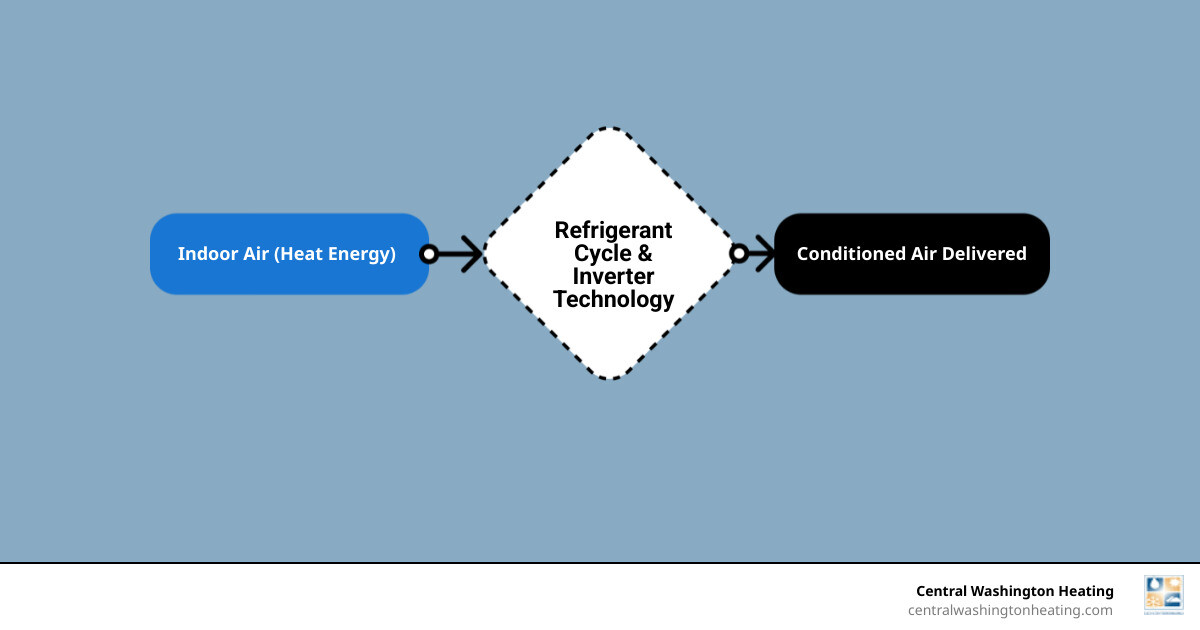
Understanding how a ductless AC unit works is simpler than you might think. At its heart, these systems are masters of heat transfer – they move heat from where you don't want it to where it won't bother you. It's like having a very efficient heat bouncer for your home.
Unlike traditional central air systems that push conditioned air through a maze of ducts (losing up to 30% of their energy along the way), ductless systems take a more direct approach. They create a dedicated connection between an outdoor unit and indoor units, delivering comfort exactly where you need it without the middleman of ductwork.
The real genius lies in inverter technology. Think of it as cruise control for your comfort system. Instead of your compressor constantly turning on and off like a light switch, it adjusts its speed smoothly to maintain your desired temperature. This means fewer temperature swings, quieter operation, and significantly better energy efficiency.
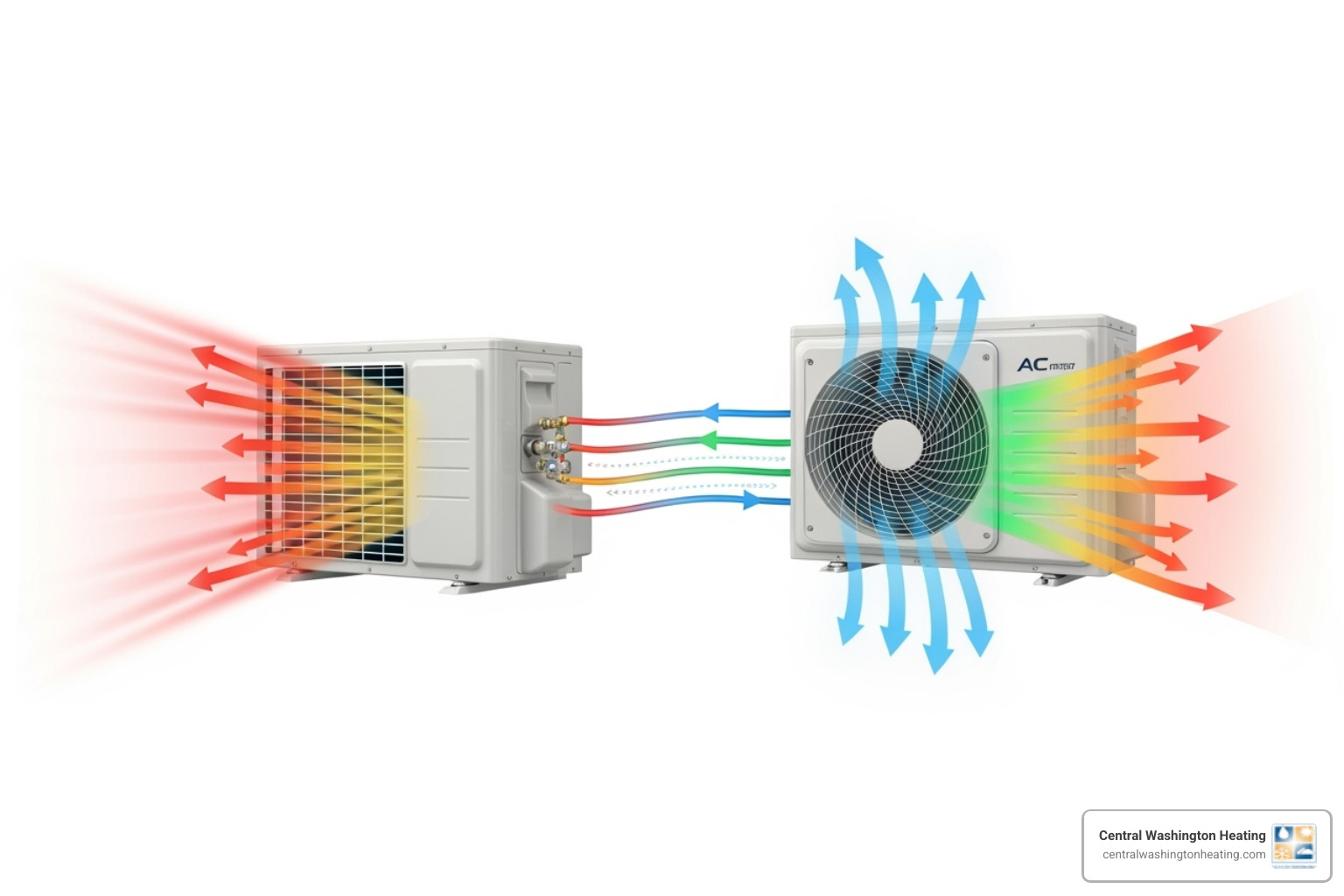
Whether you're cooling down in summer or warming up in winter, the heat pump function allows these systems to provide year-round comfort with remarkable efficiency. For more detailed information about how these systems earn their efficiency ratings, check out Ductless Heating & Cooling.
Understanding the Components of a Ductless AC unit
Every ductless AC unit is built around a few key players that work together like a well-orchestrated team. Let's meet the cast of characters that make your comfort possible.
The outdoor unit is your system's powerhouse. It houses the compressor (the heart that pumps refrigerant through the system) and the condenser (which releases or absorbs heat depending on the season). This unit does the heavy lifting and can be positioned up to 50 feet away from your indoor spaces, keeping the noise outside where it belongs.
Inside your home, the indoor air-handling unit takes center stage. This sleek unit contains the evaporator coils that actually cool or heat your air, plus a quiet fan that circulates the conditioned air throughout your room. These units come in various styles – wall-mounted, ceiling-recessed, or floor-standing – so they can blend seamlessly with your décor.
Connecting these two components is the conduit, a small bundle that's the unsung hero of the system. It carries the refrigerant lines (copper tubes filled with the special fluid that makes heat transfer possible), the power cable that keeps everything running, and the condensate drain that whisks away moisture collected during the cooling process.
The Cooling and Heating Process
The magic of how a ductless AC unit transforms your indoor climate is actually quite neat. During cooling mode, your indoor unit acts like a heat magnet, drawing warm air from your room across its cold evaporator coils.
As this warm air removal happens, something wonderful occurs – the refrigerant inside those coils absorbs the heat, instantly cooling the air. At the same time, dehumidification takes place as moisture in the air condenses on the cold coils, making your space feel more comfortable even at higher temperatures.
The beauty of modern ductless systems lies in their reversible cycle. When winter arrives, your system doesn't take a vacation – it simply switches roles. The heat pump function allows the outdoor unit to extract heat from outside air (yes, even when it's cold!) and transfer it indoors. It's like your system puts on a different hat depending on the season.
Each indoor unit gives you precise temperature control with its own thermostat. This means your bedroom can be a cool 68°F while your living room stays at a cozy 72°F – whatever makes each space perfect for its purpose.
If you're experiencing issues like your system not cooling properly, our guide on Why is AC Blowing Warm Air can help you troubleshoot common problems and understand when it's time to call in the professionals.
Key Advantages of a Ductless AC Unit vs. Traditional Central Air
When you're weighing your cooling options, understanding how a ductless AC unit stacks up against traditional central air can help you make the right choice for your home. We've seen countless homeowners find that ductless systems offer advantages they never knew they were missing.
Here's how ductless mini-splits compare to traditional central AC across the features that matter most:
| Feature | Ductless Mini-Splits | Traditional Central AC |
|---|---|---|
| Energy Efficiency | High (no duct losses, zoned control, inverter tech). Up to 40% more efficient. | Moderate (significant energy loss via ducts, whole-home cooling). |
| Installation | Easy, minimal disruption (small hole), flexible placement. | Complex, requires extensive ductwork, major renovation. |
| Zoned Control | Excellent (individual thermostats for each indoor unit). | Limited (one thermostat for entire home or large zones). |
| Air Quality | Good (multi-stage filtration per unit, no duct contaminants). | Variable (depends on duct cleanliness and filter quality). |
| Aesthetics | Visible indoor units (various styles), small outdoor footprint. | Hidden ducts, visible outdoor unit, registers visible indoors. |
The difference often comes down to efficiency and flexibility. Traditional systems cool your entire home whether you need it or not, while a ductless AC unit lets you target exactly where comfort matters most.
The Game-Changing Benefits
Energy savings top the list for good reason. Traditional ductwork can waste more than 30% of your cooling energy through leaks and heat transfer – that's like throwing money out the window. A ductless AC unit eliminates this waste entirely by delivering conditioned air directly where you need it.
The zoned control changes everything about home comfort. Picture keeping your bedroom at a cool 68°F for better sleep while your rarely-used guest room stays at 75°F. Each indoor unit operates independently, so you're only paying to condition the spaces you're actually using. This personalized approach often results in energy savings of up to 40% compared to traditional systems.
Installation flexibility makes these systems perfect for homes that weren't built with central air in mind. Instead of tearing up walls for extensive ductwork, installation requires just a small three-inch hole to connect indoor and outdoor units. This makes a ductless AC unit ideal for room additions, older homes, or spaces with radiant heating where adding ducts would be impractical.
Improved air quality comes standard with multi-stage filtration in each indoor unit. Unlike ducted systems where dust and allergens can accumulate in hidden ductwork, ductless systems filter air right at the source. You're breathing cleaner air without worrying about what might be lurking in your ducts.
Whisper-quiet operation means you'll barely know the system is running. With noisy compressors located outside, indoor units operate at levels quieter than a human whisper – often around 22 decibels. Compare that to the whoosh of air through traditional vents, and the difference is remarkable.
Most modern systems also provide year-round comfort with heat pump technology, efficiently heating your home in winter and cooling it in summer. It's like getting two systems in one.
Our detailed guide on the Advantages of Mini-Split AC explores these benefits further.
Potential Drawbacks to Consider
We believe in giving you the complete picture, so let's talk about the considerations that come with a ductless AC unit.
Indoor unit visibility is the most common concern we hear. Unlike central air where everything hides behind walls, these units are visible on your walls or ceilings. Modern designs are increasingly sleek and unobtrusive, but they're still there. Many homeowners find this a fair trade-off for the efficiency and control they gain.
Regular maintenance is straightforward but necessary. Each indoor unit has filters that need cleaning about once a month – a simple task that takes just a few minutes but requires staying on top of it.
Professional installation is essential, even though the process is less invasive than traditional systems. Proper sizing, placement, and refrigerant connections aren't DIY territory. Poor installation can lead to short cycling and energy waste, which defeats the purpose of choosing an efficient system.
The upfront investment tends to be higher than some alternatives, though long-term energy savings often offset this difference. Think of it as paying more initially to save consistently over the system's 15-20 year lifespan.
Despite these considerations, most homeowners find the advantages far outweigh the drawbacks, especially in homes without existing ductwork or those wanting precise temperature control. Our post on Why Choose Mini-Split Systems dives deeper into making this decision.
Choosing the Right System: Types, Sizing, and Efficiency
Finding the perfect ductless AC unit for your home doesn't have to feel overwhelming. Think of it like finding the right pair of shoes – you need the right fit for comfort, the right style for your needs, and the right quality for long-term value. The key is understanding how many zones you want to condition, what size capacity you'll need, and which efficiency features will save you the most money over time.
Single-Zone vs. Multi-Zone Systems
The first big decision you'll face is whether you need a single-zone or multi-zone ductless AC unit. It's really about matching the system to your specific situation.
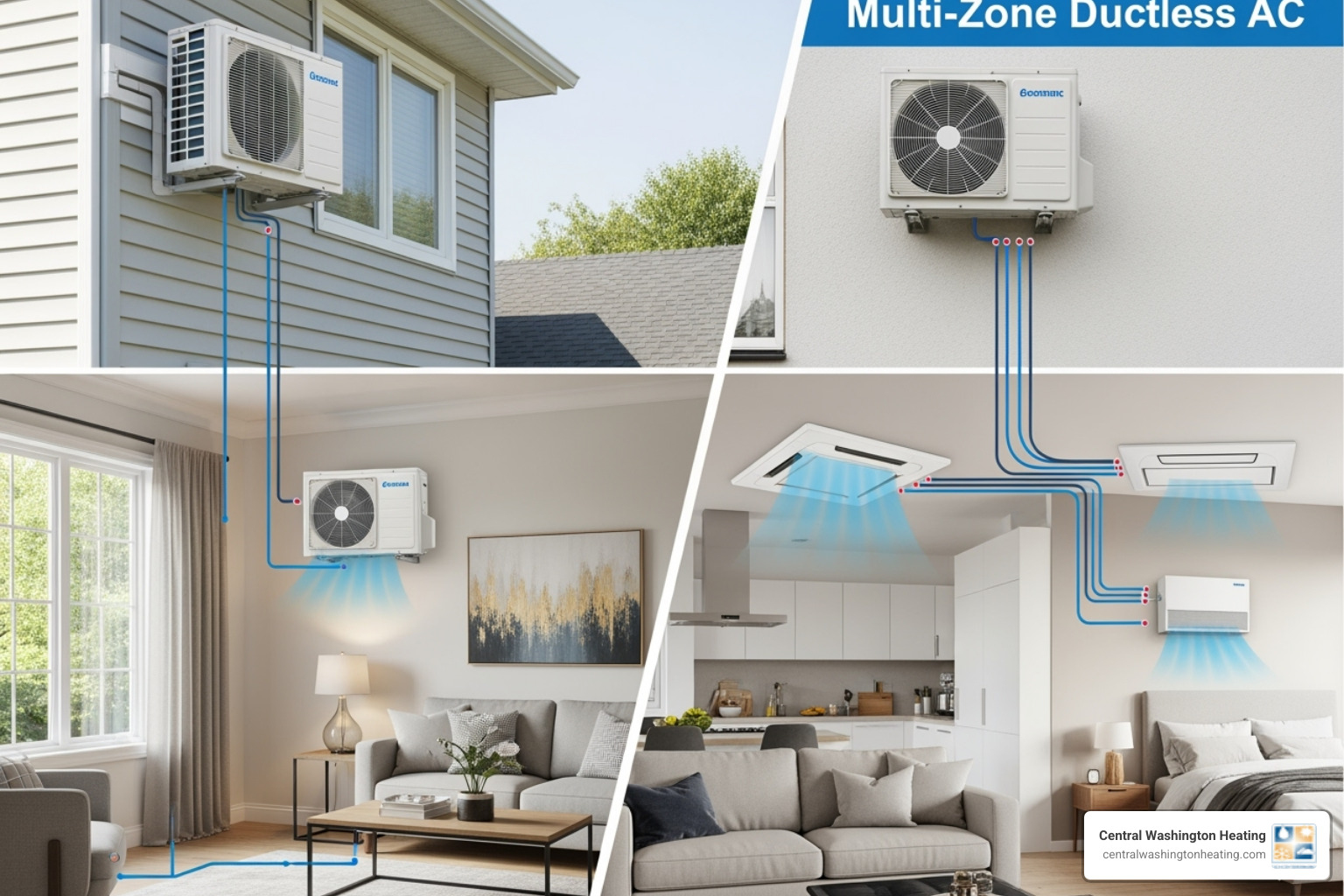
Single-zone systems pair one outdoor unit with one indoor unit, making them perfect for room additions like converted garages, new sunrooms, or home offices where running ductwork would be a nightmare. They're also ideal for targeting that one problem room – you know, the upstairs bedroom that's always sweltering or the basement office that never seems to warm up. If you have a small apartment or studio, a single-zone system can efficiently condition your entire living space without the complexity of multiple units.
Multi-zone systems connect one outdoor unit to multiple indoor units, and they're game-changers for whole-home comfort. The biggest advantage? Individual thermostats for each room mean no more thermostat wars between family members. Your teenager can keep their room arctic while you maintain a comfortable temperature in the living room. These systems also deliver energy savings because you only run the units in rooms you're actually using – why cool an empty guest room all day? Plus, you get whole-home solutions without the need for ductwork, and you only have one outdoor unit taking up space in your yard.
Choosing the Right Size for Your Ductless AC Unit
Getting the size right is absolutely critical for your ductless AC unit. Too small, and it'll run constantly without ever quite reaching your target temperature – like trying to fill a bathtub with a teaspoon. Too big, and you'll get short-cycling, where the system turns on and off repeatedly, creating uneven temperatures and wearing out faster than it should.
Calculating BTUs is where we start – these British Thermal Units measure how much heating or cooling power you need. Square footage gives us the foundation, but it's not the whole story. A typical rule of thumb suggests 20-25 BTUs per square foot, but your home's unique characteristics can change that dramatically.
Your home's insulation quality makes a huge difference. A well-insulated 500-square-foot room might need a 9,000 BTU unit, while a poorly insulated room of the same size could require 12,000 BTUs or more. Climate considerations matter too – Central Washington's hot summers and cool winters influence what capacity you'll need year-round.
Don't forget about ceiling height (more air volume to condition), heat sources like appliances and electronics, and even how many people typically occupy the space. All these factors add up to determine the right size for your specific situation.
This is why we always recommend a professional load calculation. Our experts can evaluate all these variables to ensure your ductless AC unit is perfectly matched to your needs. For more detailed guidance, check out our Mini-Split Installation Checklist for Homes.
Understanding Efficiency Ratings: SEER, EER, and HSPF
When you're shopping for a ductless AC unit, you'll see several important efficiency ratings that directly impact your energy consumption and long-term savings. Think of these ratings like a car's miles-per-gallon rating – higher numbers mean better efficiency and lower operating costs.
SEER (Seasonal Energy Efficiency Ratio) measures how efficiently your system cools over an entire season. It's like getting an average of your system's performance through all the ups and downs of summer weather. Higher SEER ratings mean lower energy bills – it's that simple.
EER (Energy Efficiency Ratio) focuses on peak performance, measuring efficiency when it's 95°F outside and your system is working its hardest. While SEER gives you the seasonal picture, EER shows you how well your ductless AC unit handles those scorching hot days when you need it most.
For systems that provide heating too, HSPF (Heating Seasonal Performance Factor) measures heating efficiency over a typical winter. Just like SEER for cooling, higher HSPF numbers mean more warmth for less energy – crucial for year-round comfort and savings.
These ratings aren't just numbers on a spec sheet – they translate directly to real savings on your utility bills. Many ENERGY STAR® certified systems offer impressive efficiency ratings that can significantly reduce your energy consumption. You can explore ENERGY STAR® certified products to see what's available, and our SEER Calculator can help you estimate potential savings.
For comprehensive guidance on making the right choice for your home, our blog on Selecting the Right Mini-Split AC covers everything you need to know.
Installation and Maintenance for Longevity
Think of your ductless AC unit like a well-built car – with proper installation and regular maintenance, it'll serve you faithfully for 10-15 years, sometimes even longer. The beauty is that these systems are designed to be workhorses, but they do appreciate a little TLC along the way.
Installation Requirements
Installing a ductless AC unit is refreshingly straightforward compared to traditional central air systems. No tearing up floors or walls to install ductwork – just a small wall penetration about three inches in diameter to thread the conduit through. It's amazing how such a small hole can connect your indoor and outdoor units so efficiently.
The outdoor unit placement requires some thought, though. We need a stable, level surface with good airflow around it. The unit can sit up to 50 feet away from your indoor unit, giving us flexibility to tuck it somewhere unobtrusive. Nobody wants their relaxing patio time interrupted by a noisy compressor, after all.
Electrical requirements are where professional expertise really matters. Your ductless AC unit needs dedicated circuits and proper wiring to run safely and efficiently. This isn't a weekend DIY project – proper electrical work ensures your system operates reliably for years to come.
The conduit length between units affects performance, so we always plan the most efficient route. Flexible placement options for indoor units mean we can mount them on walls, recess them in ceilings, or even install floor-standing models depending on your space and preferences.
For a detailed look at our installation process, check out How Professionals Install Mini-Split AC. If you're local to our area, we provide expert Mini-Split AC Installation in Wenatchee, WA.
Essential Maintenance and Typical Lifespan
Here's the secret to getting the most from your ductless AC unit: consistent, simple maintenance. It's really not complicated, and the payoff in system longevity is huge.
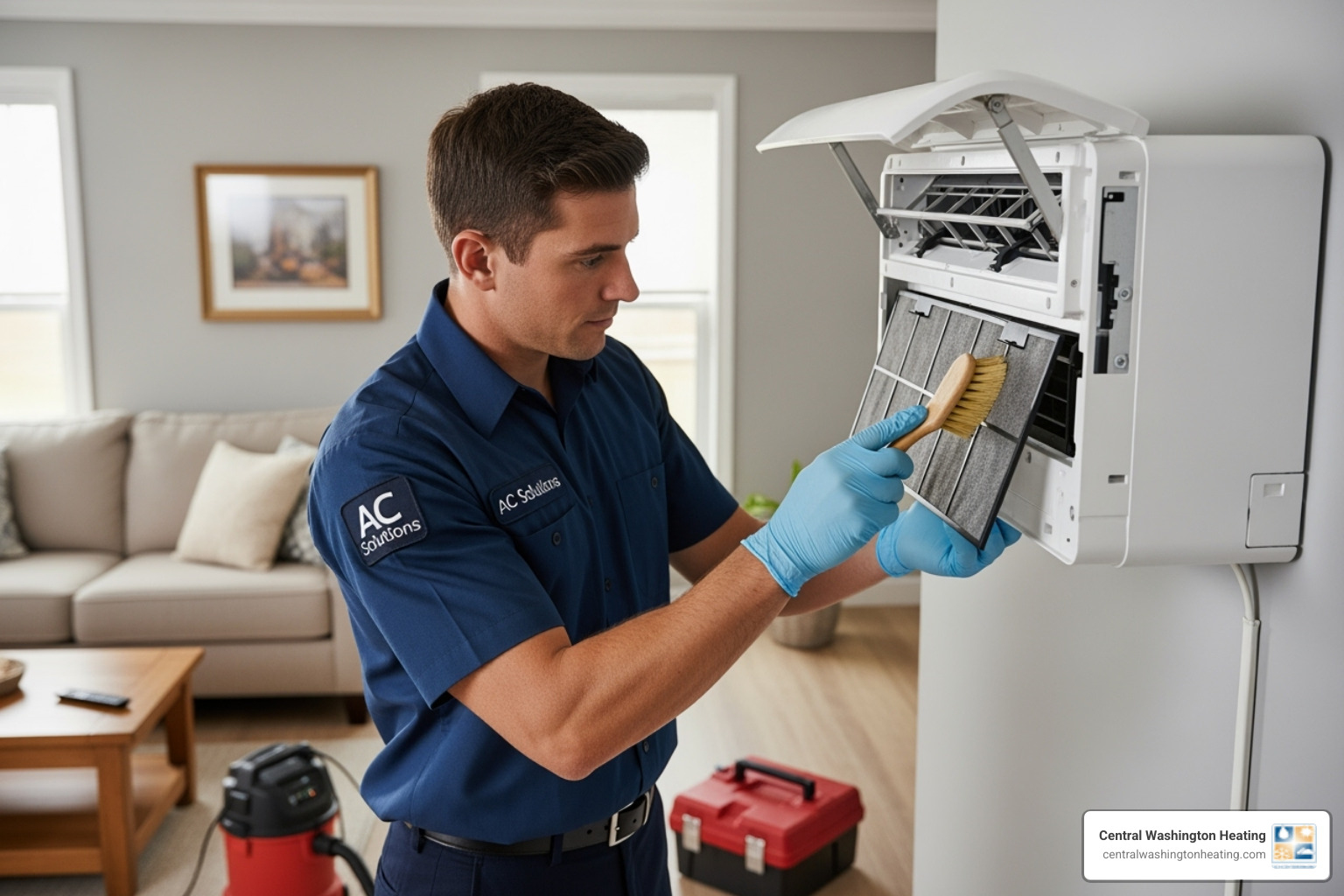
Washing filters is your most important job as a homeowner. Those washable filters in each indoor unit should be cleaned monthly – more often if you have pets or if someone smokes. Just pop them out, rinse with water, let them dry, and slide them back in. Clean filters keep your air fresh and your system running efficiently.
Annual professional service is where we come in. During these visits, we'll clean both indoor and outdoor coils to keep heat transfer working smoothly. We'll also check refrigerant levels and connections, inspect electrical components, and clean the condensate drain line. Think of it as a yearly physical for your system – we catch small issues before they become big headaches.
Checking refrigerant levels is particularly important because low refrigerant can damage your compressor, which is like the heart of your ductless AC unit. We make sure everything is running at optimal levels so your system doesn't have to work harder than necessary.
With this kind of care, your ductless AC unit will reward you with reliable, efficient comfort year after year. For more tips on keeping your system in top shape, read our guide on Maximizing AC Lifespan with Regular Maintenance. And if you ever need repairs, we're here to help with Mini-Split AC Repair in Wenatchee, WA.
Frequently Asked Questions about Ductless Systems
We love talking with homeowners about ductless AC unit systems because they're truly fascinating pieces of technology. Over the years, we've noticed that people tend to ask similar questions, and honestly, they're all great questions! Let's explore the most common ones we hear.
Can a ductless system provide both heating and cooling?
Yes, absolutely! This is one of our favorite features to talk about because it surprises so many people. Most modern ductless AC unit systems are actually heat pumps, which means they're like having two systems in one sleek package.
Here's the cool part (pun intended): these systems work by simply flipping a switch - literally reversing the refrigeration cycle. During summer, your ductless AC unit acts like a traditional air conditioner, pulling heat from inside your home and moving it outside. But when winter rolls around, it does the exact opposite. The system extracts heat from the outside air (yes, even when it's cold outside, there's still heat energy available) and pumps it into your home.
This makes them perfect for our Central Washington climate, where we need reliable cooling in summer and efficient heating when temperatures drop. It's like getting two appliances for the space of one, and they're incredibly efficient at both jobs.
How do ductless systems improve indoor air quality?
This is where ductless AC unit systems really shine, and it's something we're passionate about because clean air makes such a difference in how you feel at home.
Each indoor unit comes equipped with its own multi-stage filtration system. These filters work hard to capture dust, bacteria, pollen, pet dander, and other airborne particles that can make you sneeze or feel uncomfortable. Think of each unit as having its own personal air cleaning crew.
But here's the real game-changer: since there's no ductwork involved, you completely eliminate one of the biggest culprits of poor indoor air quality in traditional systems. We can't tell you how many times we've seen dirty ducts that haven't been cleaned in years, circulating dust and allergens throughout entire homes. With a ductless AC unit, that's simply not a concern. The air goes directly from the unit to your room - no detours through potentially contaminated ducts.
Are ductless mini-splits noisy?
Not at all! In fact, quiet operation is one of the standout features that homeowners rave about after installation. We often get calls from people who are amazed at how peaceful their homes have become.
Here's why ductless AC unit systems are so quiet: all the noisy components - the compressor, condenser, and other mechanical parts that do the heavy lifting - are located in the outdoor unit. The indoor units house just the quiet components like the fan and evaporator coil.
The indoor air handlers typically operate at whisper-quiet levels, often around 22 decibels or less. To put that in perspective, that's quieter than most people whispering (which is around 40 decibels) and much quieter than your refrigerator running. Many of our customers tell us they sometimes have to look at the unit to see if it's even running!
This makes ductless AC unit systems perfect for bedrooms, home offices, or any space where peace and quiet matter. No more being woken up by a noisy AC kicking on in the middle of the night.
Your Partner for Ultimate Home Comfort
When you step back and look at all the benefits we've covered, it's clear that a ductless AC unit offers something special – the ability to create personalized comfort in your home without the limitations of traditional HVAC systems. These versatile systems have become increasingly popular across Central Washington, and for good reason.
Ductless AC units truly shine in specific situations that many homeowners face. If you're dealing with retrofit add-ons where your home uses hydronic heating, radiant panels, or baseboard heat, adding central air conditioning would be a major undertaking. A ductless system gives you the cooling you need without tearing up walls or compromising your existing heating setup.
Room additions are another perfect match for ductless technology. Whether you're converting that garage into a workshop, finishing the basement as a family room, or adding a beautiful sunroom, extending your existing ductwork often isn't practical or cost-effective. A ductless AC unit provides independent climate control for these new spaces, ensuring they're comfortable year-round.
For homeowners focused on creating energy-efficient homes, ductless systems check all the right boxes. They eliminate the 30% energy loss that comes with traditional ductwork, use advanced inverter technology to optimize energy consumption, and allow you to condition only the spaces you're actually using. This precision makes them an excellent choice for anyone working toward a high-performance or net-zero energy home.
Perhaps most importantly, ductless AC units excel at providing zoned comfort. We all know that one room that's always too hot in summer or that chilly corner that never seems to warm up. With individual thermostats for each indoor unit, everyone in your family can enjoy their ideal temperature in their own space. No more thermostat battles or compromising on comfort.
At Central Washington Heating, we understand that every home is unique, and your comfort solution should be too. We're passionate about helping you find how a ductless AC unit can transform your living environment, creating the perfect balance of comfort, efficiency, and control that fits your lifestyle.
Ready to explore what ductless technology can do for your home? Contact us for expert mini-split services in Chelan, WA, and let's discuss how we can help you achieve the ultimate in home comfort.

Written by the Central Washington Heating and Air team
The techs and comfort advisors who've kept the Wenatchee Valley heated, cooled, and breathing easy for 30+ years — family & veteran owned, with 40+ years of combined industry experience.
- Licensed & insured · LIC# CENTRWH742JN
- Daikin Comfort Pro certified
- Wenatchee, WA
Last updated July 29, 2026
Ready for comfort you can count on?
Schedule service, request a free estimate, or call now for 24/7 emergency help. Our team is standing by across the Wenatchee Valley.
Get started today
Free estimates on installs · no-pressure, written quotes
Schedule My ServiceCall (509) 776-0247Mon–Fri: 8:00 AM – 4:30 PM · 24/7 for emergencies
Already have a quote? Get a free second opinion →