
Purify Your Pad: The Ultimate Guide to Air Purifier Installation
Learn expert air purifier installation for whole-home & portable units. Breathe cleaner, healthier air today!
Why Clean Air Matters in Your Home
Air purifier installation is key to dramatically improving your home's air quality and protecting your family's health. Here's what you need to know:
Quick Installation Guide:
- Portable units: Unpack, remove filter packaging, place in optimal location with 6+ inches clearance, plug in
- Whole-home systems: Professional HVAC integration into ductwork required
- Best placement: Central location with good airflow, away from walls and obstacles
- Maintenance: Replace filters every 3-12 months depending on type
If you spend up to 90% of your time indoors like most people, the air you breathe matters more than you might think. Indoor air is 7-10 times more polluted than outdoor air, packed with dust, pet dander, mold spores, and volatile organic compounds that can trigger allergies and respiratory issues.
Installing an air purifier can remove up to 99.97% of airborne particles as small as 0.3 microns, creating a healthier environment for your family.
Whether you're dealing with seasonal allergies, pet odors, or just want cleaner air throughout your Central Washington home, proper installation is crucial for getting the results you want. A poorly placed unit can lose up to 50% of its effectiveness, while optimal placement can boost efficiency by 20%.

Choosing Your System: Portable vs. Whole-Home Air Purifiers
The biggest decision you'll face with air purifier installation isn't whether to get one—it's which type will work best for your home. Think of it like choosing between a flashlight and overhead lighting. Both illuminate, but they serve very different purposes.
Portable air purifiers are like that trusty flashlight—flexible, affordable, and perfect for targeting specific areas. You can move them from your bedroom during allergy season to the living room when guests visit. They're also budget-friendly, making clean air accessible without a major investment.
The downside? They're limited to one room at a time. If you want clean air throughout your entire home, you'd need multiple units running constantly. That's where whole-home air purifiers shine.
Whole-home systems integrate directly into your existing HVAC system, purifying every breath of air that flows through your ductwork. It's like having that overhead lighting—comprehensive coverage that works seamlessly in the background. While they require professional air purifier installation, they deliver consistent air quality in every single room.
| Feature | Portable Air Purifiers | Whole-Home Air Purifiers |
|---|---|---|
| Coverage | Single room coverage | Comprehensive whole-house coverage |
| Installation | Simple plug-and-play setup | Professional HVAC integration required |
| Initial Investment | Lower upfront cost | Higher initial investment |
| Flexibility | Move between rooms as needed | Fixed installation, purifies all air |
| Power | Less powerful for large spaces | More powerful, handles entire home |
For detailed guidance on selecting the right system for your Central Washington home, check out our guide to the Best Home Air Filtration Systems.
Understanding Different Filtration Technologies
Not all air purifiers work the same way. Think of different filters like specialized tools in a toolbox—each one tackles specific problems.
HEPA filters are your heavy-duty workhorses. They capture an impressive 99.97% of particles as small as 0.3 microns—that includes dust, pollen, pet dander, and mold spores. If you're dealing with allergies or asthma, HEPA filtration is non-negotiable.
Activated carbon filters handle what HEPA can't touch—odors, gases, and volatile organic compounds (VOCs). These filters contain porous carbon that acts like a sponge, soaking up cooking smells, pet odors, and chemical fumes from cleaning products. If your home battles persistent odors, activated carbon is your best friend.
UV-C light purifiers take a completely different approach. Instead of trapping pollutants, they use germicidal irradiation to zap bacteria, viruses, and mold spores at the DNA level. This prevents these microorganisms from reproducing and spreading throughout your home.
Many modern systems combine all three technologies, giving you comprehensive protection against every type of indoor air pollutant.
How to Size an Air Purifier for Your Space
Getting the wrong size air purifier is like buying shoes that don't fit—uncomfortable and ineffective. Too small, and it won't keep up with your air quality needs. Too large, and you're paying for power you don't need.
The key measurement is Clean Air Delivery Rate (CADR)—basically how much clean air the unit pumps out per minute. You'll also want to consider Air Changes per Hour (ACH), which tells you how many times the purifier can theoretically clean all the air in your room each hour.
For most homes, 3 to 5 air changes per hour works well. If you have severe allergies or pets, aim for the higher end.
Here's a simple way to calculate the right size: Multiply your room's square footage by the ceiling height to get the volume. Then multiply that by your desired ACH (let's say 4). A 12x15 foot room with 8-foot ceilings needs about 5,760 cubic feet of air cleaned per hour.
Most manufacturer recommendations make this easier by listing the maximum room size each unit can handle effectively. Just match your room size to their specifications, and you're golden.
For more insights on choosing the right filtration system, read our article on Why You Need a Good Air Filter.
A Step-by-Step Guide to Portable Air Purifier Installation
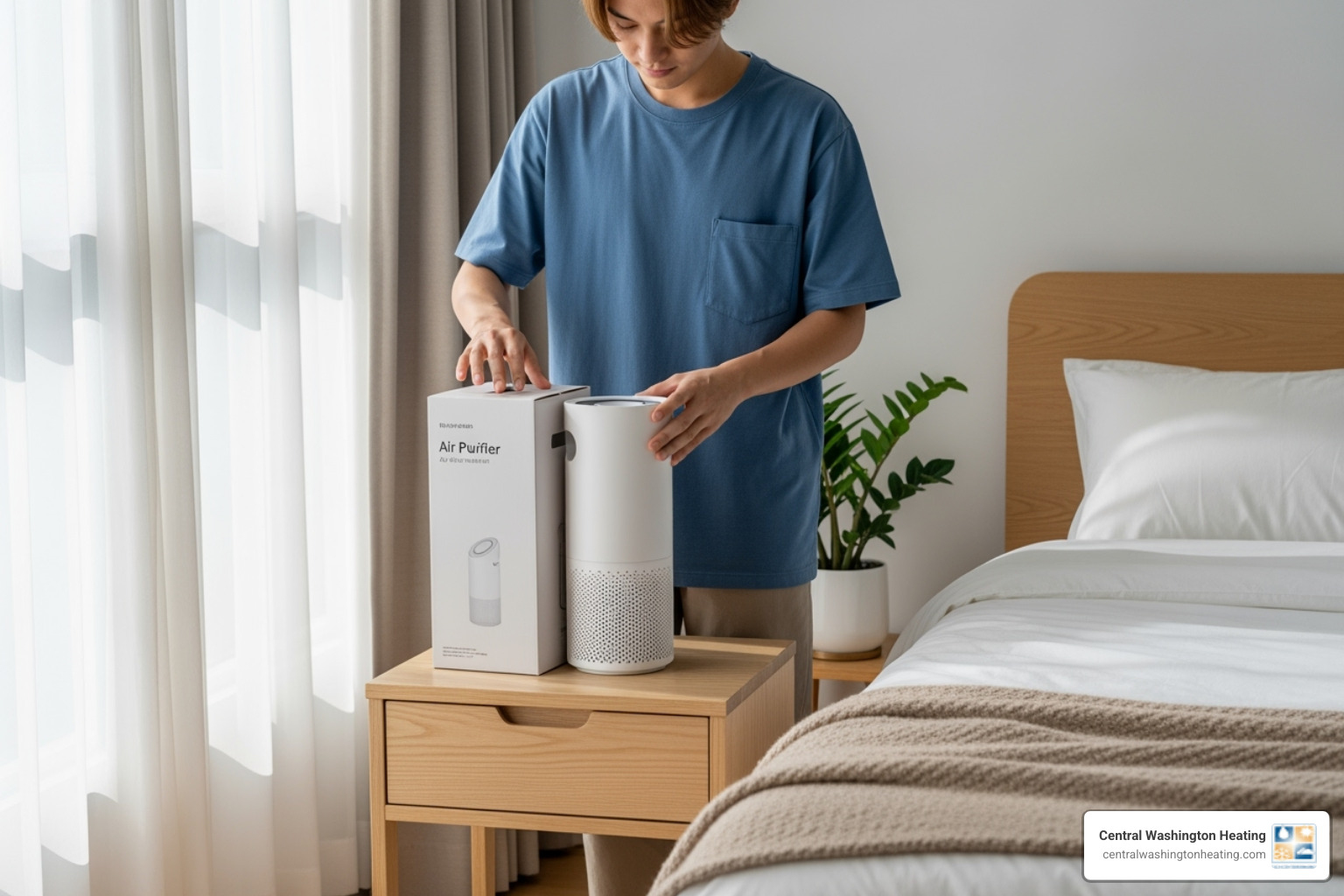
Installing a portable air purifier is surprisingly straightforward – think "unbox and go" rather than "call a contractor." But here's the thing: even the simplest air purifier installation has a few crucial steps that can make or break your results. Skip them, and you might wonder why your shiny new purifier isn't delivering that crisp, clean air you were expecting.
The beauty of portable units lies in their simplicity, but don't let that fool you into thinking placement doesn't matter. A well-positioned air purifier can boost efficiency by 20%, while a poorly placed one might struggle to clean even half the air it should.
Step 1: Prepare Your New Air Purifier
Before you get excited and plug in your new air purifier, there's some essential prep work that many people overlook. Trust me, taking five minutes now will save you from wondering why your unit isn't working later.
Unpack carefully and keep that user manual handy – you'll actually want to read this one. Once you've got everything out of the box, it's time for the most important step that nearly everyone misses.
Remove all filter packaging. This is where things get interesting. Most air purifiers arrive with their filters wrapped in protective plastic to keep them fresh during shipping. The problem? Many people forget to remove this plastic before running their unit. Your HEPA filter, carbon filter, and any pre-filters all need to be unwrapped.
Open your unit (usually by removing a back panel or lifting off the top) and carefully remove every piece of plastic wrap from the filters. Running the unit with plastic still on the filters won't just make it ineffective – it can actually damage the motor over time.
Once everything's unwrapped, reinstall the filters correctly. Look for arrows on both the filter frames and inside the unit – these show you which direction the airflow should go. The arrows on your filter should typically point toward the inside of the unit, following the path of air being pulled in.
Different brands have their own quirks, so consulting your user manual is always smart. Whether you've got a Honeywell, Shark, Levoit, or Crane unit, each has specific instructions that can save you trouble down the road.
Step 2: Find the Best Location for Optimal Performance
Here's where the magic happens – or doesn't, depending on where you place your purifier. Think of your air purifier like a hardworking friend who needs room to breathe and space to do their job effectively.
Choose a central location within the room where your purifier can draw air from all directions. This isn't just about convenience – it's about maximizing air circulation throughout your entire space. A corner might seem tidy, but it's like asking someone to have a conversation while facing the wall.
Consider your pollutant sources when picking the perfect spot. If you're battling pet dander, placing the unit closer to where your furry friend spends time makes sense. Dealing with cooking odors? The kitchen or nearby dining area could be ideal. Seasonal allergies from outdoor allergens? Near a frequently used entrance or window might help.
The real game-changer is clearance distance. This is where most people unknowingly sabotage their air purifier's performance. When you place an air purifier directly against a wall, its airflow can drop to just 5% of its potential. Move it even 4 inches away, and you jump back up to 100% airflow – that's a massive difference!
Give your unit breathing room by keeping it at least 6-10 inches away from walls and furniture. Some models need even more space – check your manual for specific requirements. Make sure nothing blocks the intake or exhaust grilles. Curtains, furniture, or even decorative items can seriously hamper performance.
Height matters too. While most portable units work great on the floor, elevating them 3-5 feet can improve air circulation, especially if your unit draws air from the bottom. Just make sure wherever you place it, the airflow remains unobstructed.
For more detailed guidance on optimal placement strategies, you can explore where to place an air purifier for best results.
Once you've found the perfect spot, plug in your unit and power it on. Most modern air purifiers offer auto modes that adjust fan speed based on air quality, making your air purifier installation truly complete. Now you can sit back and start breathing easier, knowing your purifier has everything it needs to work at peak performance.
Understanding Whole-Home Air Purifier Installation
When you're ready to take your home's air quality to the next level, a whole-home system is where the magic really happens. Unlike portable units that work room by room, these powerhouse systems transform your entire HVAC system into a comprehensive air cleaning machine. But here's the thing – air purifier installation for whole-home systems is definitely not a weekend DIY project.
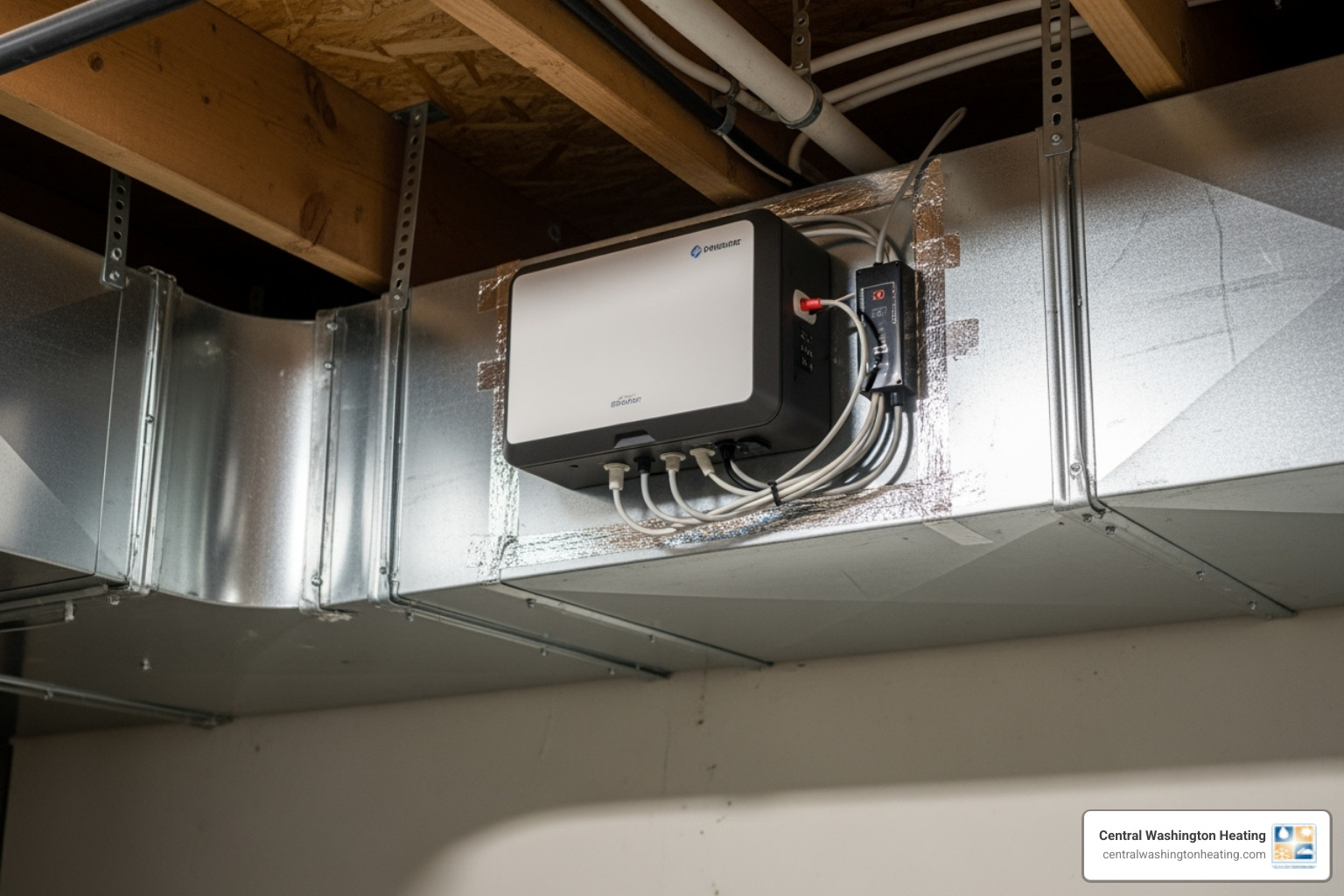
These systems work by integrating directly into your existing ductwork, treating every cubic foot of air that flows through your home. Think of it as giving your HVAC system superpowers – suddenly, it's not just heating and cooling your home, it's actively purifying the air too.
The beauty of whole-home systems lies in their seamless operation. Once installed, they work quietly behind the scenes, ensuring that clean, healthy air reaches every corner of your Central Washington home through your existing vents.
The Process of a Professional Whole-Home Air Purifier Installation
Professional air purifier installation for whole-home systems involves several critical steps that require specialized knowledge and tools. Safety comes first, so we always start by completely shutting off power to your HVAC system at both the thermostat and circuit breaker.
The installation process begins with a thorough evaluation of your existing HVAC system and ductwork. Every home is unique, and we need to determine the best location and type of system for your specific setup. Most whole-home air purifiers are installed in the supply plenum – that's the main ductwork that distributes conditioned air throughout your home.
Creating the perfect fit requires precision cutting into your ductwork. This isn't something you want to eyeball – it requires specialized tools and years of experience to ensure a clean, properly sized opening. Once the opening is prepared, we carefully mount and seal the air purifier unit into place. Proper sealing is absolutely crucial because any air leaks mean some of your air bypasses the purification system entirely.
The electrical connections are where things get technical. We connect the air purifier to your HVAC system's power supply and control board, often wiring it to the fan circuit so it operates automatically whenever your system runs. This ensures continuous air purification without any extra effort on your part.
After everything is connected and sealed, we restore power and test the entire system. We'll run your HVAC through all its modes – heating, cooling, and fan-only – to verify that your new air purifier is working perfectly with your existing equipment.
Finally, we'll walk you through your new system's operation and maintenance requirements, making sure you're completely comfortable with how everything works. For a deeper dive into what whole-home systems can do for your home, check out our Guide to Whole Home Air Filtration.
Key Benefits of an Integrated System
The advantages of professional whole-home air purifier installation go far beyond what any portable unit can achieve. Consistent air quality is perhaps the biggest game-changer – instead of having clean air in just one room, every space in your home enjoys the same high-quality, purified air.
Your family will notice dramatically reduced dust settling on furniture and surfaces throughout the house. The system continuously filters out dust, pollen, pet dander, and other allergens before they can circulate and settle. Many of our customers are amazed at how much less dusting they need to do!
Odor removal becomes effortless with activated carbon filtration working around the clock. Cooking smells, pet odors, and even chemical vapors from cleaning products get neutralized before they can spread throughout your home.
Here's a bonus benefit many homeowners don't expect: protecting your HVAC equipment. When your air is cleaner, less dust and debris build up on your system's components. This reduces strain on your equipment and can actually lower your energy bills while extending the life of your heating and cooling system.
Most importantly, you're creating a healthier environment for your entire family. By removing harmful pollutants, bacteria, and viruses from the air, whole-home systems contribute to better sleep, fewer respiratory issues, and improved overall comfort for everyone under your roof.
These comprehensive benefits make whole-home air purification a smart long-term investment in your family's health and comfort. Learn more about the Essential Benefits of Whole Home Air Filtration and find how these systems can transform your indoor environment.
Maintaining Your Air Purifier for Lasting Effectiveness
Whether you've chosen a portable unit or invested in a whole-home system, proper maintenance is just as important as getting the air purifier installation right in the first place. Think of it like caring for a car - regular tune-ups keep everything running smoothly and prevent costly breakdowns down the road.
The good news? Maintaining your air purifier isn't complicated, but skipping it can turn your clean-air champion into an expensive dust collector. A well-maintained unit with clean filters can actually reduce your energy bills by up to 15%, while a neglected one might struggle to clean the air at all.
Filter Replacement and Cleaning
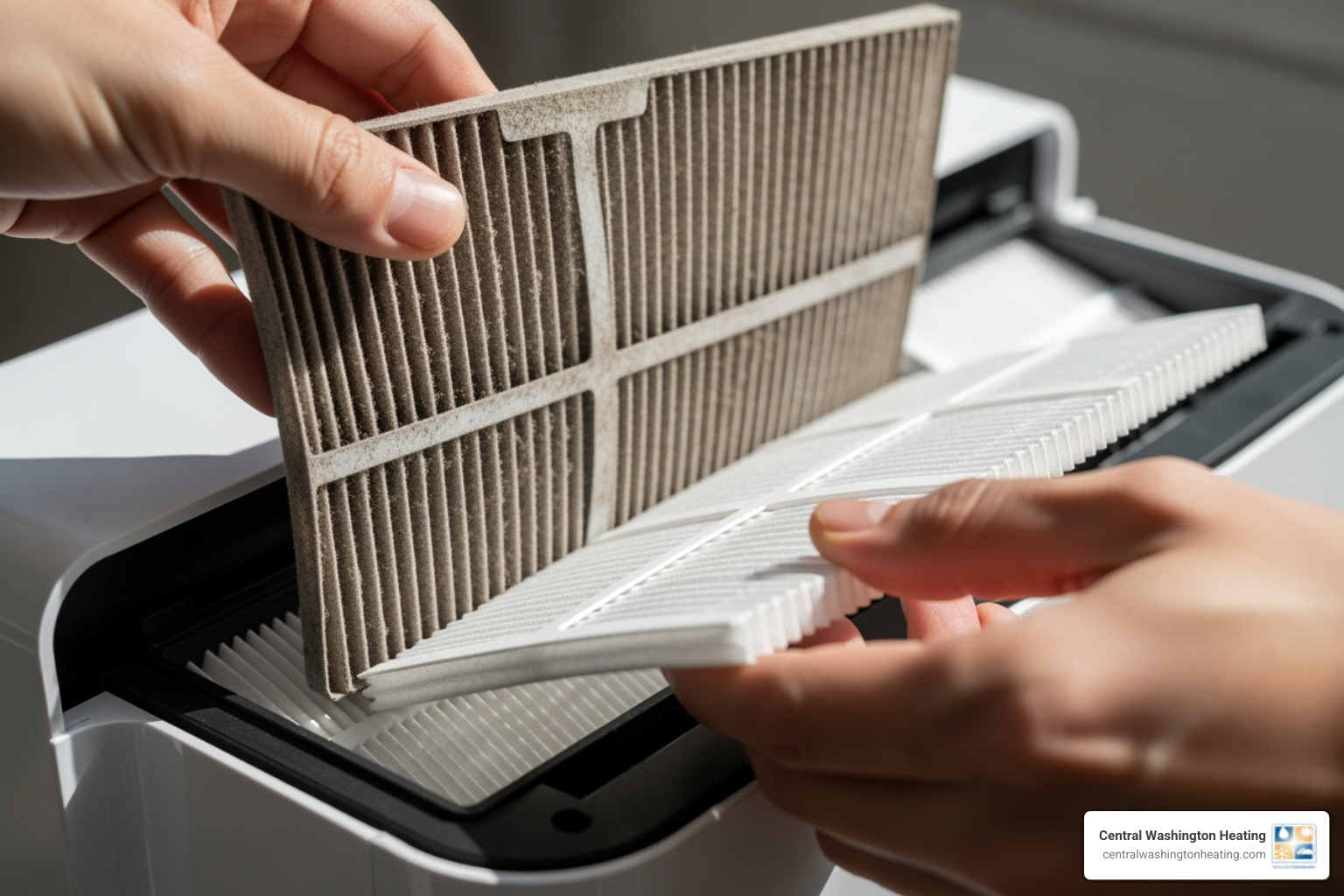
Your air purifier's filters are the real heroes of the operation, working 24/7 to trap dust, allergens, and pollutants. But like any hardworking hero, they need regular care to stay effective.
Check your filters regularly - we're talking every 1-3 months, especially during high-pollen seasons or if you have furry family members. You'll be amazed at how quickly they can fill up, particularly during Central Washington's wildfire season when outdoor air quality takes a hit.
HEPA and activated carbon filters are your main workhorses, but they're not built to last forever. These filters need complete replacement according to your manufacturer's timeline - typically every 6-12 months for HEPA filters and every 3-6 months for carbon filters. Don't try to wash them; they're designed to be replaced, not revived.
Pre-filters are different - these washable champions catch the big stuff like pet hair and large dust particles before they reach your expensive HEPA filter. You can vacuum them or rinse them with water, just make sure they're completely dry before putting them back. Wet filters and electrical equipment don't mix well!
Keep the exterior clean by wiping down your unit's housing with a soft, damp cloth every few weeks. This isn't just about looks - dust buildup on the outside can eventually work its way into the internal components.
Don't forget the grilles - those intake and exhaust openings can get surprisingly dusty. A quick vacuum with a brush attachment or a gentle wipe keeps airflow unrestricted and your unit breathing easy.
Why Regular Maintenance is Crucial
Here's the thing about air purifiers - they're only as good as their maintenance schedule. A dirty filter doesn't just work poorly; it can actually harm your unit and your wallet.
Maintaining peak efficiency means your air purifier can do what you bought it for - clean your air effectively. When filters get clogged, airflow drops dramatically, and suddenly your powerful purification system is working about as well as a desk fan.
Preventing unnecessary strain on your unit's motor is crucial for longevity. When filters are dirty, the motor has to work overtime to pull air through, which is like asking someone to breathe through a pillow - exhausting and ultimately damaging.
Clean air delivery is the whole point of your investment. A neglected air purifier with saturated filters isn't just ineffective; it can actually become a breeding ground for the very pollutants you're trying to eliminate.
Energy efficiency takes a nosedive when maintenance is ignored. Your unit will draw more power while delivering less performance - the worst of both worlds for your electricity bill and your indoor air quality.
Extending your purifier's lifespan through regular maintenance means you'll get years of reliable service from your investment. Think of filter changes as a small price to pay for continued clean air and avoiding premature replacement of the entire unit.
Regular maintenance isn't just about keeping your air purifier running - it's about ensuring it continues to protect your family's health and comfort for years to come. For more insights on maximizing your air purifier's benefits, check out our guide on Enhancing IAQ with Air Purifiers.
Frequently Asked Questions about Air Purifiers
We get it – choosing and installing an air purifier can feel overwhelming with so many options and considerations. These are the questions we hear most often from homeowners in Central Washington who want to breathe easier in their homes.
Where is the best place to put an air purifier?
The sweet spot for your air purifier is wherever your family spends the most time. For most of us, that's the bedroom for better sleep or the living room where everyone gathers.
Think of your air purifier like a helpful friend who needs some space to work effectively. Place it where airflow isn't blocked – ideally 3-5 feet off the ground and at least 6-10 inches away from walls and furniture. This gives it room to pull in dirty air and push out clean air without any obstacles getting in the way.
Here's what we've learned makes the biggest difference: avoid corners and tight spaces like the plague! When you tuck an air purifier into a corner, you're basically asking it to clean air with one hand tied behind its back. Optimal placement can boost efficiency by 20%, which means cleaner air for your family and better value for your investment.
Can I add an air purifier to my existing HVAC system?
Absolutely! This is one of our favorite questions because whole-home air purifiers are designed exactly for this purpose. They integrate directly into your existing HVAC system's ductwork, turning your heating and cooling system into a whole-house air cleaning powerhouse.
When we install a whole-home system, it works behind the scenes to clean and purify the air as it circulates throughout your entire home. Instead of just cleaning one room like a portable unit, you get comprehensive coverage in every room – from the master bedroom to the basement workshop.
Professional air purifier installation is definitely the way to go for these systems. It involves connecting the unit to your ductwork and electrical system, which requires the right tools and expertise to ensure everything works safely and effectively.
How often should I run my air purifier?
Here's the simple truth: run it all the time. We know that might sound like overkill, but air pollutants don't take breaks. Pet dander, dust, cooking odors, and outdoor allergens are constantly finding their way into your home, even when you're sleeping.
Think of it like your refrigerator – you wouldn't turn it off at night and expect your food to stay fresh, right? Your air purifier works the same way. Continuous 24/7 operation ensures the air stays consistently clean, which is especially important if anyone in your family deals with allergies or respiratory issues.
The good news is that modern air purifiers are designed to be energy-efficient, so running them constantly won't send your electricity bill through the roof. Most homeowners are pleasantly surprised by how little impact it has on their monthly energy costs while making such a noticeable difference in their home's air quality.
Breathe Easier with a Properly Installed Air Purifier
When you take that first deep breath in a home with a properly functioning air purifier, you can actually feel the difference. The air seems fresher, cleaner, and somehow more welcoming. That's the magic of air purifier installation done right.
Think about it – we spend up to 90% of our time indoors, breathing the same air over and over. Without proper purification, that air carries dust from last week's cleaning, pet dander from our furry friends, cooking odors that have overstayed their welcome, and countless invisible particles that can trigger allergies and respiratory issues.
Improved health is perhaps the most compelling reason to invest in air purification. When allergens, dust, and airborne pathogens are consistently removed from your home's air, family members with asthma or allergies often experience fewer symptoms. Sleep quality improves when you're not breathing in irritants all night long.
Improved comfort goes hand in hand with better health. No more waking up with stuffy noses or scratchy throats. No more lingering cooking smells or that musty odor that seems to settle in during humid weather. Clean air simply makes your home feel more welcoming and comfortable for everyone.
But here's the thing – none of these benefits matter if your system isn't working properly. The importance of proper installation cannot be overstated. A portable unit shoved in a corner might look like it's doing something, but it's probably only working at half capacity. A whole-home system installed incorrectly could actually reduce your HVAC efficiency instead of improving it.
That's where professional expertise makes all the difference. At Central Washington Heating, we've seen what happens when air purifiers are installed as an afterthought versus when they're integrated thoughtfully into your home's air circulation system. The difference in performance is dramatic.
Whether you're dealing with seasonal allergies in the Wenatchee Valley, pet odors that just won't quit, or you simply want the peace of mind that comes with breathing truly clean air, we're here to help. Our team understands the unique air quality challenges of Central Washington homes and can guide you toward the solution that makes the most sense for your family.
Ready to transform the air in your home? Let us help you find the best home air filtration system for your Chelan, WA home and find what it feels like to breathe easier every single day.

Written by the Central Washington Heating and Air team
The techs and comfort advisors who've kept the Wenatchee Valley heated, cooled, and breathing easy for 30+ years — family & veteran owned, with 40+ years of combined industry experience.
- Licensed & insured · LIC# CENTRWH742JN
- Daikin Comfort Pro certified
- Wenatchee, WA
Last updated July 29, 2026
Ready for comfort you can count on?
Schedule service, request a free estimate, or call now for 24/7 emergency help. Our team is standing by across the Wenatchee Valley.
Get started today
Free estimates on installs · no-pressure, written quotes
Schedule My ServiceCall (509) 776-0247Mon–Fri: 8:00 AM – 4:30 PM · 24/7 for emergencies
Already have a quote? Get a free second opinion →